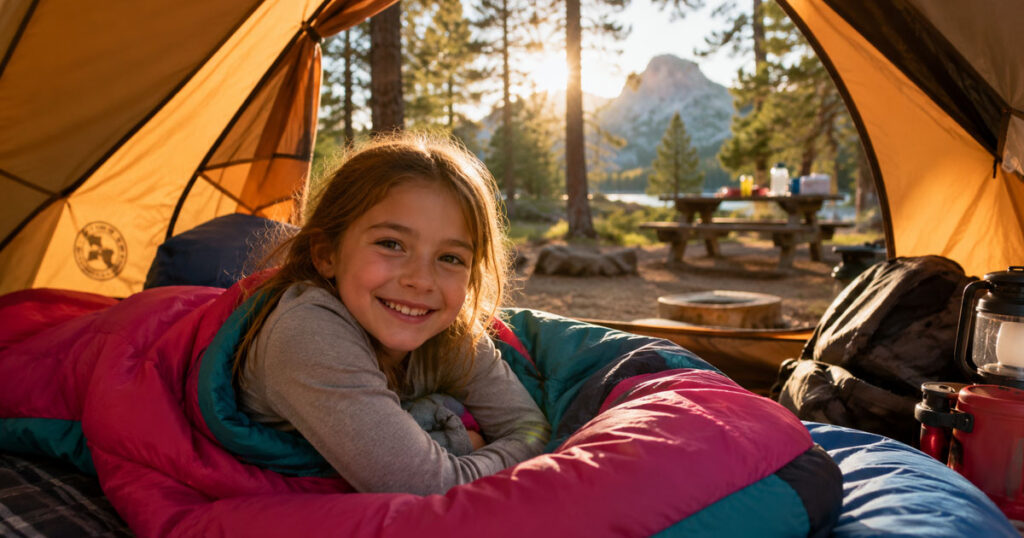
Short answer: the REI Co-op Kindercone 25 is the best all-around sleeping bag for kids ages 3-12. It adjusts as your child grows, keeps them warm down to 25°F, and doesn’t need replacing every camping season.
For a toddler who still wiggles out of everything, the Morrison Little Mo wearable sleep sack solves the “blanket kicked off at 2am” problem for good. And if you just need something solid for under $55, the Kelty Kids Mistral 20 gets the job done.
We’ve packed enough kids’ sleeping bags into the car to know the difference between “warm enough” and “warm on paper.” Adult bags don’t work for small bodies. They leave cold air pockets, the zippers aren’t built for little fingers, and nobody wants to buy a new one every year as your kid grows two inches. Here’s what actually holds up, sorted by age and need.
Quick Top 3 Picks
- Best Overall: REI Co-op Kindercone 25, adjustable length, genuinely warm, grows with your kid
- Best for Toddlers: Morrison Little Mo, wearable sleep sack, no more waking up on bare tent floor
- Best Budget: Kelty Kids Mistral 20, under $55 and warm enough for 3-season trips
Comparison Table
1. REI Co-op Kindercone 25 – Best Overall
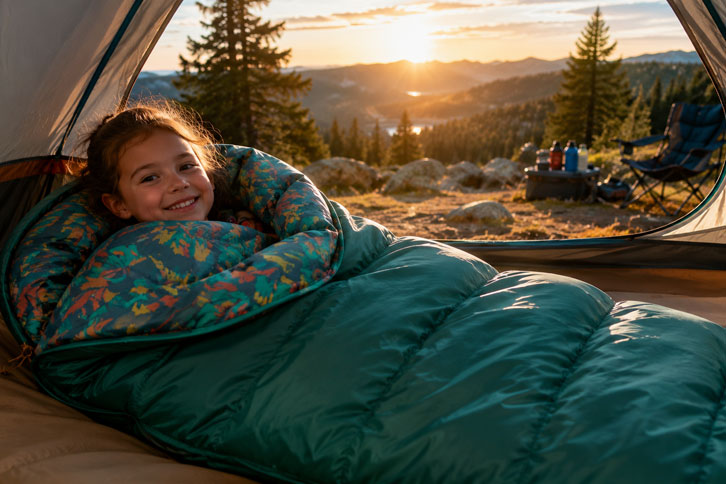
This is the bag we point every first-time camping parent toward, and the reason is simple: it grows with your kid instead of getting outgrown after one summer. An internal cinch cord shortens the footbox for a smaller child now, then lets out as they grow, so you’re not rebuying a bag every year or two.
Rated to 25°F, it runs warmer in practice than that number suggests, which matters because kids sleep colder than adults in the same tent. The attached stuff sack doubles as a cinch point for smaller kids, tightening up the extra room so there’s less cold air to heat with body warmth.
Best for: Families who want one bag to last from early elementary through the tween years. Skip it if: your kid is still in the toddler stage, a wearable system like the Little Mo works better for that age.
2. Morrison Little Mo – Best for Toddlers
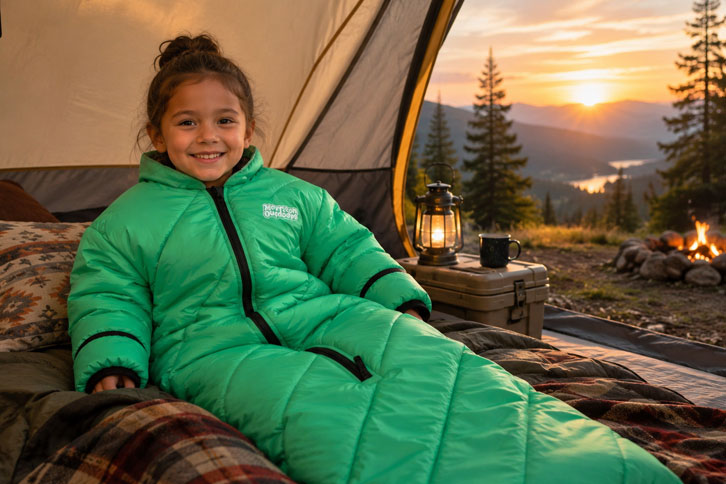
Any parent who’s camped with a toddler knows the drill: you zip them in, and twenty minutes later they’ve wriggled out and are lying directly on the cold tent floor. The Little Mo fixes that by functioning more like a sleep sack with legs than a traditional bag, so it stays on through all the rolling.
It’s built for the 6-24 month range specifically, with room to move but not enough room to escape. It won’t work once your kid outgrows it, but for the toddler stretch, it solves a problem that regular kids’ bags genuinely can’t.
Best for: Toddlers and younger kids who move a lot in their sleep. Skip it if: your child is already in a regular twin bed at home and past the wearable-sleep-sack stage, a standard mummy bag like the Little Red will fit better.
3. Big Agnes Little Red 20
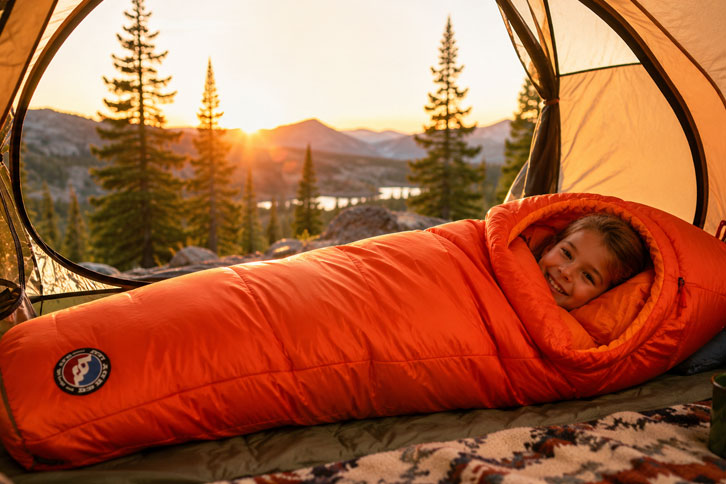
Sized specifically for younger kids rather than shrunk down from an adult pattern, the Little Red avoids the classic problem of a “kids” bag that’s really just a slightly smaller adult mummy bag with dead air space everywhere. The 20°F rating gives a solid margin for spring and fall trips, and the synthetic fill keeps insulating even after it inevitably ends up damp from a spilled water bottle.
Best for: Ages 2-5 who’ve graduated from a wearable sleep system but still need a properly sized bag. Skip it if: your child is closer to age 8-12, size up to the Wolverine instead.
4. Big Agnes Wolverine 20
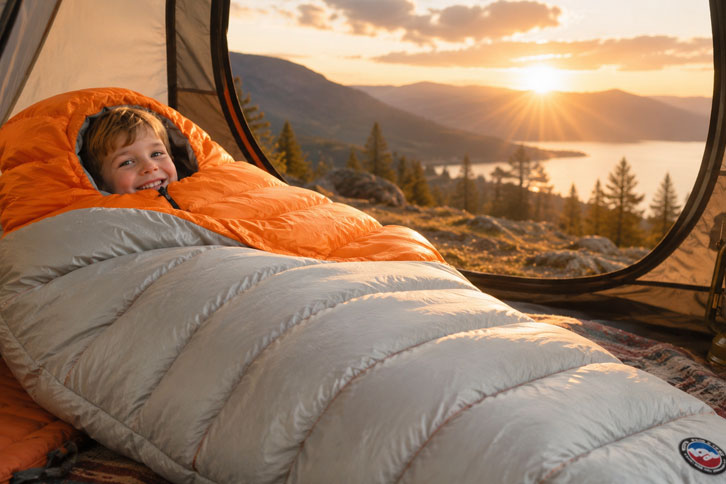
This is the pick for the older-kid stretch, roughly ages 6-12, when they’re sleeping through the night more reliably but still need a bag that can survive being dragged through dirt, stuffed in a stuff sack the wrong way, and left half-unzipped at the foot of the tent. The synthetic fill and reinforced footbox hold up to that kind of treatment better than a delicate down bag would.
Best for: Active older kids who need a bag that can take some abuse. Skip it if: you’re outfitting a toddler, this one runs too big for kids under about age 6.
5. Morrison Mighty Mo
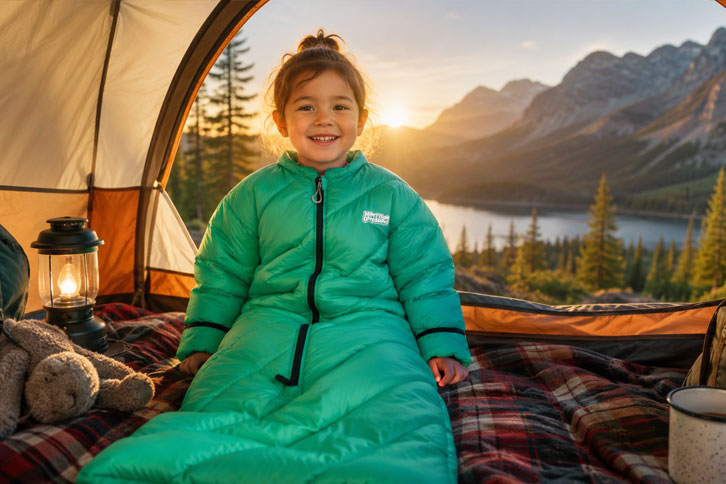
Some kids sleep with their arms tucked in. Others fling them straight out of the bag by midnight, no matter how many times you zip them back in. The Mighty Mo has built-in sleeves that keep arms contained without feeling restrictive, which solves that specific problem better than a standard mummy bag.
It’s also light enough to double as a backpacking bag if your family ever graduates from car camping to an overnight trail trip, which is a nice bit of future-proofing for the money.
Best for: Kids who won’t stay zipped into a regular bag. Skip it if: your child sleeps still and doesn’t fight the zipper, a standard bag will be simpler and just as warm.
6. Kelty Kids Mistral 20 – Best Budget
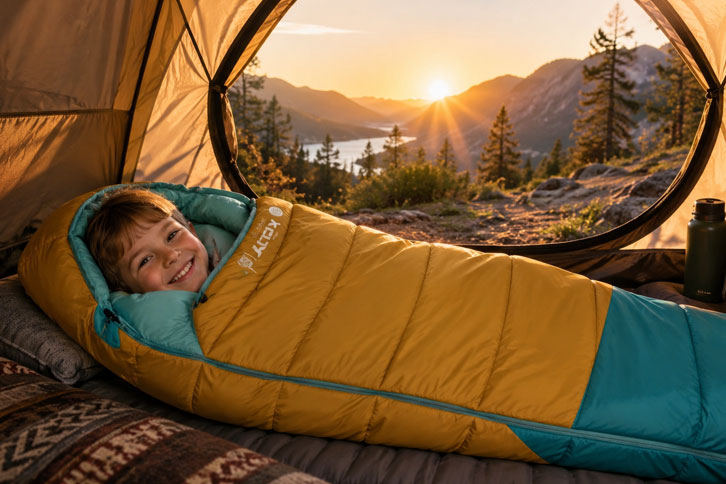
At under $55, this is the bag we’d point you toward if you need to outfit two or three kids at once without spending premium-brand money on each one. It’s rated to 20°F, which is warmer than most bags at this price point, and it holds up fine for the handful of trips most families take each year.
Best for: Tight budgets and families with multiple kids to gear up at once. Skip it if: you camp several times a month, a pricier bag with better fill will hold up longer under heavy use.
Buying Guide: What to Look for in a Kids’ Sleeping Bag
Size It for Now, Not “Room to Grow”
It’s tempting to buy a bigger bag so your kid “grows into it,” but that extra space becomes cold air your child’s small body has to heat all night. Buy for their current size, or choose an adjustable bag like the Kindercone that cinches down instead of leaving dead space.
Temperature Rating Runs Warmer for Kids
Kids lose heat faster than adults relative to their body size, so a bag rated “20°F” won’t necessarily feel as warm on a small child as it would on you. When in doubt, size warmer than the forecast calls for, and always pair it with a proper kids’ sleeping pad underneath.
Wearable Systems vs. Traditional Bags
For the toddler stretch (roughly 6 months to 2-3 years), a wearable sleep sack like the Little Mo keeps a wiggly sleeper covered all night in a way a zippered bag can’t. Once kids are reliably staying put and sleeping through the night, a traditional mummy-style bag like the Little Red or Wolverine takes over.
📋 Camping with a toddler for the first time? We’ve got a full guide coming on: Camping with Toddlers: A Survival GuidePair It With the Right Pad
A warm bag on cold ground still leaves kids cold, since a sleeping bag compresses under body weight and stops insulating from underneath. See our full guide to family camping sleeping pads for picks that work well paired with any bag on this list.
Final Verdict
Best Overall: The REI Co-op Kindercone 25 is the bag that grows with your kid instead of getting replaced every season.
Best for Toddlers: The Morrison Little Mo solves the “wiggled out of the bag” problem that regular kids’ bags can’t.
Best Budget: The Kelty Kids Mistral 20 outfits multiple kids without draining the gear budget.
If your kid is past the toddler stage, this is the bag to buy first. The adjustable length means you’re not replacing it next summer, and it runs warmer than the rating suggests. Still have a toddler at home? Jump to the Morrison Little Mo instead – a zippered bag isn’t the right tool for that age yet.
Check Price on Amazon →Frequently Asked Questions
What temperature rating do kids’ sleeping bags need for camping?
A 20°F rating covers most 3-season family trips with a comfortable margin. Kids sleep colder than adults in the same conditions, so it’s better to size warmer than the forecast suggests rather than cutting it close.
Do toddlers need a different sleeping bag than older kids?
Yes. Toddlers tend to wiggle out of a zippered bag within minutes, which is why a wearable sleep system like the Morrison Little Mo works better for ages roughly 6 months to 2-3 years. Once kids reliably stay put overnight, a traditional mummy-style bag takes over.
Should I buy a bigger sleeping bag so my kid can grow into it?
No. Extra space inside a sleeping bag becomes cold air that a small body has to work harder to heat. Buy for their current size, or choose an adjustable bag like the REI Kindercone that cinches down instead of leaving dead space.
Is synthetic or down fill better for a kids’ camping sleeping bag?
Synthetic is the better choice for almost every family. It costs less, keeps insulating even if it gets damp (which, with kids, it eventually will), and holds up better to rough handling than a delicate down bag.
How do I know if a kids’ sleeping bag is actually safe?
Look for a covered zipper pull, no loose drawstrings around the hood or neck, and sizing appropriate to your child’s age rather than an oversized adult-style bag. Buying from an established outdoor brand also means the bag has gone through standard product safety testing.
Can my kid share my sleeping bag instead of buying a separate one?
For very young toddlers who end up in a parent’s bag anyway, a doublewide bag can work in a pinch, see our family sleeping bag guide for options. For kids past toddlerhood, a properly sized kids’ bag keeps them warmer and gives everyone more room to actually sleep.