We’ve made pretty much every camping mistake on this list ourselves, so consider this the shortcut. No fluff, no “connect with nature” filler, just the specific things that make a first (or fifth) family camping trip go smoothly.
These 35 tips are grouped by when you’ll actually need them: before you leave, picking a campsite, packing, setting up, dealing with kids, and staying safe. Skim the section that matches where you are right now.
Before You Go: Planning Tips (1-7)
1. Start smaller than feels necessary. One night, 30-60 minutes from home, at a developed campground. You can go bigger once you know your family actually likes this.
2. Check the weather the morning you leave, not just the week before. Forecasts shift. A quick recheck can save you from packing shorts for a 45°F night.
3. Book at least a few weeks ahead for popular campgrounds. Summer weekends at state parks fill up fast, especially anything with a lake or pool.
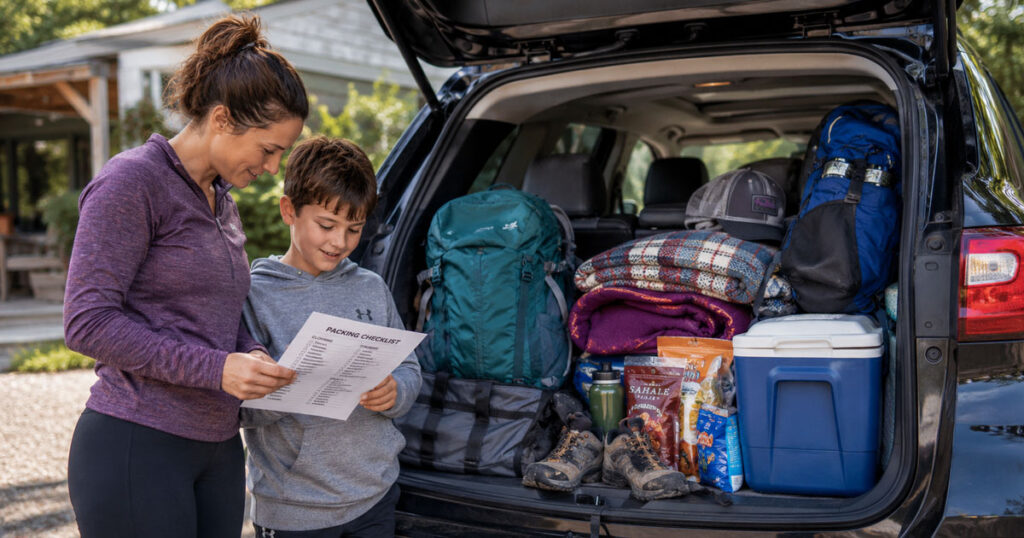
4. Make a packing list and reuse it every trip. You’ll forget less each time, and after three trips you’ll have it memorized.
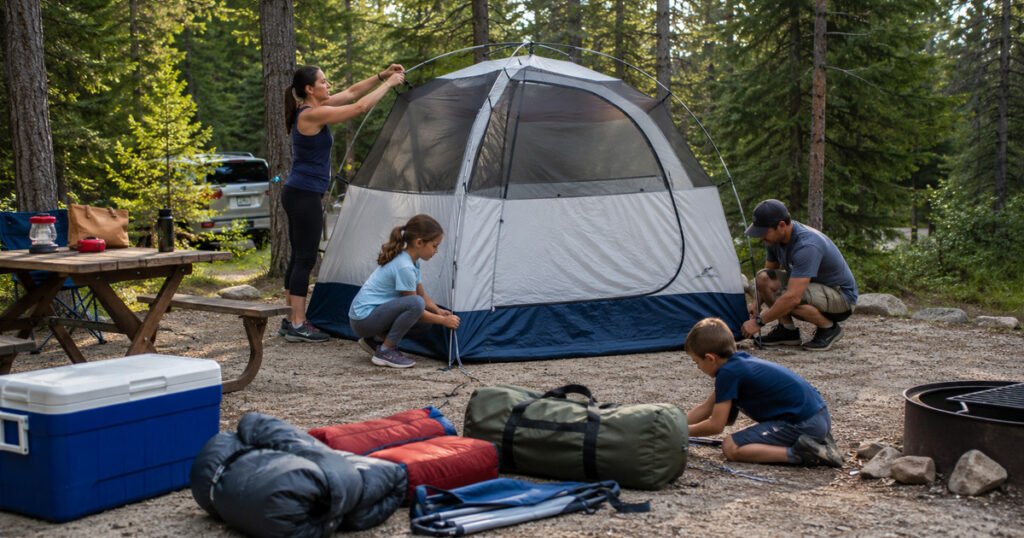
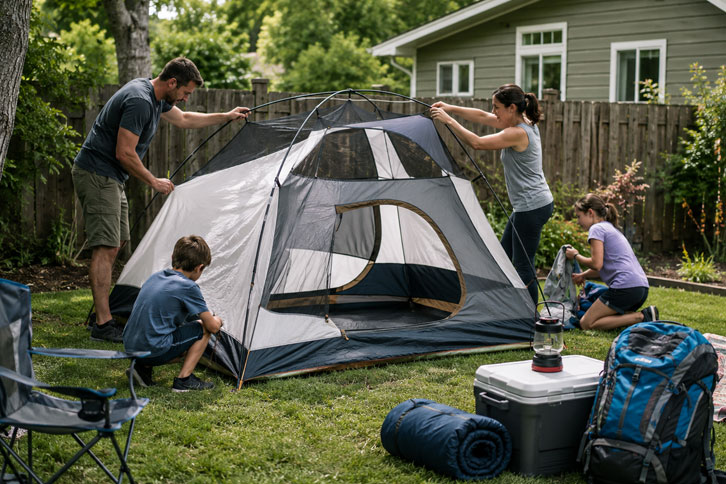
5. Practice pitching your tent in the backyard before the trip. Ten minutes of practice at home beats an hour of frustration at the campsite with tired kids watching.
6. Meal plan before you shop, not at the grocery store. Three simple dinners, easy breakfasts, and snacks you don’t need to cook. Overplanning meals is a common way first trips go sideways.
7. Tell someone your campsite and return date. Cell service is spotty at a lot of campgrounds, and it costs nothing to text a friend your plans.
Choosing a Campsite (8-11)
8. Pick a developed campground with flush toilets and showers for your first trip. Pit toilets and no running water are fine once everyone’s hooked. They’re an unnecessary hurdle on trip one.
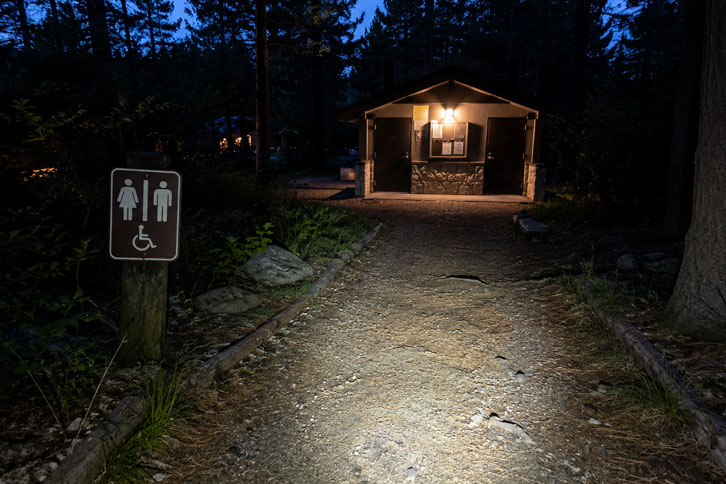
9. Look for sites near (but not right next to) the bathroom. Close enough for 2am trips, far enough that you’re not listening to the door slam all night.
10. Read recent reviews, not just the campground’s own description. Reviews from the last few months tell you about noise, bugs, and whether the “lake view” site is actually 200 yards from the water.
11. Ask about shade when you book. A site with afternoon shade makes a huge difference in a tent’s internal temperature during summer.
Packing Smart: Gear Tips (12-19)
12. Size your tent up, not exact. A tent rated for 6 people comfortably fits a family of 4 with gear inside. Our family tent guide breaks down sizing by family size and budget.
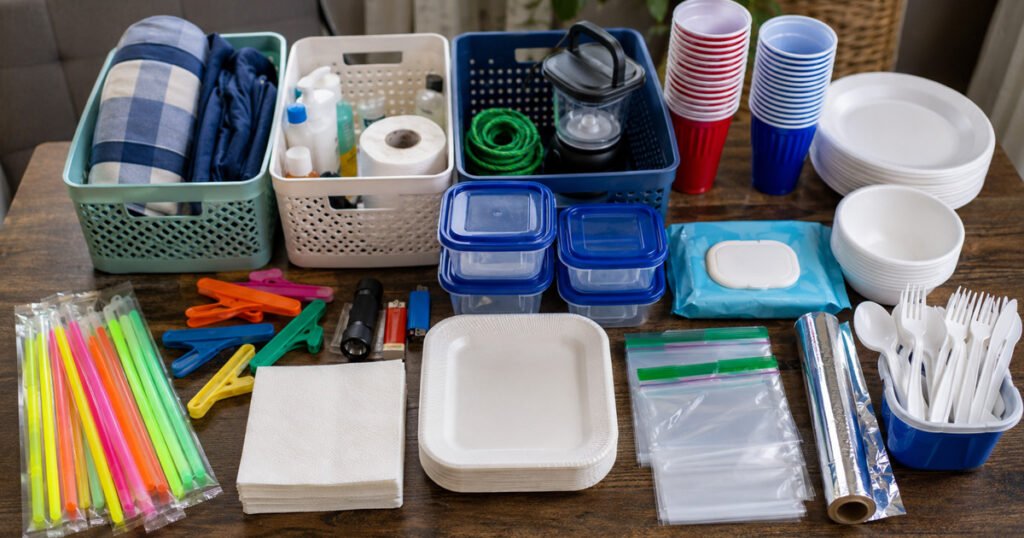
13. Bring a sleeping pad or air mattress under every sleeping bag, even in summer. The ground pulls heat from your body all night. Cold sleepers are cranky campers.
14. Skip the camping pillow for your first trip. Bring pillows from home instead. It’s one less thing to buy and kids sleep better on something familiar.
15. A cooler with a day’s buffer of ice beats a fancy cooler with exact math. Pack more ice than you think you need. Our cooler guide covers options from budget coolers to multi-day ice retention picks.
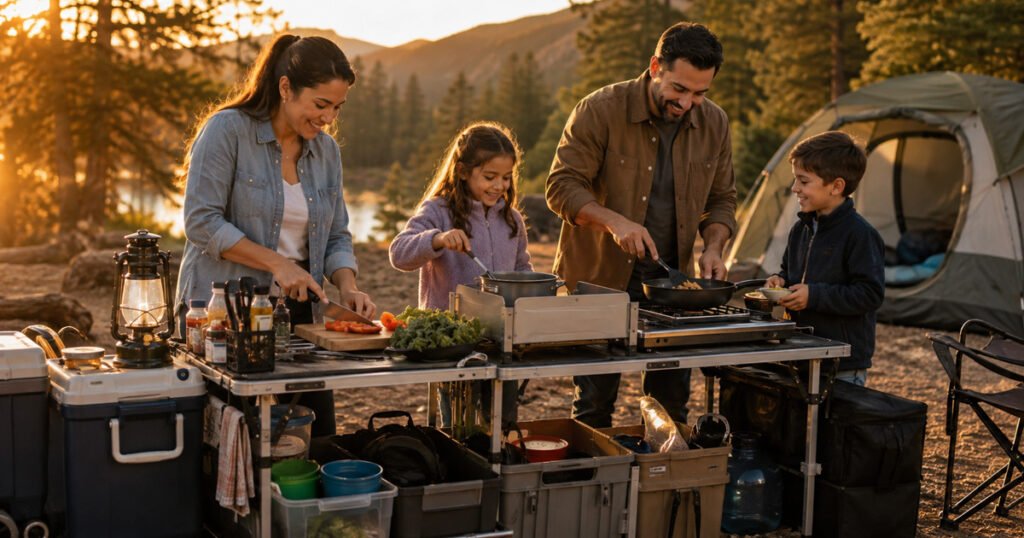
16. A basic 2-burner stove covers almost every camp meal a beginner needs. You don’t need a full camp kitchen setup for trip one.
17. Pack a headlamp for every person old enough to wear one, plus one lantern for the table. Kids old enough to walk are old enough for their own light source.
18. Bring a first aid kit even for a one-night trip near home. Splinters, blisters, and scraped knees show up more at campgrounds than anywhere else.
19. Pack layers, not just “warm clothes.” Campsite temperatures swing more than home temperatures. A base layer, a fleece, and a rain shell cover almost any condition.
Setting Up Camp (20-24)
20. Arrive with at least two hours of daylight left. Setting up a tent in the dark with tired kids is the fastest way to make trip one your last one.
21. Pitch your tent on level, slightly elevated ground. Avoid low spots that collect water if it rains overnight.
22. Set up the kitchen area before the tent if kids are hungry. A snack and a job (like handing you tent stakes) keeps them busy while you work.
23. Walk the path to the bathroom once before dark. A familiar route matters a lot more at 2am than it does at 6pm.
24. Store all food in the car or a latched cooler overnight, not the tent. This applies everywhere, not just bear country.
Kids & Family Logistics (25-30)
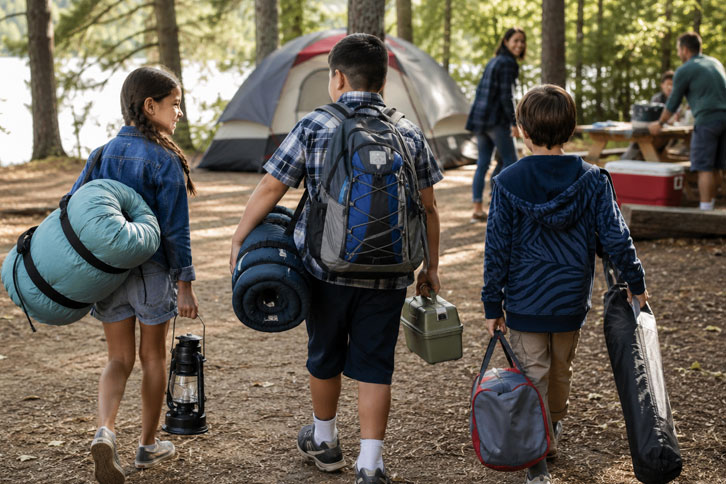
25. Let each kid pack one “fun bag” themselves. A toy, a book, or a stuffed animal gives them ownership over the trip and a familiar comfort item for the first night away from home.
26. Skip the schedule. Kids entertain themselves remarkably well with sticks, dirt, and a campfire to stare at. Overpacking activities usually backfires.
27. Budget double the time for “easy” hikes with kids. They stop to look at bugs. A lot. Our summer camping activities guide has ideas that don’t require a trail at all.
28. Expect a rough first night’s sleep and don’t panic over it. New sounds and a different bed throw kids off. Most families report smoother sleep by the second or third trip.
29. Involve toddlers and preschoolers in small jobs. Carrying a lightweight bag, holding a flashlight, or “helping” set up a sleeping bag makes them feel included instead of bored.
30. For teens, give them more independence than younger kids need. A little unsupervised time exploring near camp (with clear boundaries) tends to land better than forcing group activities.
Safety & Comfort (31-35)
31. Sun protection matters more at a campsite than most people expect. Hats and sunscreen reapplied every couple hours, especially for kids near water or in open sites.
32. Know where the nearest ranger station or camp host is when you arrive. It’s the fastest way to get help if something comes up.
33. Keep bug spray and sunscreen separate and apply sunscreen first. Applying them in the wrong order reduces sunscreen effectiveness.
34. Check kids for ticks at the end of each day, especially around the hairline and behind ears. It takes two minutes and catches most issues early.
35. Pack a way to purify water even at developed campgrounds. Water spigots occasionally go down, and it’s a cheap backup to have on hand.
The 3 Mistakes That Ruin Most First Trips
Going too big, too soon. A week-long trip to a remote site three hours away sounds like an adventure. If something goes wrong on day one, you’re stuck for six more days.
Testing gear for the first time at the campsite. The first time you use a stove, tent, or lantern should not be in front of hungry, tired kids. Test everything at home first.
Overpacking activities instead of packing patience. Beginners often plan every hour. Experienced camping families plan almost nothing and let the campfire do the work.
Next Steps
Once you’ve got one trip under your belt, the rest gets easier. Build your gear collection piece by piece instead of buying it all at once, and keep reusing (and refining) your packing list every time.
Frequently Asked Questions
How many camping tips do I actually need to remember for my first trip?
Realistically, five: start small, pick a developed campground, arrive with daylight to spare, test your gear beforehand, and store food away from the tent. Everything else is refinement.
What’s the most common mistake first-time family campers make?
Going too big on the first trip, whether that’s distance, length of stay, or remoteness. A short trip close to home tells you everything you need to know before you commit to more.
Do I need to buy all new gear before my first camping trip?
No. Budget gear, borrowed gear, or rental gear all work fine for a first trip. Figure out if your family enjoys camping before spending on premium equipment.
How do I keep kids entertained at a campsite without a packed schedule?
Bring a few open-ended items (a ball, sidewalk chalk, a magnifying glass) and let unstructured time do the rest. Most kids self-entertain better at a campsite than at home.
What should I pack that beginners usually forget?
A first aid kit, extra layers for temperature swings, and a way to purify water. These aren’t glamorous, but they’re the items that turn a minor hiccup into a non-issue.
Is camping safe for young kids and toddlers?
Yes, with normal precautions: secure food storage, a stocked first aid kit, sun protection, and supervision near fire and water. Our camping safety guide covers the specifics.