If you need the short answer: the Camp Chef Everest 2X is the best camping stove for most families in 2026. It boils water fast, simmers low enough for oatmeal without scorching it, and holds up in wind. If you want serious power for a bigger crew, the Camp Chef Explorer brings 60,000 total BTUs and room for big pots. And if you’re just getting started, the Coleman Classic 2-Burner Propane Stove does the basics well for under $70.
We’ve burned a lot of pancakes figuring out which stoves actually simmer instead of just blasting full heat or nothing. Here’s what holds up when you’re cooking three meals a day with kids asking “is it ready yet” every thirty seconds.
Quick Top 3 Picks
- Best Overall: Camp Chef Everest 2X, fast boil, real simmer control, handles wind well
- Best Budget: Coleman Classic 2-Burner Propane Stove, under $70 and reliable for basic family meals
- Most Powerful: Camp Chef Explorer, 60,000 total BTUs for big pots and bigger families
Comparison Table
1. Camp Chef Everest 2X – Best Overall
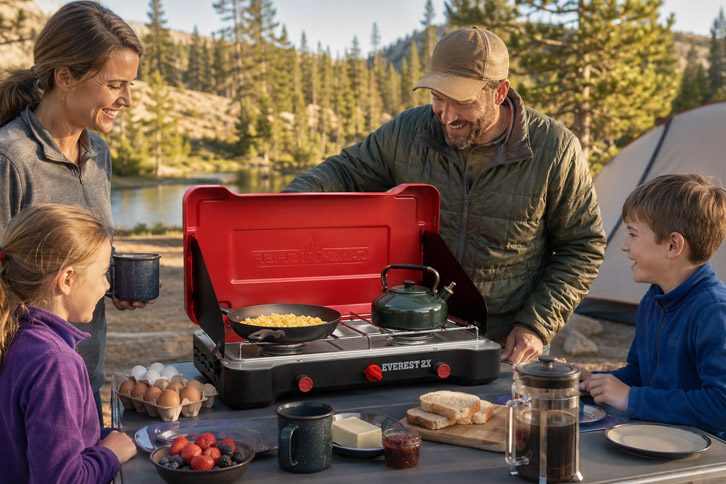
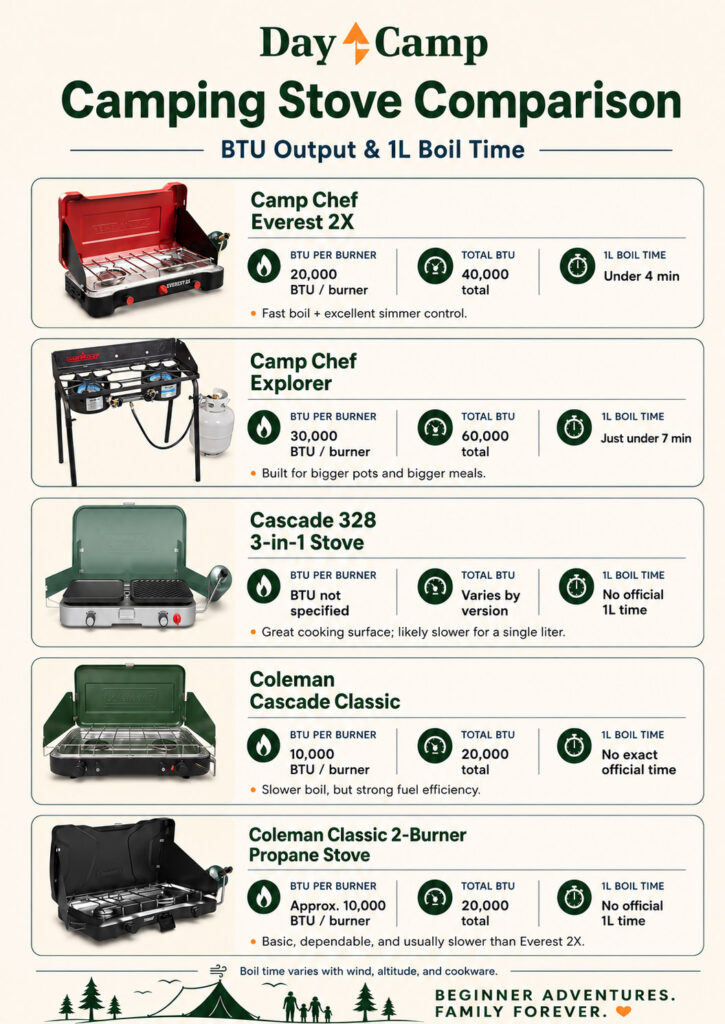
The Everest 2X is the stove that keeps winning “best overall” across every major test we’ve seen this year, and cooking on one explains why. Each burner puts out 20,000 BTUs, which boiled a liter of water in under 4 minutes in independent testing. That’s the difference between a quick breakfast and a hungry kid melting down before the eggs are even cracked.
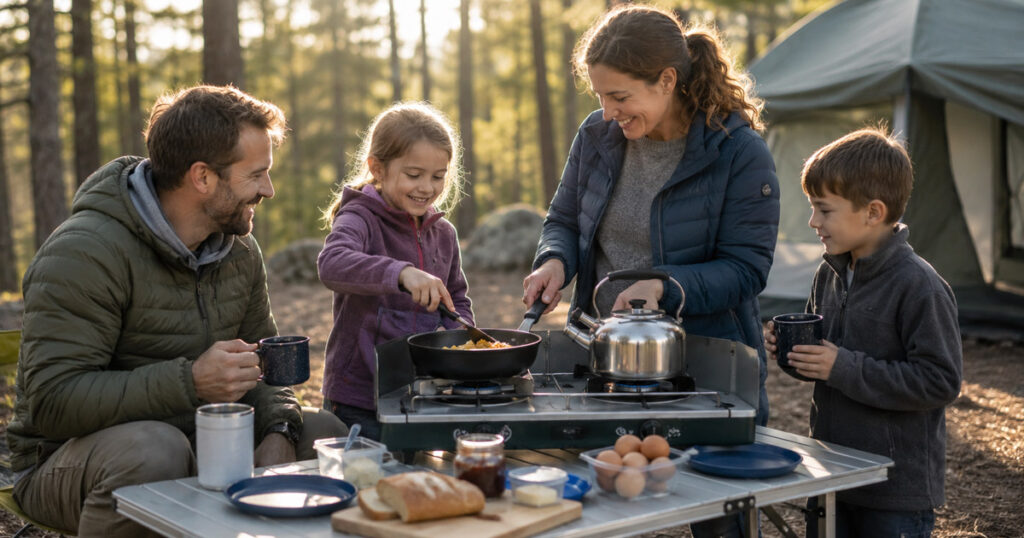
What actually sets it apart is the simmer control. A lot of camp stoves are either “off” or “blast furnace,” but the Everest holds a real low flame, which matters the second you’re trying to keep oatmeal from burning while also pouring juice for three kids. The windscreen is nearly seamless too, so a breezy morning doesn’t kill your flame mid-pancake.
Best for: Families who cook real meals at camp (not just hot dogs) and want a stove that handles both high heat and a gentle simmer. Skip it if: you only need to boil water for instant meals, a simpler, cheaper stove will do.
2. Camp Chef Explorer – Most Powerful
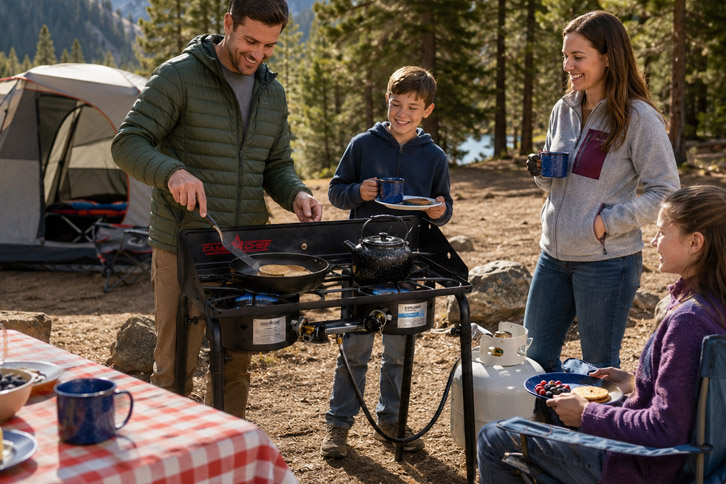
With 60,000 total BTUs split across two 30,000 BTU burners, the Explorer is built for families who cook in bulk, whether that’s two skillets of bacon at once or a stockpot of chili for a multi-family trip. It boiled a liter of water in just under 7 minutes despite the larger volume the burners are built to handle, and the cooking surface fits pots from 4 to 14 inches.
It can run with or without its folding legs, which is a small detail that makes a big difference depending on your camp table setup.
Best for: Bigger families, multi-family trips, or anyone regularly cooking for 6+ people at camp. Skip it if: you’re usually cooking for 2-4 people, the Everest 2X is more practical day to day.
3. Cascade 328 3-in-1 Stove
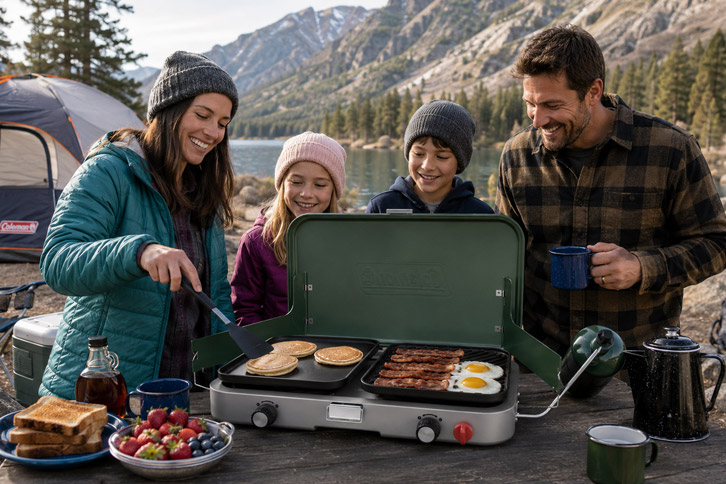
This one earns its spot for families who want to cook more than one thing without playing pot-and-pan musical chairs. A 290-square-inch cooktop area is one of the largest in this lineup, with enough room to run eggs, bacon, and a kettle all at the same time.
Best for: Families or small groups who want to cook multiple dishes simultaneously without a giant stove. Skip it if: you only ever cook one pot at a time, you don’t need the extra surface area.
4. Coleman Cascade Classic
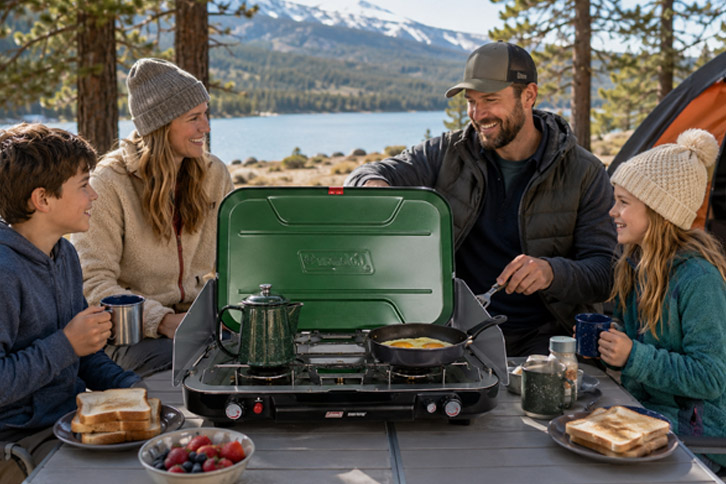
At 10,000 BTUs per burner, this won’t win any boil-time races, but it’s a dependable middle-ground stove. It’s compact, light, and fits two skillets without crowding, which covers most family breakfast and dinner needs.
Best for: Families who prioritize fuel efficiency and portability over raw cooking power. Skip it if: you regularly cook for a crowd or need fast boil times for big batches of water.
5. Coleman Classic 2-Burner Propane Stove – Best Budget
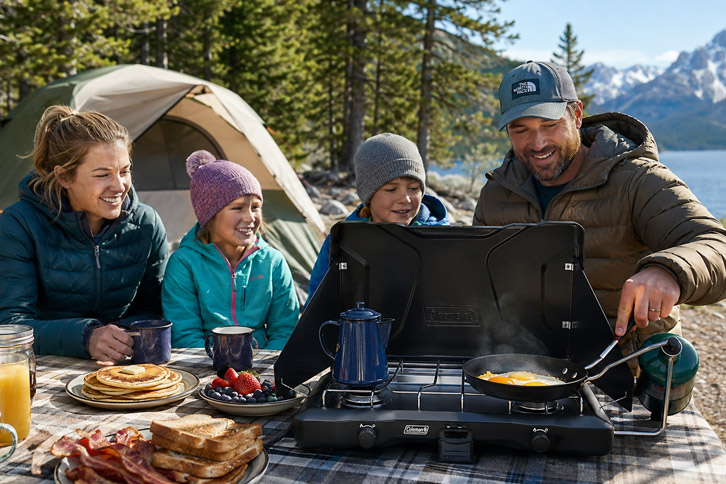
At under $70, this is the stove we’d hand a friend trying camping for the first time. Two burners put out 20,000 total BTUs, ignition is quick and reliable, and the WindBlock panels actually help in a breeze. It runs on the same 1lb propane bottles you’ll find at every gas station and outdoor store for $4-5 each.
The trade-off is no simmer control, so delicate dishes like sauces or melting chocolate for s’mores prep aren’t its strong suit. For eggs, bacon, and basic camp meals, it gets the job done without drama.
Best for: First-time campers and families who want something simple, cheap, and reliable for basic meals. Skip it if: you want fine simmer control for more delicate cooking.
Buying Guide: What to Look for in a Family Camping Stove
BTUs: More Isn’t Always Better
Look for at least 10,000-12,000 BTUs per burner for reliable cooking. Stoves in the 20,000+ BTU range (Camp Chef Everest, Explorer) boil water faster and recover heat quicker after you add cold ingredients, which matters when you’re cooking multiple dishes back to back for a hungry family.
Simmer Control Matters More Than the Spec Sheet Suggests
A stove that only does “blast” or “off” will burn oatmeal, scorch sauces, and make melting butter a stressful event. If you cook real meals at camp rather than just boiling water, prioritize a stove with adjustable, reliable low-flame simmer.
Wind Resistance
A good windscreen is the difference between a quick breakfast and standing there relighting the burner every five minutes. Stoves with full wraparound windscreens (Everest, Explorer) hold a flame far better than open-burner budget models.
Fuel Type
Most family camp stoves run on standard 1lb propane bottles, which are cheap and available almost everywhere. A few run on larger refillable propane tanks via a hose adapter, which is more economical for frequent campers but adds setup complexity.
📋 Need to keep your ingredients cold until they hit the pan? Check out our guide to the: 9 Best Camping Coolers in 2026Final Verdict
Best Overall: The Camp Chef Everest 2X balances fast boil times, real simmer control, and wind resistance better than anything else on this list.
Best Budget: The Coleman Classic 2-Burner Propane Stove is the easiest “yes” for a first camping trip without a big financial commitment.
Most Powerful: The Camp Chef Explorer is the one we’d trust for cooking big batches for a bigger family or multi-family trip.
If you only read one section of this guide, read this: the Everest 2X is the stove we’d buy for our own family. It costs more upfront, but the fast boil times and real simmer control pay off every single morning you’re trying to feed hungry kids. Skip it only if you’re just testing the waters with your first trip, grab the Coleman Classic 2-Burner instead.
Check Price on Amazon →Frequently Asked Questions
How many BTUs do I need for a family camping stove?
Look for at least 10,000-12,000 BTUs per burner for dependable cooking. For faster boil times and quicker heat recovery between dishes, stoves in the 20,000+ BTU range like the Camp Chef Everest 2X are worth the extra cost.
Is a 2-burner stove enough for a family of 4?
Yes, for most families. Two burners let you cook two dishes at once (like eggs and bacon, or pasta and sauce), which covers the vast majority of camp meals. Bigger families or those cooking for groups may want a 3-burner or higher-BTU option like the Camp Chef Explorer.
What’s the difference between a camping stove and a backpacking stove?
Camping stoves (the ones in this guide) are larger, more powerful, and designed for car camping where weight doesn’t matter. Backpacking stoves are small, ultralight, and built to be carried in a pack, with far less cooking surface and power.
Do camping stoves need a separate propane tank?
Most family camping stoves run on small 1lb propane bottles that screw directly into the stove. Some models can be adapted with a hose to run off a larger refillable propane tank, which is cheaper per use but adds setup steps.
Is it safe to use a camping stove near kids?
Yes, with normal precautions. Set the stove on a stable, level table away from tent doors and walkways, keep matches or lighters out of reach, and never leave a lit burner unattended. Treat it the same way you’d treat a stovetop at home.
How do I keep my camping stove’s flame from blowing out in the wind?
Look for a stove with a full wraparound windscreen, like the Camp Chef Everest 2X or Explorer. You can also set up the stove in a wind-sheltered spot, like behind your vehicle or a picnic table, and angle a portable windbreak if needed.