Short answer: the RTIC Ultra-Tough Soft Cooler 30 Can is the best soft cooler for most camping families. It holds enough for a full day of snacks and drinks, keeps ice frozen for about two days, and costs a fraction of the premium brands without giving up much in return. If ice retention over a long weekend matters more, the REI Co-op Trailgate 30L holds ice for close to a week. And for a quick trip to the trailhead where a hard cooler is overkill, the REI Co-op Campwell 18L Folding Cooler folds completely flat when you’re not using it.
Your main hard cooler stays at basecamp. A soft cooler is what actually goes with you: to the trailhead, the beach, the campground pool, the picnic table down the loop from your site. Here’s what held up.
Quick Top 3 Picks
- Best Overall: RTIC Ultra-Tough Soft Cooler 30 Can, 20-quart capacity, roughly 2-day ice retention, around $120-130
- Best Ice Retention: REI Co-op Trailgate 30L Weekend Cooler, tested to hold ice 6+ days, around $160
- Best Budget: REI Co-op Campwell 18L Folding Cooler, folds flat, doubles as a tote, around $40
Comparison Table
RTIC Ultra-Tough Soft Cooler 30 Can – Best Overall
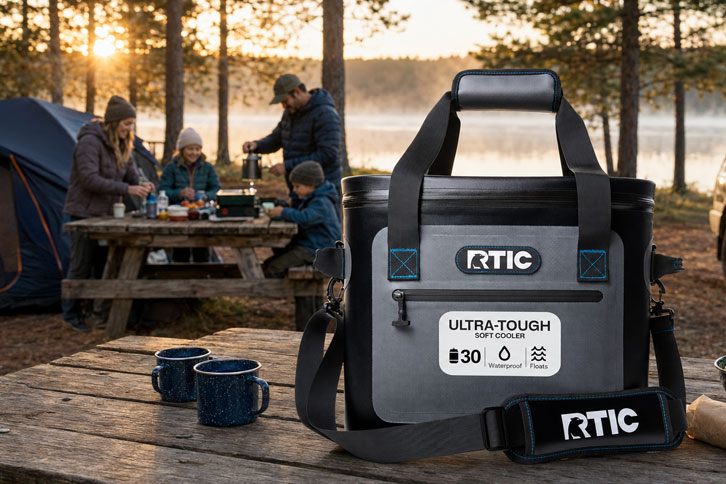
At 15.5 x 12.75 x 11.5 inches and roughly 20 quarts, this holds a full day’s worth of drinks, sandwiches, and snacks for a family of 4 without needing a second bag. Up to 1.5 inches of closed-cell foam insulation keeps things cold for about two days when packed right, which covers most single-night camping trips without needing to restock ice.
The waterproof zipper and rugged exterior fabric have held up well to being tossed in the trunk next to hiking boots and a folding chair. It’s not as premium-feeling as a YETI, but for the price gap, most families won’t notice the difference in daily use.
Best for: families packing lunch and drinks for a single day or overnight trip who want solid performance without the premium price tag. Skip if: you need ice to last 4+ days without a restock.
REI Co-op Trailgate 30L Weekend Cooler – Best Ice Retention
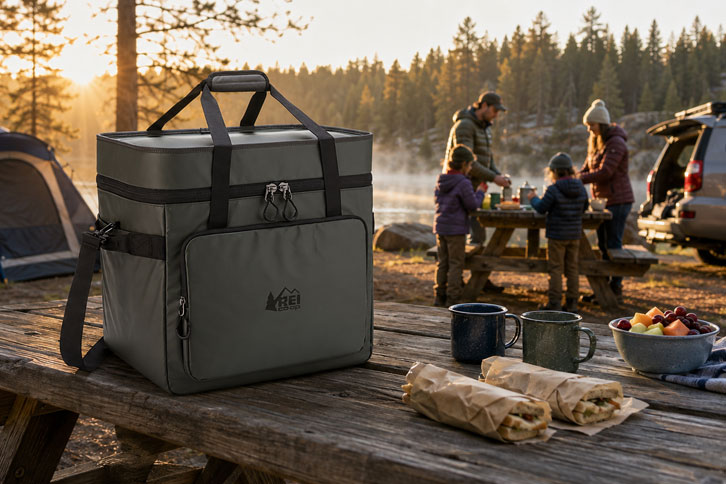
Independent lab testing has clocked this one holding ice for over 6 days, which is genuinely impressive for a soft-sided cooler and puts it in the same range as much pricier hard coolers. The wide-open top makes it easy to see and grab items without digging, which matters when a kid is asking “where are the snacks” for the fifth time.
The removable liner pulls out for a full wipe-down or wash after a trip, so it doesn’t end up smelling like last month’s melted popsicles by the time your next trip rolls around.
Best for: weekend trips or hot climates where you can’t easily restock ice. Skip if: you only ever need it for a single afternoon at the park.
YETI Hopper Flip 12 – Best Durability
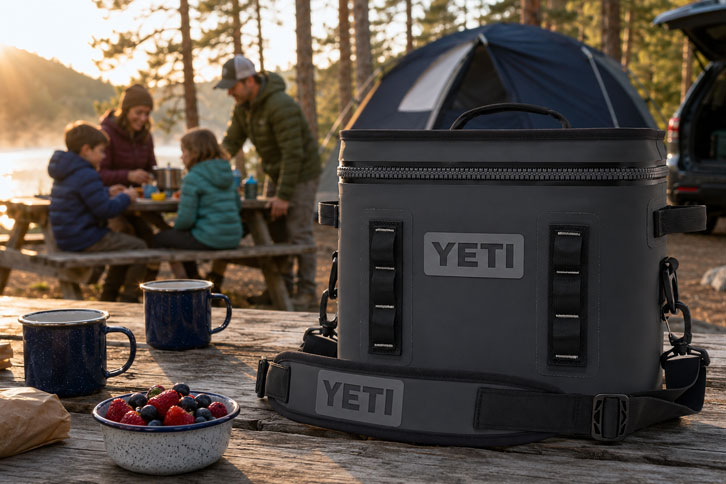
The YETI name comes with a real price premium, and here it buys you a genuinely leakproof HydroLok zipper and a shell that shrugs off years of being dragged across gravel and thrown in truck beds. At 12 cans plus ice, it’s sized more for a couple or a single adult than a whole family’s daily haul.
If your family already owns YETI hard coolers and wants matching gear that’ll survive a decade of trips, this earns its price. If you’re building a camp kitchen from scratch, your money goes further with the RTIC above.
Best for: families who already trust the YETI brand and want long-term durability over daily capacity. Skip if: budget is a real factor, or you need to pack for more than 2-3 people.
Engel HD30 – Best for Big Families
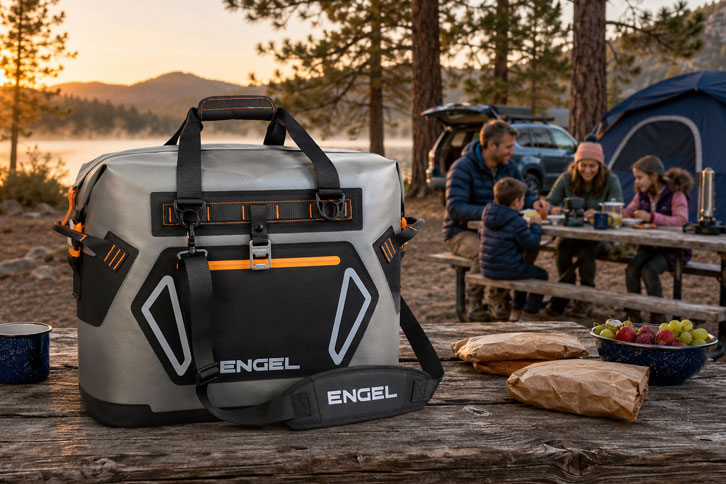
At 32 quarts and roughly 48 cans of capacity, the Engel HD30 is the biggest bag on this list, built for families who camp with extended relatives or just pack more food than average. It’s a genuine workhorse: heavy-duty fabric, a wide carry handle, and enough insulation to compete with mid-range hard coolers.
The trade-off is size and weight once it’s full. This isn’t the bag you casually sling over a shoulder for a mile-long trail walk, it’s the one that stays near the picnic table or gets carried by two hands.
Best for: extended family camping trips or anyone who consistently packs more food and drinks than a standard family of 4. Skip if: you need something compact enough to carry on a hike.
Hydro Flask Day Escape 20L – Best for Day Hikes
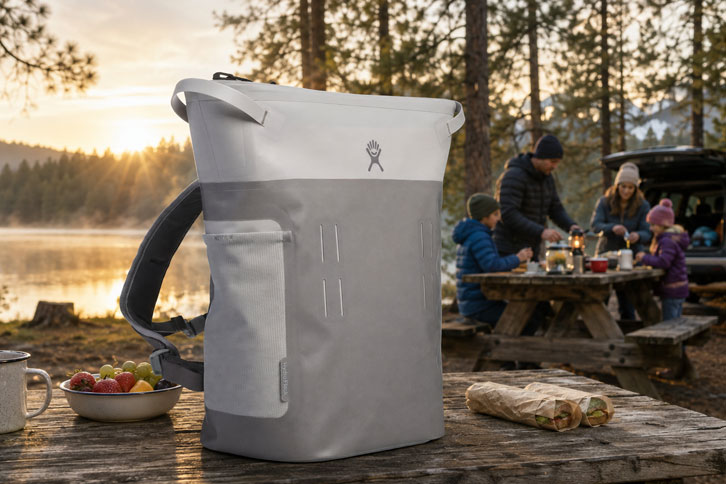
This is the only bag on the list built to actually be worn, with padded shoulder straps and a cushioned back panel that make a 36-can load comfortable over a mile or two of trail. It’s the pick for families who hike to a swimming hole or picnic spot rather than driving straight to a table.
Cushioned straps mean it doubles as a decent everyday backpack cooler for the beach, farmers markets, or tailgating, not just camping trips specifically.
Best for: families who regularly hike to their picnic or swim spot instead of driving right up to it. Skip if: you always camp car-adjacent and never actually carry the cooler far.
REI Co-op Campwell 18L Folding Cooler – Best Budget
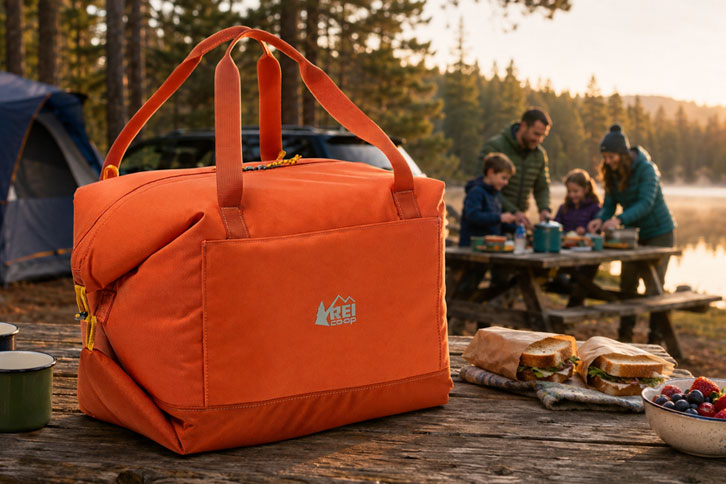
At under $40, this origami-style cooler folds completely flat when empty, which matters if your camping gear is already crammed into a garage bin with no room to spare. It works as a soft cooler, unfolds into a tote bag, or lies flat for packing, depending on what the day needs.
Ice only lasts a day or two here, so it’s not a replacement for a real multi-day cooler. Think of it as the grab-and-go bag for a quick trip to the pool, a grocery run home from the campground store, or a short picnic where you’re not asking much of it.
Best for: quick day trips, grocery runs, and families with genuinely limited gear storage. Skip if: you need it to hold ice for more than a day.
Buying Guide: What to Look For
Capacity vs. what you’re actually packing. Count real cans and food containers, not the marketing number on the box. A “30-can” rating usually assumes cans only, no ice, no sandwiches, no juice boxes wedged in sideways. Round down your expectations by about 20%.
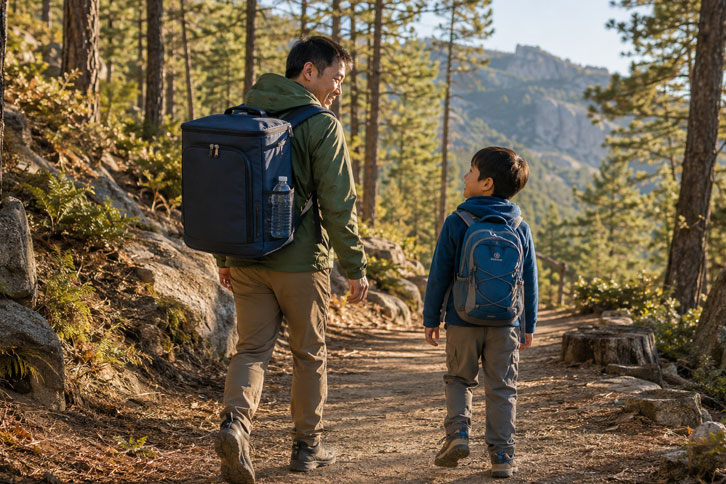
Carry style matters more than people expect: A top-handle bag is fine for a car-to-picnic-table trip. A backpack-style cooler earns its keep the moment you’re actually walking a trail with kids who need a free hand held.
Ice retention claims are tested in ideal conditions. Lab numbers assume a closed, shaded cooler. If your kids are opening it every 20 minutes to grab a juice box, expect real-world performance to fall short of the marketing claim, sometimes by a full day or more.
Pairing your soft cooler with the right ice strategy matters as much as the bag itself. Our guide on how to keep ice longer in a cooler covers pre-chilling, ice-to-food ratios, and packing order that apply to soft and hard coolers alike.
Final Verdict
Best Overall: The RTIC Ultra-Tough Soft Cooler 30 Can hits the sweet spot of capacity, price, and durability for most families’ single-day or overnight trips.
Best Budget: The REI Co-op Campwell 18L Folding Cooler is the pick if you need something cheap, foldable, and good enough for a short trip.
Best Premium: The REI Co-op Trailgate 30L earns the upgrade price with genuinely class-leading ice retention, useful for anyone camping somewhere hot or staying more than one night.
If day hikes are part of your regular routine, our hiking with kids guide covers what else to pack besides snacks. And once the cooler’s sorted, our easy camping meals guide has ideas that travel well in one of these.
Frequently Asked Questions
What’s the best soft cooler for family camping?
The RTIC Ultra-Tough Soft Cooler 30 Can is the best overall pick for most families, holding about 20 quarts with roughly 2 days of ice retention at a price well below premium brands like YETI.
How long does ice actually last in a soft cooler?
Most mid-range soft coolers hold ice for 1-2 days under normal use. Premium options like the REI Co-op Trailgate can hold ice for 6 or more days in lab testing, though real-world use with frequent opening will shorten that.
Is a soft cooler or hard cooler better for camping?
Soft coolers are better for day trips, hikes, and situations where you need to carry it some distance. Hard coolers hold ice longer and handle heavier loads, making them better for your main basecamp cooler. Most families benefit from having one of each.
Can soft coolers hold as much ice as hard coolers?
Pound for pound they hold less, since soft-sided insulation isn’t as thick as a hard cooler’s walls. A 30-can soft cooler roughly matches a mid-size hard cooler’s usable capacity but won’t match its multi-day ice retention.
Are backpack-style soft coolers worth the extra cost?
Yes, if you’re actually walking any real distance with it, like to a trailhead picnic spot or a swim area away from the parking lot. If you only ever carry it from the car to a nearby table, a standard top-handle bag saves you money.