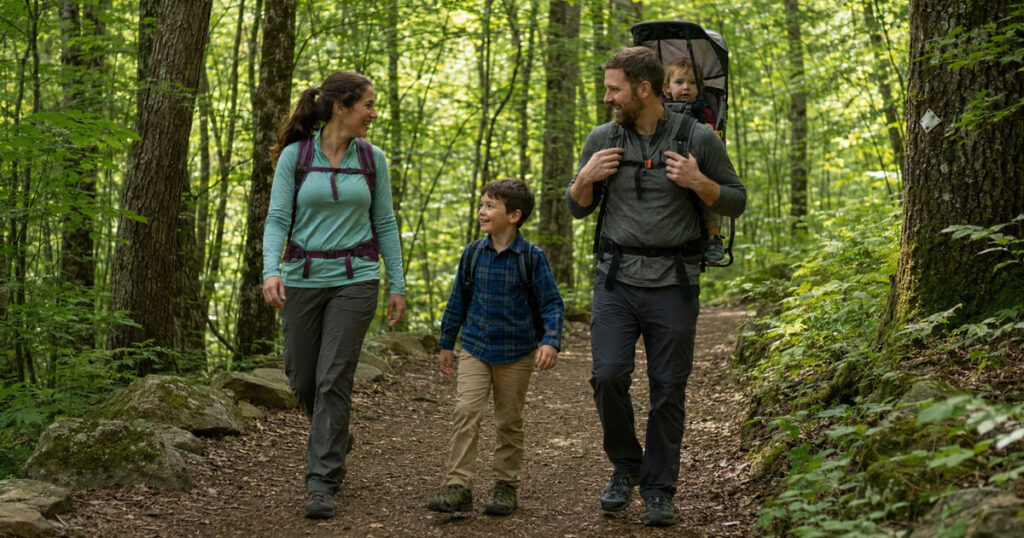
Our first “hike” with our oldest was a quarter-mile loop that took ninety minutes because she stopped for every rock, bug, and stick along the way. We used to call that a failure. Now we know it was the whole point.
Hiking with kids doesn’t look like hiking without them, and the sooner you stop expecting it to, the more you’ll actually enjoy it. This guide covers how far to actually go, what gear is worth packing, how to keep everyone moving without a meltdown, and the mistakes that turn a fun afternoon into a trail nobody wants to repeat.
How Far Should You Actually Hike With Kids?
Every family’s “too far” is different, but most first-timers overestimate what their kids can handle and underestimate how long it’ll take. Use this as a starting point, not a rule.
How Far Should You Actually Hike With Kids?
Every family’s “too far” is different, but most first-timers overestimate what their kids can handle and underestimate how long it’ll take. Use this as a starting point, not a rule.
| 🥾 Realistic Hiking Distances for Kids | |||
|---|---|---|---|
| Age | Realistic Distance | Elevation Gain | Notes |
| Under 3 | 0.5–1 mile (in a carrier) | Minimal | They’re along for the ride, not walking the whole thing. |
| 3–5 | 1–2 miles | Under 200 ft | Expect frequent stops; budget double the “adult” hiking time. |
| 6–8 | 2–3 miles | 200–400 ft | Can handle a real trail, but still needs snack and rest breaks. |
| 9–12 | 3–5 miles | 400–800 ft | Ready for moderate trails, especially with a rewarding destination. |
| 13+ | 5+ miles | Varies | Closer to an adult pace, but still check motivation, not just physical energy. |
Trail Selection: Tips 1-4
1. Choose a loop over an out-and-back you’re not sure they’ll finish. With a loop, there’s no “we’re only halfway there” moment to argue about. Every step is forward progress toward the car, which matters a lot to a tired six-year-old.
2. Pick trails with a payoff destination. A waterfall, a big rock to climb, a lake to skip stones on. “We’re hiking to see something” beats “we’re hiking for exercise” every single time with kids.
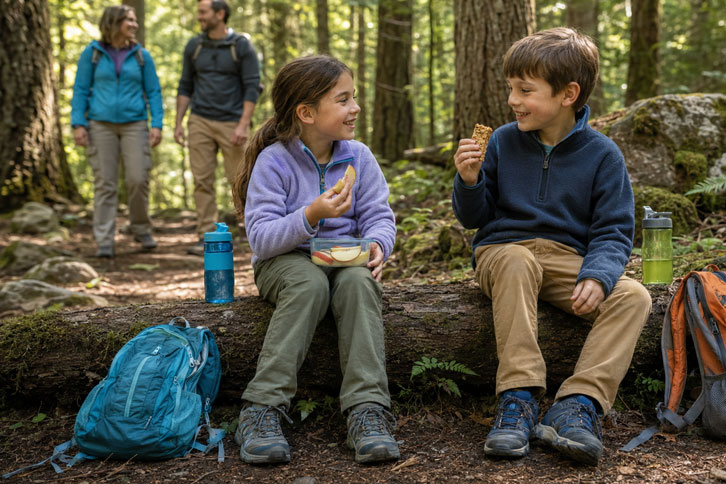
3. Water beats views for holding a kid’s attention. A trail that follows a creek or ends at a lake will out-perform a trail with a gorgeous overlook nine times out of ten. Kids want to touch and splash, not admire scenery from a distance.
4. Check distance, elevation, and weather before you commit. All three matter more together than any one alone. A short trail with steep elevation gain can wreck a family hike just as fast as a long, flat one in July heat.
The Gear That Actually Earns Its Spot in the Pack
You don’t need ultralight backpacking gear for a family trail day. You need a handful of things that solve the specific problems kids create.
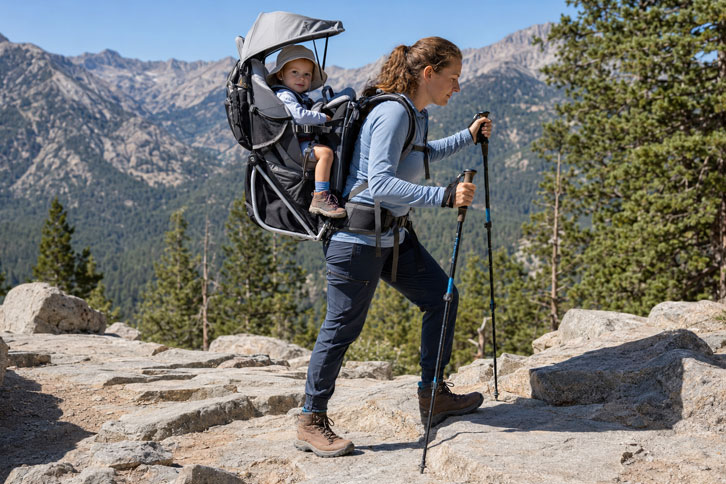
5. A carrier for kids under 3. Strollers don’t handle roots, rocks, or mud. A structured child carrier does, and it keeps your hands free for the parts of the trail that need them.
6. Real hiking shoes, broken in before the trip. New shoes on hike day is how blisters happen two miles from the car. Wear them around the house or yard first.
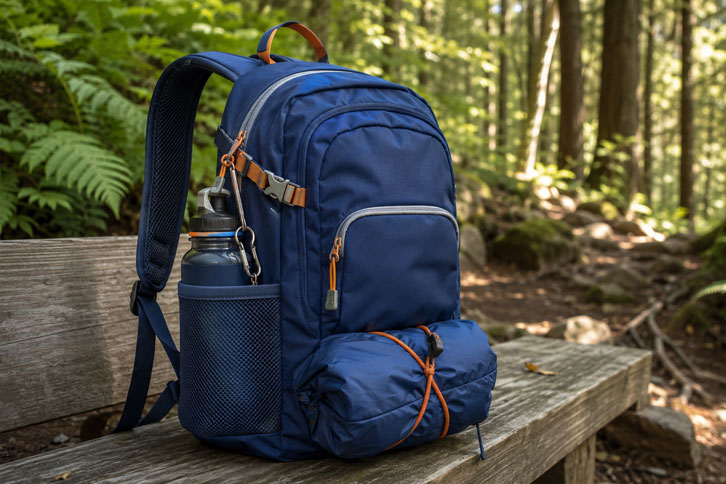
7. A daypack they carry themselves. Even a small one with their own water bottle and a snack gives kids ownership of the hike. It’s a small thing that makes a noticeable difference in attitude.
8. One water bottle per kid, non-negotiable. Sharing a bottle mid-trail slows everyone down and guarantees someone runs out at the worst moment. Insulated bottles keep water cool even in a hot pack.
Pace & Engagement: Tips 9-12
9. Let the slowest kid set the pace. Fighting this just creates tension. Once you accept the trip will move at toddler speed, the whole outing gets more enjoyable for everyone, including you.
10. Plan a snack stop every 20-30 minutes. Don’t wait for the whining to start. A proactive snack break resets energy and mood before things go sideways.
11. Turn the hike into a game. A simple scavenger hunt (find something red, something round, something that makes noise) keeps young kids scanning the trail instead of focusing on how tired they are.
12. Bring a friend family if you can. Kids hike farther and complain less when there’s another kid setting the pace beside them. It also means two sets of adult hands for two sets of kids.
Safety Basics for the Trail
13. Dress kids in bright colors and clip on a whistle. It’s the fastest way to spot a kid who’s wandered a few steps off trail, and the whistle is louder than a small kid’s voice on windy ground.
14. Pack a first aid kit sized for kids, not adults. Kid-friendly bandages, tweezers for splinters, and antihistamine for reactions cover 90% of what actually happens on a family trail day.
15. Reapply sunscreen mid-hike, not just before you leave. One application in the parking lot doesn’t hold up to two hours of sweat and sun. Set a reminder if you have to.
Mistakes to Skip on Your First Family Hike
Picking a trail based on what you’d hike solo. Your normal pace and distance don’t apply anymore. Cut your usual expectations in half, at least for the first few trips.
Skipping the practice run. New boots, a new carrier, or a first-time daypack should all get a trial walk around the neighborhood before trail day, not their debut two miles from the car.
Not bringing enough snacks. “Enough” for a family hike is more than you think. Pack extra, because a kid who runs out of trail snacks with a mile left to go is a kid who’s done hiking for the day.
Waiting until kids complain to take a break. By the time a kid says they’re tired, they’ve usually been tired for a while. Build breaks into the plan instead of reacting to meltdowns.
Make the Hike Part of a Bigger Camping Trip
A short family hike is one of the easiest ways to fill a slow afternoon on a camping trip, and most campgrounds sit near at least one kid-friendly trail. Check the campground map or ranger station when you arrive. Many have marked “easy” or “nature” loops specifically because families ask for them.
If you’re already packing for the weekend, add the hiking day pack items to your general list rather than treating it as a separate trip. Our family camping checklist covers the full 75+ item list so nothing gets left behind, hiking gear included.
Next Steps
Once the hiking gear is sorted, keep the momentum going with more ways to fill camp days. Our summer camping activities guide has 25 more ideas for the hours between hikes, from campfire games to water play.
Frequently Asked Questions
At what age can kids start hiking?
Kids can “hike” from birth in a carrier, and can start walking short trails themselves around age 3. There’s no perfect starting age. What matters more is matching the trail to your kid’s current ability, not a calendar age.
How far can a 5-year-old hike?
Most 5-year-olds can comfortably handle 1-2 miles on a relatively flat trail, though pace varies a lot by kid. Budget double the time it would take you to hike the same distance alone.
What should I pack for a family hike?
Water per person, snacks, a kid-sized first aid kit, sunscreen and bug spray, an extra layer, and a whistle for each child. A downloaded offline trail map is worth having since cell service is unreliable on most trails.
How do I keep kids motivated on a hike?
Pick trails with a clear payoff like water or a view, take proactive snack breaks every 20-30 minutes, turn the walk into a scavenger hunt, and let the slowest kid set the pace instead of pushing for a faster finish.
Do I need a hiking carrier if my toddler can already walk?
Yes, for anything beyond a very short trail. Toddlers who can walk still tire fast, and a carrier means you’re not carrying an exhausted, squirming kid the last mile back to the car.
Is it safe to hike with kids in bear or wildlife country?
Yes, with the usual precautions: make noise on the trail, keep kids close on blind corners, and store food properly at rest stops. Our camping safety guide covers wildlife precautions in more detail.