Short answer: the Platypus GravityWorks 4L is the best water filter for family camping. Hang the dirty bag, walk away, and come back to four liters of clean water with zero pumping or squeezing, which matters a lot when you’ve got kids underfoot. If ease of use matters more than anything, the Grayl GeoPress works like a French press and is simple enough for a ten-year-old to run on their own. And if you just want a cheap backup for the glovebox, the Sawyer MINI does the job for under $25.
Most “best water filter” lists online are written for solo thru-hikers counting ounces on a 2,000-mile trail. That’s not you. You’re filling a jug at a rustic campground pump, filtering creek water at a dispersed site with no potable tap, or keeping one in the car in case the campground’s water is out. We picked filters that make sense for that reality.
Quick Top 3 Picks
- Best Overall: Platypus GravityWorks 4L, fills 4 liters hands-free while you set up camp, around $99.95
- Easiest for Kids to Use: Grayl GeoPress, press like a French press, no technique required, around $89.95
- Best Budget: Sawyer MINI, same filtration as the pricier Sawyer, under $25
Comparison Table
1. Platypus GravityWorks 4L – Best Overall
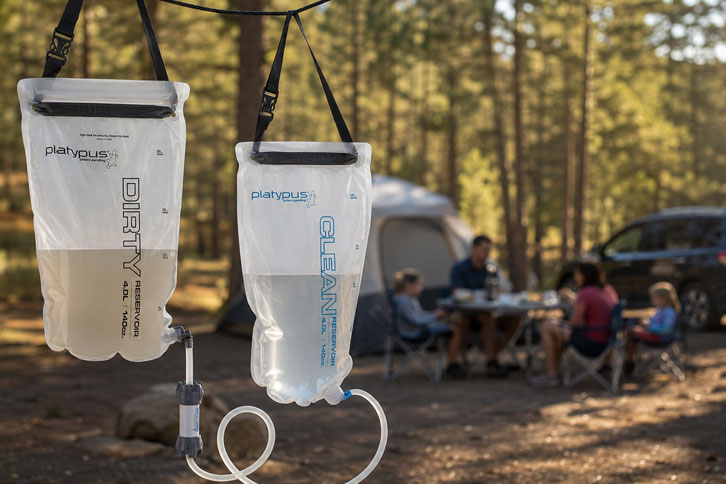
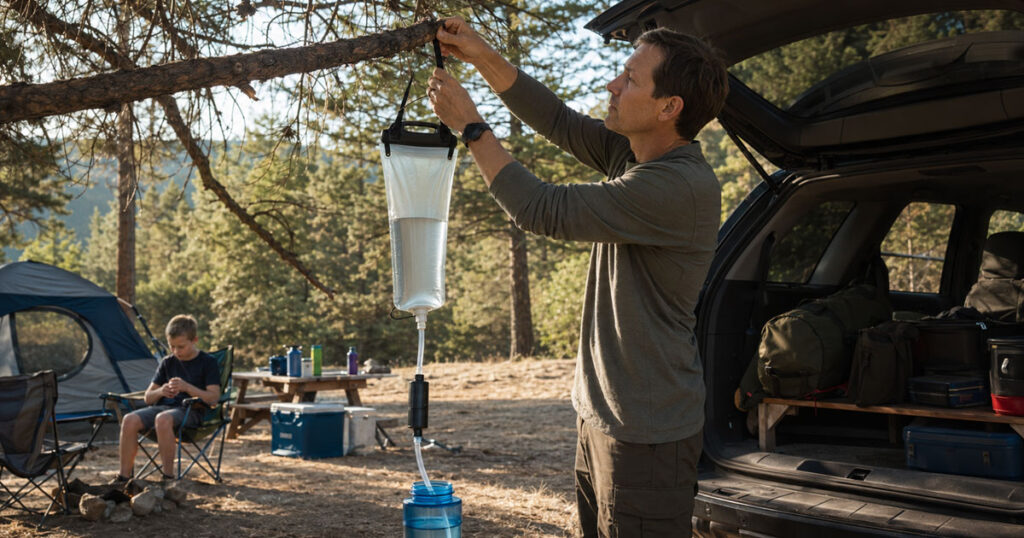
This is the filter that makes the most sense once you’re camping with more than one person to hydrate. Fill the “dirty” bag from a stream or pump, hang it from a tree or your car mirror, and gravity pushes the water through the filter into the “clean” bag while you’re busy setting up the tent or starting the fire. No pumping, no squeezing, no standing around.
It comes with two 4-liter bags, which is enough for drinking water and cooking for a family of four to refill once or twice a day. It’s not the lightest option if you’re also hiking any real distance with it, but for a basecamp setup it’s the one we’d grab first.
Best for: Families basecamping for a weekend or longer who want water sorted for the whole group in one pass. Skip it if: you’re backpacking any distance to your site and need to save weight.
2. Grayl GeoPress – Easiest for Kids to Use
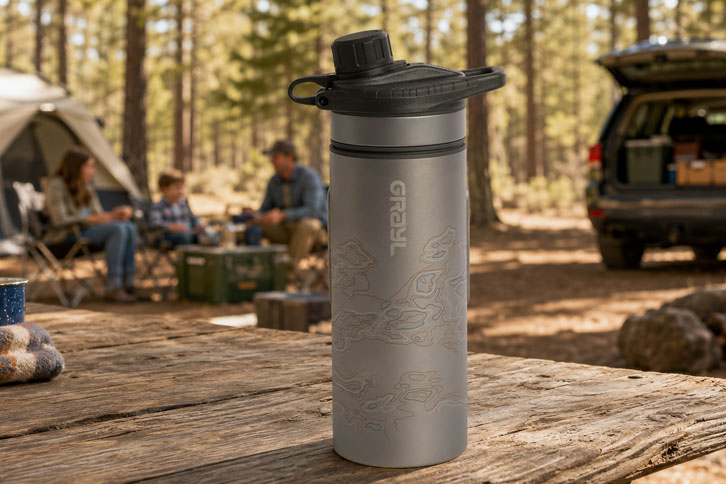
The GeoPress doubles as a purifier, not just a filter, which means it also handles viruses, something worth knowing if you’re ever filtering water in an area with questionable upstream contamination. It works on the same principle as a coffee press, and there’s genuinely nothing to learn.
The tradeoff is capacity. At 24 ounces per press, it’s built for one or two people to refill a bottle, not to fill a family’s cooking pot in one go.
Best for: Families who want the simplest possible tool, or parents who want their kids to be able to filter their own water without supervision. Skip it if: you need to filter large volumes at once for cooking or a bigger group.
3. Katadyn BeFree 3L – Fastest Flow Rate
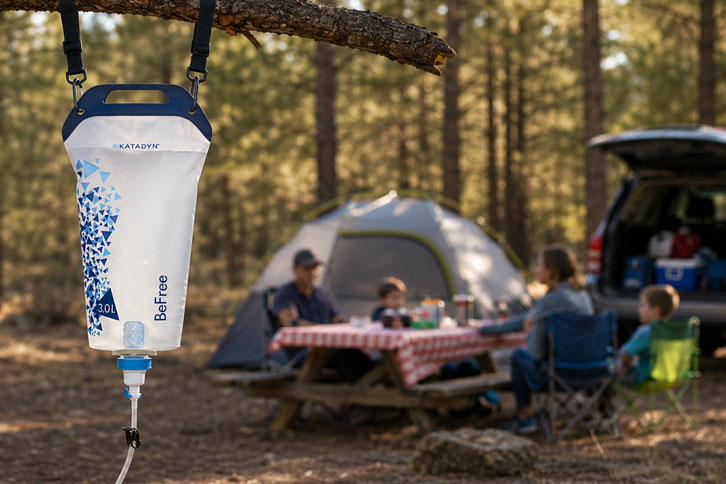
Squeeze filters live and die by how fast water actually moves through them, and the BeFree is the quickest one we found for its size. The soft, collapsible flask packs down small when empty, and the 3-liter version holds enough for a family’s water bottles between refills at the pump or stream.
The filter membrane is easier to clean than most, which matters because flow rate on any squeeze filter slows down as sediment builds up. A quick swish in clean water usually restores it.
Best for: Day hikes away from the campsite where you want to refill bottles fast without waiting around. Skip it if: you’re rough on gear, the soft flask material isn’t as durable as a hard-sided bottle system.
4. LifeStraw Mission 12L – Best for Large Groups
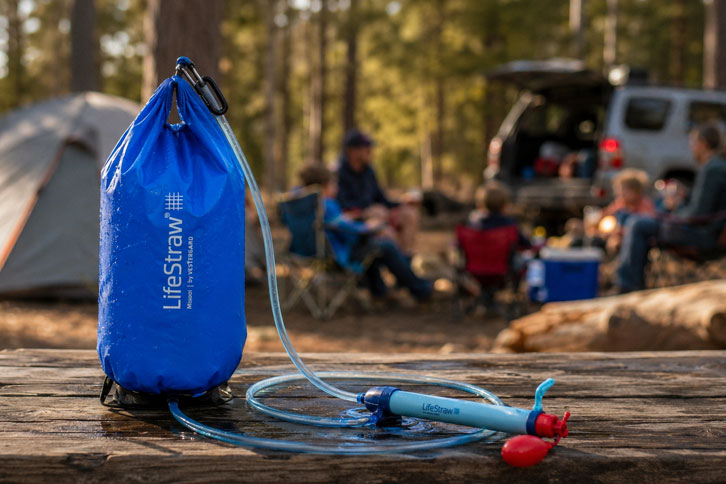
If you’re camping with extended family or a group of friends and their kids, the smaller filters on this list start to feel like a bottleneck. The Mission is a gravity bag system built for exactly that scenario, filtering 12 liters at a time for a whole camp’s worth of water.
It’s bulkier than the personal-sized options and takes a bit longer to set up the first time, but once it’s hanging, it just works in the background the same way the Platypus does at a smaller scale.
Best for: Multi-family trips or basecamps where several families are sharing one water source. Skip it if: it’s just your family of four, the Platypus GravityWorks is lighter and easier to manage at that scale.
5. Sawyer Squeeze – Most Versatile Backup
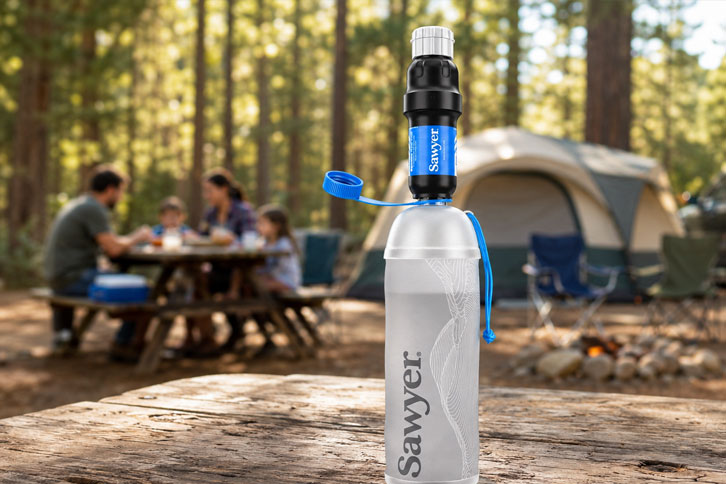
The Sawyer Squeeze is the filter most often cited as the standard pick across nearly every outdoor gear site we checked, and there’s a reason it’s stuck around for years. It threads onto standard disposable water bottles and Sawyer’s own pouches, so it adapts to whatever container you already have on hand.
It’s also rated for an enormous number of gallons before the filter needs replacing, which makes it a smart thing to toss in the car and forget about until you actually need it.
Best for: Families who want one reliable, inexpensive filter that works with gear they already own. Skip it if: you want a hands-free setup, this one requires squeezing the pouch yourself.
6. Sawyer MINI – Best Budget
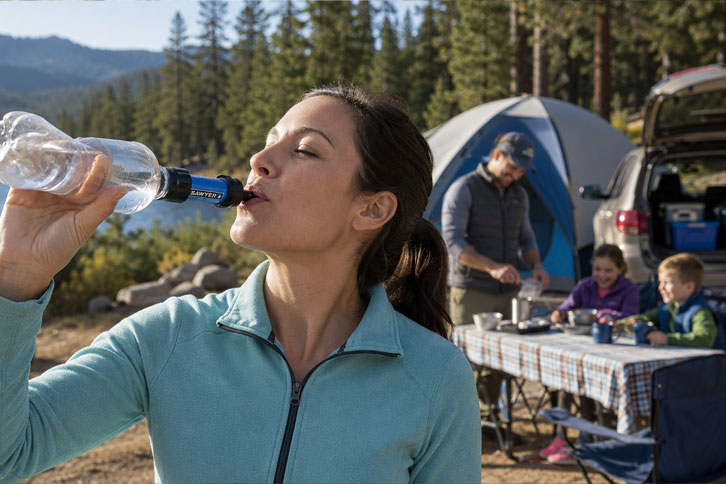
The MINI uses the same hollow-fiber filtration technology as its bigger sibling, the Squeeze, in a smaller, lighter package for under $25. It’s slower to squeeze through because of the smaller opening, but if you’re mainly buying this as an emergency backup rather than a daily-use tool, that tradeoff barely matters.
Keep one in the glovebox or your camping bin year-round. It weighs almost nothing and takes up no real space, so there’s little reason not to have a backup on hand for the campground water pump that turns out to be broken.
Best for: A cheap emergency backup you forget about until you need it. Skip it if: you’ll be using it daily for a full family’s water needs, step up to the Squeeze or BeFree for faster flow.
Buying Guide: What Actually Matters for Family Camping
Filter vs. Purifier – Know the Difference
A filter (like the Sawyer or Platypus options above) removes bacteria and protozoa, which covers the vast majority of US backcountry water risks like giardia. A purifier (like the Grayl GeoPress) also removes viruses. In the US, viruses in natural water sources are rare outside of areas with heavy human contamination, so a standard filter is usually enough. If you’re ever unsure about a water source, a purifier is the safer default.
Match the Filter to How You Actually Camp
Gravity filters like the Platypus and LifeStraw Mission are the right call for a basecamp where you’re staying put and want water handled passively. Squeeze filters like the Sawyer and Katadyn make more sense if you’re moving around, doing day hikes from camp, or want something more compact. Bottle-style purifiers like the GeoPress are the simplest option if ease of use matters more than speed or volume.
📋 Not sure what else belongs in your gear bin? Run through our full family camping checklist to make sure a filter isn’t the only thing you’re missing.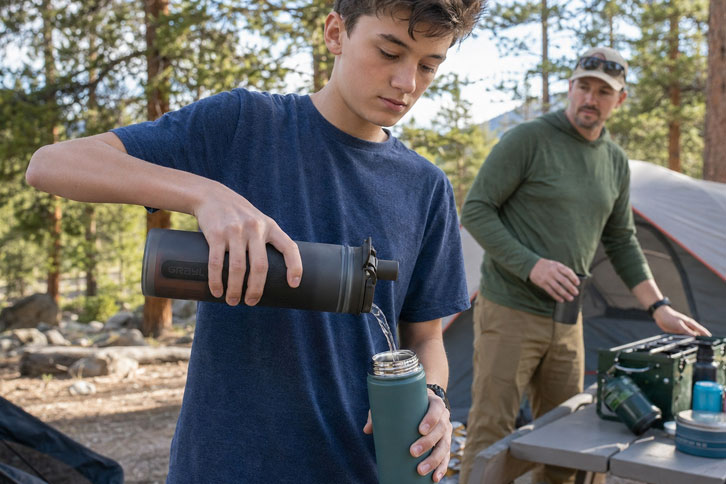
Flow Rate Matters More With Kids Around
A slow filter is a minor annoyance solo. It’s a bigger deal when three kids want water at once and you’re the only one who knows how to work it. If you’ll be relying on your filter daily rather than as a backup, prioritize flow rate (Katadyn BeFree) or hands-free gravity systems (Platypus) over the cheapest option.
It’s Also a Safety Item, Not Just a Convenience
A water filter belongs in the same category as your first aid kit: something you hope you don’t need every trip, but that turns a rustic campsite or an unexpected water outage from a real problem into a non-issue.
📋 Building out the rest of your safety gear? See our picks for the best family first aid kits, and check our general camping safety guide for more on this.If you’re just getting started with a toddler in tow, our guide to camping with toddlers covers the broader hydration and safety basics too.
Final Verdict
Best Overall: The Platypus GravityWorks 4L handles a family’s daily water needs hands-free, which beats squeezing a pouch by hand every time someone’s thirsty.
Best for Kids: The Grayl GeoPress has no learning curve, works like a French press, and doubles as a virus purifier for extra peace of mind.
Best Budget: The Sawyer MINI is cheap enough to leave in the car untouched for a whole season and still be ready when you actually need it.
If you want water handled for the whole family without babysitting a filter, this is it. Hang it, forget it, come back to clean water. It’s bulkier than a squeeze filter and overkill if you’re only ever camping at sites with potable taps, so skip it if that’s your normal setup.
Check Price on Amazon →Frequently Asked Questions
Do I even need a water filter for family camping?
Not always. Most developed campgrounds have potable water at the tap or spigot, so a filter isn’t required. It becomes worth packing once you camp somewhere rustic or dispersed, or if you just want a backup in case the campground’s water system fails mid-trip.
What’s the best water filter for a family with young kids?
The Grayl GeoPress is the easiest for kids to use correctly without supervision since it works like a French press with no technique to learn. For hands-free water at basecamp that a parent manages, the Platypus GravityWorks is the better overall pick.
Is a $25 filter as good as a $100 one?
For basic filtration of bacteria and protozoa, yes, the Sawyer MINI uses the same filter membrane as pricier Sawyer products. What you’re paying more for at the top end is convenience, flow rate, and capacity, not necessarily cleaner water.
Can water filters remove viruses?
Standard filters like the Sawyer and Platypus options remove bacteria and protozoa (including giardia) but not viruses. If you want virus protection too, look at a purifier like the Grayl GeoPress.
How do I know if my campsite’s water needs filtering?
Potable water taps at developed campgrounds and RV parks are safe to drink without filtering. Water from streams, lakes, or hand pumps at dispersed or rustic sites should always be treated first, regardless of how clear it looks.
How long do camping water filters last?
Most hollow-fiber filters (Sawyer, Platypus, Katadyn) are rated for thousands of gallons, often lasting years of regular family use if you backflush them occasionally per the manufacturer’s instructions. Purifier cartridges like the GeoPress’s typically need replacing after a set number of uses, usually noted on the cartridge itself.