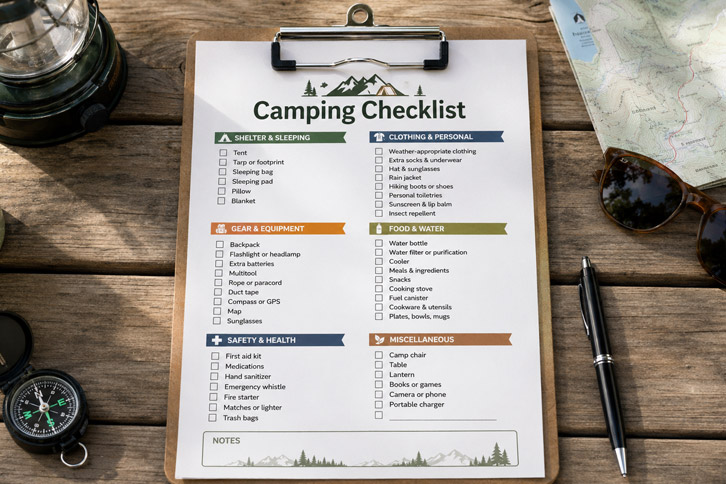
You’re three exits from the campground when someone asks, “Did we bring the can opener?” We’ve had that exact moment, and it’s why this checklist exists. It covers shelter, sleep, cooking, clothing, safety, and kids’ stuff, organized so you can pack by category instead of by panic.
Print it, save it, or just scroll through it the night before your trip. Either way, you’ll leave with everything you actually need and skip the stuff that just takes up trunk space.
Shelter & Sleep
This is the category that ruins trips when it’s wrong. A tent that’s too small or a sleeping bag rated for the wrong season makes for a long, cold night.
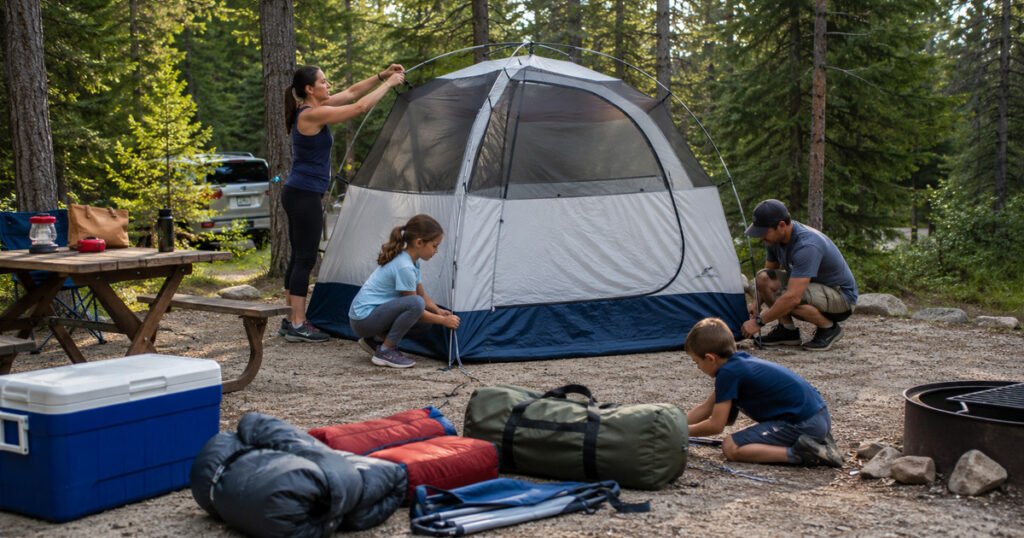
- Tent (sized for one more person than your group)
- Tent footprint or groundsheet
- Stakes and extra guylines (tents always come with too few)
- Rubber mallet for stakes
- Sleeping bags rated for the season
- Sleeping pads or air mattress
- Pillows (bring them from home)
- Extra blanket for cold nights
- Battery-powered pump if you’re using an air mattress
Camp Kitchen & Food
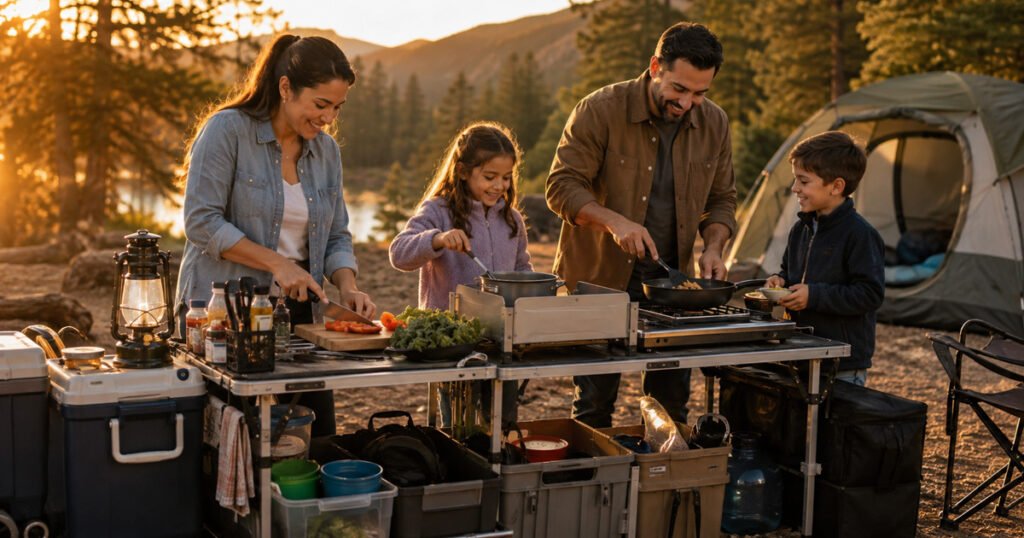
You don’t need a five-course setup. You need a way to cook, a way to keep food cold, and a way to clean up after.
- Camping stove and fuel
- Lighter and waterproof matches (pack both)
- Cooler with ice
- Cookware (pot, pan, kettle)
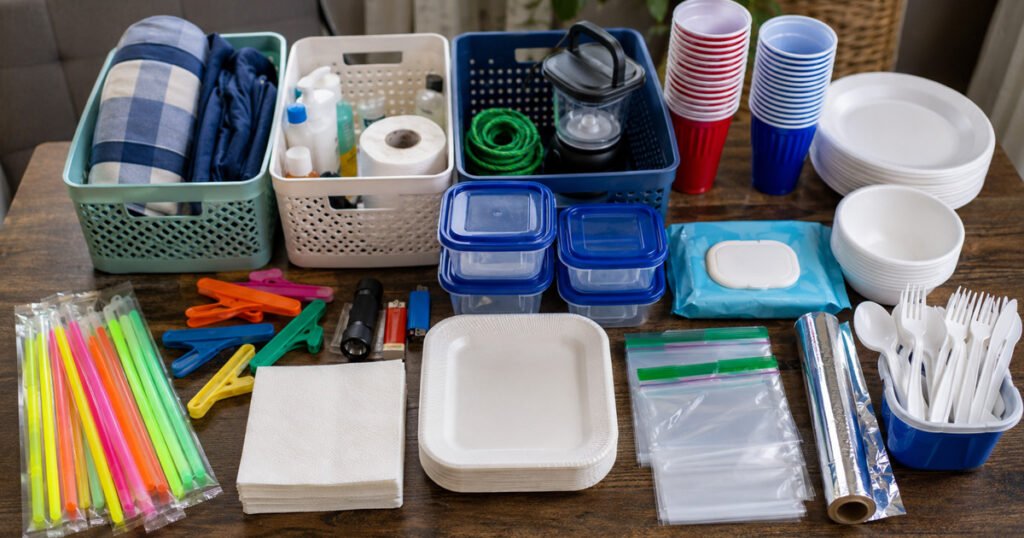
- Plates, bowls, cups, utensils (reusable cuts down on trash)
- Cutting board and knife
- Can opener
- Dish soap, sponge, and a small basin for washing up
- Trash bags
- Cooler with food and snacks
- Extra water (more than you think you need)
- Coffee setup, if that’s a non-negotiable for the adults
Clothing & Footwear
Layers beat single heavy items every time. Weather at a campsite swings more than weather at home, even in summer.
- Moisture-wicking base layers
- A warm layer for night (fleece or puffy jacket)
- Waterproof rain jacket for everyone
- Extra socks (pack double what feels reasonable)
- Closed-toe shoes for hiking and around camp
- Camp shoes or sandals for relaxing
- Hat for sun protection
- Swimsuit, if there’s water nearby
- Pajamas that are warmer than you’d wear at home
Lighting & Power
Once the sun goes down at a campsite, it goes down completely. Bring more light sources than feels necessary.
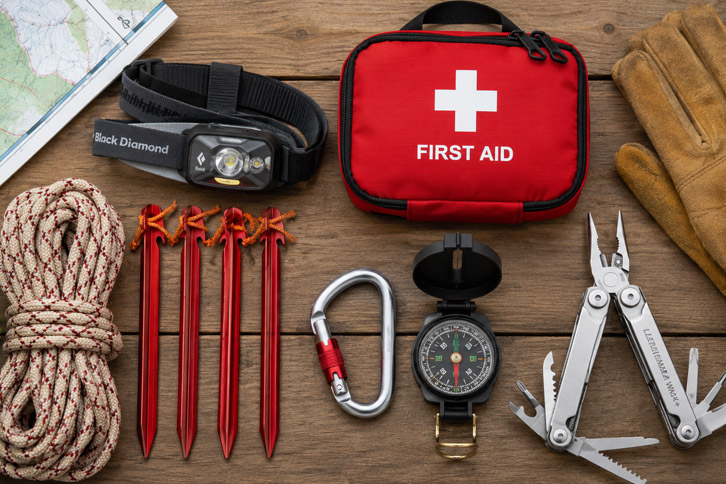
- Headlamp for every person old enough to wear one
- Lantern for the picnic table or tent area
- Extra batteries for everything
- Portable power bank or power station for phones
- Flashlight as backup
Safety & First Aid
Nobody wants to think about this category until they need it, which is exactly why it goes in the car every time without exception.
- First aid kit (stocked, not the one that’s been in your car since 2019)
- Sunscreen
- Bug spray
- Any personal medications
- Emergency contact info written down (not just on a phone that might die)
- Whistle for each kid
- Map of the campground and nearest hospital
- Fire extinguisher or bucket for water near the campfire
Kids-Specific Gear
A general checklist misses the stuff that’s specific to camping with kids. Don’t let this category be an afterthought.
- Kids’ sleeping bags rated for the season
- One comfort item per kid (stuffed animal, blanket)
- Extra clothes (kids get dirty and wet faster than adults)
- Kid-safe bug spray and sunscreen
- Snacks they’ll actually eat, not just snacks you packed
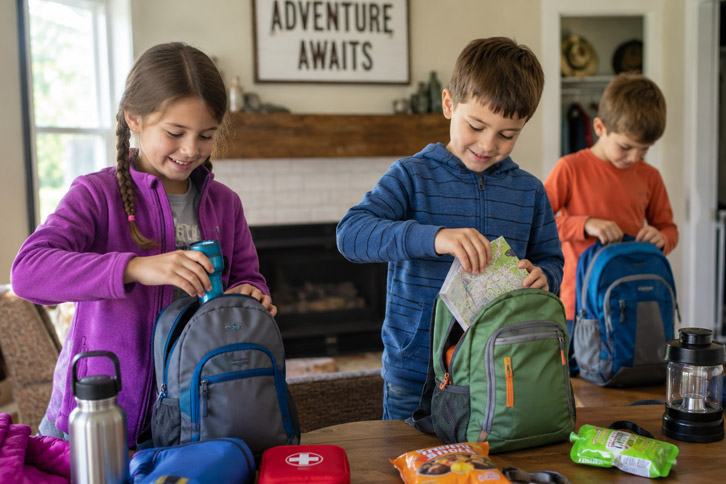
- A small “fun bag” they packed themselves
- Outdoor toys (bucket, shovel, ball)
- Baby monitor, if you’re camping with a toddler in a separate tent space
Comfort & Extras
Not essential, but these are the items that make a campsite feel like your campsite instead of a parking lot with a tent on it.
- Camping chairs
- Camping table, if your site doesn’t have a picnic table
- Hammock
- Outdoor games (cards, frisbee, cornhole)
- Bluetooth speaker
- Camera, for the photos you’ll actually want later
- Books or a journal
- Extra trash bags for the drive home
How to Actually Use This Checklist
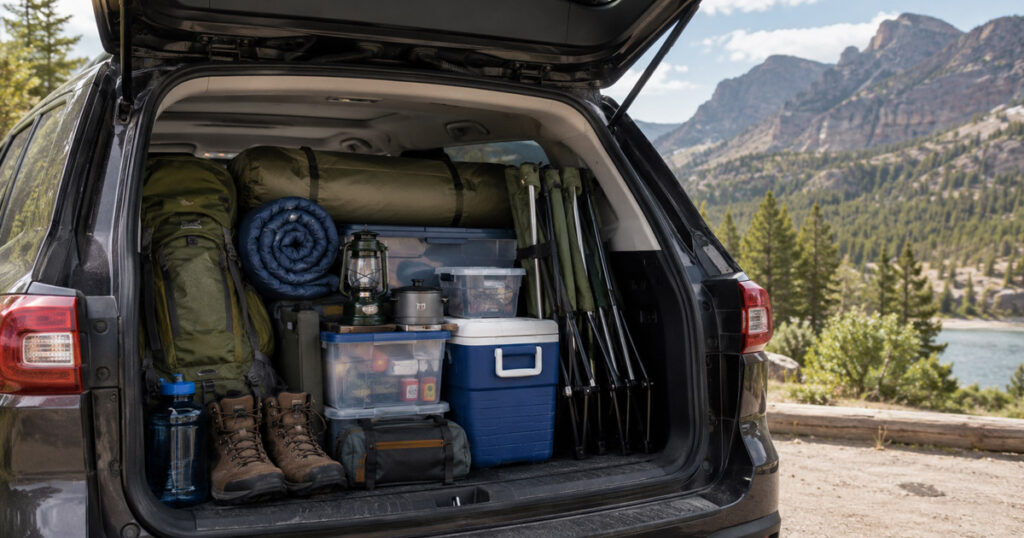
Print it or save it to your phone, then go through it room by room at home before you load the car: garage (gear), kitchen (food and cooking), closets (clothing), bathroom (first aid and toiletries). Checking by room is faster than checking by category when you’re physically packing.
Keep a master copy after your first trip. Cross off anything you packed and never touched, and add anything you needed but forgot. By trip three, you’ll have a checklist that’s actually yours.
Frequently Asked Questions
How many items are typically on a family camping checklist?
A complete family camping checklist usually runs 75-100 items once you account for shelter, sleep, cooking, clothing, safety, and kids’ gear. The essentials-only version is closer to 25-30 items if you’re keeping it simple for a one-night trip.
What’s the most commonly forgotten camping item?
Extra tent stakes, a can opener, and phone chargers top the list. Sunscreen and bug spray are close behind, especially for families packing in a rush.
Do I need a different checklist for a one-night trip versus a week-long trip?
The core categories stay the same, but quantities change. For one night, pack enough food, water, and clothing for that period plus a small buffer. For a week, double-check you have backup fuel, extra batteries, and enough clean clothes, since laundry isn’t usually an option at a campsite.
Should kids have their own packing list?
Yes. A simple list of 5-10 items (clothes, comfort item, water bottle, sunscreen, one toy) gives kids ownership over their own bag and teaches packing responsibility early.
What should never go inside the tent overnight?
Food, scented toiletries, and trash. All of these should stay in the car or a secured cooler away from the sleeping area, regardless of whether you’re in bear country.
Is a printable version available?
Yes, this checklist is designed to be saved or printed directly from this page. Check off items as you pack, or photocopy it for repeat use.
How far in advance should we start packing using this checklist?
Start gathering gear 3-5 days before departure and do final food and ice shopping the day before or morning of. This avoids the scramble of trying to find a missing headlamp at 9pm the night before you leave.