



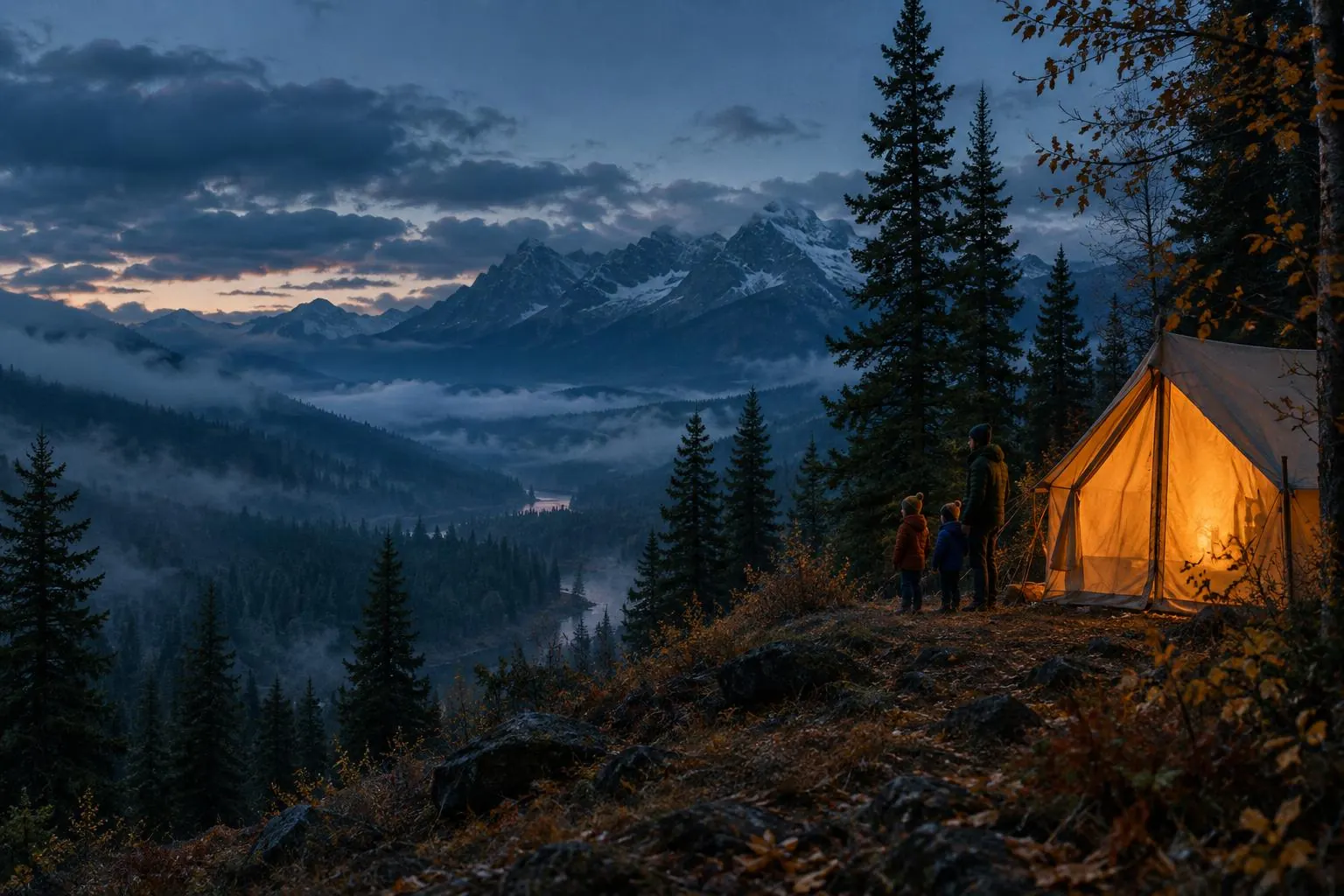
A hot tent is a tent built to hold a wood stove, with a fire-resistant opening that lets the chimney pass through the fabric. It is not a regular tent with a stove inside. Never improvise one, follow the maker's manual and use a carbon monoxide alarm. We do not recommend hot tents for beginners or for families with small children sleeping near the stove.
-
Know what the CDC says first
The CDC says fuel-burning equipment should never be used inside a tent, camper or other enclosed shelter, and that opening the flaps is not enough. Its report makes no exception for hot tents. Makers design these systems to carry smoke out through a chimney, but the fire and carbon monoxide risks do not go away.
-
Never improvise in a regular tent
A regular family tent has no fire-resistant opening for a chimney, and its fabric is not made to sit near a hot stove pipe. Do not cut a hole, run a pipe through a door or bring a stove inside. This is the one rule with no exceptions.
-
Treat it as one complete system
The tent, the stove jack (the fire-resistant opening), the stove and the pipe have to work together. Springbar, for example, says its stove jack is designed to work only as part of its own hot tent system. Before you buy anything, read the manual and use only the combination the maker approves.
-
Use a carbon monoxide alarm
Carbon monoxide has no color or smell, and the CDC warns that people who are asleep cannot notice the early signs. Tent stove sellers advise an alarm inside any tent with a stove. Treat it as a backup, not as proof the setup is safe. Test it before every trip.
-
Set up for fire
Tent stove guides call for a spark arrestor on the pipe and a flame-retardant mat under the stove. Keep the stove jack flap tied well away from the pipe, because fabric touching a hot pipe can catch fire. Keep water and a fire extinguisher within reach, and keep clothes and bedding away from the stove.
-
Keep the pipe clean
Spark arrestors clog with ash and soot, and creosote builds up in the pipe. One tent stove seller says to check the arrestor daily and clean it about every 1 to 2 days. A clogged system can push smoke back into the tent or start a fire in the pipe.
-
Ask the manual about sleeping
Before you plan to keep a stove burning overnight, check what the maker's manual says. If it does not clearly allow it, or you are not sure, let the fire go out before anyone sleeps and rely on your pad, bag and dry layers.
-
Know when to say no
Skip a hot tent if this is your first cold-weather trip, if you have never run a wood stove or if small children would sleep near it. Kids roll around at night and can touch a hot stove or pipe. For most families, a warm sleeping setup or a cabin is the better choice.
| What to compare | Regular family tent | Hot tent |
|---|---|---|
| Opening for a chimney | None | Fire-resistant stove jack |
| Fabric | Not made to sit near a stove | Often canvas or fire-resistant fabric |
| Wood stove inside | No, per the CDC | Only the setup the maker approves, and the CDC makes no exception |
| Best for | Most families | Experienced cold-weather campers |
Frequently asked questions
 Can I put a wood stove in a regular tent?


No. A regular tent has no fire-resistant opening for the chimney, and the CDC says fuel-burning equipment should never be used inside a tent. Opening the flaps does not fix it.
Is a hot tent safe for kids?
We do not recommend one for families with small children sleeping near the stove. A hot stove and pipe are a burn and fire risk, and carbon monoxide is hard to notice while you sleep.
Do I need a carbon monoxide alarm in a hot tent?
Yes. Treat it as a must-have backup, and test it before every trip. It does not make a setup safe by itself, so you still need to follow the maker's manual.
Do I need a hot tent for my first winter trip?
No. Start with an insulated pad, a bag rated below the night's low and dry layers, and choose a night you can handle with that gear. If the forecast is too cold, a cabin or another weekend is the safer plan.
What are the signs of carbon monoxide poisoning?
The CDC lists headache, dizziness, weakness, upset stomach, vomiting, chest pain and confusion. If you suspect it, get everyone into fresh air and call 911.


Free family camping checklist
75+ items in a printable PDF, and 3 emails with your first-trip plan.


