The first time we camped in real cold, we packed like it was a summer trip and spent half the night reorganizing sleeping bags by headlamp so the kids weren’t shivering. Nobody got hurt, but nobody slept well either. Staying warm while camping isn’t about toughing it out. It’s about a handful of specific choices made before the sun goes down.
None of this requires expensive gear or a background in survivalism. Most of it is layering correctly, insulating from the ground up, and knowing which shortcuts (like a propane heater left running in a tent) are actually dangerous instead of just uncomfortable.
1. Layer Up the Right Way, Not Just More Clothes
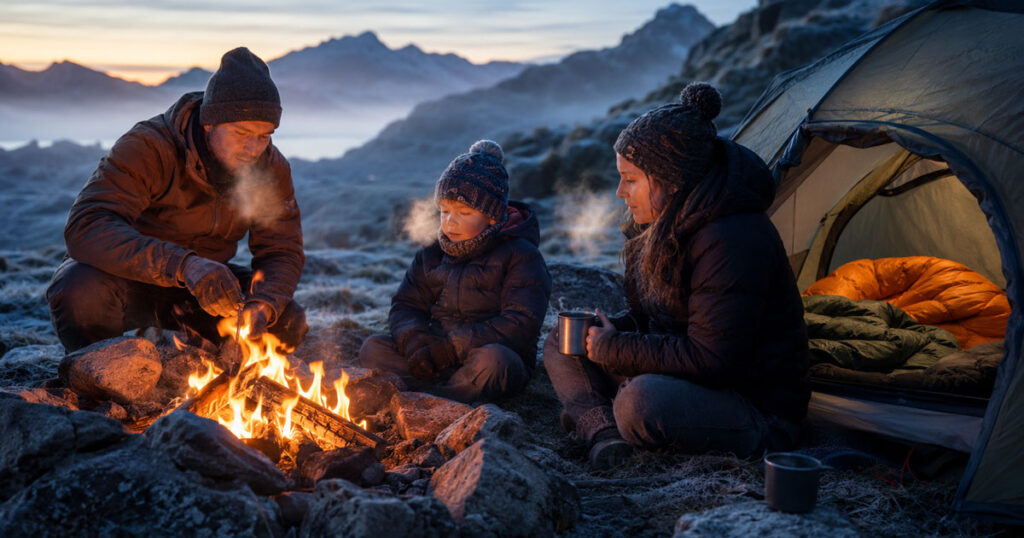
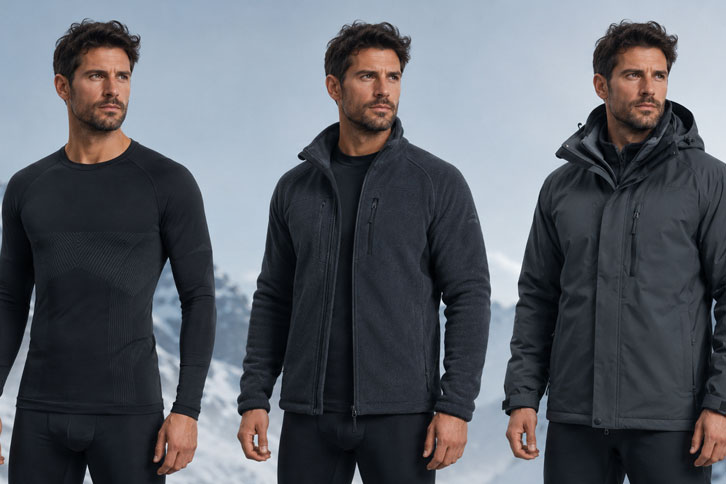
Piling on extra sweatshirts traps less heat than a proper layering system. You want a moisture-wicking base layer against skin, an insulating mid-layer (fleece or wool), and a wind- or water-resistant outer layer on top. Cotton is the one fabric to avoid for base layers, since it holds sweat against your skin and actually speeds up heat loss.
Change into a completely dry set of clothes before bed, even if what you’re wearing doesn’t feel wet. A day of hiking, cooking, and playing leaves more moisture in your clothes than you’ll notice until you’re lying still and it starts pulling heat away.
2. Pick a Sleeping Bag Rated for the Real Low, Not the Forecast High
Sleeping bag temperature ratings describe the coldest temperature you’ll survive, not the temperature you’ll be comfortable at. As a rule of thumb, choose a bag rated at least 10-15°F below the night’s expected low, especially for kids, who lose body heat faster than adults.
A 40°F night on paper can easily dip colder near the ground or with wind, so this buffer matters more than people expect on their first cold-weather trip.
📋 Shopping for a bag that’ll actually hold up on chilly nights? See our picks for the best sleeping bags for family camping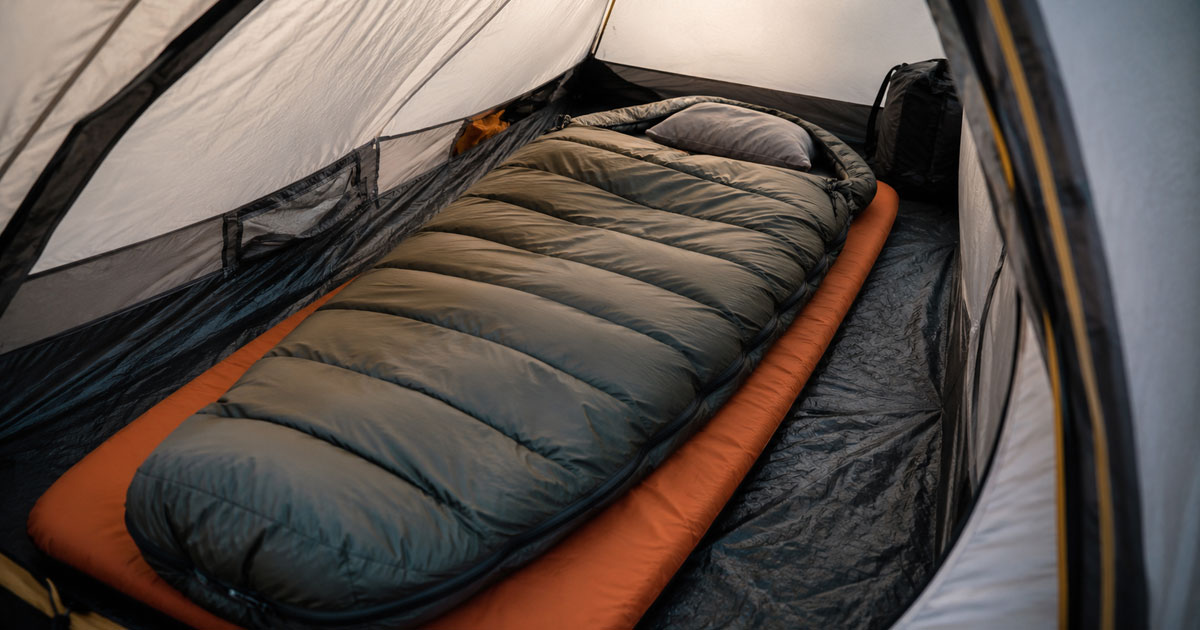
3. Insulate From the Ground Up
The ground pulls heat out of your body faster than cold air does, which is why a sleeping bag alone isn’t enough below about 50°F. A sleeping pad with a high R-value (a measure of insulation, not cushioning) is what actually stops that heat loss.
For cold-weather trips, look for a pad rated R-4 or higher. Stacking a foam pad under an inflatable one adds extra insulation and backup if the inflatable pad loses air overnight.
4. Warm Up Before You Get In the Bag, Not After
A sleeping bag traps the heat your body produces. It doesn’t generate heat on its own, so climbing in already cold means you’re starting from behind. Do a few minutes of light movement (jumping jacks, a short walk) right before bed to raise your body temperature going in.
A hot water bottle (a sealed, leak-proof bottle filled with hot water from your camp stove) tucked near your feet or core is one of the most effective low-cost warming tricks, and it keeps working for hours after you’re already asleep.
5. Keep Little Ones Warm, Not Just Warmer
Kids lose body heat faster than adults because they have more skin relative to their body size, so what feels fine for you can already be too cold for them. Dress kids in one more layer than you’re wearing yourself, and check hands, feet, and the back of their neck periodically since those are the first places to feel it.
Zip smaller kids into a bag rated well below the night’s low, or size an adult bag down with a liner so there isn’t excess empty space for their body to have to heat. Empty space inside a too-big bag works against them, not for them.
📋 Shopping specifically for a kid-sized bag? See our picks for the best kids’ sleeping bags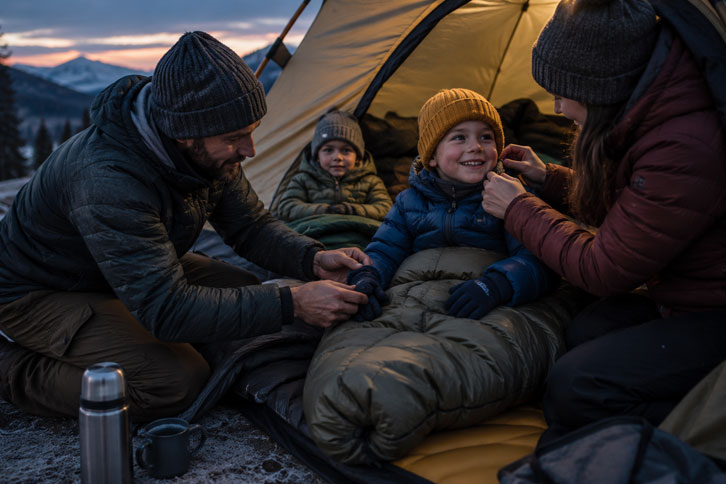
6. Set Up Your Tent to Trap Warmth, Not Wind
Pitch your tent with the door facing away from prevailing wind, and choose a site with natural windbreaks like trees or a rise in terrain if one’s available. A tent that’s flapping and catching wind all night loses heat far faster than one pitched with wind direction in mind.
Keep the rainfly on even on clear nights in cold weather. It traps a layer of warmer air between the tent body and the fly, which adds real insulation you’d otherwise lose to the open sky.
📋 Camping somewhere genuinely cold? Check out our guide to the best tents for cold weather camping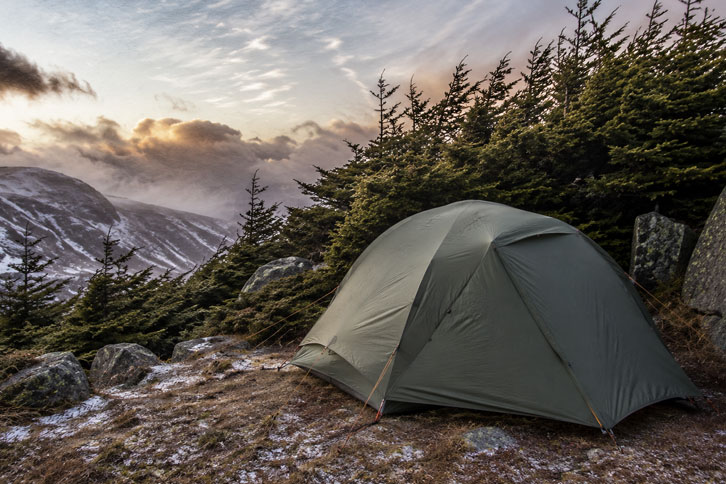
7. Common Mistakes That Let the Cold In
- Going to bed hungry. Your body burns calories to generate heat overnight, so a light snack before bed (something with protein or fat) actually helps you stay warmer, not just full.
- Sleeping in the clothes you cooked or hiked in. They’re holding more sweat than you realize, and damp fabric pulls heat away all night.
- Skipping the ground insulation. A high-rated sleeping bag on a thin or old pad still leaves you cold, since the ground is doing most of the damage.
- Leaving the rainfly off “because it’s clear.” Clear skies at night actually radiate more heat away than cloudy ones, making a rainfly-free tent colder, not warmer.
- Not accounting for kids’ faster heat loss. An adult-comfortable setup can still leave a child cold; check on them, don’t assume they’re fine because you are.
What to Pack Before a Cold-Weather Trip
Getting the big-ticket gear right (bag, pad, tent) matters most, but a full packing pass avoids the smaller gaps that catch families off guard on their first cold trip.
📋 Planning a full cold-weather trip? Use our complete winter camping checklist 📋 Packing for camping in general? Grab our full 75+ item family camping checklistFrequently Asked Questions
What temperature is too cold for camping with kids?
There’s no universal cutoff, but most families new to cold-weather camping are comfortable down to around 30-40°F with the right gear (rated sleeping bags, insulated pads, layered clothing). Below that, it takes more experience and specialized winter gear to keep kids safely warm.
How can I stay warm camping without electricity?
Layer clothing correctly, use a sleeping bag and pad rated for the temperature, warm your body before getting into the bag, and use a hot water bottle for extra heat. None of these require power, just planning ahead.
Is it safe to use a heater inside a tent?
Fuel-burning heaters (propane, gas) are not safe inside a closed tent because of carbon monoxide risk, even for short periods. Battery-powered heated gear like heated socks or small electric blankets is a safer way to add extra warmth.
What’s the difference between a sleeping bag’s comfort rating and its limit rating?
The comfort rating is the temperature at which most people sleep comfortably. The limit rating is the coldest temperature the bag will keep an average sleeper from becoming dangerously cold, but not comfortably. Shop based on the comfort rating when possible, and buffer 10-15°F colder than the forecast either way.
Do kids really get cold faster than adults while camping?
Yes. Kids have more skin surface relative to their body size and less developed temperature regulation, so they lose heat faster than adults in the same conditions. Dress them in an extra layer compared to what you’re wearing and check their hands, feet, and neck periodically.
Does a rainfly actually help on clear nights?
Yes, more than most people expect. Clear skies let heat radiate away from the tent faster than cloudy ones, so keeping the rainfly on traps a layer of warmer air even when it isn’t raining.
What’s the single most effective way to warm up a cold sleeping bag?
A hot water bottle (a sealed, leak-proof bottle filled with hot water) placed near your feet or core before you climb in. It adds direct heat for hours and works alongside proper layering and insulation, not instead of it.