Packing for yourself is easy. Packing for a 6-year-old who runs hot at night, refuses to wear “the itchy socks,” and somehow needs three flashlights is a different sport entirely. We’ve made every mistake here: the sleeping bag that was too big and let all the warm air escape, the “kid-sized” backpack that was actually sized for a teenager, the headlamp with a strap that pinched.
This guide skips the fluff and gets straight to what actually works. Below is the gear that holds up trip after trip, organized by what your kids will actually use, plus a budget alternative for every category so the first trip doesn’t wreck your wallet.
Quick Top Picks
- est Overall Kids Sleeping Bag: REI Co-op Kindercone 25,warm, fits up to 5′, grows with your kid
- Best Budget Sleeping Bag: KingCamp Kids Sleeping Bag (45°F), solid for mild-weather summer trips
- Best Headlamp for Kids: Black Diamond Wiz, soft strap, easy on/off, glow-in-the-dark face
- Best Kids Hiking Backpack: Deuter Schmoozie 8, actually sized for small bodies, not mini-adult gear
Comparison Table: Kids Camping Gear Essentials
Sleeping Gear: Where Kids Need the Most Help
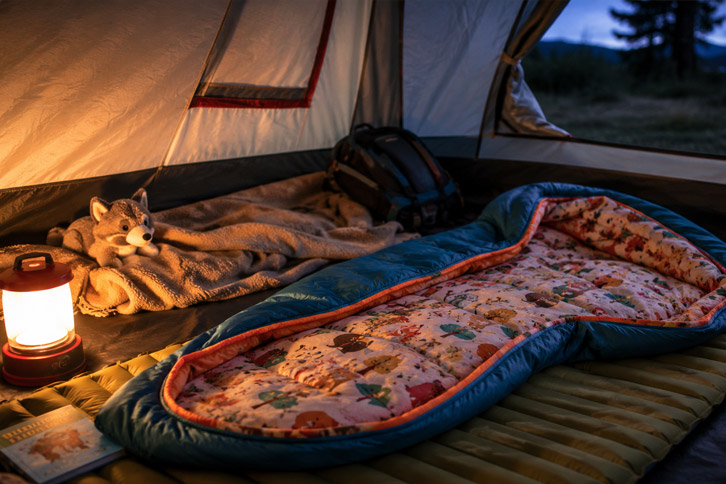
Kids run colder than adults at night because they have less body mass to generate heat. A sleeping bag rated “for kids” that’s really just a smaller print of an adult bag won’t cut it once the temperature drops below 50°F.
The REI Co-op Kindercone 25 is our top pick. It’s rated to 25°F, fits kids up to 5 feet tall (so it has a few years of growing room), and the hood actually cinches down to keep warm air in. We’ve used it down to 38°F with a base layer underneath and our kid stayed warm all night.
If you’re only camping in summer and want to keep costs down, the KingCamp 45°F bag is a fine choice. It won’t keep your kid warm on a chilly mountain night, but for a July weekend at a lake campground, it does the job for under $30.
A sleeping pad matters just as much as the bag. Cold ground pulls heat away from a sleeping kid faster than cold air does. A cheap foam pad under their bag solves most of the “I’m cold” wake-up calls at 2am.
Lighting: Headlamps Beat Flashlights, Every Time
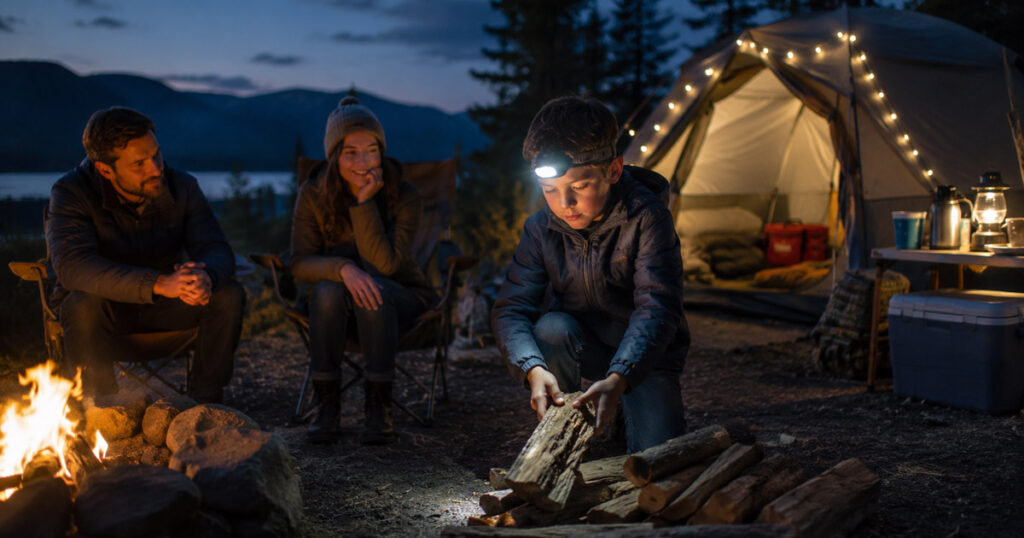
Kids lose flashlights. They drop them, leave them at the picnic table, or hand them to a sibling who then loses them. A headlamp stays on their head, which means it’s there when they actually need it.
The Black Diamond Wiz is built for kids specifically. The strap is soft and adjustable, the on/off button is big enough for small hands, and there’s a glow-in-the-dark trim that doubles as a “find it in the tent” feature.
Backpacks: Sized for Kids, Not Scaled Down
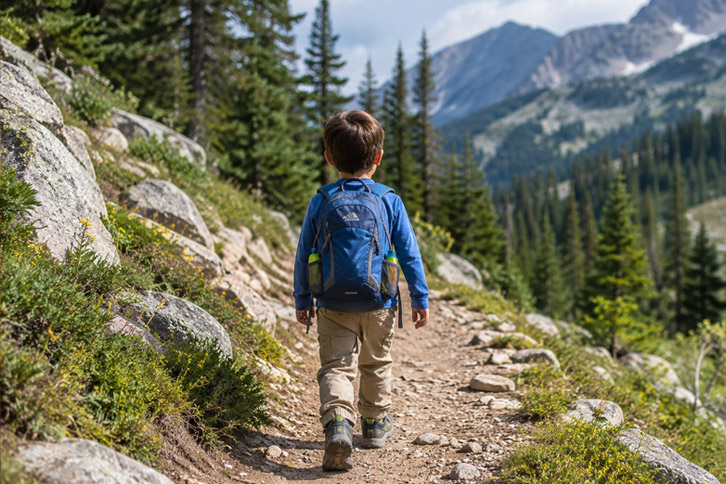
A lot of “kids hiking backpacks” are just smaller versions of adult packs, which means the straps still sit wrong and the hip belt does nothing useful. The Deuter Schmoozie 8 is actually built around a kid’s proportions, with a shorter back length and a chest strap that keeps it from sliding around.
It holds enough for a water bottle, a snack, and a “treasure” pocket for rocks and pinecones, which in our experience is exactly what a kid backpack needs to hold.
What Else Belongs in the Kit
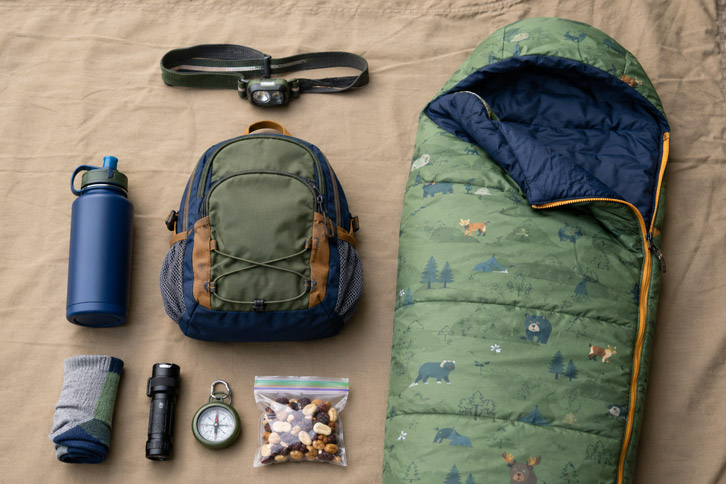
A few smaller items round out a solid kids camping kit. None of these need to be expensive, but skipping them usually means a rougher trip:
- Bug spray made for kids (lower DEET concentration, or a picaridin-based option)
- A camp towel that dries fast, because kids end up wet at some point every trip
- A dedicated water bottle they can open themselves
- Binoculars for spotting wildlife and birds
- A small first aid kit kept in an easy-to-reach spot
Buying Guide: What to Look For
Sizing first, features second. A sleeping bag, backpack, or rain jacket that fits properly will outperform a “premium” item that’s the wrong size. Check the height and weight ranges on the product listing before anything else.
Temperature ratings are optimistic. Treat any sleeping bag’s temperature rating as the survival limit, not the comfort limit. For real comfort, add 10-15°F to the rating.
Durability beats lightweight for car camping. Unless you’re backpacking in, weight doesn’t matter much. Pick the sturdier option that can handle being dragged through dirt and dropped near the campfire.
Buy growing room when it’s cheap to do so. Backpacks and sleeping bags with a wider size range save you from rebuying gear every season.
Final Verdict
Best Overall: REI Co-op Kindercone 25 sleeping bag. Warm, durable, and roomy enough to last several camping seasons.
Best Budget: KingCamp Kids Sleeping Bag. Solid for summer trips when you don’t need cold-weather performance.
Best for Daily Use: Black Diamond Wiz headlamp. The single most-used item in any kid’s camping kit.
Frequently Asked Questions
At what age can kids start camping?
Most families start car camping with kids as young as 1-2 years old, since you’re never far from the car if something goes wrong. The key adjustments are temperature management and having a contained sleep space like a portable crib.
Do kids need their own sleeping bag, or can they share with a parent?
A dedicated kids sleeping bag traps heat better for a small body than sharing an adult bag. For toddlers, a sleeping bag liner inside a parent’s bag can work for one trip, but a properly sized kids bag is worth the investment if you’ll camp more than once or twice.
What temperature rating should I get for a kids sleeping bag?
For three-season camping (spring through fall) in most of the US, a 20-30°F rating covers you. For summer-only trips, a 40-45°F bag is lighter and cheaper.
How much should I budget for a basic kids camping kit?
A sleeping bag, headlamp, and small backpack typically run $100-150 total when you mix a few premium picks (like the sleeping bag) with budget items (like the backpack).
Is it worth buying name-brand gear for kids who might lose interest in camping?
Not always. Start with budget picks for the first trip or two. If your family camps regularly after that, upgrade the items that get the most use, usually the sleeping bag and headlamp.
What should kids carry in their own backpack?
A water bottle, a snack, a small flashlight or headlamp, and one “comfort item” like a stuffed animal. Keep the weight light and let them feel responsible for their own small kit.