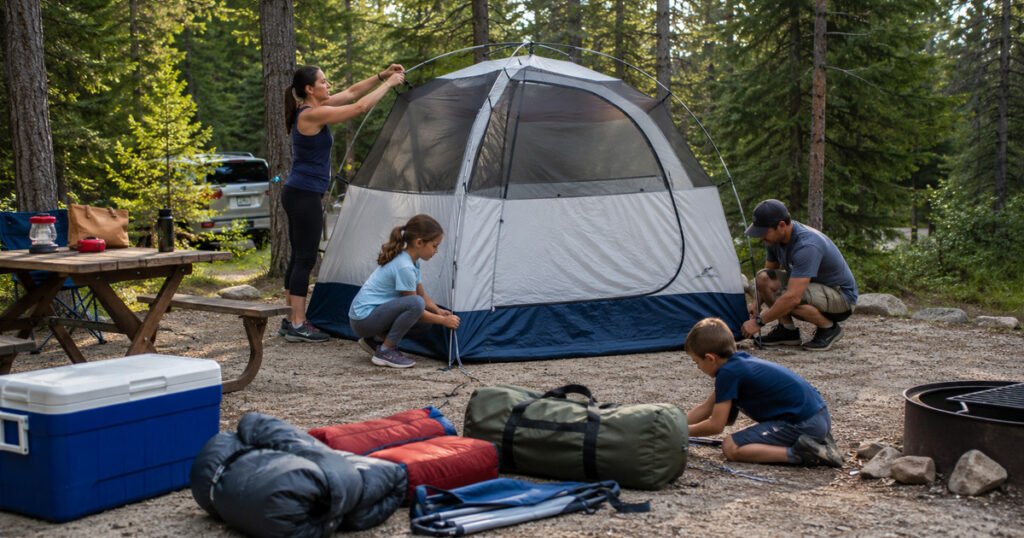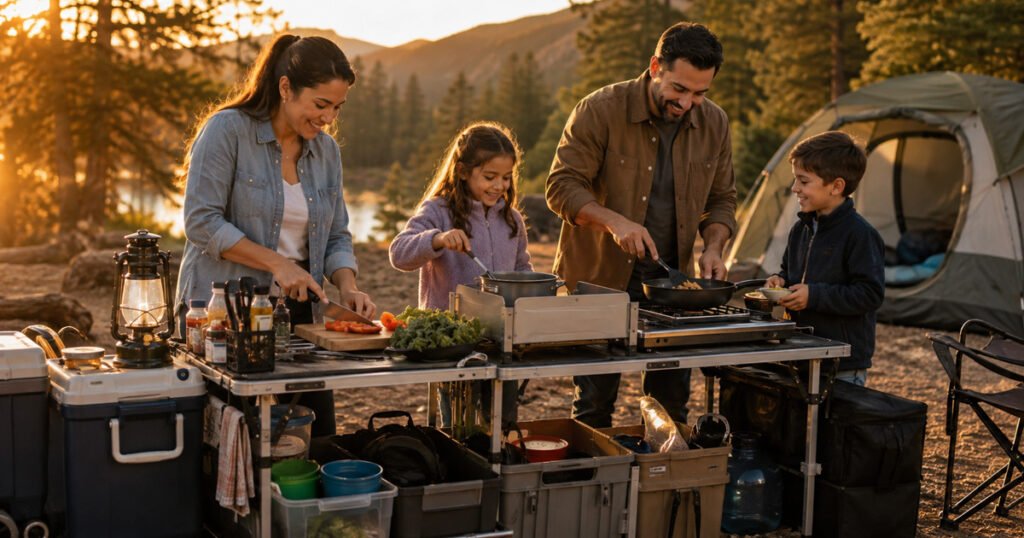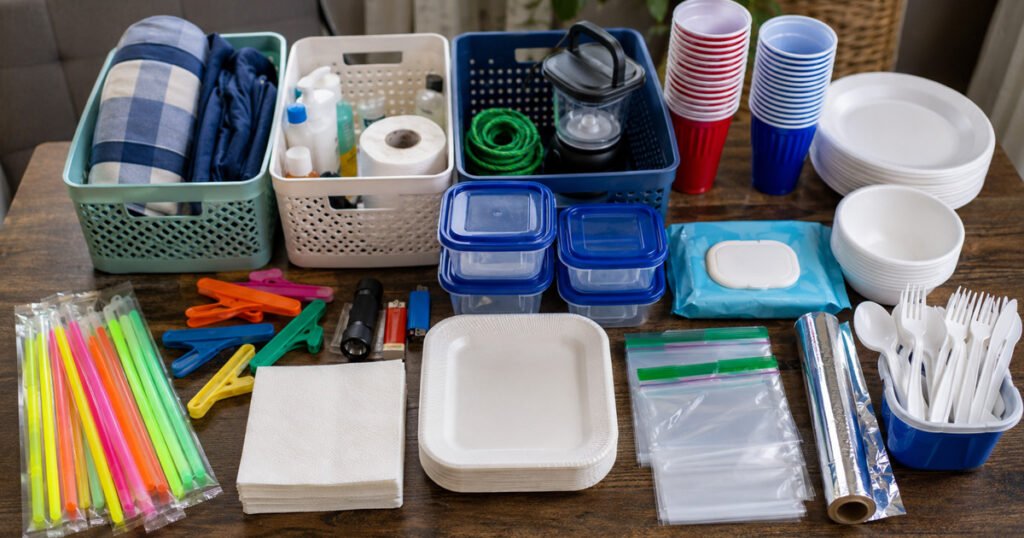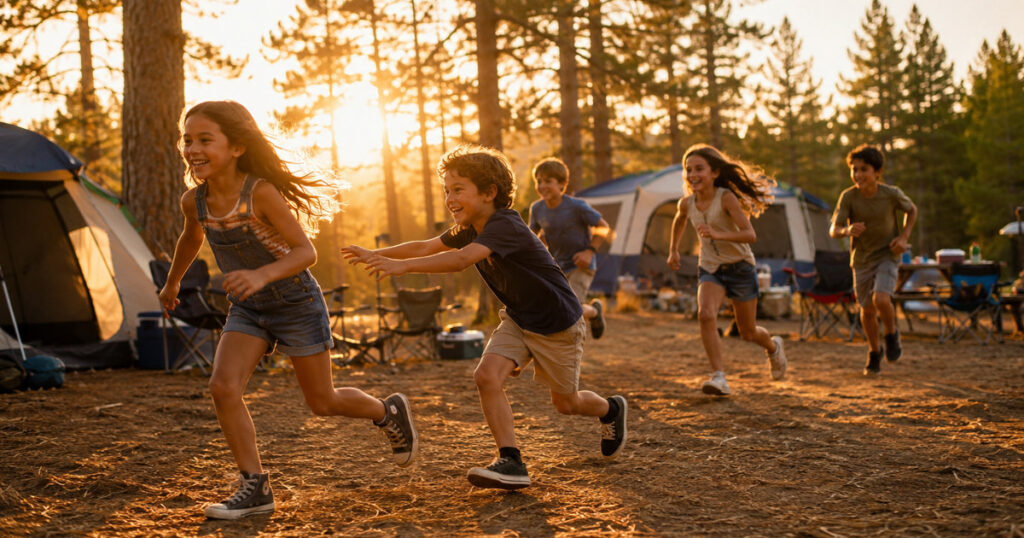
The gear is packed, the tent is up, and now you’ve got a 6-year-old asking “what do we do now?” twenty minutes into the trip. Summer camping activities don’t need to be elaborate. The best ones use what’s already at the campsite: dirt, water, sticks, and a flashlight after dark.
Below are 25 activities sorted by type, so you can match them to your kids’ ages, the weather, and how much energy everyone has left. Every one of these has been tested on actual sticky, sunburned, occasionally cranky kids, not staged for a photo.
Quick Picks by Energy Level
- Highest energy: Water balloon dodgeball, capture the flag, obstacle course
- Medium energy: Nature scavenger hunt, stick boat racing, frisbee
- Low energy / wind-down: Stargazing, campfire stories, nature journaling
Water Activities: The Summer Heat Solver
When it’s hot, water activities solve two problems at once: boredom and overheated kids.
Lake or river swimming. If your campsite is near water, this is the activity that needs zero setup and burns the most energy. Always supervise within arm’s reach for kids under 8, even in shallow water.
Water balloon dodgeball. Fill a bucket of balloons before the trip (do this at home, not at 2pm at the campsite when patience is already thin). Split into teams and play regular dodgeball rules.
DIY slip-and-slide. A plastic tarp, a hose or jugs of water, and a little dish soap on flat grass turns into 45 minutes of entertainment. Check the ground for rocks first.
Paddleboarding or kayaking. If the campground rents gear, a slow paddle around a calm lake works for kids as young as 6 with a properly fitted life jacket. Skip this one in any current or wind.
Nature-Based Activities: Low Cost, High Payoff
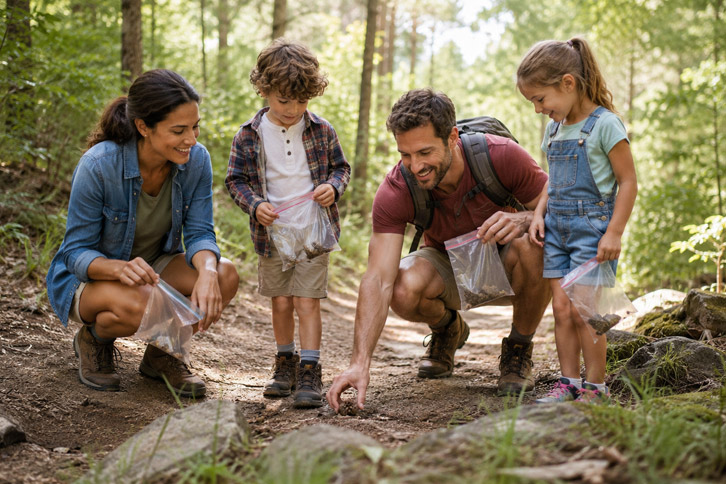
Nature scavenger hunt. Give each kid a printed list (pinecone, smooth rock, feather, something yellow, animal track) and a small bag. This works for almost any age and any campsite, and it turns a boring walk into a mission.
Animal track and scat ID. Walk the perimeter of the campsite looking for tracks in dirt or mud. A simple animal track guide (or a phone app with offline mode) turns this into a 20-minute detective game.
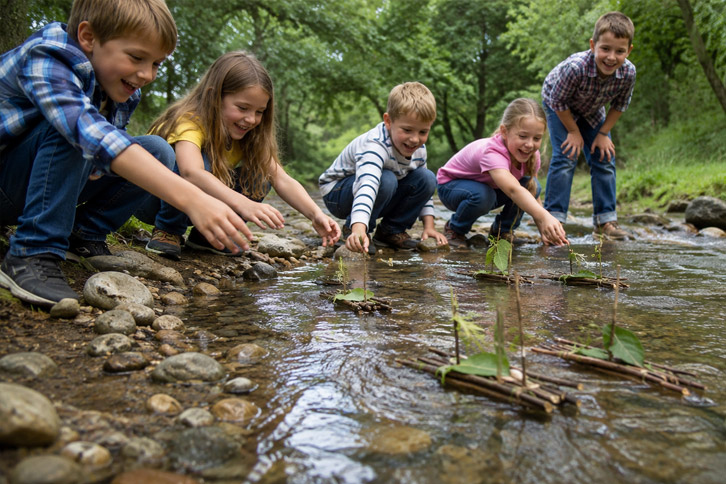
Stick boat racing. Find a creek or slow-moving stream. Build tiny boats from sticks and leaves, then race them downstream. Costs nothing and works on kids as young as 3.
Nature journaling or sketching. Pack a small notebook and colored pencils. Have everyone find a spot, sit still for 10 minutes, and draw or write about what they notice. Works well as the “calm down” activity after a high-energy game.
Building forts. Sticks, fallen branches, and a tarp turn into a fort in about 15 minutes. This one entertains for surprisingly long stretches with zero parental involvement required.
Group Games: Built for Open Campsites
Capture the flag. Split into two teams with a clear boundary (the campsite loop road works well). Rules scale from simple “tag and freeze” for younger kids to full strategy for older ones.
Obstacle course. Use whatever’s around: a log to balance on, a rope to crawl under, a cooler to jump over. Time each kid and let them try to beat their own score.
Tug of war. A length of rope and a clear flat patch of grass. Takes 30 seconds to set up and works for almost any group size.
Frisbee and ring toss. Low-effort, pack-light classics that work whether you have 2 kids or 12.
Evening Activities: After the Sun Goes Down
Campfire stories. The original screen-free entertainment. Keep stories age-appropriate for younger kids; older kids and teens usually want it spookier.
S’mores variations. Classic s’mores are great, but swapping in peanut butter cups, strawberries, or different cookies keeps it interesting on multi-night trips.
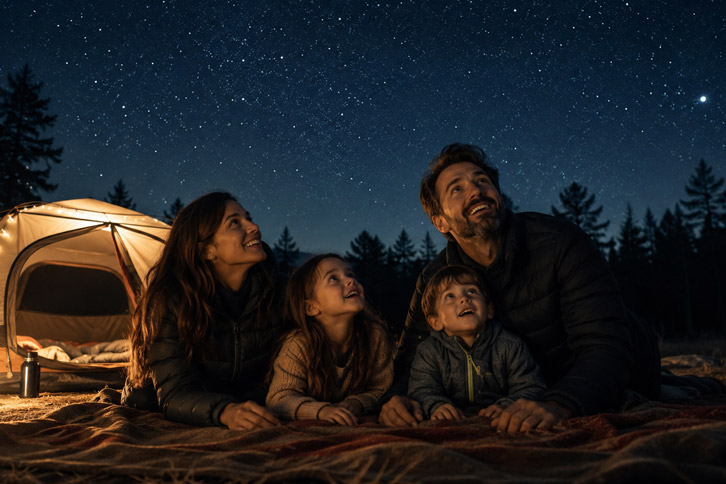
Stargazing. No equipment needed, though a basic stargazing app helps identify constellations. Bring a blanket to lie on and let eyes adjust for 10-15 minutes before expecting to see much.
Flashlight tag. A nighttime twist on regular tag using headlamps or flashlights. Set a tight, well-lit boundary so nobody wanders into the dark unsupervised.
Rainy or Slow Afternoon Backups
Card games. Pack a deck of cards and one or two simple games (Go Fish, Uno) the whole family already knows. Zero setup, fits in a pocket.
Puzzles. A small puzzle in a ziplock bag is an easy way to fill a quiet hour, especially under a tarp during a rain delay.
Buying Guide: What’s Actually Worth Packing
Skip the bulky toy bin. Most camping activities use sticks, water, and dirt, which are free. Reserve packing space for the few items that actually get used: a frisbee, a deck of cards, water balloons, and a headlamp per kid.
Buy a scavenger hunt list once, reuse it forever. A laminated list lasts for years of trips and costs less than $5 to make at home.
Prioritize headlamps over flashlights for night games. Kids lose flashlights. A headlamp stays put and keeps hands free for tag or s’mores.
Final Verdict
Best All-Around: Nature scavenger hunt. Works for nearly any age, costs almost nothing, and can be reused trip after trip.
Best for High Energy: Water balloon dodgeball. Burns off afternoon energy fast and needs minimal setup.
Best for Wind-Down: Stargazing. Zero gear required and gives the whole family a quiet moment to end the day.
Frequently Asked Questions About: 25 Fun Summer Camping Activities for Kids and Families
What are good camping activities for toddlers?
Stick boat racing, simple scavenger hunts (one or two items at a time), and digging in dirt with a small shovel work well for toddlers. Keep activities within arm’s reach of water or fire at all times.
How do I keep kids entertained on a rainy camping day?
Pack a deck of cards, a small puzzle, and a flashlight for tent-bound games like shadow puppets. A tarp rigged as a covered area outside the tent also extends how much “outdoor” time is possible even in light rain.
What camping games work for large groups or multiple families?
Capture the flag, tug of war, and obstacle courses scale well for 8 or more kids. Games with simple, fast-to-explain rules work best when you have a mixed-age group.
Do I need to buy special gear for camping activities?
No. Most of the best activities (scavenger hunts, stick boats, stargazing, card games) use items you already own or find at the campsite. The only worthwhile purchase for most families is a headlamp per kid for nighttime games.
What’s a good age to start doing structured camping activities with kids?
Around age 3, kids can participate in simple versions of most activities (scavenger hunts, stick boats, story time). Game complexity and group games like capture the flag work better starting around age 5-6.
How many activities should I plan for a weekend camping trip?
Plan 2-3 activities per day loosely, but don’t over-schedule. Unstructured time to explore and get bored (then get creative) is part of what makes camping valuable for kids.