Short answer: the Osprey Poco Plus is the best all-around hiking carrier for families, with the easiest sunshade, the most storage, and a suspension system that actually keeps your shoulders from screaming by mile two. If you’re only hiking a few times a season, the ClevrPlus Canyonero gets the job done for less than half the price. And if two of you trade off carrying duty on the same hike, the Thule Sapling Elite makes the handoff painless.
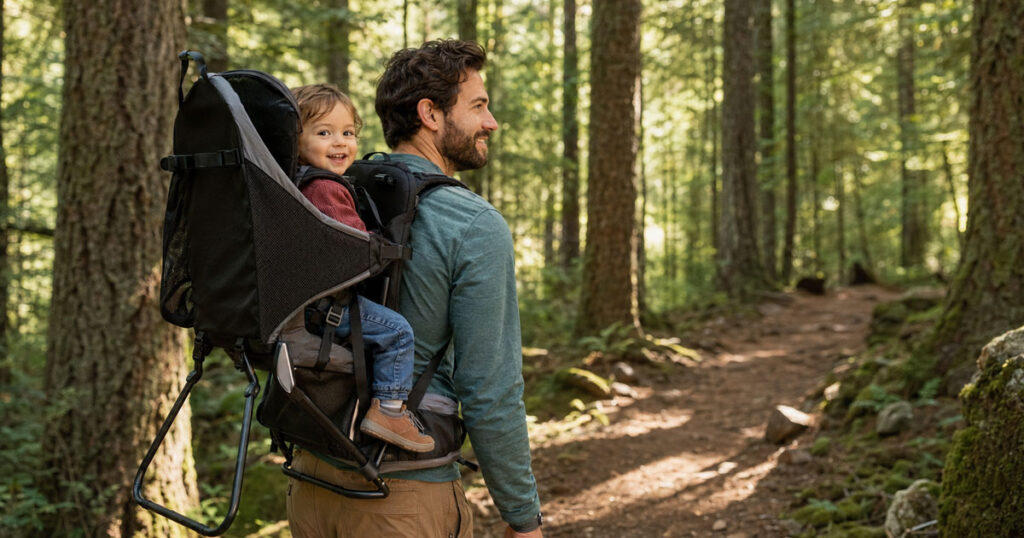
We’re not talking about the wrap or soft-structured carrier you use around the house. This is the framed backpack-style carrier built for actual trail miles, uneven ground, and a kid who’s decided halfway through the hike that leaning way to one side is hilarious. Here’s what held up.
Quick Top 3 Picks
- Best Overall: Osprey Poco Plus, 26L of storage, best sunshade in the test, anti-gravity suspension that moves weight to your hips, around $320
- Best Budget: ClevrPlus Canyonero, full-featured for occasional hikers, built-in kickstand, around $135
- Best for Two-Parent Households: Thule Sapling Elite, fastest to adjust when you’re swapping who’s carrying, around $400
Comparison Table
1. Osprey Poco Plus – Best Overall
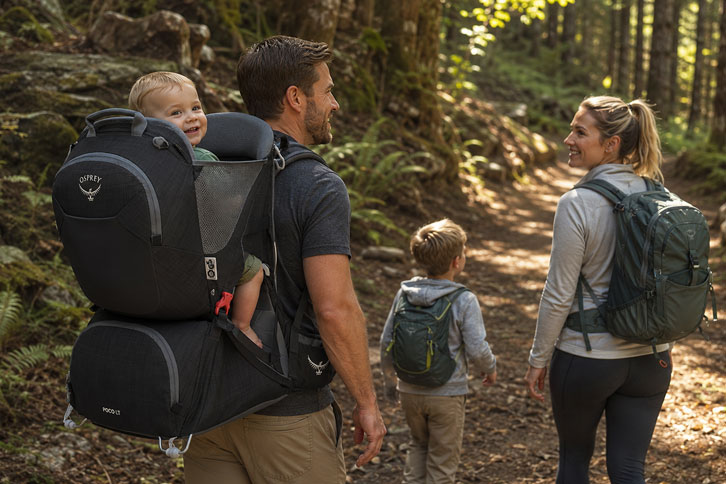
This one earns the top spot because it doesn’t make you choose between comfort, storage, and ease of use. The anti-gravity suspension genuinely moves weight off your shoulders and onto your hips, which you’ll appreciate around the two-mile mark. The sunshade deploys with one hand and covers 270 degrees around your kid’s head, not just a strip over their forehead.
At 26 liters, there’s enough room for diapers, snacks, an extra layer, and a water bladder without needing a second pack. The carrier also has a fold-out kickstand, so you can set it down and load your kid in without a second adult holding it steady.
Best for: Families who hike regularly and want one carrier that covers every trip. Skip it if: you’re only hiking a handful of times a year, in which case the price is hard to justify.
2. Deuter Kid Comfort – Best for Long Days on the Trail
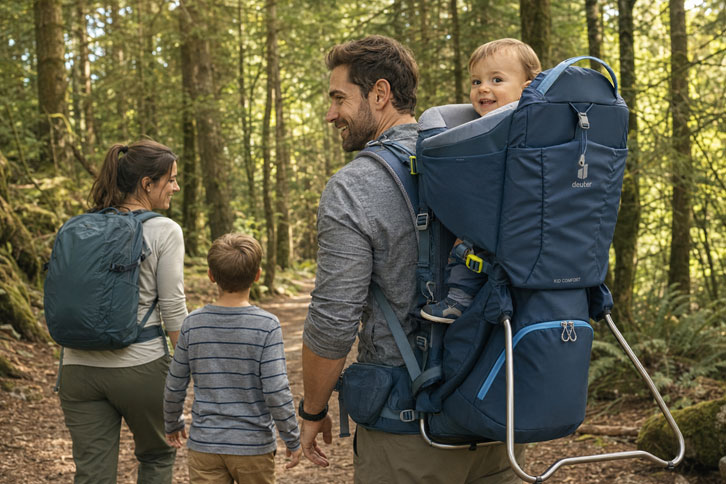
If you’re the one who ends up wearing the carrier for most of a five-mile hike, this is the one your back will thank you for. The Variflex hip belt pivots with your body as you step over roots and rocks, instead of fighting you on uneven ground. It’s the most padded harness and hip belt in this comparison, full stop.
The trade-off is storage. At 14 liters, it holds noticeably less than the Osprey or Kelty, so you may need a small daypack for extras on longer trips. It’s a comfort-first design, not a storage-first one.
Best for: Parents logging real trail mileage who want their own comfort prioritized. Skip it if: you need to carry a lot of gear for the whole family on the same hike.
3. Thule Sapling Elite – Premium Pick
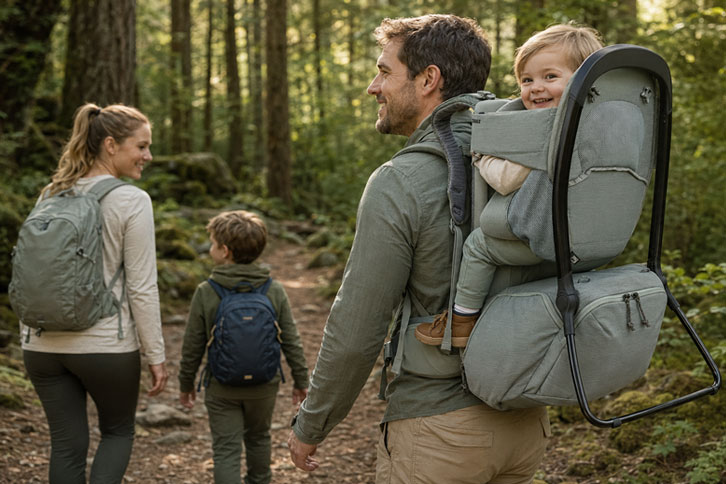
If you and your partner trade off carrying duty on the same hike, this is the carrier that makes the handoff painless. The adjustment system resets quickly between two parents of different heights, so you’re not stopping the hike for ten minutes to refit everything. It also includes an integrated sunshade and above-average storage for the category.
The child cockpit runs smaller than the Osprey or Deuter, so it can feel snug once your toddler is on the bigger side. It’s also the priciest option here, which is a real consideration if this only gets used a few weekends a year.
Best for: Two-parent households who split carrying duty on the same hike. Skip it if: only one of you typically wears the carrier, or the budget doesn’t stretch that far.
4. Kelty Journey PerfectFIT Elite – Best Storage Runner-Up
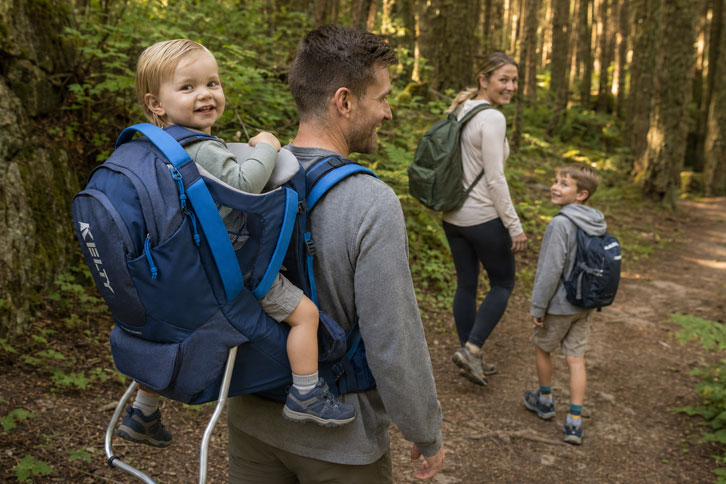
This one splits the difference between Osprey’s storage and a lower price tag. At 26 liters, it holds about as much as the Poco Plus, and the torso adjustment system is genuinely the easiest to use of anything we looked at, which matters if more than one adult will wear it over the season.
It’s heavier on your back than the Deuter once loaded, and despite being positioned as the “value” pick among the premium carriers, it’s still a real investment. Think of it as the choice if you want Osprey-level capacity without going all the way to Osprey’s price.
Best for: Families who want maximum storage without buying the single priciest carrier. Skip it if: carrying the lightest possible pack weight is your top priority.
5. ClevrPlus Canyonero – Best Budget
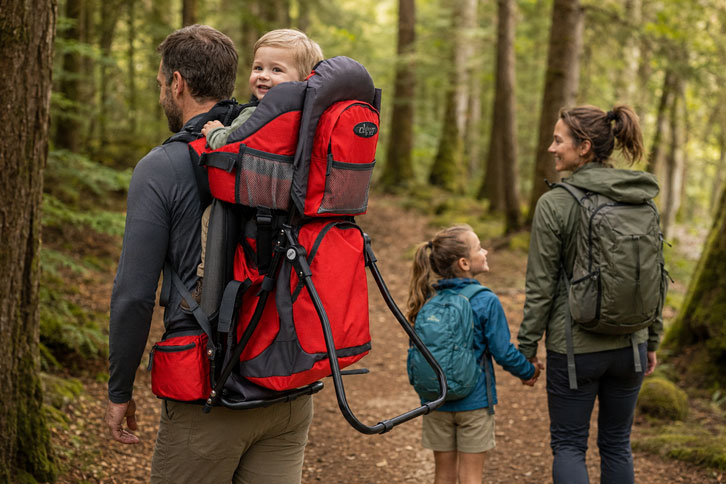
If you’re hiking a handful of times a season and don’t want to drop $300+ on gear your kid will outgrow, this is the one to buy. It includes a stand-alone kickstand and a sun and rain hood standard, features some competitors charge extra for. At under $135, it’s less than half the price of anything else on this list.
The suspension and padding aren’t in the same league as the premium picks, and you’ll notice it more the longer and rougher the hike gets. For an afternoon trail near camp, it’s more than enough. For a serious all-day mountain hike, it starts to show its limits.
Best for: Occasional hikers who want solid basics without a big investment. Skip it if: you’re hiking most weekends and logging serious mileage, the premium picks earn their price there.
Buying Guide: What to Actually Look For
Minimum age and neck control. Most framed hiking carriers require a baby to sit unassisted with full head and neck control, typically starting around 6 months. This is different from a soft-structured everyday carrier, which can be used earlier. Always check the manufacturer’s stated minimum before your first hike.
Weight capacity. Most carriers in this category top out between 40-48.5 lbs, including the weight of anything you pack alongside your child. Check both the child weight limit and the total carrying capacity so you’re not surprised mid-hike.
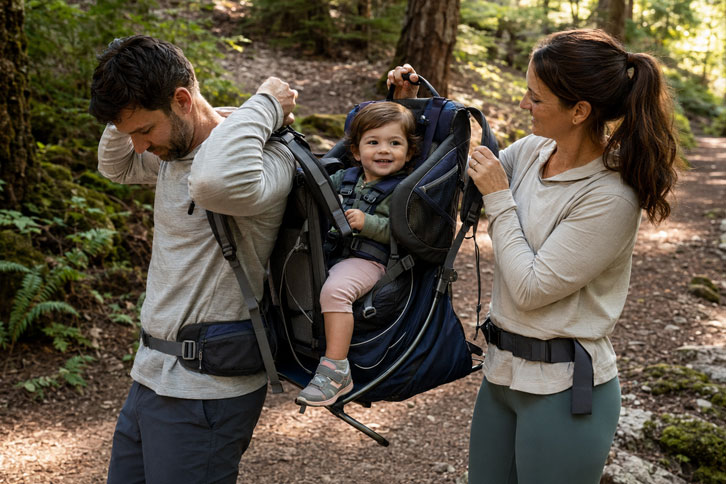
Torso adjustability. If more than one parent will wear the carrier, or if you plan to use it for a couple of years as your kid grows, look for an easy torso adjustment system. This matters more than most first-time buyers expect.
Storage capacity. More liters means fewer things you need to stuff in your pockets or carry separately: diapers, snacks, a water bladder, an extra layer. If you’re already packing a full family camping checklist for the trip, having storage built into the carrier is one less bag to manage.
Sunshade and weather protection. Babies riding up high get more direct sun exposure than you do at ground level. A sunshade that actually deploys easily (not a fight with a stubborn zipper) gets used more consistently.
Final Verdict
Best Overall: The Osprey Poco Plus earns it for the combination of storage, suspension comfort, and the easiest sunshade to use one-handed while your other hand is holding a snack, a leash, or a toddler’s hand.
Best Budget: The ClevrPlus Canyonero covers the basics well for families who hike occasionally and don’t need premium suspension for every trip.
Best Premium: The Thule Sapling Elite is worth the extra cost specifically for households where two parents trade off carrying duty on the same hike.
Frequently Asked Questions
What age can a baby ride in a hiking carrier?
Most framed hiking carriers require a baby to sit unassisted with full head and neck control, which usually lands around 6 months, though every manufacturer sets its own minimum. Check the specific carrier’s guidelines before your first trip.
How much weight can a baby hiking carrier hold?
Most carriers in this category hold between 40 and 48.5 lbs of total capacity, which includes your child plus anything packed alongside them. High-capacity carriers like the Osprey Poco Plus and Kelty Journey PerfectFIT sit toward the top of that range.
Are framed hiking carriers safe for newborns?
No. Framed carriers are built for babies who can sit up on their own with good head and neck control, not newborns. For younger babies, use a soft-structured front carrier instead and switch to a framed hiking carrier once your baby hits that sitting milestone.
What’s the difference between a soft-structured carrier and a hiking carrier?
A soft-structured carrier is a fabric wrap-style carrier meant for shorter wear around town, usable from a younger age. A hiking carrier is a framed backpack built for trail miles, with a kickstand, storage, a sunshade, and suspension designed to distribute weight for long stretches.
How long can a baby comfortably stay in a hiking carrier?
Most families cap it around 2-3 hours before taking a break to let their kid stretch, move, and reset. Watch for fussiness or leg-numbness cues rather than sticking to a strict time limit.
Do I need a separate hiking carrier if I already have an everyday baby carrier?
Usually yes, if you’re doing real trail miles. Everyday soft-structured carriers aren’t built for the storage, suspension, or multi-hour comfort that a framed hiking carrier provides, and using one on a long, uneven trail gets uncomfortable fast for both of you.