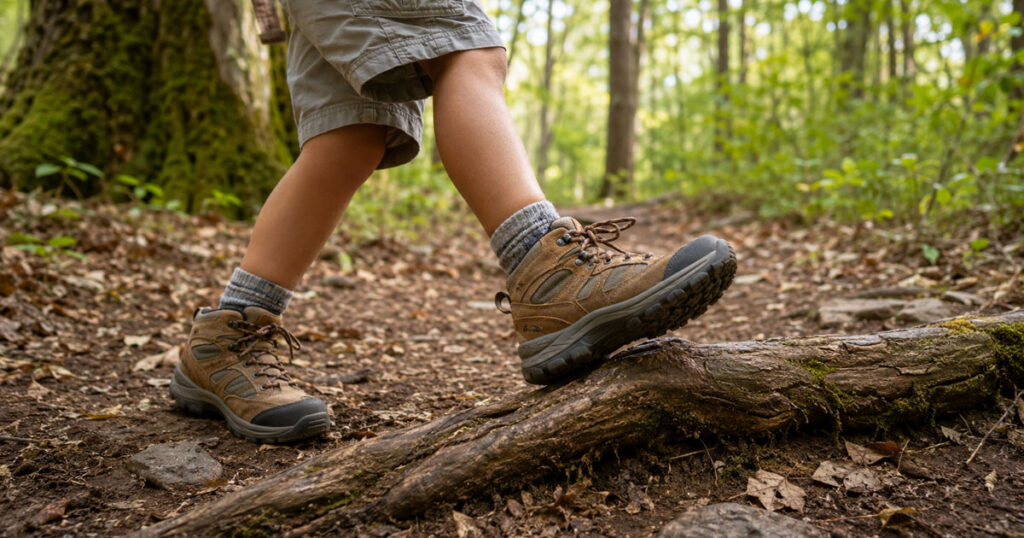
Short answer: the Adidas Terrex AX4R Mid is the best all-around hiking boot for kids, with grippy traction and ankle support that doesn’t need days of breaking in before your trip. If you don’t want to spend $70 on boots your kid will outgrow in one growth spurt, the Northside Cedar Rapids covers the basics for under $40. And if you’re logging real trail miles on a multi-day camping trip, the Merrell Moab 3 Mid Waterproof is the one built to last.
Kids’ feet grow fast, which makes this a weird category to shop for. You want something that actually protects their feet on rocky, root-covered trails, but you don’t want to drop $80 on a boot that fits for one camping season. Here’s what’s worth it and what isn’t.
Quick Top 3 Picks
- Best Overall: Adidas Terrex AX4R Mid – grippy traction, real ankle support, almost no break-in period, around $70
- Best Budget: Northside Cedar Rapids – solid traction and padding for short family hikes, around $36-40
- Best for Serious Trail Miles: Merrell Moab 3 Mid Waterproof – the kids’ version of one of the most trusted adult hiking boots, around $70-75
Comparison Table
1. Adidas Terrex AX4R Mid – Best Overall
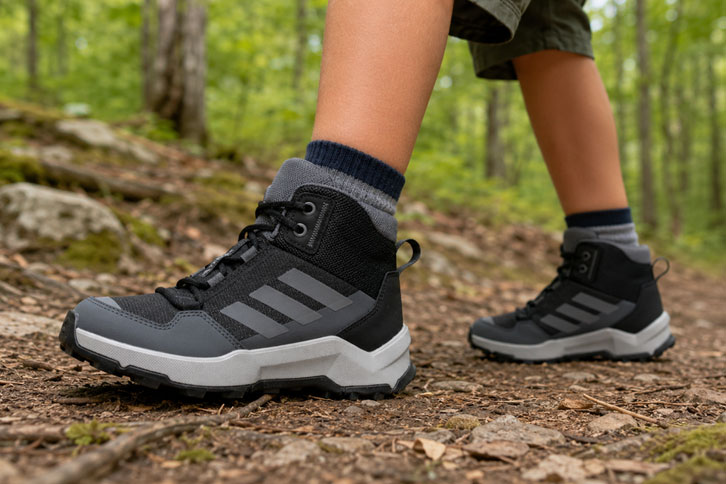
This one earns the top spot because it doesn’t ask you to plan around a break-in period. Most kids can wear these straight out of the box on a moderate hike without blisters, which matters when your camping trip is this weekend and not three weeks from now. The traction holds up on loose gravel and wet rock, and the ankle support is real without feeling bulky or stiff on smaller feet.
It’s a mid-cut design, so it splits the difference between a low-top trail shoe and a full boot. That’s the right call for most family hikes, which rarely involve the kind of technical terrain that demands a stiffer, heavier boot.
Best for: Families who want one boot to handle most trail conditions without a lengthy break-in period. Skip it if: your kid is mid-growth-spurt and will outgrow it before you get real use out of it, go budget instead.
2. Merrell Moab 3 Mid Waterproof – Best for Serious Trail Miles
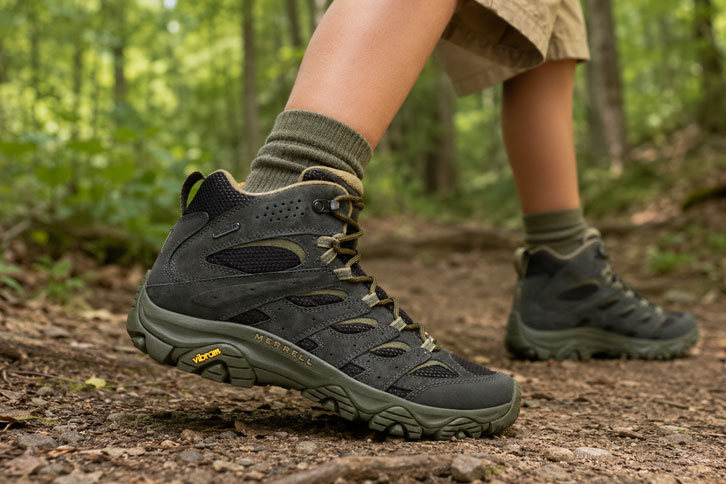
If your family is doing actual mileage over a multi-day camping trip, this is the boot that holds up. The waterproofing genuinely keeps feet dry through stream crossings, wet grass, and the puddle your kid insists on stepping in anyway. The toe cap is reinforced enough to handle roots and rocks without your kid noticing.
The trade-off is a slightly stiffer feel out of the box compared to the Adidas. It benefits from a short break-in period of a few short walks before a big hike, rather than being trip-ready on day one.
Best for: Multi-day camping trips with real hiking distances and wet trail conditions. Skip it if: you’re mostly walking flat, dry campground paths, you don’t need this much boot.
3. KEEN Targhee 4 Mid Waterproof – Best Toe Protection
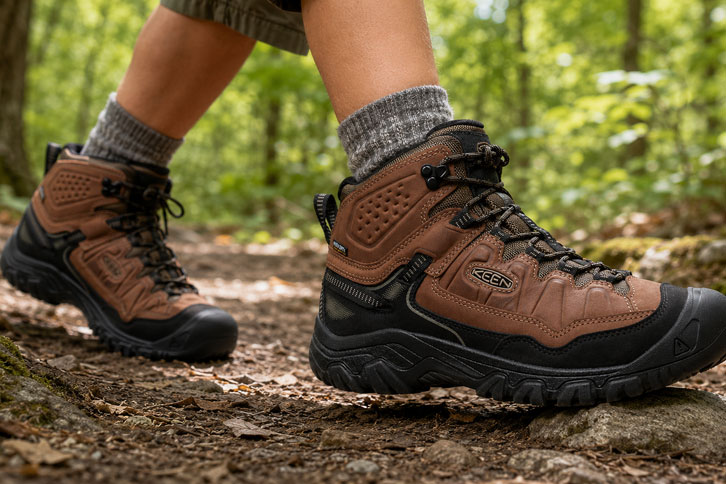
If you’ve got a kid who treats every rock on the trail as something to kick rather than step around, this is the boot for that kid. KEEN’s signature toe bumper wraps further around the front of the foot than most competitors, which holds up well against the general chaos of a 7-year-old on a trail. The no-tie, easy-adjust lacing system also means less time stopped on the trail redoing a bow.
It runs a touch narrower in the heel than the Merrell, so it’s worth trying on in person if your kid has a wider foot. Traction on uphill climbs is strong, with enough cushion on the way back down that tired legs don’t feel every root.
Best for: Kids who are hard on shoes and need real protection up front. Skip it if: your kid has a wide foot, try these on before buying.
4. Columbia Peakfreak Rush Mid Waterproof – Best Value
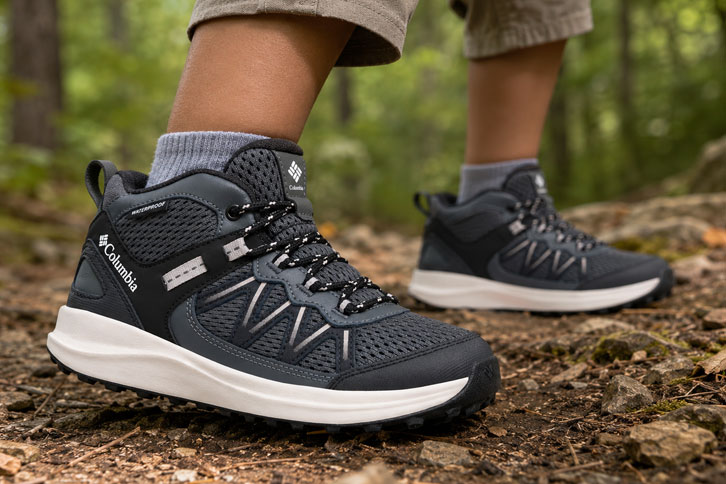
This one splits the difference between the premium picks and the budget option. Columbia’s Omni-TECH waterproofing actually works, keeping feet dry in testing through wet grass and shallow puddles, and the Omni-Grip rubber sole grips well on rock and dirt. You’re getting most of what the pricier boots offer for meaningfully less money.
It’s not quite as refined as the Merrell or Adidas in terms of cushioning over a long day, and the toe protection isn’t as beefed-up as the KEEN. For a family that hikes a handful of weekends a season rather than every trip, that’s a fair trade.
Best for: Families who want genuine waterproofing without paying premium prices. Skip it if: you’re hiking every weekend and want the extra cushioning of a top-tier boot.
5. Merrell Trail Chaser 2 – Best Lightweight / Everyday
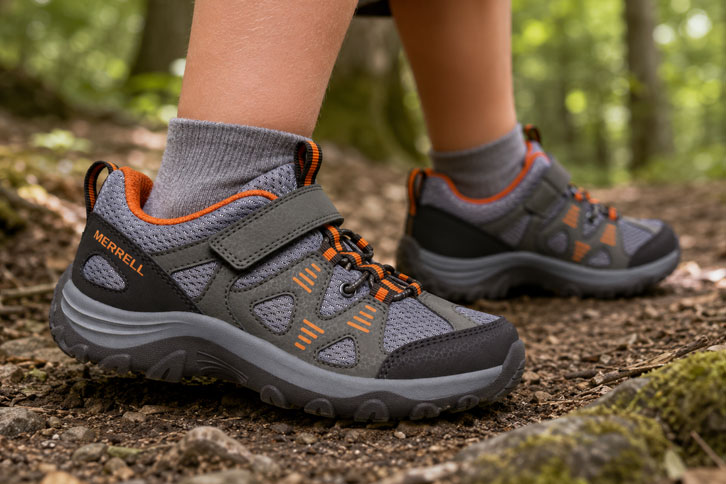
This is the boot for the kid who’ll wear it hiking on Saturday and to school on Monday. It’s lighter and more flexible than the true hiking boots on this list, which makes it comfortable for all-day wear off the trail, not just on it. It transitions well between the playground, the campsite, and an actual short hike without feeling like overkill.
It’s not the pick for technical terrain or wet conditions. There’s no meaningful waterproofing, and the tread is less aggressive than the Adidas or Merrell Moab. Think everyday trail shoe, not dedicated hiking boot.
Best for: Everyday wear that also needs to handle an easy family trail day. Skip it if: you need real waterproofing or serious ankle support for rougher terrain.
6. Northside Cedar Rapids – Best Budget
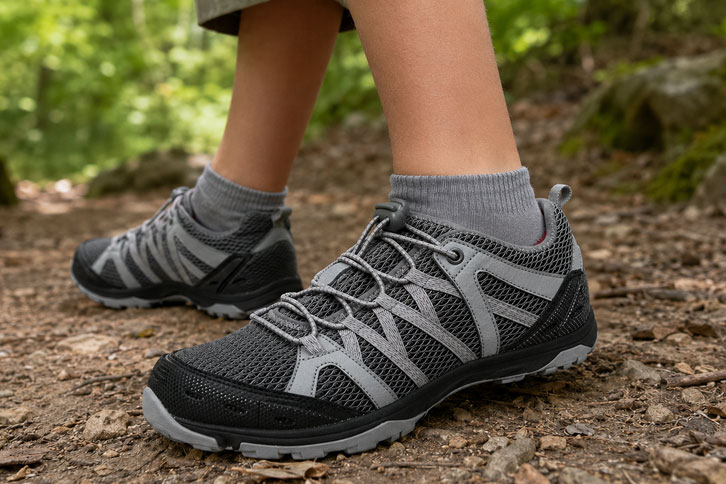
If your kid is going through a growth spurt, or you’re testing out whether family hiking is even going to stick, there’s no reason to spend $70+ right now. The Cedar Rapids has decent traction and enough padding to make a few miles of trail comfortable, at less than half the price of the premium picks.
The tread isn’t as aggressive as the name-brand options, and long-term durability is the trade-off. For occasional trail days near your campsite, it’s more than enough. For a kid who hikes every weekend, it’ll wear out faster than the pricier boots.
Best for: Occasional hikers, growth-spurt years, or families just starting out. Skip it if: you’re hiking most weekends, the premium picks earn their price there.
Buying Guide: What to Actually Look For
Size with room to grow, but not too much room. Kids’ feet can grow half a size in a few months. Use the classic thumb-width test: with your kid standing, there should be about a thumb’s width of space between their longest toe and the front of the boot. Any more than that and their foot slides around, which causes blisters and makes the boot harder to control on uneven ground.
Mid-cut vs. low-cut. A mid-cut boot (ankle-height) gives more support on uneven terrain and is the safer default for most family trails. A low-cut trail shoe is lighter and more flexible, which some kids prefer for shorter, easier hikes or everyday wear.
Waterproofing. Worth it if you’re hiking near streams, in spring mud, or anywhere rain is a real possibility. Skip the extra cost if you’re mostly hiking dry summer trails, since waterproof membranes trap a bit more heat.
Traction and tread depth. Deeper, more aggressive tread matters more on loose gravel, roots, and rock than on a flat, groomed campground path. Match the boot to the terrain you’ll actually be on, not the terrain you’re picturing.
Should you even buy premium? Honestly, think about how many months of wear you’ll realistically get before a growth spurt makes the decision for you. If your kid is between sizes or you’re not sure hiking will stick as a family activity, buy budget this year and upgrade next season once you know it’s a habit worth investing in.
Final Verdict
Best Overall: The Adidas Terrex AX4R Mid earns it for combining real traction and ankle support with a boot your kid can wear straight out of the box, no lengthy break-in required.
Best Budget: The Northside Cedar Rapids covers the basics well for occasional hikers, growth-spurt years, or families still figuring out if hiking is a regular thing for them.
Best for Serious Trail Miles: The Merrell Moab 3 Mid Waterproof is worth the extra cost specifically for families doing real mileage and wet trail conditions on multi-day camping trips.
Frequently Asked Questions
How do I know if my kid’s hiking boots fit correctly?
Use the thumb-width test: with your kid standing and their toes touching the front of the boot, there should be about a thumb’s width of space behind their heel. If you can’t fit a finger back there, size up. If there’s more than a thumb’s width of space up front, size down.
Do kids need waterproof hiking boots?
Only if you’re hiking near streams, in muddy spring conditions, or anywhere rain is likely. For dry summer trails, a non-waterproof boot is lighter, more breathable, and usually cheaper.
What’s the difference between hiking boots and regular sneakers for kids?
Hiking boots have deeper, more aggressive tread for grip on loose or uneven ground, plus more ankle support and tougher, more protective materials. Regular sneakers are fine for flat, groomed paths, but they slip more on rocky or root-covered trails.
How often should I replace my kid’s hiking boots?
Check the fit every few months, since growth is usually the reason boots get replaced before the tread wears out. As a rough guide, expect to size up roughly every 6-12 months for younger kids and less often as growth slows in the tween years.
Should I buy hiking boots a size bigger so they last longer?
No. A boot that’s too big causes blisters and makes it harder for your kid to feel stable on the trail. Size for a proper fit now, and treat the eventual upgrade as a normal part of hiking with growing kids.
Are mid-cut boots better than low-cut hiking shoes for kids?
Mid-cut boots give more ankle support, which is the safer default for uneven, rocky, or root-covered trails. Low-cut shoes are lighter and more flexible, which works fine for shorter, easier hikes or kids who find boots too stiff.