Not every camping activity needs to be a planned event. Some of the best outdoor fun comes from handing a kid a stick and walking away for twenty minutes. But it helps to have a list ready for the moments when “go play outside” gets you a blank stare instead.
This list is organized by age and activity type, from toddler-safe nature play to games that actually challenge older kids. Pick a few before the trip so you’re not improvising at 4pm with a tired, restless crowd.
Quick Picks by Age
- Toddlers (2-4): Nature mandala crafts, digging stations, simple 3-item scavenger hunts
- Kids (5-9): Fort building, animal track ID, capture the flag, horseshoes
- Tweens/Teens (10+): Geocaching, night hikes, photography scavenger hunts, more complex games
Toddler-Friendly Outdoor Play (Ages 2-4)
Toddlers don’t need structured games. They need safe space, interesting textures, and a grown-up nearby.
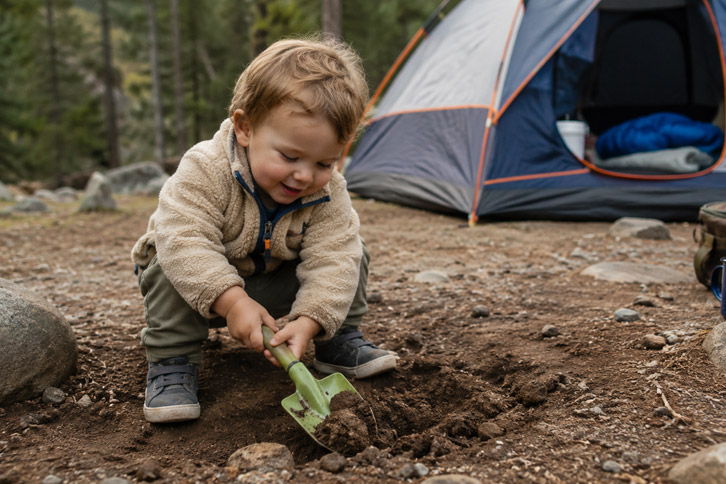
Digging stations. A small shovel and a designated patch of dirt (away from the fire and any roads) keeps a toddler occupied for a remarkable amount of time. Bring a bucket for “treasure” they find.
Nature mandala crafts. Give your toddler a paper plate or flat rock as a base, then let them arrange leaves, petals, and small stones into a pattern. No instructions needed beyond “make it pretty.”
Simple 3-item scavenger hunts. Skip the long printed list. Just say “find something red, something soft, and something round” and let them wander a small radius while you watch.
Mud and water play. A shallow puddle or the edge of a creek, with zero rules attached, is genuinely one of the highest-rated toddler camping activities. Pack a full change of clothes.
Active Games for Kids (Ages 5-9)
This age group has the energy and coordination for real games, but still needs clear, simple rules.
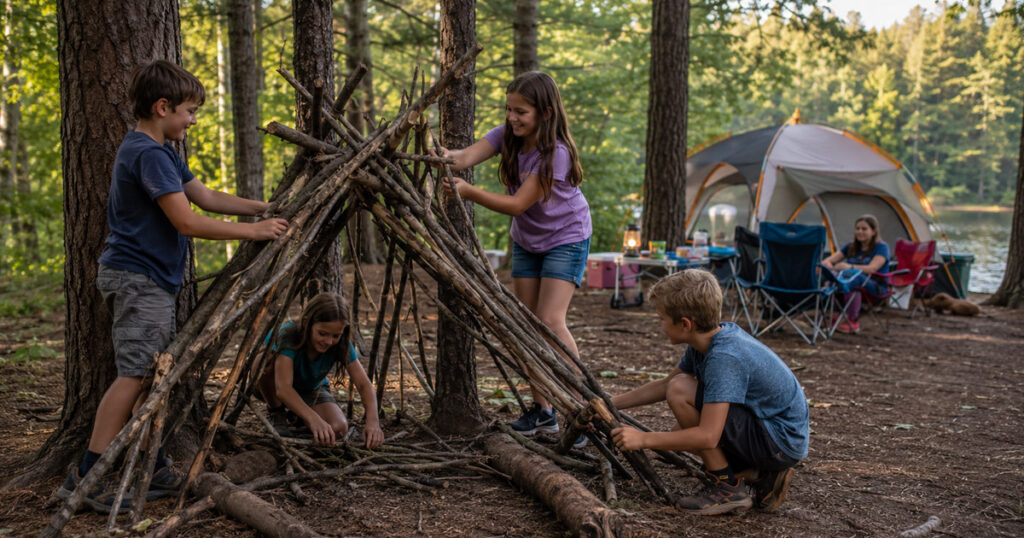
Fort building. Sticks, fallen branches, and a tarp turn into a fort in about 15 minutes. Kids this age will often spend an hour defending, redecorating, or expanding it.
Animal track and scat ID. Walk the campsite perimeter looking for tracks in dirt or mud near water sources. A printed track guide or offline-capable app turns this into a genuine mystery to solve.
Horseshoes. Low-effort for parents, genuinely engaging for kids. Most campgrounds with developed sites have a pit already, or a portable set packs small.
Capture the flag. Use the campsite loop or a clearing as the play area. Rules scale down easily (just tag and freeze) for the younger end of this range.
Stick boat racing. Find a creek or slow stream. Build tiny boats from sticks, bark, and leaves, then race them downstream. Costs nothing and reliably entertains for 20+ minutes.
Activities for Tweens and Teens (Ages 10+)
Older kids want a real challenge or at least the feeling of independence. These activities give them both while staying within sight.
Geocaching. Free apps show nearby hidden caches using GPS coordinates. It’s part scavenger hunt, part technology, and genuinely engaging for kids who think a basic nature walk is “boring.”
Night hikes. A short, well-lit walk after dark (headlamps required) to look for nocturnal animals or just experience the campsite differently. Keep it short and on a known trail.
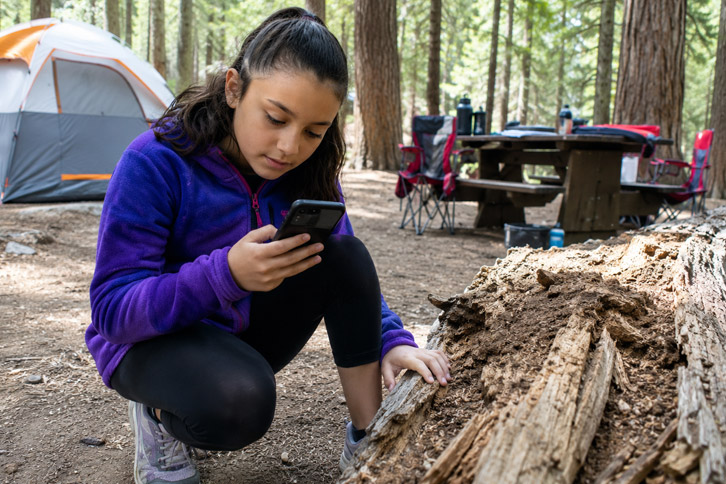
Photography scavenger hunts. Hand over a phone or a cheap point-and-shoot camera with a list of things to photograph (a shadow, something symmetrical, wildlife). It works because it gives them a “job” instead of a chore.
Cardboard box car races or obstacle courses. Slightly more elaborate builds (using whatever’s on hand) that give older kids something to design, not just play.
Nature Exploration: Works for Almost Any Age
Stargazing. No equipment required, though a stargazing app helps identify constellations for older kids who want specifics. Let eyes adjust for 10-15 minutes in the dark before expecting much.
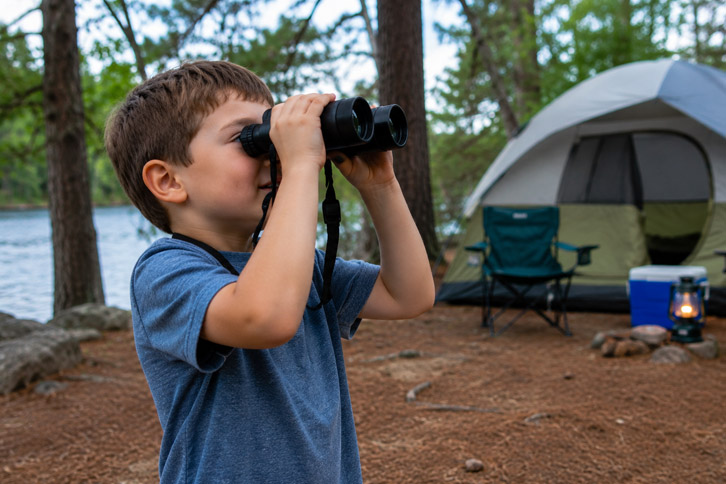
Bird and wildlife watching. A basic pair of binoculars turns a quiet moment at camp into actual entertainment. Mornings and dusk are the most active times to spot something.
Leaf and bark rubbing. Paper and a crayon, pressed against tree bark or a leaf, makes a simple texture print. Low effort, surprisingly satisfying for kids who like a tactile project.
Buying Guide: What’s Worth Packing for Activities
Match gear to the activity, not the other way around. A $40 kids binocular set is wasted if your campsite doesn’t have open sightlines. Check the terrain before buying anything specialized.
One headlamp per kid beats one flashlight for the group. Night hikes, flashlight tag, and even bathroom trips go smoother when hands stay free and nobody’s fighting over the one good flashlight.
Free apps replace a lot of gear. Geocaching, star map, and bird ID apps with offline mode cover several of these activities without buying anything extra, as long as you download maps before losing signal.
Final Verdict
Best for Toddlers: Digging stations and mud play. Zero setup, zero cost, consistently a hit.
Best for Active Kids: Fort building. Holds attention longer than almost any other free activity on this list.
Best for Tweens/Teens: Geocaching. Gives older kids independence and a tech-adjacent challenge without a screen replacing the outdoors.
Frequently Asked Questions
What outdoor activities work for a wide age range at once?
Scavenger hunts, fort building, and animal track walks adapt easily across ages by adjusting complexity. A toddler can find “something red” while an older sibling identifies specific track patterns on the same walk.
Do outdoor camping activities require special equipment?
Most don’t. Fort building, scavenger hunts, stick boats, and stargazing use items already at the campsite or free apps. The main gear worth buying is a headlamp per kid and a basic pair of binoculars.
How do I get a tween or teen interested in outdoor activities instead of their phone?
Lean into activities that use a phone productively, like geocaching or photography scavenger hunts, rather than fighting the device entirely. Independence-flavored activities (night hikes with a clear boundary, solo fort-building projects) also tend to land better than group games at this age.
Are outdoor camping activities safe for toddlers?
Yes, with active supervision. Keep toddler activities within a clear, visible boundary and away from fire or open water, and expect to stay within arm’s reach rather than just within sight.
What’s a good free activity if we forgot to pack anything for the kids?
Animal track identification and fort building need no gear at all, just sticks, dirt, and a little patience. A simple “find five things that are different shades of green” scavenger hunt also works with zero prep.
How long do these activities typically hold a kid’s attention?
Most run 15-30 minutes depending on age and energy level. Plan 2-3 activities per half-day rather than one long block, since switching activities usually re-engages kids better than pushing through one game.