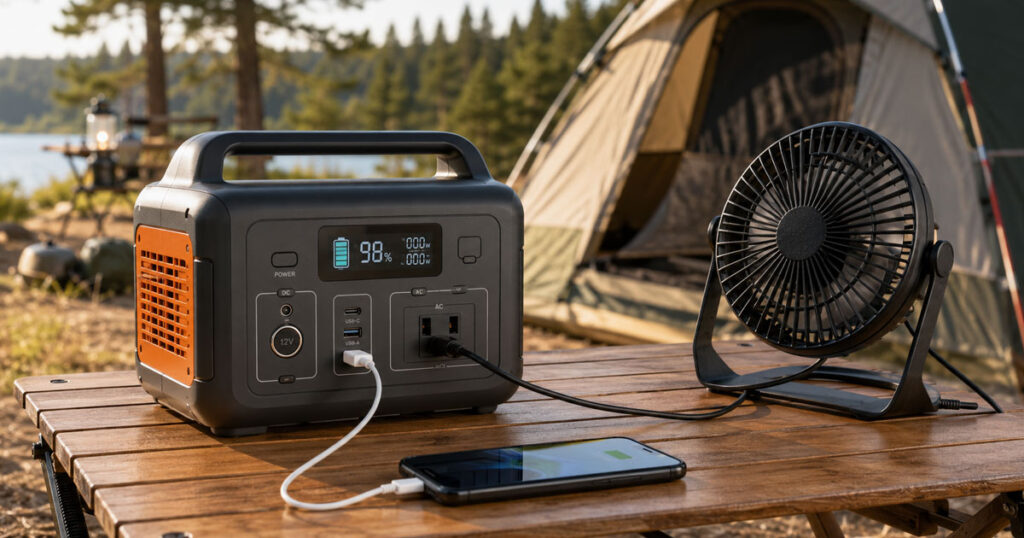
Short answer: the Jackery Explorer 300 Plus is our pick for most families, since 288Wh comfortably covers phones, a headlamp, and a battery fan for a weekend without being more power (or money) than you’ll actually use. If you’re camping with a bigger group or running something power-hungry like a CPAP overnight, step up to the Jackery Explorer 1000 v2. And if you just need backup phone charging for one trip a year, the EcoFlow River 3 covers that for under $250.
Every “best power station” list on the internet throws watt-hour numbers at you and assumes you already know what 300Wh actually means in practice. We don’t think that’s fair to a family buying their first one. So every pick below comes with a plain answer to “what does this actually run for a weekend,” not just a spec sheet.
Quick Top 3 Picks
- Best Overall: Jackery Explorer 300 Plus ($299), the right size for most families, without paying for capacity you won’t use.
- Best Budget: EcoFlow River 3 ($249), covers phone and small device charging for occasional campers.
- Best for Bigger Families / Multi-Day Trips: Jackery Explorer 1000 v2 ($499), enough capacity for a fan, lantern, and everyone’s devices across several days.
What Watt-Hours Actually Mean for Your Family
Mini-Reviews
1. Jackery Explorer 300 Plus – Best Overall
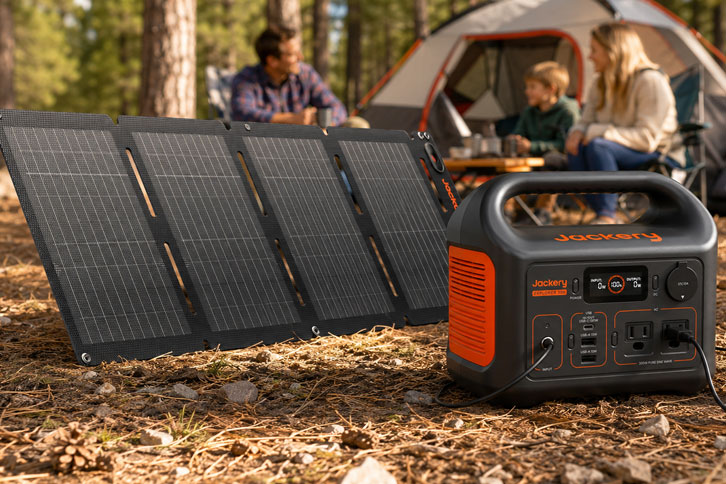
At 288Wh and 7.5 pounds, this is the size we’d recommend to most families starting out. It has a real AC outlet plus USB-A and USB-C ports, recharges from a wall outlet in about 2 hours, and is light enough for one person to carry from the car to the picnic table without a second trip.
Best for families of 2-4 camping a few times a season who mostly need phones, a fan, and a lantern covered. Skip if you’re running a CPAP nightly or camping with a bigger group, size up to the 1000 v2 below. We cover this same unit briefly in our camping gadgets roundup as our overall top pick for a reason.
2. EcoFlow River 3 – Best Budget
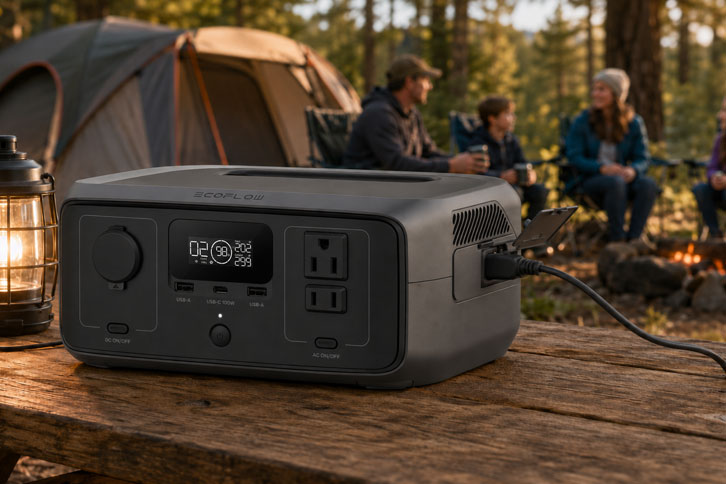
At $249 and just 7.7 pounds, this is the easiest first step into portable power without committing real money. 245Wh isn’t much, but for a family that camps once or twice a year and mainly needs phones charged and maybe a small lantern, it’s genuinely enough.
Best for occasional campers who want phone-charging peace of mind without a big purchase. Skip if you camp more than a handful of times a year, where the cost-per-watt-hour math favors stepping up to the Explorer 300 Plus instead.
3. Bluetti AC70 – Best Watt-Hours Per Dollar
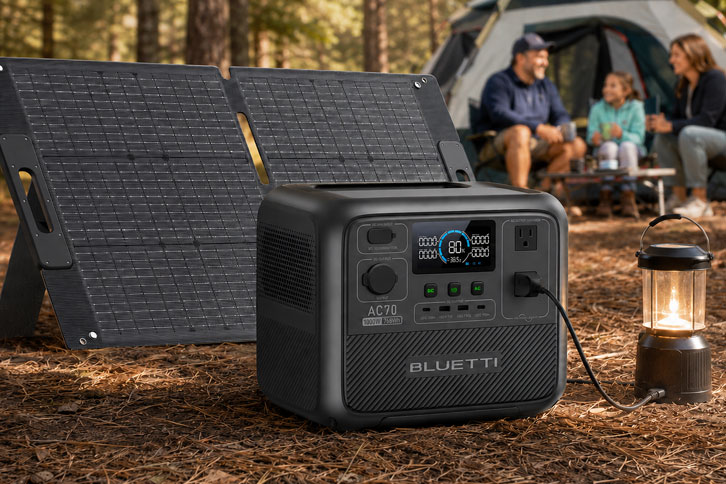
768Wh and a 2,000W surge output for $599 puts this ahead of most competitors on pure value. The LiFePO4 battery chemistry (safer, longer-lasting than older lithium-ion types) is rated for thousands of charge cycles, so it holds up over years of seasonal use, not just one camping phase.
Best for families who want real headroom for a fan, mini fridge, or CPAP without jumping to a 1,000Wh+ unit. Skip if 768Wh is more than you’ll realistically use, that’s real money to spend on unused capacity.
4. Jackery Explorer 1000 v2 – Best for Bigger Families / Multi-Day Trips
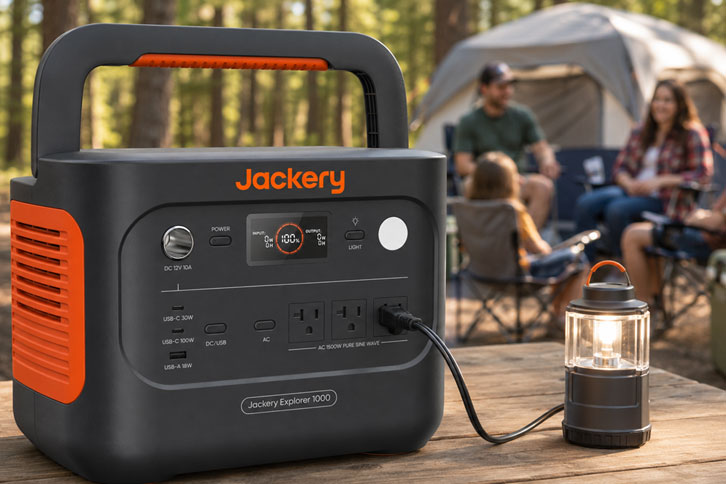
1,070Wh and 1,500W output means this one can genuinely run a mini fridge, multiple fans, lanterns, and everyone’s devices across a 3-4 day trip without a recharge. At 22 pounds, it’s a two-hand carry, not a grab-and-go, but for a family of 5+ or a week-long trip, the extra capacity earns its keep.
Best for families of 5+, multi-day trips, or anyone running a CPAP or mini fridge overnight. Skip if you’re a family of 2-3 doing weekend trips, the Explorer 300 Plus covers you for $200 less.
5. Anker SOLIX C1000 – Best App Control
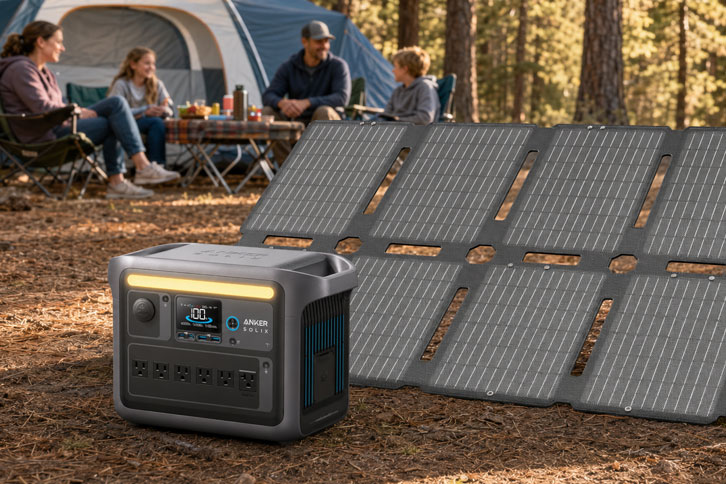
1,056Wh with 1,800W output and one of the fastest wall recharge times in this list (about an hour to 80%). The companion app lets you monitor charge level and control outlets remotely, handy for checking if the fan is still running from inside the tent without unzipping to look.
Best for tech-comfortable families who like app control and want the fastest possible recharge between trips. Skip if you’d rather have a simple button-and-display unit with nothing to sync or update.
6. Goal Zero Yeti 300 – Best Camping-First Brand
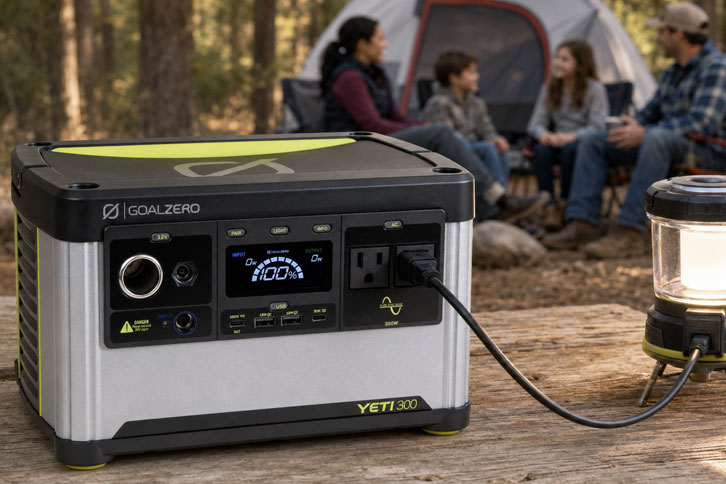
Goal Zero built its name specifically in the outdoor and camping space, not general consumer electronics, and it shows in small details like a sturdier carry handle and a simpler control panel. At 297Wh for $349, it costs a bit more per watt-hour than the Jackery or EcoFlow equivalents, but it comes from a brand a lot of long-time camping families already trust.
Best for families who prioritize buying from an established outdoor brand over squeezing the most watt-hours per dollar. Skip if price-per-watt-hour is your main decision factor, the Explorer 300 Plus or Bluetti AC70 win on pure value.
Buying Guide: How to Size a Power Station for Your Family
Match capacity to your actual gear, not your imagination. List what you’d actually plug in (phones, a fan, a lantern, maybe a CPAP) and add up realistic hours of use. Most families overestimate what they’ll run and end up paying for unused capacity.
Check the outlet types, not just watt-hours. A high-capacity unit with only one AC outlet still means sharing a single plug all weekend. If you’ll be charging multiple devices at once, outlet count matters as much as total capacity.
Recharge time matters more than people expect. A unit that takes 6+ hours to recharge from a wall outlet is a problem if you’re camping multiple nights without driving anywhere. Look for 1-3 hour recharge times if that’s your situation.
Consider a solar panel add-on for longer trips. Most major brands sell a compatible folding solar panel. It’s a nice-to-have for a weekend, genuinely useful for anything longer than 4-5 days off-grid.
Final Verdict
- Best Overall: Jackery Explorer 300 Plus. The right amount of power for most families without overspending on capacity you won’t use.
- Best Budget: EcoFlow River 3. Covers phone charging for occasional campers at the lowest real entry price.
- Best Premium: Jackery Explorer 1000 v2. The one to buy if you’re a bigger family, camp multiple days at a time, or run something power-hungry like a CPAP.
Frequently Asked Questions
Do I actually need a portable power station for family camping?
Not always. If you’re camping at a developed site with power hookups, or only camping once a year with light phone-charging needs, a $50 power bank might cover you. A dedicated power station earns its cost once you’re camping regularly or running something bigger than a phone.
What size power station does a family of four need?
For a typical weekend, 250-300Wh covers phones, a fan, and a lantern comfortably. If you’re running a CPAP or camping multiple days without a recharge option, look at 750Wh or higher.
Are portable power stations safe to use inside a tent?
Yes, unlike gas generators, battery power stations produce no carbon monoxide and no exhaust fumes, so they’re safe near sleeping areas. Just keep them away from direct water exposure and extreme heat.
How long does a portable power station take to recharge?
Most mid-size units recharge from a wall outlet in 1-3 hours. Recharging via a car outlet or solar panel takes considerably longer, often 5-8+ hours, so plan around that if you’re relying on solar for a multi-day trip.
Is it worth buying a solar panel to go with a power station?
For weekend trips, not really, since you’ll likely recharge from a wall outlet before and after. For trips longer than 4-5 days without access to power, a compatible solar panel becomes genuinely useful.
Jackery vs. EcoFlow vs. Bluetti, which brand is best for camping?
All three make solid units, and the differences matter less than picking the right capacity for your family. Jackery tends to win on simplicity and weight, EcoFlow on fast charging and app features, and Bluetti on watt-hours per dollar. Match the model to your capacity needs first, then pick whichever brand fits your budget at that size.