Home / Tents / Tents With AC Ports: How to Run AC in a Tent Safely
Tents With AC Ports: How to Run AC in a Tent Safely
Updated
To run an air conditioner in a tent, you need a campsite with electric power or a large enough power source, a unit sized to the tent’s floor, and a way to route the exhaust hose outside. An AC port makes that neater, but it isn’t essential, and port details change between versions, so confirm the port on the exact listing before you buy.
Day4Camp earns a commission from qualifying purchases, at no extra cost to you. How we choose.
Most listings say little about AC ports, and the sources we read don’t always agree. So this guide covers what to look for and how to set up safely, followed by tents worth checking. We have not tested these tents or any AC setup ourselves.
The short answer
First stepFind your powerAn electric campsite is the simplest option. Check that your site has it before you buy anything.
SizingAbout 5,000 BTU for 100 to 150 sq ftThat’s the ENERGY STAR figure for rooms. Tents hold cool air less well.
TentsConfirm the portLook for it in the current listing or manual, or ask the seller.
What an AC Port Does
An AC port is a closable opening, usually low on a tent wall, that lets you pass a hose or duct through without leaving a door unzipped. Some tents have a separate electrical port, often called an E-Port, for a power cord. That is not the same thing, since a cord opening may be too small for a hose.
How to confirm a tent has one
Search the listing and manual for “AC port” or “air conditioner port.”
Look at the photos for the port itself, and compare its size with your hose.
Check that the listing is for the exact version you’re buying.
Ask the seller if you can’t find it. A low vent or a “ready” label doesn’t prove there’s a port.
If your tent has no port
You can often route a hose through a door or a low vent, though it won’t seal as well. We don’t suggest cutting your tent, since that can damage it and may affect the warranty.
What Size Unit Do You Need?
ENERGY STAR’s room chart is a useful starting point. A tent has thin walls and no insulation, and it may sit in full sun, so don’t expect it to match a room.
Floor area
ENERGY STAR room size guide
Example tent
100 to 150 sq ft
5,000 BTU
CORE 10-Person (140 sq ft)
150 to 250 sq ft
6,000 BTU
Wenzel Klondike 8 (176 sq ft)
250 to 300 sq ft
7,000 BTU
Very large tents
ENERGY STAR also suggests adding capacity for strong sun and for more than two people. Shade helps more than almost anything else, so choose a shaded site if you can and close the windows on the sunny side.
How to Power It Safely
Campsite power. Check the outlet type and the amps at your site, and compare them with the label on your unit.
Extension cords. The CPSC advises limiting extension cords, especially with room air conditioners. If the unit’s manual allows one, use a heavy-duty cord rated for the load, marked for outdoor use. Keep connections off wet ground.
Power stations. Check the watts on the unit’s label. As a rough example, a unit drawing 500 watts would drain a 1,000 watt-hour power station in under 2 hours, so this rarely lasts through the night.
Setting Up Inside the Tent
Vent the exhaust outside. Follow the maker’s setup. The hot air has to leave the tent for the unit to cool it.
Keep it dry. Use a unit made for your conditions, keep it level and off wet ground, and handle any drain water as the manual says.
Seal around the hose. Close the gaps so cool air stays in, but keep some airflow as the tent’s maker advises.
Tidy the cords. Run them along a wall so nobody trips at night.
Family Tents to Consider
We chose these for their size and layout. We could not confirm a dedicated AC port on any of them, so check the listing first.
This large instant tent splits into three rooms. An independent review by Wilderness Times lists 192 square feet and about 55 pounds, and calls the 12-person label optimistic, saying it sleeps about 6 comfortably. Other reports describe ports or ground vents, but they don’t agree on the details. There are also several versions, so check which one you’re buying.
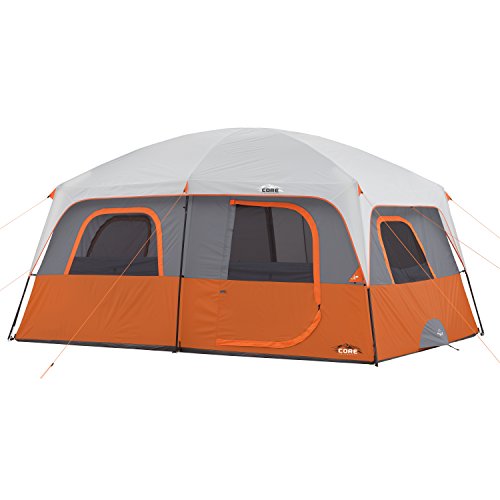
At 140 square feet with an 86-inch center height, this tent fits the 5,000 BTU line on the chart above, and CORE says it’s comfortable for 5 people with gear. It has a room divider, so you could cool one side. We did not find an AC port in the listing we read.
This tent has a convertible screen room, mesh roof vents and a vent at the back. Some retailers have described a ground-level port, but the Amazon listing we read doesn’t mention one, so confirm before you buy. The floor is 16 x 11 feet with a 78-inch center height.
The listing confirms a screened porch, vertical walls and room for two queen air beds. We did not see a dedicated AC port, so plan to route the hose through a door or vent, and keep it from pinching in the zipper.
Who it's for
Families in buggy areas who want a smaller tent to cool.
It’s a closable opening, usually low on a wall, that lets you pass a hose or duct through without leaving a door unzipped. It’s different from an E-Port, which is a small opening for a power cord.
How do I know if a tent has a real AC port?
Look for “AC port” in the current listing or manual, check the photos, and compare the opening with your hose. Versions change, so ask the seller if you’re not sure.
Can I run an air conditioner in a tent without an AC port?
Often, by routing the hose through a door or low vent, though it won’t seal as well. We don’t suggest cutting the tent, since that can damage it and may affect the warranty.
What size air conditioner do I need for my tent?
As a starting point, ENERGY STAR’s room chart lists 5,000 BTU for 100 to 150 square feet and 6,000 BTU for 150 to 250 square feet. Tents hold cool air less well than rooms, so shade matters a lot.
Is it safe to run a generator near my tent to power the AC?
Only outdoors, more than 20 feet from tent doors, windows and vents, according to the CDC. Never run one inside a tent, vestibule or screen room. Generators make carbon monoxide, which has no smell.
Can a power station run a tent air conditioner all night?
Usually not, unless it’s very large. As a rough example, a unit drawing 500 watts would drain a 1,000 watt-hour power station in under 2 hours. Check the watts on your unit’s label and do the math first.
Can I use an extension cord with a tent AC?
Check the unit’s manual first. The CPSC advises limiting extension cords, especially with room air conditioners. If one is allowed, use a heavy-duty cord rated for the load and marked for outdoor use.
We use cookies to measure traffic and improve the site.