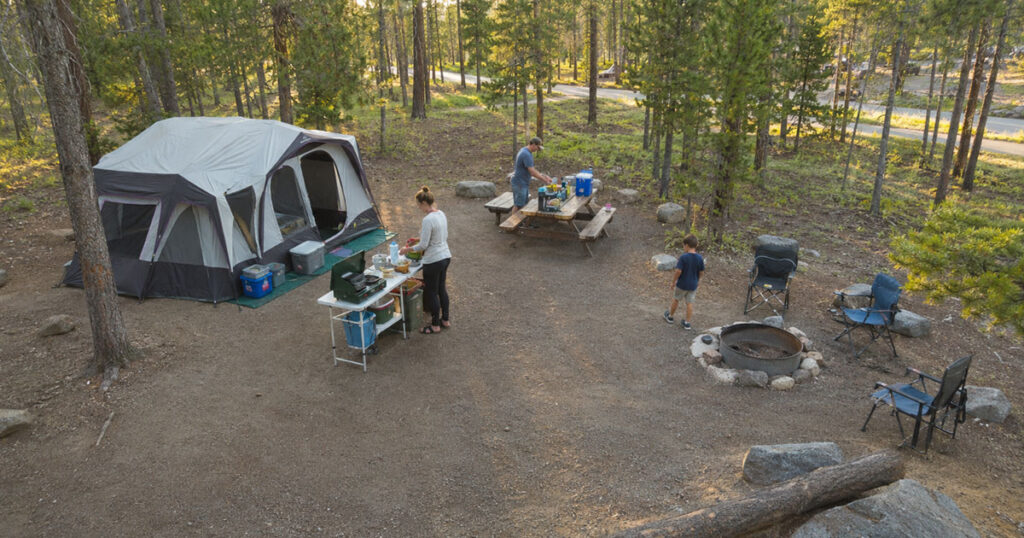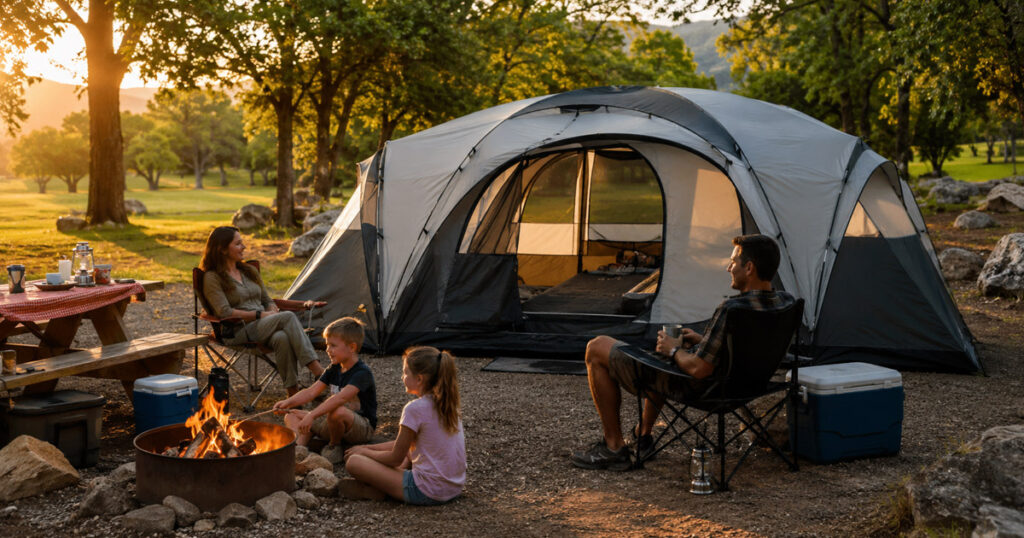
“6-person” is the most searched tent size for a reason: it’s the sweet spot for a family of four with room for gear, or a family of five if everyone’s friendly. But here’s the catch nobody tells you on the box. A “6-person” rating is a manufacturer’s max capacity, not a comfort number. In real life, these tents sleep 3-4 people well once sleeping pads, bags, and a kid’s stuffed animal collection go down.
We compared the most current 2026 tests, owner reviews, and spec sheets to find the 6-person tents that hold up to actual family use, not just the capacity number stamped on the box.
Quick Top 3 Picks:
- Best Overall: The North Face Wawona 6, near-vertical walls, a huge vestibule, and rain protection that holds up over a multi-day storm.
- Best Budget: Kelty Wireless 6, around $280, with a 6-minute setup and surprisingly solid headroom for the price.
- Best for Wind: REI Co-op Base Camp 6, the one we’d pick for an exposed, windy campsite.
Comparison Table: Best 6-Person Tents
The North Face Wawona 6 – Best Overall
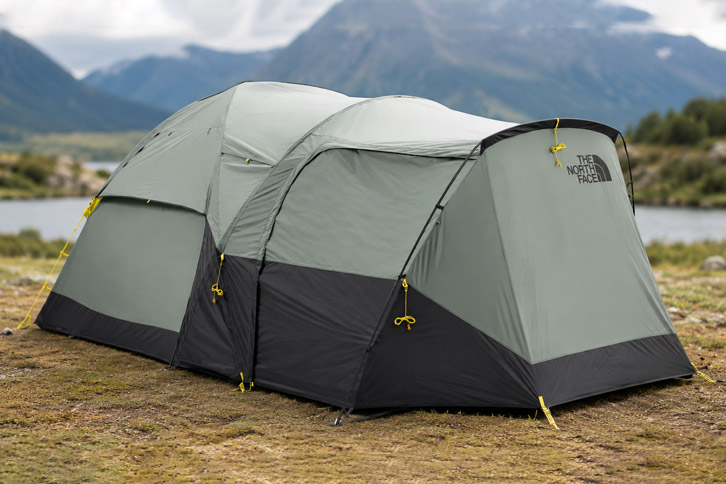
The Wawona 6 keeps showing up at the top of every 2026 test list, and it earns the spot. The 120 x 96-inch floor and near-vertical walls mean two adults can actually stand and change clothes without hunching over, and the oversized vestibule gives you a covered spot to stash muddy boots and a camp chair.
The rainfly is a 75-denier polyester taffeta with a 1,200mm hydrostatic head, and the floor steps up to 1,500mm with a PU coating. Translation: it holds up through steady rain, and most testers report no leaks during multi-day wet weekends. It’s not a 4-season tent, so don’t expect it to shrug off snow load.
At just under 21 lbs packed, it’s strictly a car-camping tent. Setup takes about 10-15 minutes with two people; doable solo, but expect some mild swearing the first time.
Best for: families who camp several times a year and want one tent that handles whatever weather shows up.
Skip it if: you camp once or twice a summer in calm weather, the Kelty Wireless 6 below will save you nearly $200.
REI Co-op Base Camp 6 – Best for Wind
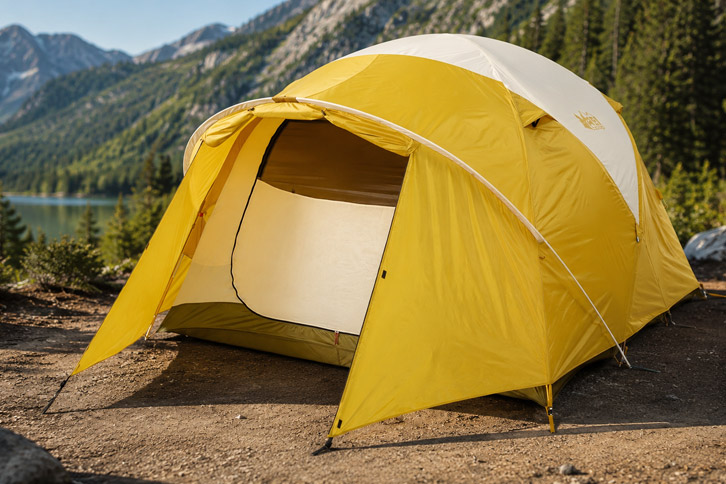
The Base Camp 6 uses a five-pole dome structure instead of a tall cabin shape, which is exactly why it holds up so well in wind. Testers report it staying solid in gusts over 40 mph, where taller cabin-style tents start flapping and flexing.
At 74 inches of peak height and 84 sq ft of floor space, it’s a touch smaller than the Wawona, but it makes up for it with smart organization: two vestibules and more interior pockets than your kids will know what to do with.
Best for: exposed campsites near the coast, plains, or anywhere wind is a regular guest.
Skip it if: you mostly camp in tree-covered campgrounds, you’re paying for wind resistance you won’t need.
NEMO Aurora Highrise 6P – Best for Headroom
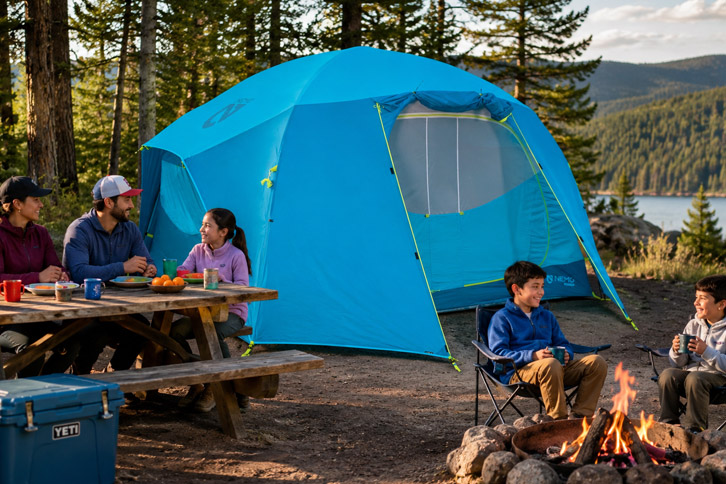
If you’ve ever hit your head on a tent ceiling while changing a toddler’s pajamas, the Aurora Highrise was built for you. Steep sidewalls and a standing-height interior (for campers under 6’5″) mean the floor space at 100 x 120 inches is actually usable, not just listed on a spec sheet.
It seals out all but the most sideways rain, which is typical for this category, and the setup is straightforward for two people in about 10 minutes.
Best for: taller parents and families who spend a lot of waking time inside the tent (rainy mornings, nap time).
Skip it if: you’re tight on truck space, the Highrise design takes up more room packed than a standard dome.
Caddis Rapid 6 – Best for Fast Setup
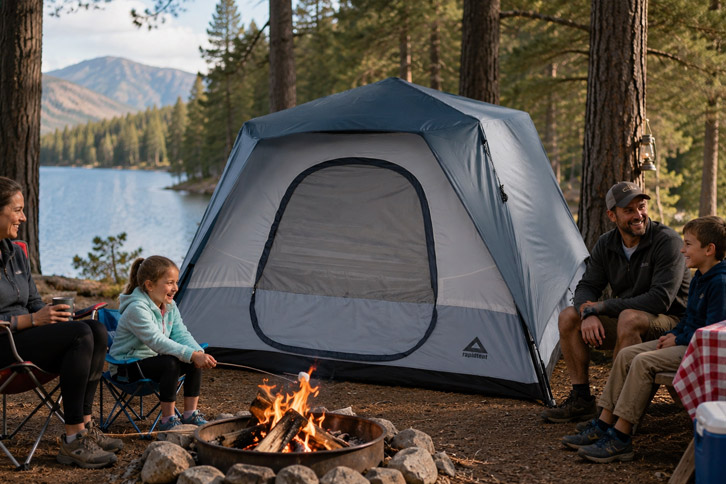
The Rapid 6 is the only true instant tent on this list, with poles pre-attached to the canopy. No sleeves, no pole puzzle, no manual. It’s the tent we’d recommend to a family with a toddler who insists on “helping” while you’re trying to set up camp.
It’s not the most weather-tough option here, but for typical summer weekends, the trade-off of speed for ultimate storm-proofing makes sense for a lot of families.
Best for: parents who’d rather spend setup time unpacking the cooler than fighting with poles.
Skip it if: you camp in unpredictable mountain weather, the Wawona or Base Camp 6 will handle it better.
Kelty Wireless 6 – Best Budget
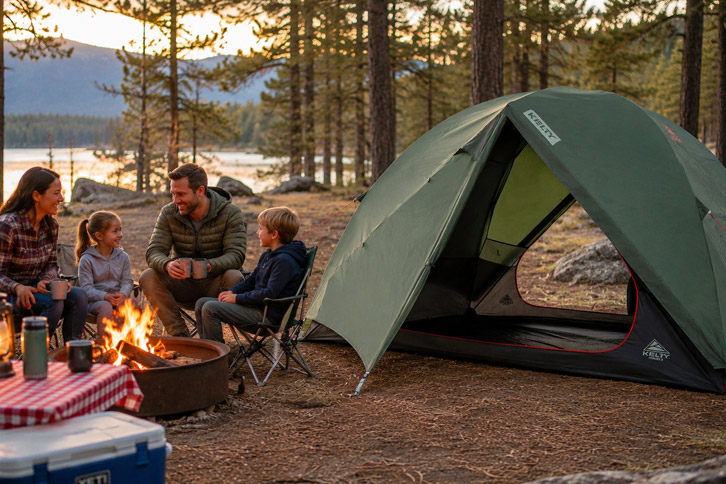
At around $280, the Wireless 6 punches above its price. You get 86.5 sq ft of floor space, two 14 sq ft vestibules, and 74 inches of peak height thanks to a ridge pole over the doors. It also recently moved to PFAS-free materials with a C0 DWR finish, which matters if you care about what’s coating the tent your kids sleep in.
Setup takes about 6-7 minutes with a partner. The trade-offs at this price: fiberglass poles instead of aluminum, smaller corner pockets, and ventilation that gets a little stuffy with the rainfly fully closed on warm nights.
Best for: budget-conscious families who still want a name-brand tent with decent headroom.
Skip it if: you camp in consistently hot, humid climates, the ventilation will bug you.
Buying Guide: What to Look For in a 6-Person Tent
Don’t trust the capacity number. Divide floor area (sq ft) by the rated capacity. Under 14 sq ft per person means a tight squeeze once pads and bags go down. Most “6-person” tents are comfortable for 3-4 people with gear.
Peak height changes daily life. Anything under 70 inches means most adults crouch the whole trip. Look for near-vertical walls (cabin-style) if standing room matters to you, not just a tall center point.
Waterproofing numbers matter. Look for at least 1,200mm on the rainfly and 1,500mm+ on the floor. Tub-style floors (where the waterproof material wraps a few inches up the walls) keep ground moisture out better than flat floors.
Setup time and crew. If you’ll often be pitching solo with kids underfoot, an instant or hub-style tent like the Caddis Rapid 6 is worth the trade-off in weather performance.
Final Verdict
Best Overall: The North Face Wawona 6, the one tent here we’d trust through an actually bad weather weekend.
Best Budget: Kelty Wireless 6, solid quality and headroom without the $400+ price tag.
Best for Wind: REI Co-op Base Camp 6, built for exposed, gusty campsites.
Frequently Asked Questions
How many people actually fit comfortably in a 6-person tent?
Plan for 3-4 people with sleeping pads, bags, and gear. The “6-person” rating assumes everyone is shoulder-to-shoulder with no gear inside.
What’s the difference between a 6-person tent and a large family tent?
6-person tents typically run 80-100 sq ft. If you have 4+ kids, a dog, or just want breathing room, our large camping tents guide covers 8 to 12-person options.
Is a cabin-style or dome-style 6-person tent better for families?
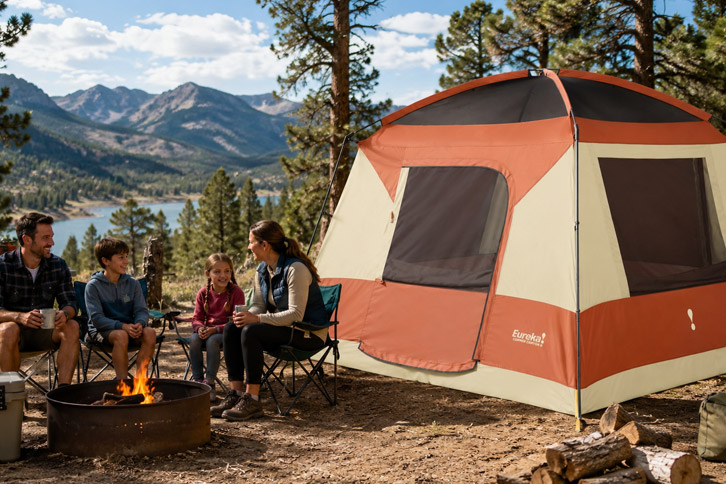
Cabin-style tents (like the Eureka Copper Canyon) have more usable headroom edge-to-edge. Dome-style tents (like the Base Camp 6) handle wind better. Our cabin tent guide breaks down the trade-offs.
Do I need a footprint for a 6-person tent?
It’s optional, but a $20-30 footprint protects the floor and adds a moisture barrier, worth it if you plan to use the tent for years.
Can one person set up a 6-person tent?
Most pole tents in this size need two people for an easy setup, though it’s doable solo with some patience. Instant tents like the Caddis Rapid 6 are built for one-person setup.
Are 6-person tents good for first-time campers?
Yes, it’s the most popular size for a reason. If this is your first trip, check our complete beginner camping guide before you head out.