Cabin camping hits a sweet spot for families. You get the full campfire-and-nature experience without the 2am “I think there’s a bug in my sleeping bag” situation. But cabins aren’t hotels, they vary wildly in what they provide, and showing up unprepared can turn a great trip into a frustrating one.
This checklist is organized around a simple question: what does the cabin give you, and what do you need to bring yourself? We’ll walk through both, plus the specific things parents of young kids tend to forget every single time.
What Cabin Type Are You Renting?
Cabin camping isn’t one thing. The checklist you need depends heavily on what kind of cabin you’re renting:
Fully equipped cabin (Airbnb-style or resort cabin): Usually has full kitchen, linens, towels, cookware, and bathrooms. You bring mostly personal items, food, and entertainment.
Campground cabin (KOA-style, national park cabins): Usually has beds with mattresses (no linens), a basic table and chairs, sometimes power outlets. You bring bedding, cookware, and your full camping kit.
Rustic/off-grid cabin: Minimal amenities, sometimes just four walls and a sleeping platform. Treat it like tent camping except you have a roof.
This checklist covers the middle ground (campground-style cabins) but flags which items you can skip if you’re in a fully equipped rental.
The Complete Cabin Camping Checklist
Bedding & Sleep
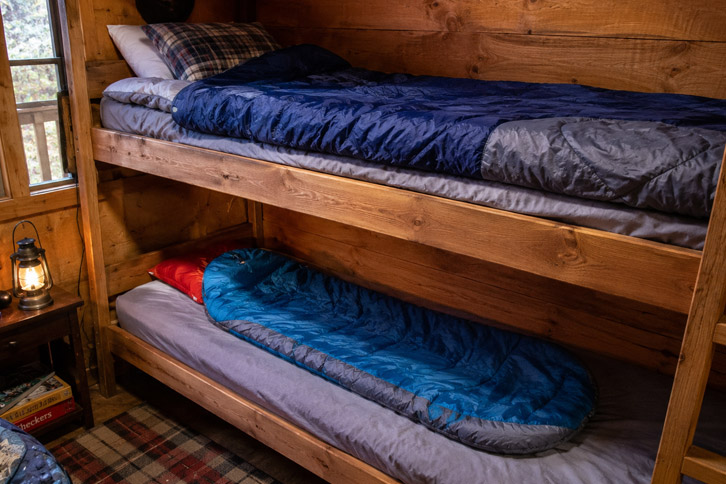
Most campground cabins have mattresses but NO linens. Don’t assume sheets and pillows are provided.
- Sleeping bags OR bed sheets + blankets (your choice based on temperature)
- Pillows (from home, or bring a compressible camping pillow)
- Sleeping pad if the mattress is thin or the cabin is cold
- Extra blanket, cabins can get cold at night even in summer
Clothing
Pack for the weather you expect plus one layer warmer. Cabins in forested areas can be significantly colder than the nearest city forecast.
- Comfortable camp clothes for hanging around
- Layers for temperature swings (morning = cold, afternoon = warm, evening = cold again)
- Rain jacket for every family member
- Sturdy shoes for walking around the campsite or short hikes
- Flip flops or camp shoes for around the cabin
- Warm hat and light gloves if it’ll be chilly evenings
- Swimsuit if there’s a lake, pool, or creek nearby
Kitchen & Cooking
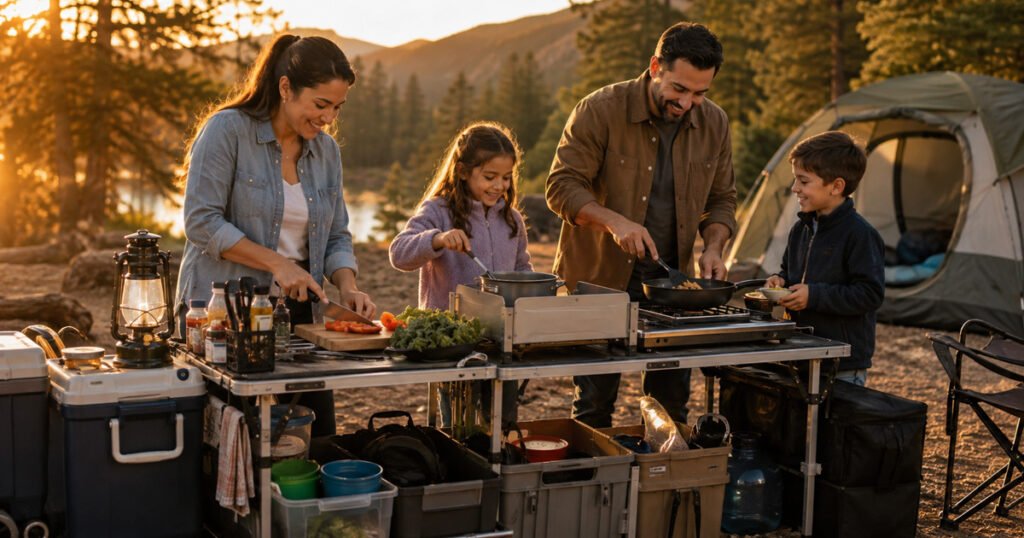
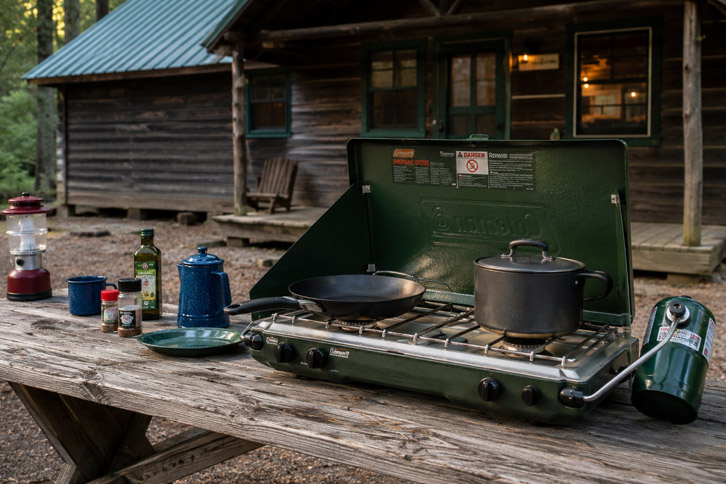
Check what the cabin provides. If it’s a campground cabin with no kitchen, you’ll need your full camp kitchen setup.
Essential cooking gear (if cabin has no kitchen):
- Camp stove + extra fuel
- Pot and pan (a basic 2-piece set covers most meals)
- Cooking utensils: spatula, spoon, tongs
- Plates, bowls, and cups (or collapsible camping versions)
- Silverware
- Can opener
- Sharp knife + cutting board
- Dish soap, scrub pad, and a small basin for washing
Items even fully equipped cabins don’t usually provide:
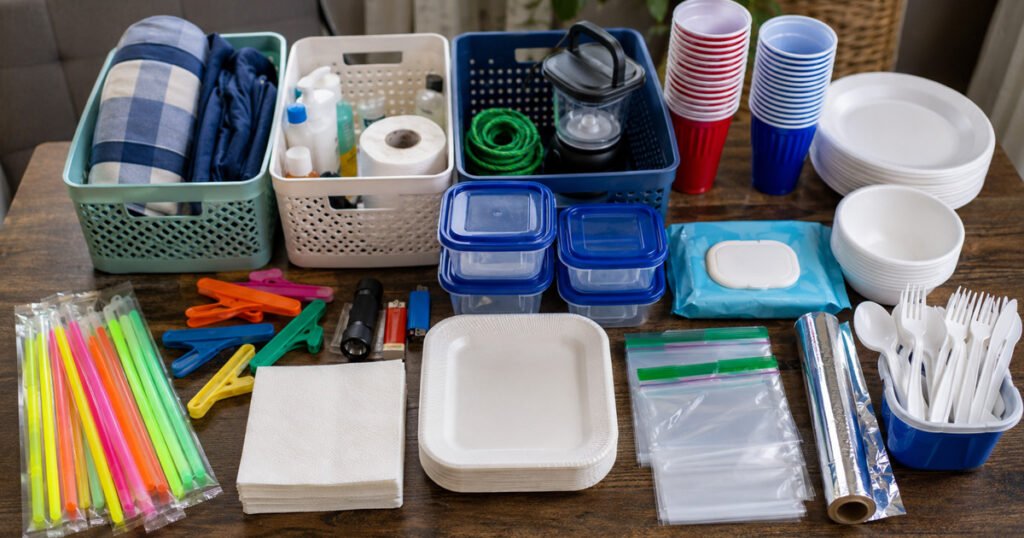
- Dish towels (almost nobody provides these)
- Aluminum foil
- Ziplock bags
- Paper towels
- Coffee and coffee maker accessories (filter, grounds, etc.)
- Spices and cooking oil
- Condiments
Food & Drinks
Plan your meals before you pack. It takes 15 minutes and saves you from forgetting the pasta while bringing three bags of chips.
- Breakfast: eggs, bacon, oatmeal, bread for toast
- Lunch: deli items, peanut butter and jelly, wraps, crackers and cheese
- Dinner: whatever you’ll cook, chili, pasta, burgers, foil packet meals
- Snacks: trail mix, granola bars, fruit, nuts, chocolate
- Drinks: coffee, tea, hot cocoa, juice boxes for kids
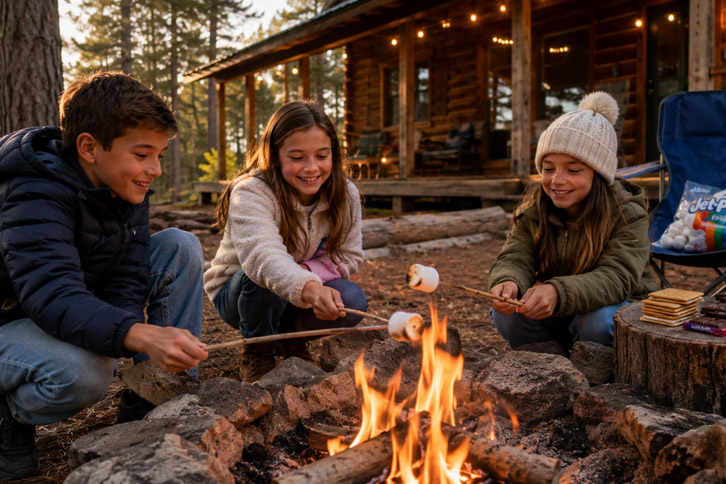
- S’mores supplies (this is non-negotiable)
- Extra food for one unexpected day, you might decide to stay longer
Toiletries & Personal Care
Cabins, even resort cabins, often provide minimal toiletries, if any. Don’t count on soap and shampoo being there.
- Shampoo, conditioner, body wash
- Toothbrush and toothpaste
- Deodorant
- Sunscreen (SPF 30+ for kids, apply more than you think you need)
- Bug spray (DEET-free if you prefer for younger kids)
- Hand sanitizer
- Wet wipes (a lifesaver with young kids, for hands, faces, and minor messes)
- Feminine hygiene products if needed
- Any prescription medications
- First aid kit: bandages, antibiotic cream, blister pads, pain reliever, antihistamine
- Insect bite relief (After Bite or Benadryl cream)
Towels & Linens
Even fully equipped cabins often have a “bring your own towels” policy.
- Bath towels for each person
- Beach/lake towels if you’re near water
- Hand towels (rarely provided)
- Washcloths
Lighting
Cabins have indoor lights, but outdoor lighting is up to you. The area between the cabin and the bathroom, fire pit, or car can be pitch black at night.
- Headlamp for each person (yes, even in a cabin)
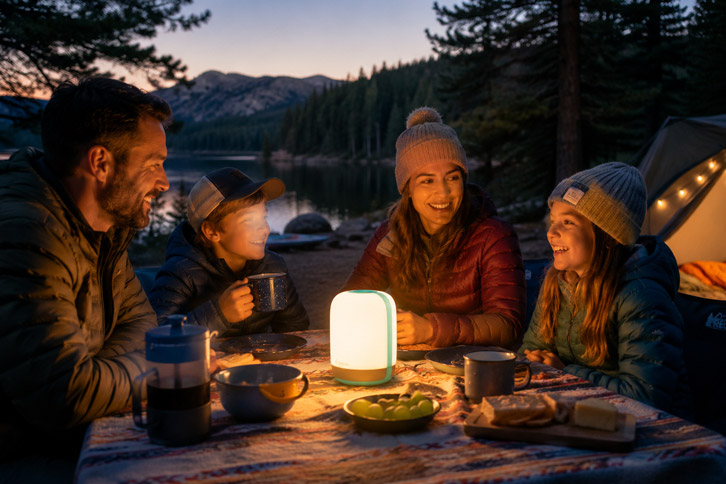
- Lantern for the porch or campfire area
- Extra batteries or a rechargeable lantern
Campfire Supplies
Most cabins with a fire pit provide the fire ring but not the wood or tools.
- Firewood (buy locally, don’t transport from home, invasive pests travel in wood)
- Lighter and waterproof matches
- Fire starter logs or fatwood sticks for getting it going fast
- Long marshmallow/hot dog roasting sticks
- Campfire tongs or poker
- S’mores kit: marshmallows, chocolate bars, graham crackers
Entertainment & Activities
The beauty of cabin camping is you have indoor downtime too. Don’t rely on screens, bring some low-tech fun.
- Card games and a deck of cards
- Board games (Uno, Sleeping Queens, Sushi Go, things that pack small)
- Books for adults and age-appropriate books for kids
- Puzzle (1,000 pieces is perfect for cabin trips)
- Outdoor yard games: ladder toss, cornhole, bocce ball
- Binoculars for wildlife watching
- Kids: bucket and shovel, bug catching kit, nature journal
- Fishing gear if there’s a nearby lake or creek (check license requirements)
- Portable Bluetooth speaker for campfire evenings
Tools & Camp Essentials
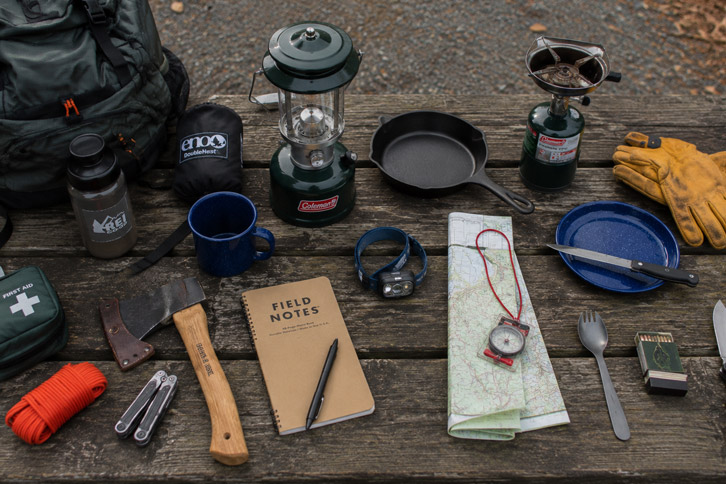
- Headlamp (listed again because forgetting it twice is a thing)
- Pocket knife or multi-tool
- Duct tape (fixes roughly 80% of camping problems)
- Clothesline and clothespins for drying wet gear
- Trash bags (bring your own, many cabins have small bins)
- Reusable tote bags for day trips or grocery runs
- Paper towels and cleaning spray
- Outdoor chairs if the cabin doesn’t have enough for your whole group
- Insect repellent candles or a citronella torch for the porch area
Documents & Admin
- Printed reservation confirmation with check-in info and cabin codes
- Directions with offline backup (cell service is often spotty near campgrounds)
- Park or campground rules printout
- Emergency contacts
- Pet documentation if you’re bringing the dog (vaccination records, permit if required)
What Parents Always Forget for Cabin Trips
We’ve surveyed enough camping families to have a reliable list of the “oh no” moments:
- Dish soap and a scrubber. Even a fully equipped cabin kitchen rarely has these.
- Dish towels. Not paper towels, actual dish towels for drying.
- Cooking oil and basic spices. Salt, pepper, and olive oil change everything.
- A can opener. The one time you need it and it’s not there.
- Extra charging cables. Everyone’s phone dies and nobody packed a second cable.
- Rain gear for kids. The forecast said sunny. It always says sunny.
- Bug spray. Packed sunscreen, forgot the other bottle.
- Laundry bag. Wet, dirty camping clothes need somewhere to go.
- A corkscrew or bottle opener. Classic cabin moment.
- Pet food and bowls. Dog came. Dog food didn’t.
Cabin vs. Tent Camping: What You Still Need to Bring
If you’re coming from tent camping, you might assume a cabin means less packing. Yes and no. You definitely skip the tent and sleeping pads, and you get a dry indoor space. But you still need most of your other camping gear.
Kids-Specific Cabin Camping Gear
Cabin camping is genuinely one of the best first camping experiences for families with young kids. The safety net of solid walls makes parents more relaxed. But kids still need a few specific things:
- Kids’ sleeping bags: Even if the cabin has beds, kids in familiar sleeping bags sleep better in unfamiliar places
- Baby monitor or walkie-talkie set: Useful if you’re sitting outside by the fire after kids are in bed
- Night light or small lantern: For the small kid who needs to know where the bathroom is at 2am
- Pack ‘n play or travel crib: If you have an infant, cabins don’t provide cribs (double-check this one)
- Portable high chair: Most campground cabins don’t have them
- Kids’ activity bag: Small toys, coloring books, sticker sets, for downtime inside
The Day Before Your Cabin Trip: Quick Checklist
- [ ] Print reservation info and access codes
- [ ] Download offline maps, cabin areas often have no cell service
- [ ] Buy firewood locally (don’t transport from home)
- [ ] Pack cooler with ice and food
- [ ] Tell someone where you’re going and your return date
- [ ] Check cabin rules for pets, check-in time, check-out expectations
- [ ] Charge all devices and backup power banks
Frequently Asked Questions
Do campground cabins provide bedding?
Most campground cabins (KOA-style, state park cabins) provide mattresses but NOT bedding, no sheets, blankets, or pillows. Resort cabins and Airbnb-style rentals usually do provide full bedding. Always check with the host or campground before you pack. When in doubt, bring sleeping bags, they’re easy to pack and guarantee you’ll be warm.
What’s the difference between cabin camping and glamping?
Cabin camping is staying in a simple wood structure at a campground, often with minimal amenities like a bed platform, electricity, and maybe A/C or heat. Glamping is a broader term for upscale outdoor accommodations that can include luxury tents, yurts, treehouses, or Airstream trailers with full hotel-style amenities. Most cabin camping falls somewhere in between, and the packing list varies a lot based on what’s provided.
Can I bring my dog to a cabin camping trip?
Many campground cabins and Airbnb-style rentals allow dogs, but you must check pet policies before booking, some charge a pet fee, some have weight limits, and some don’t allow pets at all. If pets are allowed, bring your dog’s food and bowls, a leash, vaccination records, and any required campground pet registration paperwork.
Do I need a camp stove for cabin camping?
It depends on the cabin. Resort and Airbnb-style cabins usually have a full kitchen, no camp stove needed. Campground cabins often have no cooking facilities beyond an outdoor fire ring or grill. When in doubt, bring a simple two-burner propane stove. It’s worth the extra bag space to not be stranded with no way to cook.
What should I pack for a cabin camping trip with toddlers?
Toddlers need all the basics plus a few extras: a pack ‘n play or travel crib (cabins don’t provide these), a portable high chair, a nightlight for the unfamiliar room, extra outfit changes (at least 2 per day), familiar snacks, a small comfort item from home, and baby monitor or walkie-talkie if you’ll be outside while they sleep. Bug spray and sunscreen formulated for young children are must-haves.
How much firewood should I bring for a cabin camping trip?
Plan on one full bundle (roughly 5-6 pieces) per evening campfire. If you want a fire every night plus a casual morning fire, budget 2 bundles per day. Buying locally is strongly recommended, most states have regulations against transporting firewood across county or state lines to prevent the spread of invasive pests. Almost every campground sells firewood on-site, and local gas stations near campgrounds usually carry it too.