We’ve been there. Standing in the driveway wondering if you’ve forgotten something important, wondering if the kids will actually sleep in a tent, wondering if this whole thing was a mistake. Every camping family starts exactly where you are right now.
Here’s the truth: your first trip won’t be perfect. Something will get left at home, someone will complain about the ground being hard, and you’ll probably set up the tent backwards at least once. None of that matters. What matters is that your kids see a campfire for the first time, hear an owl at night, and start to understand that fun doesn’t need a screen. Let’s get you ready.
Start Smaller Than You Think You Should
The single biggest mistake first-time camping families make is going too big, too soon. A week-long trip to a remote site three hours away sounds like an adventure, but if something goes wrong, you’re stuck.
Pick a campground 30-60 minutes from home for your first trip. One night is enough. If it goes well, you’ve proven the concept. If it goes badly, you’re close enough to pack up and drive home for a real bed.
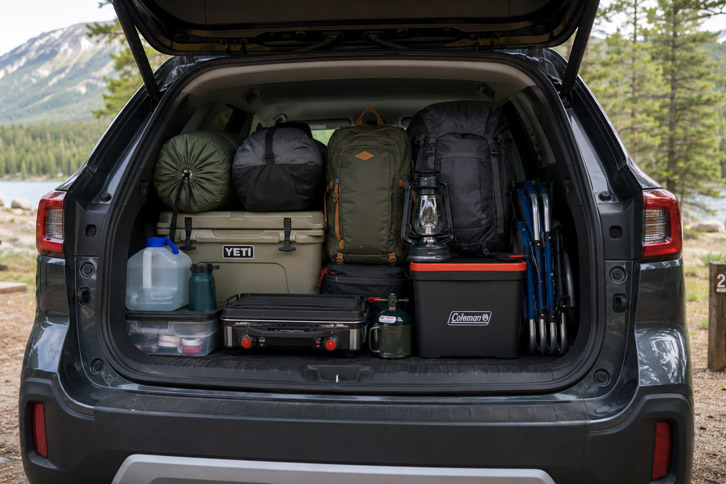
What to Pack: The Non-Negotiables
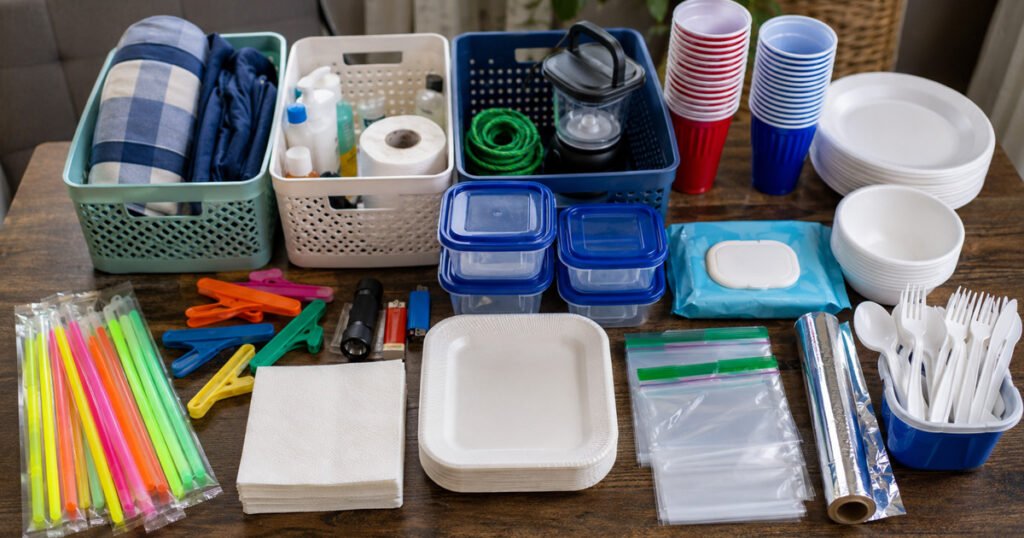
You don’t need everything on a 75-item checklist for your first trip. You need the gear that, if missing, actually ruins the experience.
Shelter and sleep:
- A tent sized for one more person than your group (a 6-person tent for a family of 4 gives breathing room)
- Sleeping bags rated for the season, plus a sleeping pad or air mattress under each one
- Pillows from home; camping pillows aren’t worth it for a first trip
Food and water:
- A cooler with enough ice for the full trip plus a day buffer
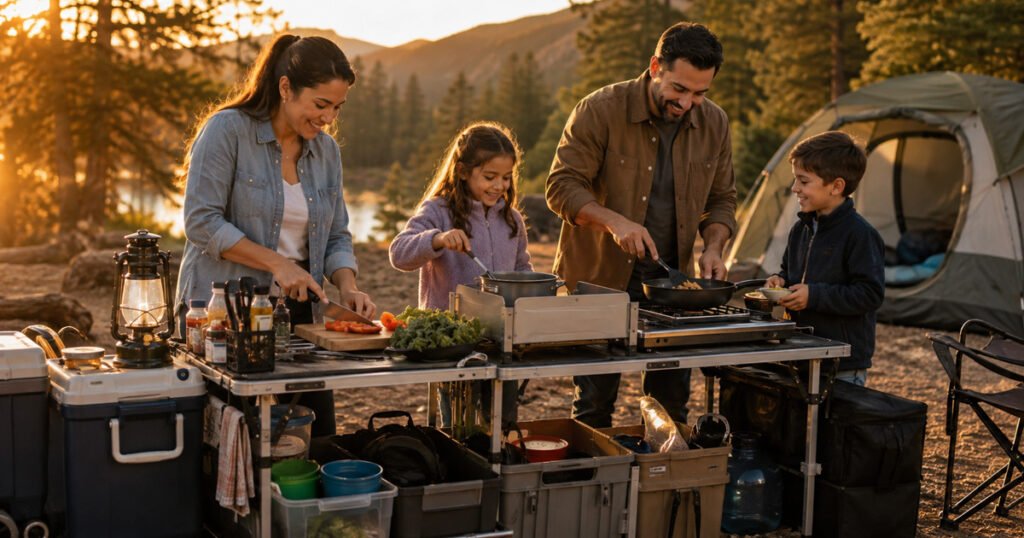
- A simple 2-burner stove, or just plan no-cook meals for one night
- More water than you think you need
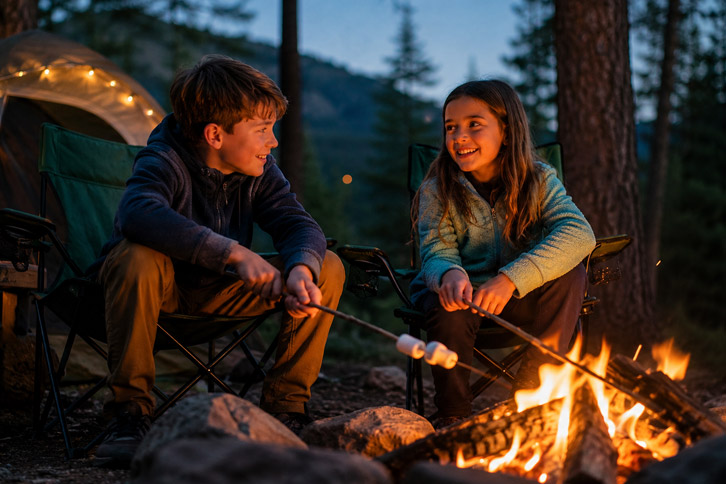
Light and safety:
- A headlamp for every person old enough to wear one
- A lantern for the picnic table area
- A basic first aid kit
Setting Up Camp Without the Stress
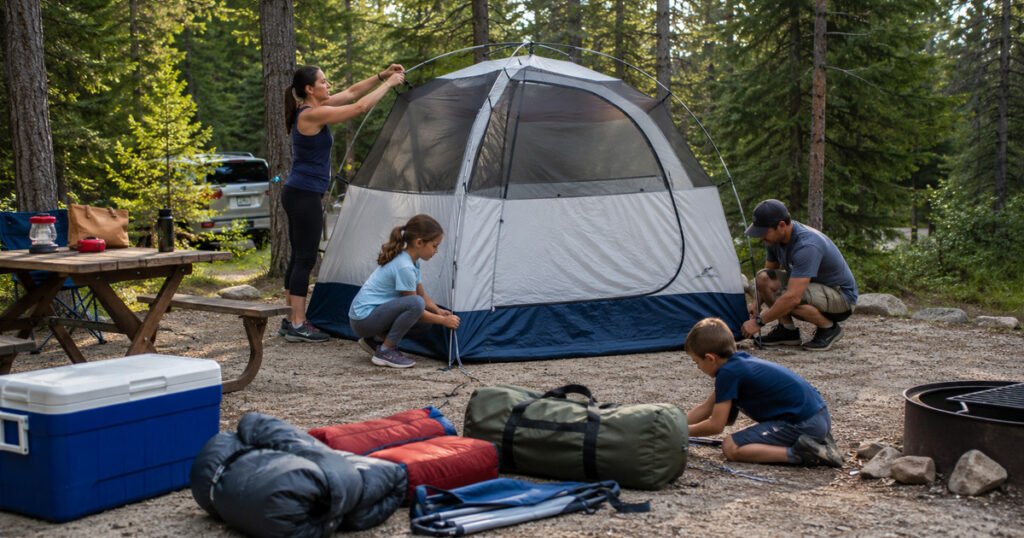
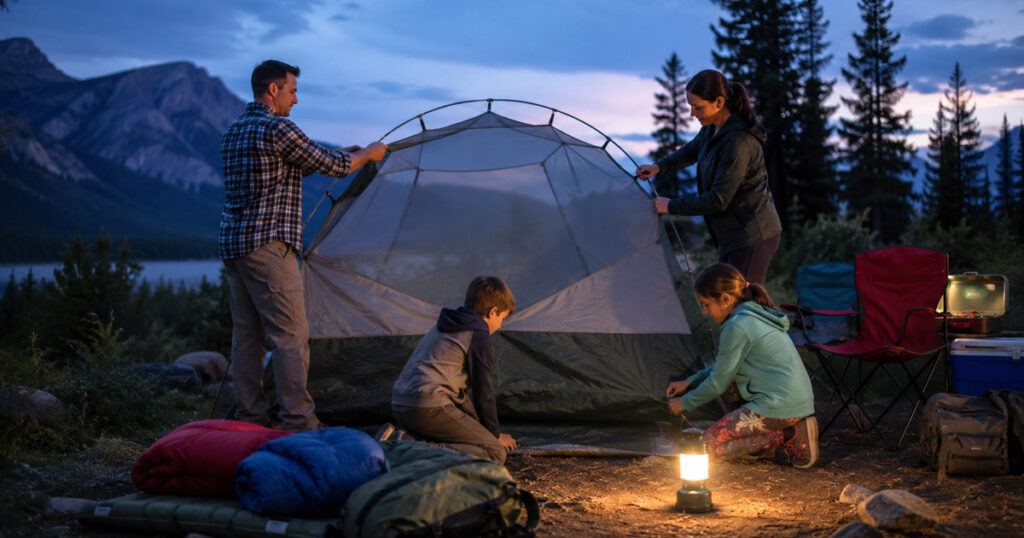
Arrive with at least two hours of daylight left. Setting up a tent in the dark, with tired kids, is the fastest way to make trip one your last one.
Pitch the tent on level ground, away from low spots that collect water if it rains. Practice setting it up in your backyard once before the trip. It sounds excessive, but ten minutes of practice at home turns into ten fewer minutes of frustration at the campsite.
What to Expect the First Night
Kids often don’t sleep well the first night camping, and that’s normal. New sounds, a different bed, and the excitement of the day all play a part. Don’t panic if your kid wakes up at 2am unsure where they are.
Bring a small flashlight or headlamp specifically for nighttime bathroom trips and keep the route to the bathroom (or the designated spot, if you’re somewhere without facilities) walked through once before dark so it’s familiar.
Common Mistakes First-Time Camping Families Make
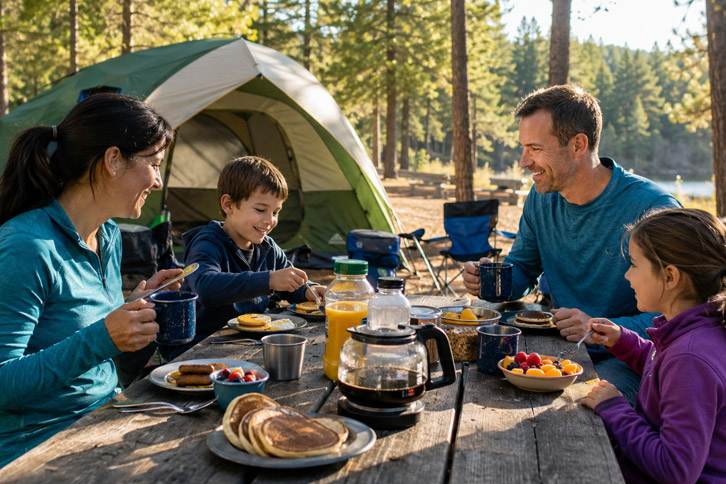
Overpacking activities, underpacking patience. You don’t need a schedule. Kids entertain themselves remarkably well with sticks, dirt, and a campfire to stare at.
Forgetting that “easy” hikes with kids take twice as long. Budget extra time for any trail. Kids stop to look at bugs. A lot.
Not testing gear beforehand. The first time you use a stove, tent, or lantern should not be at the campsite in front of hungry kids.
Ignoring the weather forecast. Check it the morning of, not just the week before. Conditions change, and rain gear or extra layers can save the trip.
Choosing a campsite that’s too far for a first attempt. See the “start smaller” section above. We mean it.
Next Steps
Once you’ve got one trip under your belt, the next moves are easy. Build out your gear collection a piece at a time rather than buying everything at once, figure out which camping style fits your family (car camping, cabin camping, or eventually backpacking), and start a simple checklist you reuse every trip.
Frequently Asked Questions
How old should kids be for their first camping trip?
There’s no minimum age. Many families start camping with babies under 1, since car camping keeps you close to your vehicle and supplies. The main considerations are temperature control and having a safe, contained sleep space.
What’s the easiest type of camping for beginners?
Car camping at a developed campground with running water and bathrooms. You can pack more gear than backpacking allows, and you’re never far from help if you need it.
How long should our first family camping trip be?
One night. It’s long enough to experience the full process (setup, sleep, breakfast, breakdown) without committing to multiple days if something goes wrong.
What if it rains on our first camping trip?
Check the forecast before you go and pack rain gear regardless. A little rain isn’t a trip-ender if you have a dry tent and a tarp over the cooking area, but heavy storms are a good reason to reschedule for a first trip.
Do we need expensive gear for our first time camping?
No. Budget or rented gear works fine for trip one. Figure out if your family enjoys camping before investing in premium equipment.
What should we do if our kids don’t sleep well the first night?
Expect it and don’t stress over it. A rough first night is common and doesn’t mean camping isn’t for your family. Most parents report smoother sleep by the second or third trip as kids get used to the routine.
Is camping safe for young kids?
Yes, with normal precautions: secure food storage, a stocked first aid kit, sun protection, and supervision near fire and water. Our camping safety guide covers the specifics.