You packed the tent, the sleeping bags, the cooler, and seventeen snacks. You’ve got two hours before the sun sets and your kids are already circling like sharks asking “what do we do now?” Camping games solve this. The right one keeps the whole family off their phones, laughing, and actually talking to each other, which is half the reason you came out here.
After testing games across real campsites (grass, gravel, dirt, and that weird slope where every bocce ball rolls left), here are the ones that actually earn their trunk space.
Quick Top 3 Picks
- Best Overall: KanJam Original Disc Game, Easy rules, all ages, endlessly competitive at ~$40
- Best Budget: Himal Portable Cornhole Set, The campsite classic under $35
- Best Active Game: Spikeball Standard Kit, Fast, small, and obsession-forming at ~$60
Camping Games at a Glance
The 7 Best Camping Games for Families
1. KanJam Original Disc Game – Best Overall
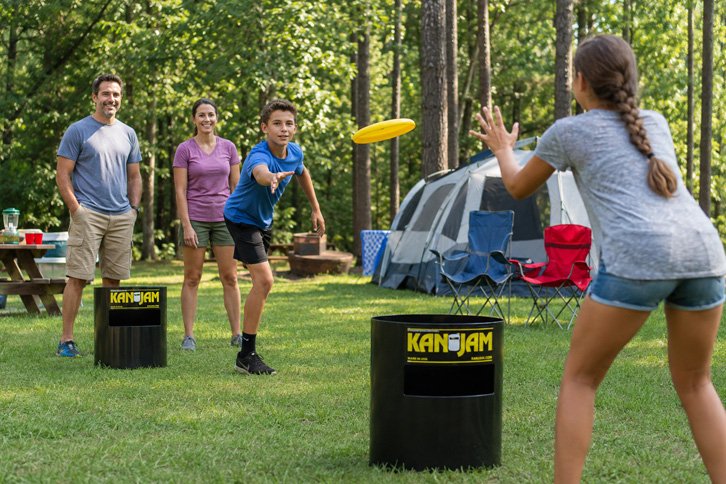
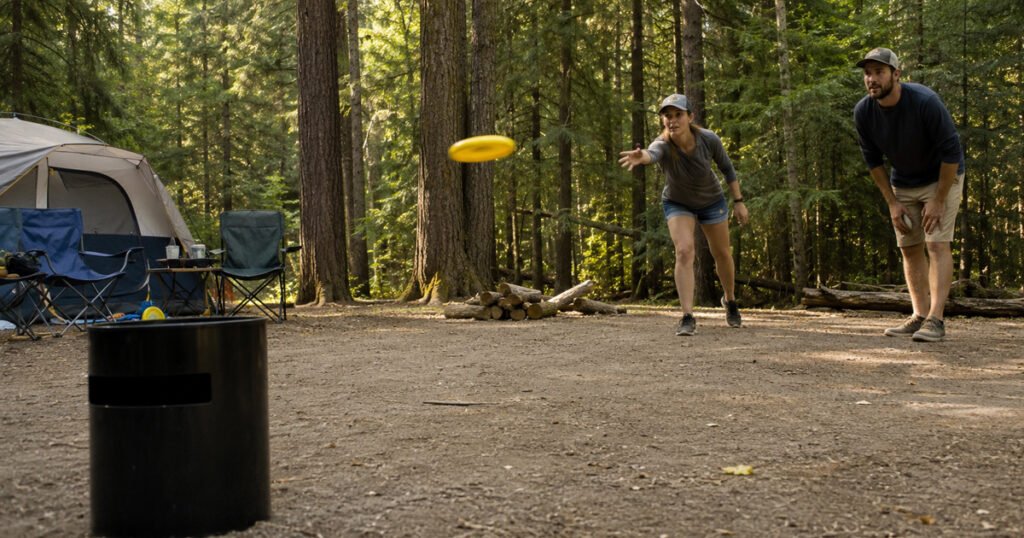
KanJam might be the most perfectly designed campsite game that exists. You set up two plastic goal cans about 50 feet apart, split into two-person teams, and take turns throwing a frisbee. Your partner can deflect it into the can for points, or you throw it in yourself for an instant win. That’s basically it. You can explain it in 90 seconds to a 7-year-old and it stays fun for adults two hours later.
The cans snap together for storage and the whole thing fits in a carry bag about the size of a sleeping bag stuff sack. It works on grass, dirt, gravel, packed sand, we’ve played it on a rocky site in the Smokies without any issues. The disc is the same one Ultimate Frisbee players use, so it flies well even in light wind.
Who it’s for: Families with kids 6 and up. Adults can play with younger kids on their team so nobody feels left out.
Who should skip it: Families camping only with kids under 5. Little ones can’t throw far enough to make the game work and they’ll get frustrated.
2. Himal Portable Cornhole Set – Best Budget
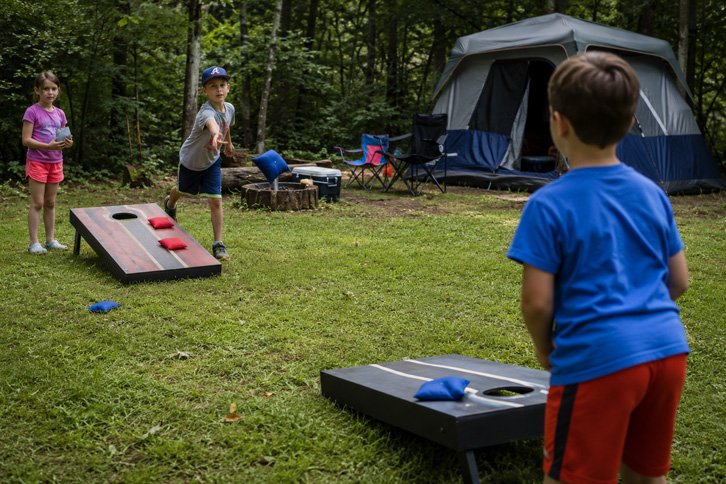
Cornhole is the campsite default for good reason. Everyone already knows how to play. The boards fold flat and slide into a carry bag, the beanbags don’t roll away on a slope like bocce balls can, and at around $35 the Himal set is one of the best-reviewed budget options around with thousands of ratings.
The boards are lighter than traditional solid-wood sets, which is exactly what you want when you’re loading up a car. The trade-off is they feel a touch less sturdy than premium sets, but for family camping, not tournament play, they hold up fine. We’ve had ours for three summers.
Who it’s for: Families with kids 5 and up. Great for multi-generational groups since grandparents and grandkids can play on the same level.
Who should skip it: Backpackers or families without car access. Even folded, the boards are too bulky for a hike-in site.
3. Spikeball Standard 3-Ball Kit – Best Active Game
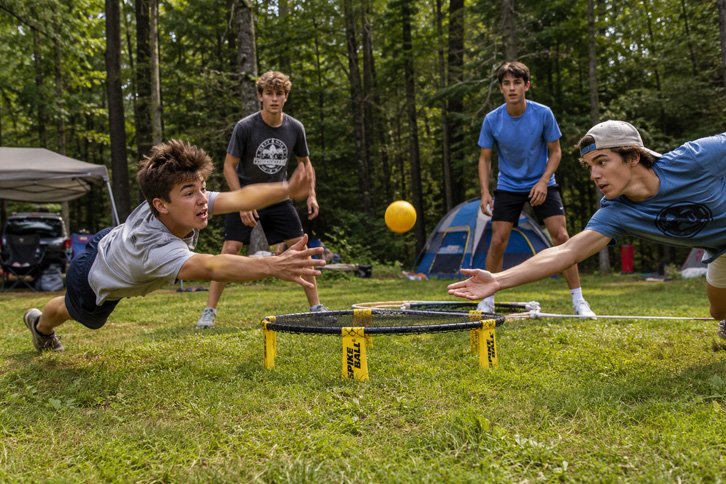
If your family has kids 10 and up, or teenagers you’re desperately trying to peel off their phones, Spikeball is your answer. You set up a small trampoline-like net on the ground, split into two-person teams, and volley a small ball off the net. The whole kit weighs about 3 pounds and fits in a drawstring bag.
The game is fast, physical, and genuinely competitive. Adults and teens play on equal footing once everyone learns the rules. It takes about one game to learn and about ten to feel like you’re getting anywhere, that’s the sweet spot for a camping game: easy to start, hard to master.
Who it’s for: Families with older kids and teens. Also great for adult groups who want something more athletic than cornhole.
Who should skip it: Families camping with children under 8. The game requires quick reflexes that younger kids haven’t developed yet, and the frustration isn’t fun for anyone.
4. GoSports Bocce Ball Set – Best for Mixed Ages
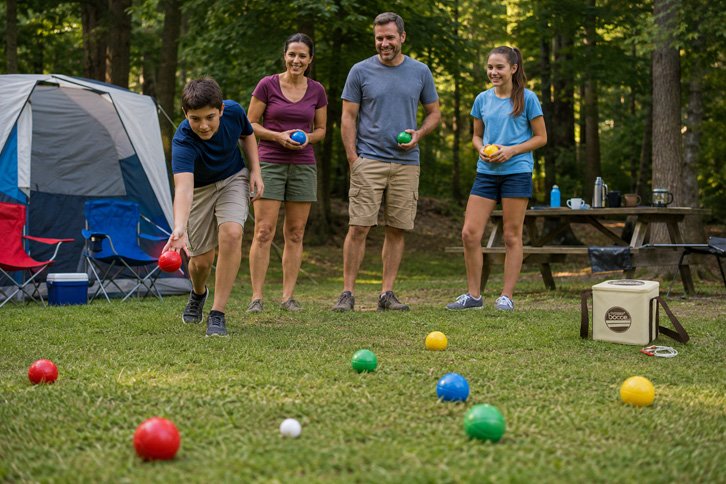
Bocce works when you’ve got a four-generation family at the campsite, grandparents, parents, kids, and teenagers can all play together without anyone feeling like the game was designed for someone else. You throw balls toward a small target ball (the pallino), and whoever’s closest wins the round. Gentle enough for grandparents, satisfying enough for competitive adults.
The GoSports set comes in a canvas bag with eight resin balls and the pallino. The balls handle grass, dirt, and gravel without cracking, which matters when you’re playing on real campsite terrain, not a manicured lawn.
Who it’s for: Multi-generational families. Also perfect for a slow afternoon game where you want conversation more than cardio.
Who should skip it: Families who need to burn off kid energy. Bocce is a slow-burn social game, it’s not the pick for restless 7-year-olds.
5. Kubb Viking Chess Set – Best Strategy Game
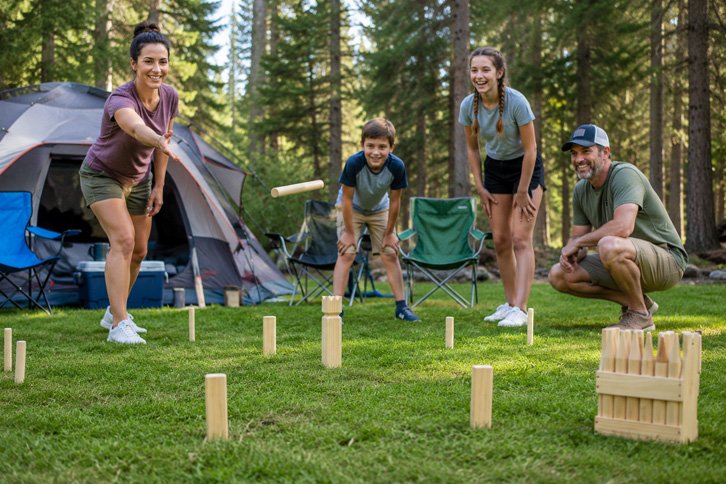
Kubb is a Swedish lawn game sometimes called “Viking Chess,” and it earns the nickname. Players set up wooden block targets and a king piece, then take turns throwing wooden batons to knock them down, but you have to topple the king last, without knocking it over too early. It sounds simple and turns out to be surprisingly strategic.
This is the game you pull out when the kids are 8+ and ready for something that requires actual thinking. A full game takes 20-45 minutes, long enough to be satisfying, short enough to play twice. Made of solid wood, the sets feel like they’ll outlast the campsite itself.
Who it’s for: Families with kids 8+ who want a game that rewards skill over luck. Great for camping with other families, Kubb is fun to watch even when you’re waiting your turn.
Who should skip it: Families with toddlers. The wooden batons are too heavy for small kids and the slow pace doesn’t hold their attention.
6. GoSports Giant Tumbling Timbers – Best for Campfire Hours
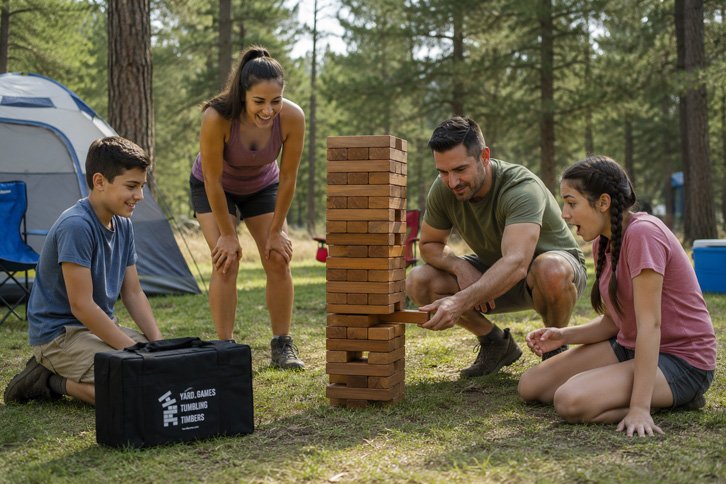
Giant Jenga at the campsite is a different experience than on a kitchen table. The dramatic crack when the tower falls echoes through the trees and every camper within three sites turns to look. GoSports makes a solid version with 56 wooden blocks that stack to a 5-foot tower at peak height. The carry case doubles as the playing base, so setup is just stacking.
This is your evening game, the one that comes out as the sun goes down and the conversation slows. It moves at a campfire pace: deliberate, tense, and punctuated by the occasional catastrophic collapse that wakes the dog.
Who it’s for: Car campers with kids 5 and up. Best for campfire evenings when you want a game everyone can gather around rather than run around.
Who should skip it: Campers with a packed trunk or hike-in sites, the carry case is bulky.
7. Trekking: The National Parks Card Game – Best Rainy Day Game
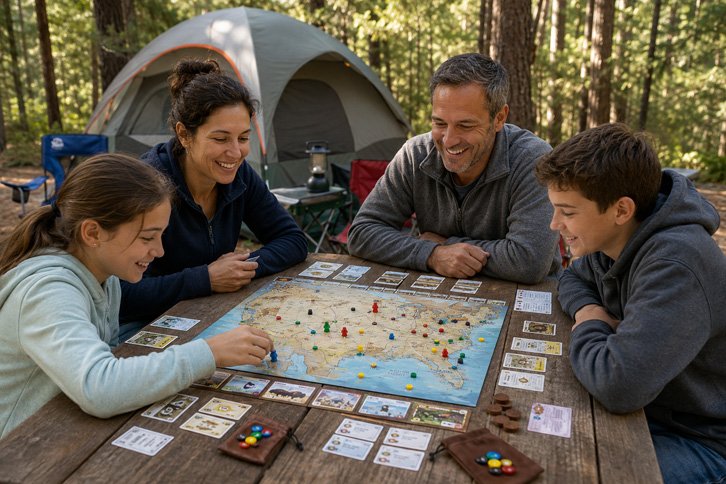
Every camping list needs one game that works inside the tent when it rains and everyone is pretending they don’t mind. Trekking is a strategy card game where you collect trail cards and claim national park locations, which makes it actually on-theme rather than a random card game you happen to have along.
It fits 2-5 players, plays in 45-60 minutes, and has enough strategy to stay interesting for adults while being learnable by kids 8 and up. The card quality holds up well in camping conditions. At $20, it’s the cheapest item on this list and the one you’ll be most grateful for on day two of unexpected rain.
Who it’s for: Families with kids 8+ who need a tent-safe backup for bad weather. Also works perfectly at a lit picnic table on a calm evening.
Who should skip it: Families with kids under 7. The strategy layer is too complex and the game stops being fun.
How to Pick the Right Camping Game for Your Family
Match the game to the age range you’re actually dealing with
This is where most families go wrong. You buy Spikeball because it looks great on Instagram, then arrive at the campsite with a 4-year-old and a 6-year-old and realize nobody can actually play it.
- Ages 3-6: Cornhole (no throwing power required), bocce (roll instead of throw), giant Jenga (they love toppling it regardless of rules)
- Ages 6-10: KanJam hits the sweet spot, simple enough to learn fast, satisfying enough to keep playing
- Ages 10+: Spikeball, Kubb, or any of the above with real competitive stakes
- Mixed ages: Bocce and cornhole are the most age-flexible; KanJam works well if adults team up with younger kids
Think about campsite terrain and space before you buy
Not every campsite gives you 50 feet of open flat ground. Many state park sites are narrow and wooded. Before committing to cornhole boards or KanJam, think realistically about where you’ll be playing.
- Narrow or wooded sites: Bocce (flexible on distances), giant Jenga (minimal footprint), card games
- Open meadow or group sites: Any game works, KanJam, Spikeball, cornhole, Kubb
- Beach or sandy sites: Bocce, cornhole, and Spikeball all excel on sand; Kubb works great too
How much trunk space do you have?
- Minimal space: Spikeball (3 lbs, drawstring bag), bocce (canvas bag), card games
- Moderate space: KanJam (carry bag, flat), cornhole (folded boards)
- Full trunk: Giant Jenga (bulky case), any of the above
Bonus: 5 Free No-Equipment Camping Games
You don’t always need to buy something. These need zero gear and zero setup, perfect backups when you didn’t pack enough, the kids burned through every activity by noon, or you’re camping somewhere you had to hike in.
Flashlight tag is the all-time campsite classic after dark. Each player holds a flashlight; you’re tagged when someone’s beam lands on you and you freeze for three seconds. Burns off the last hour of kids’ energy without anyone needing to carry anything.
Counselor Says is your campsite Simon Says, “Counselor says hop on one foot,” “Counselor says find a pine cone and bring it back.” Works from age 3 up, needs nothing, and you can run it while keeping an eye on the campfire.
Campsite 20 Questions limits the topic to things you can see or hear right now at the campsite. It makes a familiar game feel new and quietly teaches kids to pay attention to their surroundings, which is sort of the whole point of being outside.
Rock painting contest needs only rocks and a small set of washable markers or acrylic paints. Pack a travel-sized set of paints (they weigh almost nothing) and you’ve got an hour of focused kid activity that ends with something to bring home.
Nature scavenger hunt takes five minutes to write on a napkin: pinecones, a specific leaf shape, something red, a bird call, a flat rock bigger than your palm. The kids are occupied for 30 minutes minimum.
Final Verdict
Best Overall: KanJam Original. It hits the rare sweet spot of all-ages playability, easy packing, and genuinely addictive gameplay. If you only bring one game, this is it.
Best Budget: Himal Cornhole Set. At ~$35, it’s a campsite staple that earns its trunk space on every trip. No rules explanation needed, no age minimums, no drama.
Best for Teens: Spikeball Standard Kit. If you have kids 10+ who need something genuinely competitive, nothing on this list is close. Just don’t let them talk you into thinking it’s also for 5-year-olds.
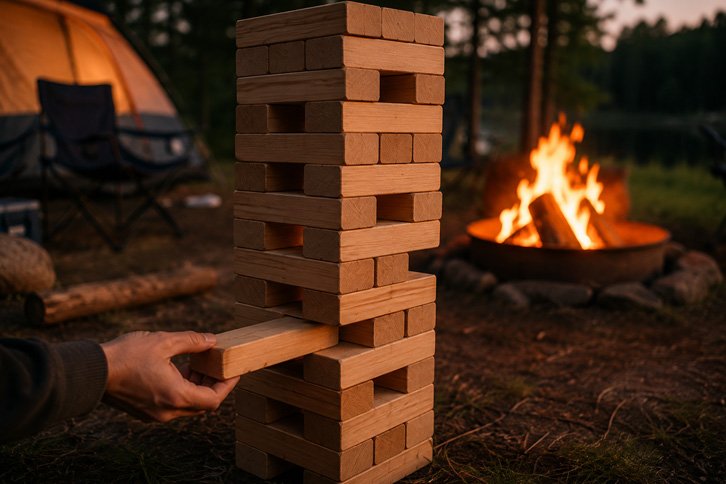
Best Campfire Evening Game: GoSports Giant Tumbling Timbers. For slow evenings around the fire, the drama of a 5-foot tower collapse is unmatched entertainment.
Best Rainy Day Pick: Trekking: The National Parks. Pack it every time, open it only when you need it. At $20, it’s the cheapest insurance against a two-day rain delay.
Frequently Asked Questions
What is the most popular camping game?
Cornhole has the largest footprint at campsites across the US, it’s the default because everyone already knows how to play and the equipment packs easily. KanJam is a close second, especially with families who want something more engaging than beanbag toss.
What games can you play camping with toddlers?
Toddlers ages 2-5 do best with unstructured versions of familiar games: roll bocce balls at anything, toss beanbags at a cornhole board without keeping score, topple giant Jenga blocks without the rules, or do a simple “find 5 pinecones” scavenger hunt. The goal at this age is movement and laughing, not scoring.
What camping games work on uneven terrain?
Bocce is the most forgiving, a slight slope just adds unpredictability to throws. KanJam and Spikeball handle mild slopes but work better on level ground. Cornhole boards can be leveled with a rock or folded towel under one leg. Kubb and Giant Jenga need the flattest ground you can find.
How many games should I pack for camping?
One outdoor physical game and one tent/table game covers most situations. The outdoor game handles sunny afternoons; the indoor game handles rain and evenings. A pack of glow sticks costs almost nothing, weighs almost nothing, and covers after-dark entertainment without needing its own packing slot.
Can you play camping games at night?
Yes. Flashlight tag, glow stick ring toss, and giant Jenga all work well after dark. KanJam is playable in low light if your campsite has lanterns going. Card games like Trekking work perfectly at a lit picnic table. For planned night games, a few glow sticks transform almost any daytime game into a night version.
What’s the best camping game for camping with other families?
Any game supporting 4-8 players works well for multi-family trips: bocce (up to 8 players), Kubb (teams), cornhole (rotate pairs in and out), or Giant Jenga with everyone taking turns. KanJam is technically 2v2 but you can rotate teams easily.
Are camping games worth buying, or should I just download game apps?
Physical games create shared experiences in ways phone games don’t. They don’t need cell service, a battery charge, or headphones. Phone games also tend to split the family into separate screens rather than bringing them together, which is the opposite of what you came camping to do. Buy the games.