Camping with kids is safe. Genuinely. The risks people worry about most (bears, getting lost, snakes) are rare, and the risks that actually cause problems (sunburn, dehydration, a kid wandering 20 feet from camp) are the boring, preventable kind. This guide covers both, so you go in prepared instead of anxious.
None of this is meant to scare you. It’s meant to make camping feel as normal and manageable as a weekend at a friend’s house, just with more stars and fewer walls.
1. Pick a Campsite With Safety in Mind
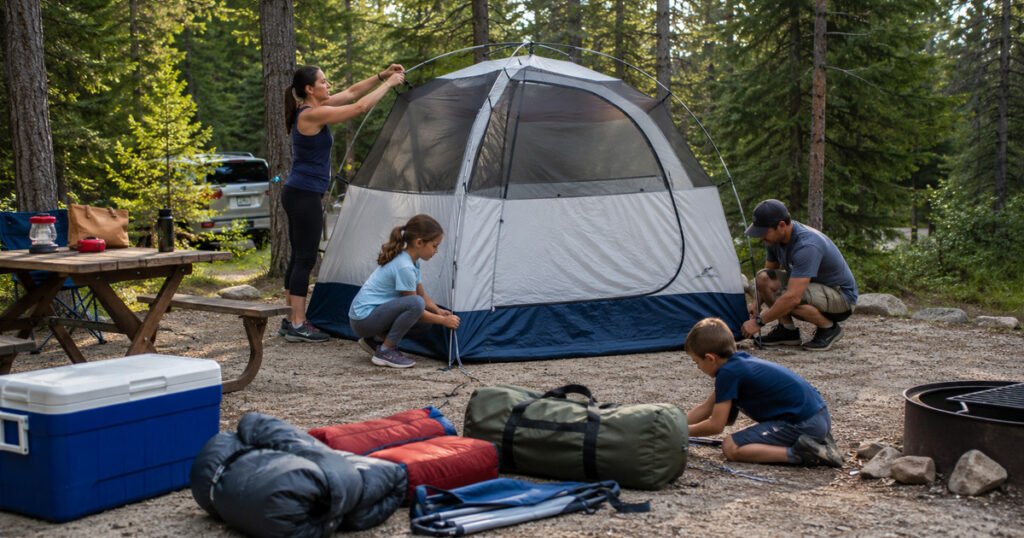
Arrive while there’s still daylight and choose a site on level ground, away from dead trees, steep drop-offs, or low spots that collect water if it rains. A campground with bathrooms and potable water is an easier first few trips than dispersed camping, even if it’s less “wild.”
2. Store Food the Right Way
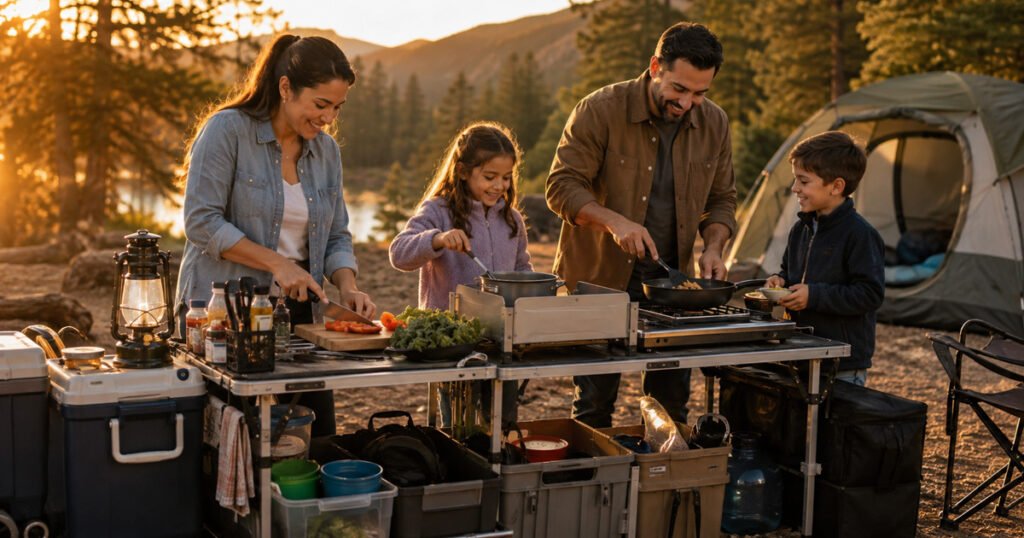
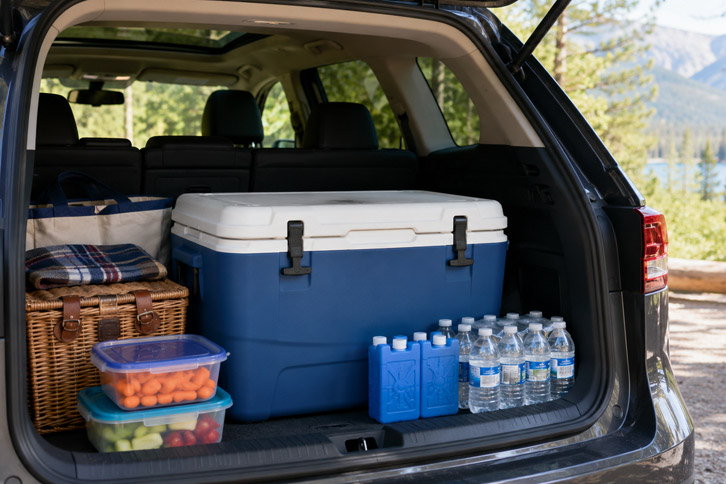
Never keep food, scented toiletries, or trash inside the tent, even snacks. It attracts insects and, depending on your location, larger wildlife. Keep food in the car or a cooler with a secure latch overnight, and clean up cooking areas immediately after meals.
If you’re in bear country specifically, store food at least 100 yards from your sleeping area, or in a bear-resistant container if the campground requires one. Check posted rules at check-in. Most developed campgrounds will tell you exactly what’s required.
3. Keep Kids Within Arm’s Reach Near Water and Fire
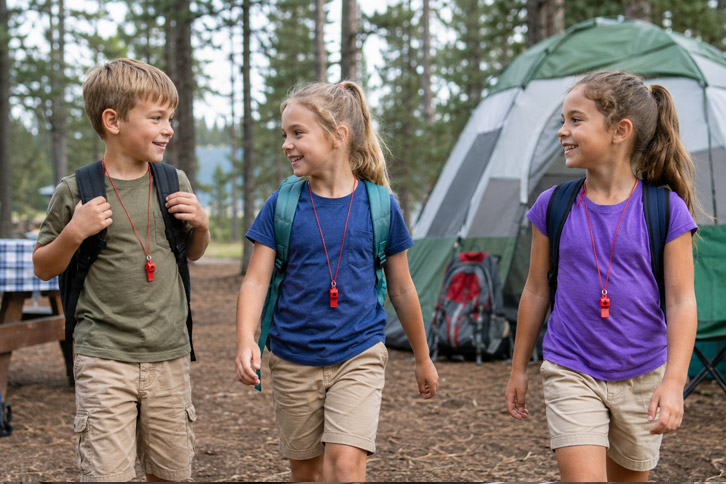
This is the single most effective safety rule for camping with young kids. Water (lakes, rivers, even shallow creek beds) and open flame are where injuries actually happen, far more than wildlife encounters.
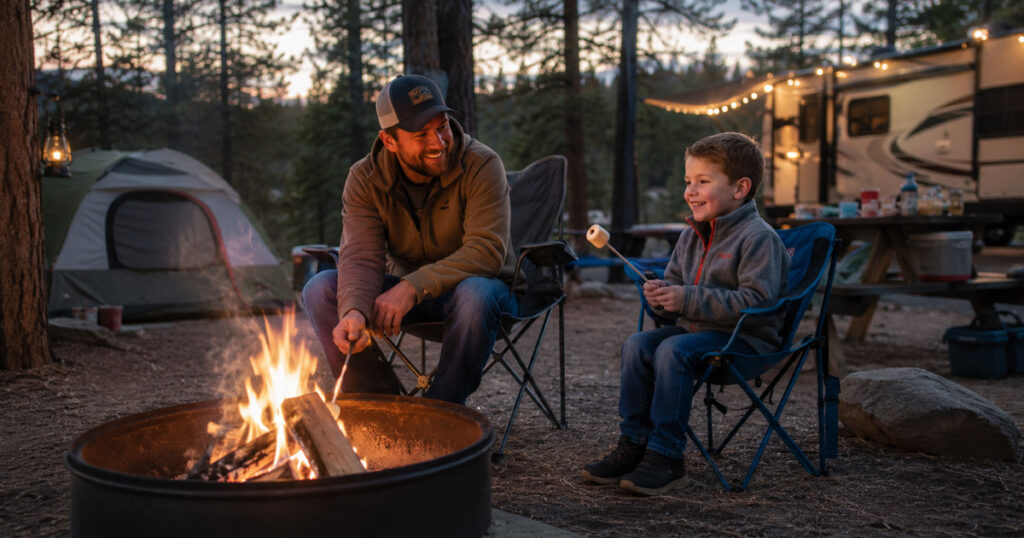
Set a clear 3-foot safety zone around any fire and treat it as non-negotiable, even for older kids who think they know better. Near water, “within arm’s reach” means exactly that, not “within sight.”
4. Pack a First Aid Kit That’s Actually Stocked
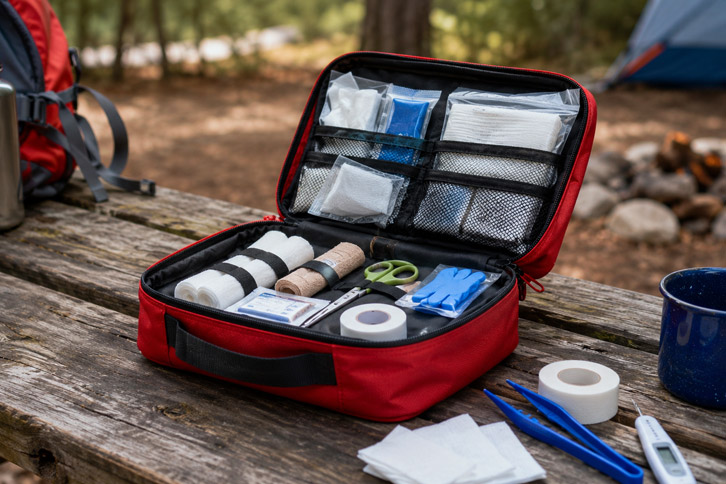
The first aid kit that’s been in your trunk since 2019 doesn’t count. Check it before every trip for bandages, antiseptic wipes, tweezers (splinters and ticks happen), any allergy medication your family needs, and pain relievers in both adult and kid doses.
5. Set an Emergency Plan Before You Arrive
Before you even start unpacking, agree on a meeting point at the campsite where everyone gathers if separated. Tell a trusted person outside your group where you’re headed and when you expect to be back, especially for sites with no cell signal.
Write down emergency contacts on paper, not just in a phone. Phones die, and they’re the first thing kids lose track of anyway.
6. Respect Wildlife From a Distance
Bears, snakes, and other wildlife aren’t looking for trouble. Most encounters happen because food wasn’t stored properly or someone got too close trying to get a photo. Keep a safe distance, never feed wildlife, and make some noise while walking so animals have a chance to move away before you’re close.
Teach kids to recognize poison ivy and poison oak before the trip. A quick photo lookup at home saves an itchy week later.
7. Protect Against Sun, Heat, and Bugs
These are boring compared to bears, and they cause far more actual problems. Apply sunscreen before you leave the car, not after you notice pink skin. Reapply every two hours, more if anyone’s swimming.
Use a kid-safe bug spray and check for ticks at the end of each day, paying attention to hairlines, behind ears, and waistbands. Dehydration sneaks up fast on kids who are busy playing, so set a habit of water breaks rather than waiting for someone to ask.
8. Match Activities to the Group’s Ability
An “easy” hike with a 4-year-old isn’t the same easy hike a fit adult remembers from years ago. Pushing past a group’s actual fitness and patience level is when most minor injuries and meltdowns happen.
Budget extra time for any activity with kids. They stop for every bug, every rock, every interesting stick. Plan for it instead of fighting it.
9. Practice Fire Safety Every Single Time
Check local fire restrictions before you go. Some areas ban campfires entirely during dry seasons, and that rule exists for a real reason. Keep a bucket of water or extinguisher within reach whenever a fire is lit, and fully extinguish it (cold to the touch) before anyone goes to sleep.
10. Trust Your Gut and Adjust the Plan
If the weather turns, a kid seems off, or the campsite feels wrong once you’re there, change the plan. Packing up early isn’t failure. It’s exactly the kind of judgment call that makes the next trip go smoother.
Frequently Asked Questions
Is camping actually safe for young kids?
Yes. The most common camping incidents are sunburn, dehydration, minor scrapes, and bug bites, not wildlife encounters. Normal precautions (supervision near water and fire, secure food storage, sun protection) cover almost every real risk.
What’s the most important camping safety rule for families?
Keeping young kids within arm’s reach near water and open fire. These two situations account for more injuries than every other camping risk combined.
How do I keep food safe from bears while camping?
Store food, trash, and scented items in the car or a bear-resistant container, at least 100 yards from your sleeping area if you’re in bear country. Never keep food inside the tent, even sealed snacks.
What should be in a family camping first aid kit?
Bandages, antiseptic wipes, tweezers for splinters and ticks, allergy medication, and pain relievers in both adult and child doses. Check expiration dates before every trip, not just when you buy it.
Do we need to worry about snakes or bears where we’re camping?
Most developed campgrounds see very few wildlife incidents. Check with the campground or ranger station about local wildlife before your trip, keep food stored properly, and give animals space if you do see them.
What’s the best way to prevent kids from getting lost at a campsite?
Set a clear meeting point before you start unpacking, give each kid a whistle with an agreed signal, and walk nighttime routes together once before dark so the path is familiar.
Should we tell someone where we’re camping?
Yes, especially for sites with no cell signal. Share your campground location and expected return date with someone outside the trip before you leave.