A tent that leaks isn’t just uncomfortable, it’s the fastest way to turn a weekend trip into a 6am drive home with wet sleeping bags in the trunk. We looked past marketing copy and focused on actual hydrostatic head ratings, taped seams, and full-coverage rainflies to find the tents that hold up when the forecast turns against you.
If you just want the short answer: the North Face Wawona 6 handles rain better than almost anything else in this price range. Need serious storm protection? The canvas-built Kodiak Canvas Flex-Bow is tougher. Watching your budget? The ALPS Mountaineering Meramac 6 still keeps you dry without the premium price.
Quick Top 3 Picks
- Best Overall: North Face Wawona 6, 1,200mm rainfly, 1,500mm floor, and a track record of staying dry through multi-day storms
- Best for Serious Storms: Kodiak Canvas Flex-Bow, heavy-duty canvas that shrugs off wind-driven rain
- Best Budget: ALPS Mountaineering Meramac 6, dependable rain protection for under $200
Comparison Table
1. North Face Wawona 6 – Best Overall
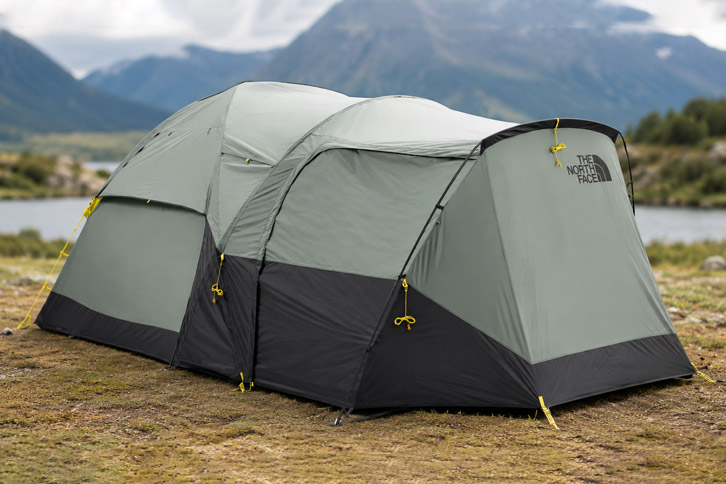
The Wawona 6 keeps showing up at the top of rain tests for a reason. The rainfly carries a 1,200mm hydrostatic head, the floor steps up to 1,500mm, and the seams come factory-taped instead of relying on a spray-on sealer you have to apply yourself.
The 51-square-foot vestibule is the real MVP here. It’s big enough to swallow wet shoes, a stroller, and a soaked dog before any of that mess makes it into the sleeping area. We’ve heard from owners who rode out three straight days of rain in this tent without a single wet spot inside.
Best for: families who camp several times a year and want one tent that handles whatever shows up. Skip it if: you camp once or twice a summer in predictably dry weather, the Meramac 6 covers you for a third of the price.
2. Kodiak Canvas Flex-Bow – Best for Serious Storms
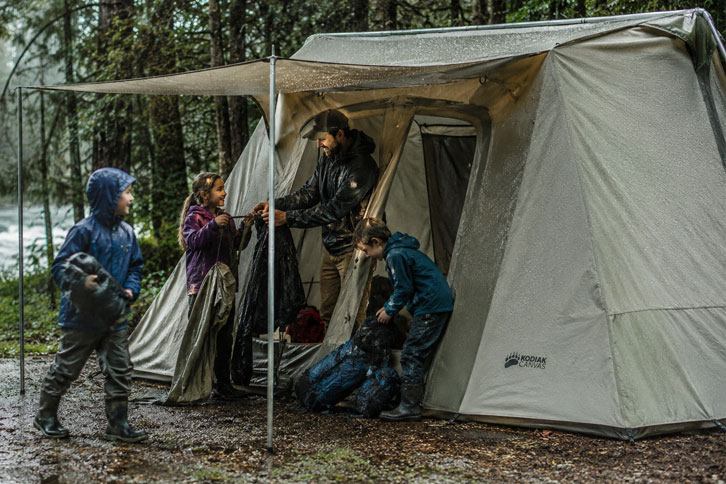
Canvas isn’t the trendy material anymore, but it’s still the toughest one for genuinely bad weather. The Flex-Bow’s cotton duck canvas is treated with a hydra-shield finish that sheds rain without ever feeling stiff or crinkly, and the flexible steel frame handles wind gusts that would flatten a lighter dome tent.
It’s heavier and pricier than everything else here, and it’s not something you’ll want to pitch and pack every weekend. But for extended trips where the weather is genuinely unpredictable, it’s the closest thing to a guarantee you’ll find in a family tent.
Best for: longer trips in regions where storms are genuinely unpredictable. Skip it if: you need something light to load and unload solo, this tent is a two-person job.
3. REI Co-op Base Camp 6
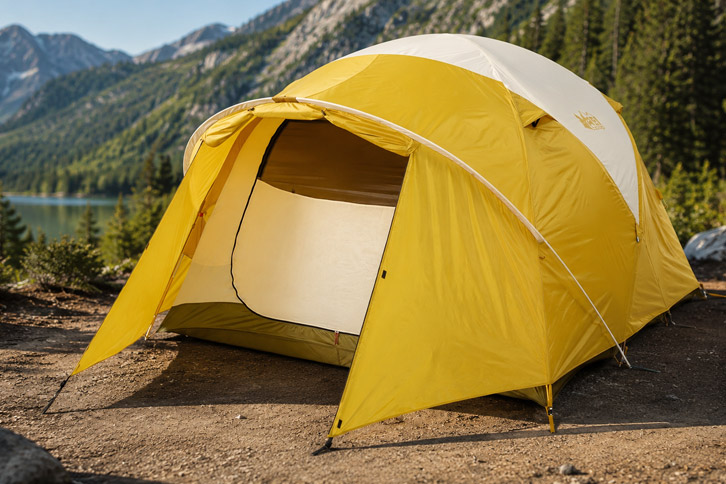
Rain rarely arrives alone, and the Base Camp 6 is built for the combo that actually ruins trips: rain plus wind. The five-pole dome structure stays solid in gusts that would rattle a lighter tent, while the full-length rainfly keeps water from finding its way in sideways.
Best for: campsites near open fields, lakes, or coastline where wind shows up with the rain. Skip it if: you mostly camp in sheltered, tree-covered spots, you’re paying for weather resistance you may not need.
4. Coleman WeatherMaster 6-Person
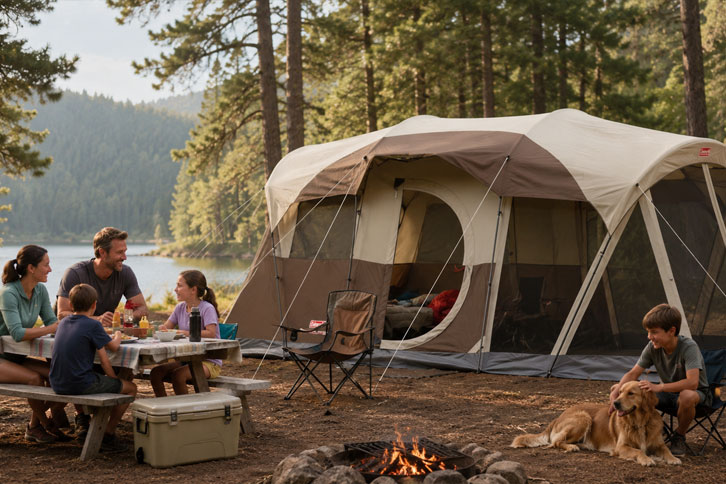
Coleman’s WeatherTec system combines welded floor seams with inverted seams on the rest of the tent, so water is directed away from stitch holes instead of pooling on top of them. It’s a simpler build than the premium options above, but the rain protection is genuinely solid for the price.
Best for: families who want dependable rain performance without spending $400+. Skip it if: you’re facing sustained heavy storms, step up to the Wawona or Base Camp 6 instead.
5. Browning Big Horn
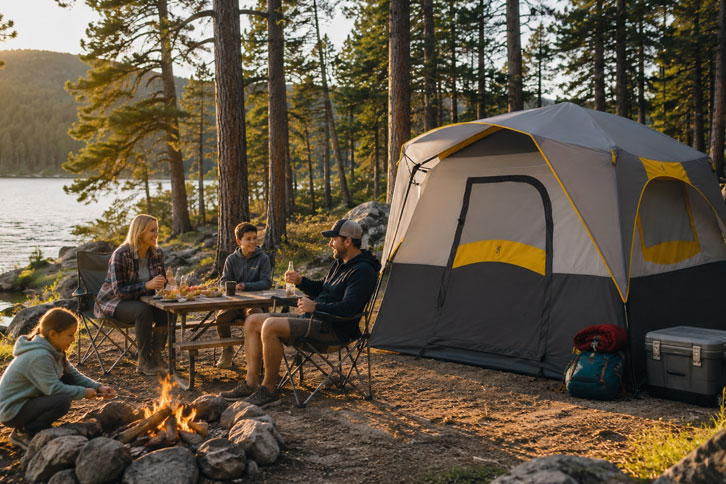
The Big Horn’s full-coverage rainfly extends almost to the ground on every side, which matters more than people expect. Partial “cap” style rainflies are one of the most common reasons budget tents leak, and this one doesn’t cut that corner.
Factory-sealed seams and a bathtub-style floor round out the package. It’s not the flashiest tent here, but it consistently gets recommended by owners who camp in genuinely wet regions.
Best for: anyone who wants full rainfly coverage without paying premium prices. Skip it if: you need instant setup, this is a traditional pole tent that takes a bit longer to pitch.
6. Coleman Skydome XL 8
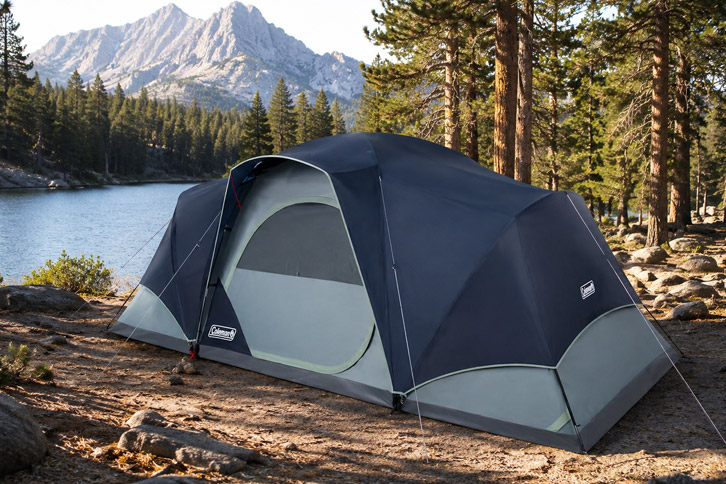
If you need extra square footage without a big budget, the Skydome XL 8 delivers dependable rain protection in a bigger footprint. The tub-style tarp floor is spill-safe and easy to wipe clean, which is handy on its own even before the sky opens up.
Best for: bigger families who want room to spread out without a premium price tag. Skip it if: you’re dealing with frequent severe weather, this tent is built for typical weekend rain, not multi-day storms.
7. ALPS Mountaineering Meramac 6 – Best Budget
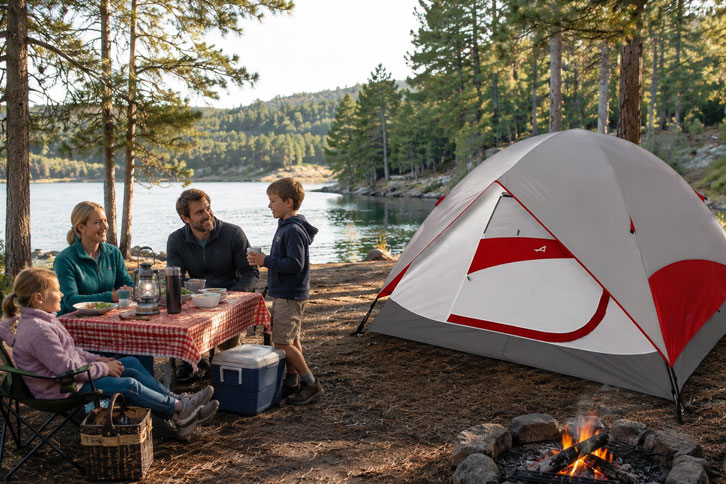
At under $200, this is the tent we’d point a friend to for their first camping trip without a big financial commitment. It won’t survive a multi-day deluge, but for a typical weekend forecast with a chance of rain, the polyester rainfly and taped floor seams do exactly what they need to.
Best for: occasional campers who want real rain protection without the premium price. Skip it if: you camp often enough to justify investing in something built for tougher weather.
Buying Guide: What Actually Makes a Tent Waterproof
Check the Hydrostatic Head Rating
This number, measured in millimeters, tells you how much water pressure the fabric resists before it starts leaking. Look for at least 1,200mm on the rainfly and 1,500mm+ on the floor, which takes the most abuse from ground moisture and pooling water.
Taped Seams Aren’t Optional
Every stitch is a tiny needle hole, and untaped seams let water through no matter how good the fabric rating is. Check the product listing for “fully taped” or “factory-sealed” seams on both the rainfly and the tent body.
Full-Coverage Rainflies Beat Partial Ones
A rainfly that only covers the top third of the tent looks fine in photos but leaves the walls exposed to sideways rain. Full-coverage flies that extend close to the ground protect far better in real storms.
A Tub-Style Floor Keeps Ground Water Out
When the waterproof fabric wraps a few inches up the tent walls before meeting the mesh, water pooling underneath the tent has nowhere to seep in. Flat floors are much more vulnerable to puddling.
Don’t Skip the Footprint
A $20-30 ground tarp pitched under the tent adds a real layer of protection against rocks, roots, and abrasion, and it extends the life of the floor significantly. Most tents don’t include one.
📋 Not sure what else belongs on your packing list before a rainy trip? Check our: Family Camping ChecklistFinal Verdict
Best Overall: The North Face Wawona 6 handles the widest range of rainy conditions without asking you to compromise on space or comfort.
Best for Storms: The Kodiak Canvas Flex-Bow is the one we’d trust for an extended trip somewhere genuinely unpredictable.
Best Budget: The ALPS Mountaineering Meramac 6 keeps your family dry through a normal rainy weekend for under $200.
If rain is even a possibility on your trip, this is the tent we’d pack. It costs more upfront, but the factory-taped seams and 1,200mm rainfly mean you’re not gambling on a forecast. Skip it only if you’re an occasional camper on a tight budget, the Meramac 6 will still keep you dry.
Check Price on Amazon →Frequently Asked Questions
What waterproof rating should I look for in a camping tent?
Aim for at least 1,200mm on the rainfly and 1,500mm or higher on the floor. Anything under 1,000mm tends to struggle once rain becomes sustained rather than a passing shower.
Are canvas tents more waterproof than nylon or polyester?
Treated canvas can handle sustained rain and wind extremely well, but it’s heavier, pricier, and takes longer to dry out. For most families, a well-rated nylon or polyester tent like the Wawona 6 is more practical.
Does a higher denier fabric mean better waterproofing?
Not directly. Denier measures fabric thickness and durability, while the PU or silicone coating is what actually determines waterproofing. Check both numbers rather than assuming a thicker fabric equals a drier tent.
Can I make a non-waterproof tent more rain-resistant?
A seam sealer and a rain tarp pitched over the top help in a pinch, but they’re a patch, not a real fix. If rain is a regular part of your camping trips, start with a tent rated at least 1,200mm.
What’s the difference between a rainfly and a waterproof tent body?
The tent body itself is usually breathable mesh and fabric that isn’t fully waterproof on its own. The rainfly is the separate waterproof layer that goes over the top and does the actual work of keeping rain out.
How much should I budget for a genuinely waterproof family tent?
Solid rain protection starts around $180-230 for tents like the ALPS Meramac 6 or Coleman WeatherMaster. For frequent campers or unpredictable climates, $450-800 gets you into the Wawona 6 or Kodiak Canvas Flex-Bow range.
Do I need to reapply waterproofing treatment over time?
Yes. Even good tents benefit from a fresh coat of seam sealer and a DWR (durable water repellent) refresh every year or two, especially on the rainfly, as the original coating wears down with UV exposure and use.