Short answer: Great Smoky Mountains National Park is our top pick for most first-time camping families. It’s free to enter, close to towns if you need a backup plan, and the trails are genuinely easy for little legs. If your kids are old enough to handle a longer trip and you want the full bucket-list experience, Yellowstone is worth the planning headache. And if you’re on the East Coast and don’t want a 12-hour drive, Shenandoah gets you real mountains in a day trip’s distance from DC.
We’ve camped in a few of these parks with kids who complained the whole first mile and then wouldn’t stop talking about it for a year. National park camping is a different animal than a state campground down the road: bigger crowds, tighter booking windows, and sometimes a permit system you need to understand months in advance. Here’s what actually matters when you’re choosing one with kids in tow.
Quick Top 3 Picks
- Best Overall: Great Smoky Mountains National Park, no entrance fee, easy trails, Elkmont Campground has shaded sites along a stream
- Best for the Full Bucket-List Trip: Yellowstone National Park, wildlife, geysers, and the most robust Junior Ranger program in the system
- Best for Easy Logistics: Shenandoah National Park, close to major East Coast cities, simple reservations, gentle trails
An America the Beautiful Annual Pass costs $80 and covers entry for your whole vehicle at every park on this list for 12 months, which pays for itself after roughly two trips.
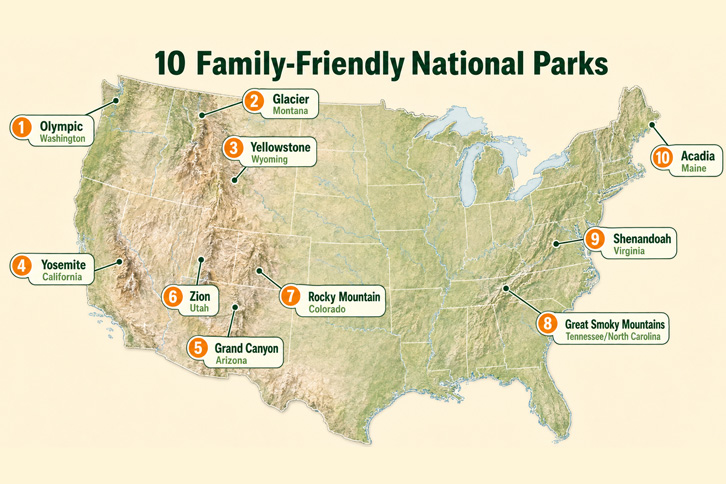
1. Great Smoky Mountains National Park (Tennessee/North Carolina)
There’s no entrance fee at the Smokies, just a parking tag ($5/day, $15/week, or $40/year) required for any vehicle parked over 15 minutes. That alone makes it the most budget-friendly park on this list.
Elkmont Campground sits along a fast-moving stream with shaded sites that stay tolerable even in July, and it’s close enough to Gatlinburg for a resupply run without losing a whole afternoon. Trails here skew gentle, and the park is genuinely wild without requiring backcountry experience.
2. Yellowstone National Park (Wyoming/Montana/Idaho)
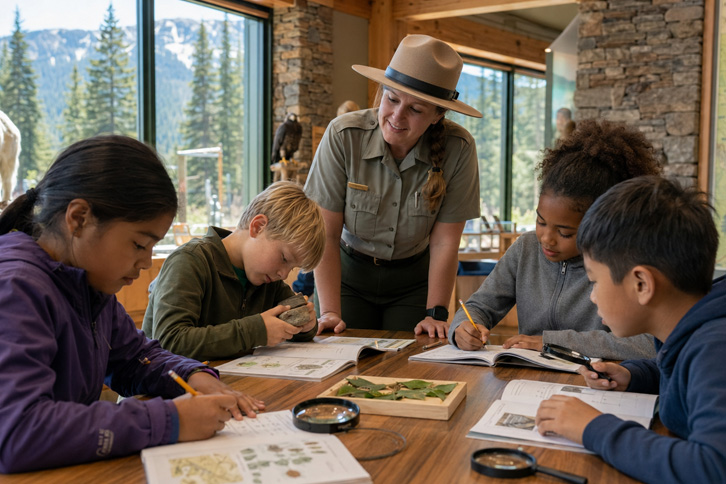
Yellowstone is the best park for a family trip if your kids are between 5 and 12 and you have at least four days to spend. Old Faithful erupts roughly every 90 minutes, bison and elk show up along the roadside without you needing binoculars, and the Junior Ranger program here is the most thorough in the whole system.
The catch: summer campground reservations don’t open on the usual rolling 6-month schedule. Yellowstone releases them all on one single date in late March, and popular sites like Madison go within minutes.
3. Grand Canyon National Park (Arizona)
Mather Campground sits inside the South Rim and puts you within walking distance of viewpoints, ranger programs, and paved trails that work fine with a stroller. It’s the least intimidating way to show young kids the Grand Canyon without a long approach hike.
Heat and sun exposure are the real challenges here, especially May through September. Plan viewpoint visits for early morning or evening and keep midday for the campsite or the visitor center.
4. Zion National Park (Utah)
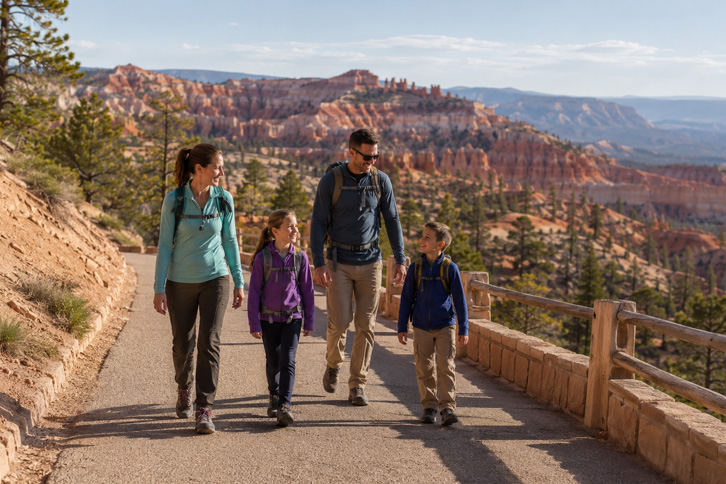
Zion blends genuinely dramatic red rock canyons with the practical convenience of Springdale, Utah, sitting just outside the park entrance. If your family isn’t fully sold on tent camping yet, having restaurants and a grocery store ten minutes away is a real safety net.
The park uses a shuttle system through the main canyon during peak season, which is actually a relief with kids: no parking hunt, no car seat wrangling at every stop.
5. Yosemite National Park (California)
Yosemite runs 10 campgrounds and over 1,200 individual campsites, which means more flexibility than almost any other park on this list, from easy drive-up sites to a short hike-in for older kids. Waterfalls, granite cliffs, and giant sequoias make it an easy sell to reluctant teenagers.
During peak season, Yosemite requires a separate timed-entry reservation just to drive into the park, on top of your campground booking. Check current requirements before you go, since the rules shift year to year.
6. Rocky Mountain National Park (Colorado)
Close enough to Denver for an easy drive, Rocky Mountain gives you elk sightings, alpine scenery, and over 350 miles of trail without needing a week off work. Estes Park sits right at the entrance for supply runs.
Elevation matters more here than at most parks on this list. Some campgrounds sit above 9,000 feet, which means colder nights than the forecast for “Colorado in July” might suggest.
7. Acadia National Park (Maine)
Acadia is the rare park where you get ocean and mountain in the same afternoon. Blackwoods Campground puts you close to Cadillac Mountain and the rocky coastline, and the trails here are shorter and gentler than out West.
For East Coast families, Acadia is often the closest true “big scenery” national park experience without a cross-country flight.
8. Glacier National Park (Montana)
Glacier rewards families with older kids and teenagers who can handle a bit more rugged terrain. Apgar, Avalanche Creek, and St. Mary campgrounds put you close to the park’s most dramatic overlooks, and Going-to-the-Sun Road is one of the most scenic drives in the country.
Like Yellowstone, this is bear country. Bear spray, secure food storage, and a basic understanding of trail etiquette matter more here than at most parks.
9. Olympic National Park (Washington)
Olympic packs beach, rainforest, and alpine mountains into one park, which makes it a genuinely unique trip if your family wants variety without three separate vacations. It’s also less crowded than the marquee Western parks, which means an easier time getting a site.
Weather changes fast here, so pack layers regardless of season.
10. Shenandoah National Park (Virginia)
Shenandoah is our pick for East Coast families who want the “first national park camping trip” experience without a cross-country drive. It’s within a few hours of Washington DC, Baltimore, and Richmond, and the trails and campgrounds are genuinely beginner-friendly.
Skyline Drive runs the length of the park with overlooks every mile or so, which is a low-effort way to see a lot of scenery with kids who aren’t up for a long hike yet.
How to Pick the Right Park for Your Family
Match the drive to your kids’ patience, not your ambition. A park eight hours away sounds exciting when you’re planning from your couch. It feels very different at hour six with a carsick toddler. For a first national park camping trip, aim for something under a five-hour drive.
Check the elevation before you check the photos. Parks like Rocky Mountain and Yosemite’s high country can mean freezing nights even in summer. Pack sleeping bags rated colder than you think you’ll need; our printable camping checklist has a full cold-weather section.
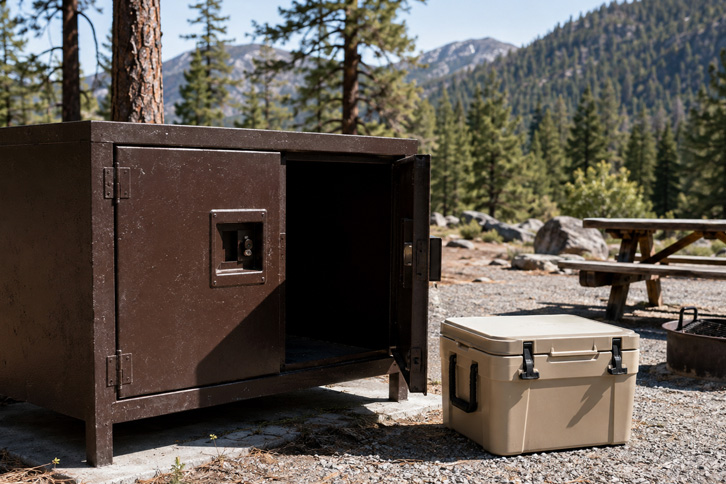
Know whether you’re camping in bear country. Yellowstone, Glacier, Yosemite, and Rocky Mountain all require secure food storage. A hard cooler that actually locks matters here, not just one that keeps ice cold. Our camping cooler guide flags which models work with bear boxes.
Book earlier than feels necessary. Six months out is the standard window for most parks, and popular sites disappear in minutes, not days. Set a calendar reminder for the exact date your target site opens.
Common Mistakes Families Make Booking Park Camping
Waiting until “closer to the trip” to book. By the time most families start looking, the popular campgrounds inside the park are gone. Backup options outside the park boundary usually still have room, but you lose the convenience of being inside.
Not checking for required permits beyond the campsite reservation. Several parks now require a separate timed-entry pass just to drive in during peak months. Booking a campsite doesn’t automatically guarantee you can enter when you want.
Underestimating drive time between park entrance and campground. Some parks are enormous. “20 miles” on a map can mean 45 minutes on a winding mountain road with a bathroom stop required halfway through.
Skipping the annual pass math. If you’re visiting more than two parks in a year, the $80 America the Beautiful Pass is almost always cheaper than paying per-park entrance fees.
Next Steps
Once you’ve picked a park, the planning that actually matters is the boring stuff: booking the site early, packing the right gear for the elevation and climate, and knowing the food storage rules before you arrive.
Frequently Asked Questions
How far in advance do I need to book national park camping?
Most parks open campground reservations on recreation.gov exactly 6 months ahead, on a rolling daily basis. Yellowstone is the exception: all summer sites release on a single date in late March. Popular campgrounds can sell out within minutes of opening.
Is the America the Beautiful Pass worth it for one trip?
If you’re visiting just one park for one trip, probably not; a single 7-day vehicle pass usually costs $30-35. If you’re hitting two or more parks in a year, the $80 annual pass pays for itself.
What’s the easiest national park for first-time family camping?
Great Smoky Mountains and Shenandoah both work well for beginners. Both have gentle trails, no entrance fee complications beyond a parking tag (Smokies) or a standard fee (Shenandoah), and reasonable drive times for East Coast families.
Do I need a bear canister or special cooler for national park camping?
In bear country parks like Yellowstone, Glacier, Yosemite, and parts of Rocky Mountain, yes. Most campgrounds provide bear boxes for food storage, but a cooler that can be securely locked or stored inside one makes the process much easier.
Can toddlers handle national park camping?
Yes, with the right park choice. Stick to developed campgrounds with flush toilets and shorter drive times, and pick parks with stroller-friendly paved trails like the Grand Canyon’s South Rim rather than parks that require longer hikes to reach the highlights.
What if I can’t get a reservation at the campground I want?
Check campgrounds just outside the park boundary on public or private land, or try recreation.gov’s waitlist and cancellation alerts. Cancellations happen constantly in the weeks leading up to a trip.