We’ve packed the car with two kids yelling from the back seat, a cooler that wouldn’t fit anywhere, and a tent bag we eventually had to sit on to close the trunk. It works out eventually. It’s just a lot louder and slower than it needs to be.
Car camping setup isn’t about buying fancy gear. It’s about loading the same stuff you already own in an order that doesn’t leave you unpacking half the trunk at 9pm to find a kid’s stuffed animal. Get the zones right before you leave the driveway, and the whole trip runs smoother.
Why Most Packing Advice Ignores the Biggest Problem: Car Seats
Nearly every car camping guide out there assumes two adults and a flexible trunk. That’s not the reality for most families. Two car seats can eat 30-40% of your usable cargo space before a single bag of gear goes in, and that changes everything about how you pack.
If car seats are tight on space, soft-sided duffel bags earn their keep here. They squish into the odd-shaped gaps around seats in a way that a rigid bin never will. Save the rigid bins for the trunk area behind the back seat, where the shape is predictable.
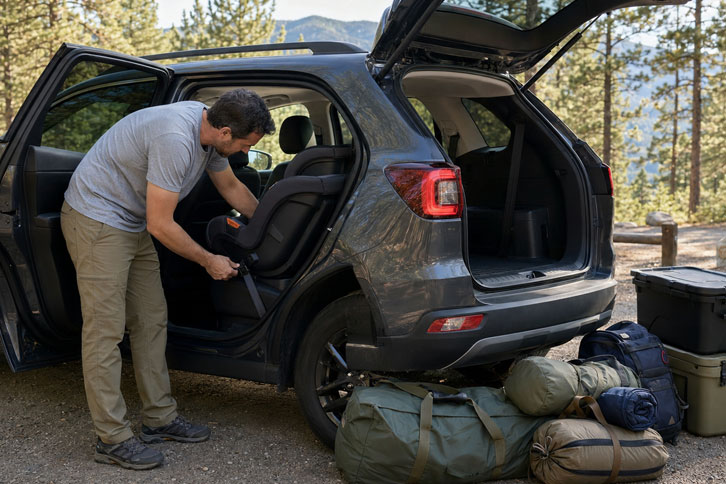
The Zone System
Instead of throwing gear in as it comes out of the garage, split your car into four zones before you load anything. This is the single biggest difference between a calm pack job and a frustrating one.
Loading Order, Step by Step
1. Clean the car out completely first. Old cups, forgotten toys, and last month’s grocery bags all eat space you’ll want back. Five minutes here saves you from repacking mid-driveway.
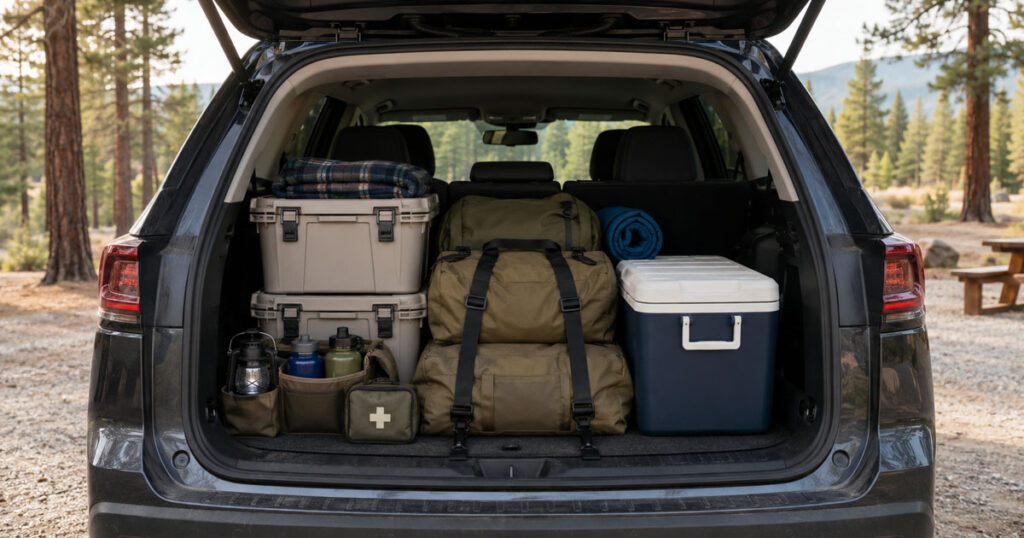
2. Load the Base Zone first, heavy and low. Coolers, water jugs, and gear bins go in against the back seat, low in the cargo area. This keeps your center of gravity down and stops lighter bags from getting crushed on top.
3. Fill gaps with soft duffels, not more bins. Once the rigid stuff is in, soft-sided bags mold into whatever odd-shaped space is left around them, including the gaps next to car seats.
4. Load the Setup Zone last, closest to the door. Your tent, stakes, and sleeping gear should be the first things you touch when you open the trunk at the campsite. If you have to dig past everything else to reach your tent, you packed it backwards.
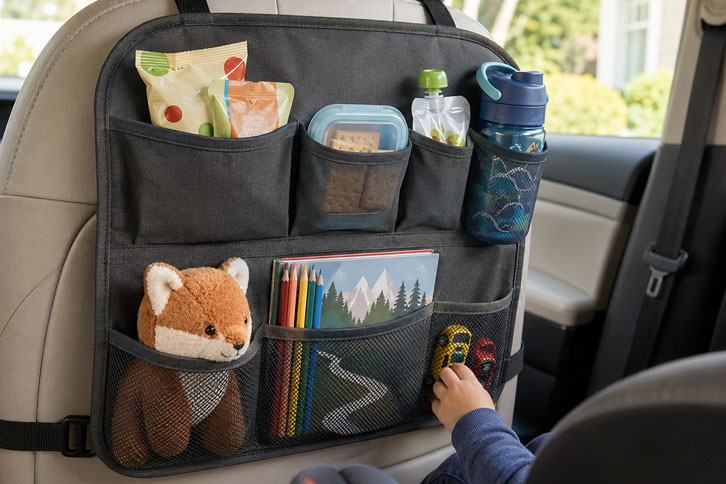
5. Set up the Reach Zone last, in the back seat, not the trunk.** This is a small bag or a hanging seat-back organizer with snacks, a toy, and a spare layer, kept entirely separate from the gear underneath everything else.
Once you’re actually at the campsite, our guide to setting up a family campsite picks up right where this one leaves off, covering tent placement, kitchen zone spacing, and where to put the kids’ play area.
Storage Tools Worth Using (and What to Skip)
You don’t need to buy anything to pack a car well, but a few cheap tools genuinely help. Collapsible fabric bins hold their shape when full but fold flat when empty, which matters if you’re storing gear in a garage between trips. A hanging car-seat organizer keeps the Reach Zone snacks and toys off the floor and within a kid’s actual reach.
Skip rigid, oddly-shaped organizers marketed as “camping-specific” unless they solve a problem your current bins and duffels don’t. Most of what you need, you probably already own.
Common Mistakes to Avoid
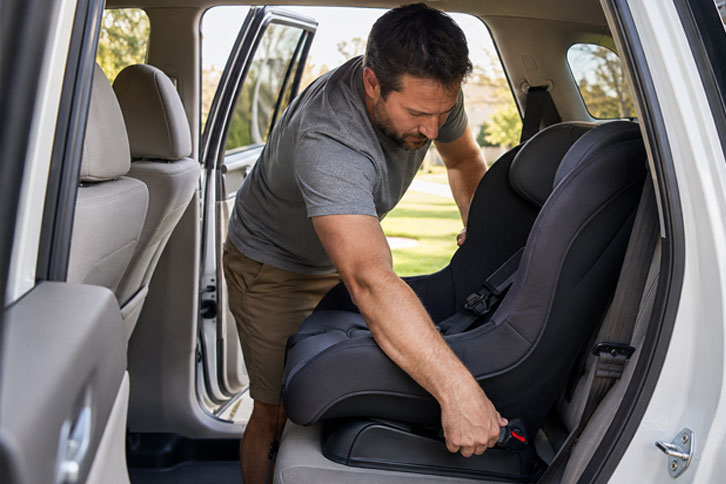
Packing before you check car seat space. Load gear around the car seats first if they’re already installed, or install seats before you start loading anything else. Retrofitting gear around seats you forgot about wastes the most time.
Putting the tent at the very bottom. If you’re digging through three layers of bins to find your tent poles at the campsite, the loading order went backwards. Setup gear goes in last, closest to the door.
Giving kids nothing to reach during the drive. A Reach Zone takes two minutes to set up and prevents an hour of “I’m bored” from the back seat.
Overpacking bins because they’re rigid and “look organized.” A rigid bin that doesn’t fully fit takes up more space than a squishy duffel with the same contents. Function over tidiness here.
Next Steps
If this is your family’s first trip, start with our complete first-time camping guide, then build your gear list against our family camping checklist before you load anything. If you’re camping with a toddler or younger kids specifically, our toddler camping survival guide covers what changes about your packing list at that age, beyond just car seat space.
Frequently Asked Questions
What’s the best way to organize a car for camping?
Split your car into four zones: a Base Zone for heavy gear like coolers and bins (loaded first, low and toward the back), a Setup Zone for your tent and sleeping gear (loaded last, near the door), a Personal Zone for clothes and toiletries, and a Reach Zone in the back seat for kids’ snacks and toys.
How do car seats affect car camping packing?
Two car seats can take up 30-40% of your usable cargo space. Install seats first, then measure or eyeball what’s actually left before you plan how gear fits, rather than assuming your usual packing routine still works.
Should I use bins or duffel bags for car camping?
Both, for different jobs. Rigid bins work well in the predictable trunk space for kitchen gear and coolers. Soft-sided duffel bags are better for filling odd-shaped gaps, especially around installed car seats.
What should be packed last when loading the car?
Whatever you need first at the campsite: your tent, stakes, and sleeping gear. If you have to unpack other bins to reach your tent, the loading order needs to change.
How do I keep kids entertained without digging through the trunk?
Set up a small “Reach Zone” bag in the back seat with snacks, a toy, and headphones that a kid can grab without help. Keep it completely separate from the gear packed in the trunk.
Is it safe to stack bins high in the trunk?
Only if they’re below headrest height and can’t shift forward under hard braking. Never stack heavy items where they could block your rearview mirror or slide toward passengers.