If you need the short answer: the REI Co-op Westward Dreamer Self-Inflating Bed is the best camping sleeping pad for most families in 2026. It’s four inches thick, self-inflates in minutes, and won’t wreck your budget at around $199.
If you and your partner want to actually share a bed under canvas, the Exped MegaMat Duo 10 is worth the splurge. And if you just need something cheap and packable for the kids, a basic foam pad like the Therm-a-Rest Z-Lite gets the job done for under $50.
We’ve slept on a lot of ground since our first family trip, including the night our air pad slowly deflated at 2am and we woke up on bare dirt. A good sleeping pad isn’t just about comfort. It’s the difference between a family that wants to camp again next month and one that swears off tents forever. Here’s what actually keeps everyone warm and rested at your family campsite.
Quick Top 3 Picks
- Best Overall: REI Co-op Westward Dreamer Self-Inflating Bed, thick, wide, and budget-friendly for a family of 4
- Best Budget: REI Co-op Campwell Mattress, a low-cost way to equip the whole family at once
- Best for Couples: Exped MegaMat Duo 10, the widest, most stable double pad for parents who actually want to sleep together
Comparison Table
1. REI Co-op Westward Dreamer Self-Inflating Bed – Best Overall
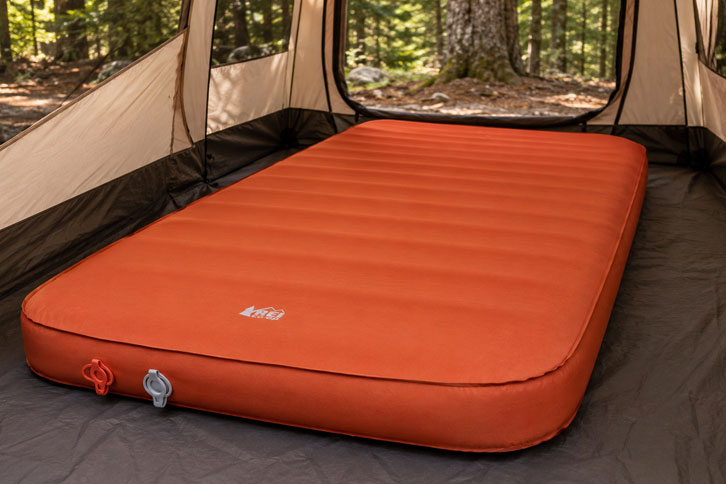
REI updated its budget lineup this year, and the Westward Dreamer is the result. It’s a genuine 4 inches thick, self-inflates most of the way on its own, and comes with a repair kit tucked into the stuff sack, which matters more than it sounds like the first time you’re patching a leak by headlamp.
At 78 inches long and 30 inches wide (in the Long Wide version), it comfortably fits an adult with room to spare, and it’s still compact enough to fit in the back of a loaded SUV alongside the cooler and the tent. The R-value of 6.7 keeps you warm into the low 30s°F, which covers spring through fall camping for most families.
Best for: Families who want one great pad per person without spending premium-brand money. Skip it if: you’re camping in near-freezing temps regularly, look at a higher R-value pad instead.
2. Therm-a-Rest MondoKing 3D
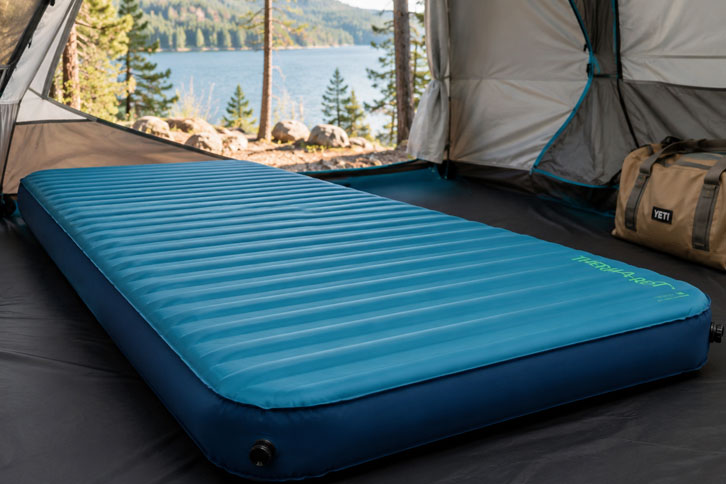
The MondoKing has held the top comfort spot in independent testing for five years running, and after sleeping on one for a week straight, it’s easy to see why. It’s 4.25 inches thick with vertical sidewalls that add real usable sleeping space, so you’re not sliding toward the middle every time you roll over.
The R-value of 7 is the highest on this list, which means it’ll keep you comfortable well into cold-weather camping without needing to layer extra blankets underneath. It’s not the cheapest option here, but for a parent who wants one pad that never needs replacing, it’s the one we’d point you toward.
Best for: Parents who camp several times a year and want a pad that outlasts a decade of trips. Skip it if: you’re on a tight first-year budget, the Westward Dreamer gets you 90% of the comfort for less.
3. Exped MegaMat Duo 10 – Best for Couples
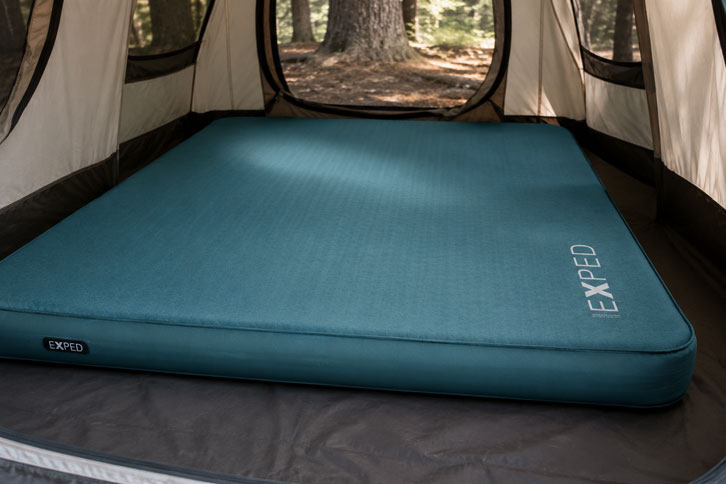
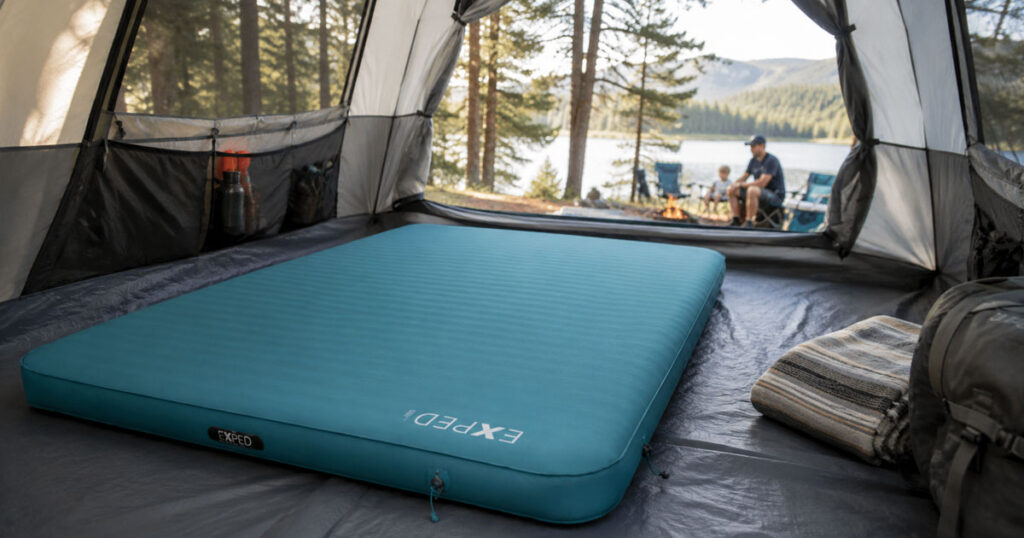
If you and your partner are tired of feeling every toss and turn through a shared pad, this is the fix. The MegaMat Duo combines 4 inches of foam and air into a single stable surface, so one person moving doesn’t send the other person bouncing. It’s also the pad we’d recommend for a parent who co-sleeps with a toddler on camping trips, since there’s genuinely enough width to spread out.
It’s the priciest pad on this list at $370-520, and it takes longer to fully inflate than a self-inflating pad. Exped sells an optional electric pump for around $50 that speeds this up considerably if you camp often enough to justify it.
Best for: Couples or a parent sharing space with a young child who want maximum stability and width. Skip it if: you’re each sleeping on your own pad, a single pad like the MondoKing will save you money.
4. Sea to Summit Camp Deluxe
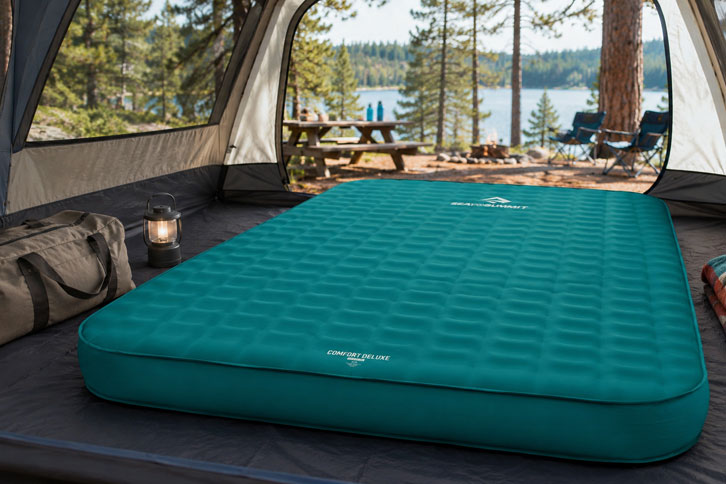
This one lands as a strong alternative if the MondoKing is out of stock or you want something a little lighter to carry from the car. At 4 inches thick with a 6.5 R-value, it’s only a hair behind the MondoKing on paper, and most people can’t tell the difference once they’re actually lying on it.
Best for: Families who want MondoKing-level comfort at a slightly lower weight and price. Skip it if: you need the absolute warmest option for cold-weather trips, the MondoKing’s extra half-point of R-value matters more in freezing temps.
5. NEMO Roamer
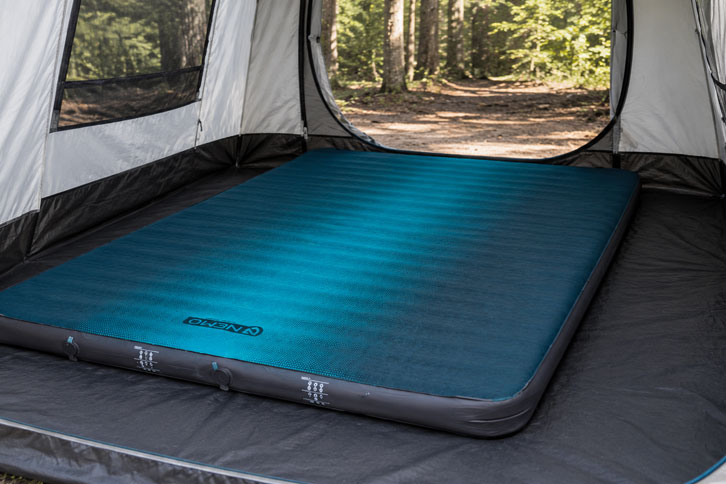
Built with the same “sleep wherever you park” mindset as a car-camping mattress, the Roamer is the pad we’d hand to a family that camps often enough to wear through a cheaper pad in a season or two. Four inches of open-cell foam holds up to repeated packing and unpacking better than most budget options.
Best for: Families who camp most weekends and need a pad built for repeated abuse. Skip it if: you camp a handful of times a year, you won’t notice the extra durability enough to justify the price.
6. REI Co-op Campwell Mattress – Best Budget
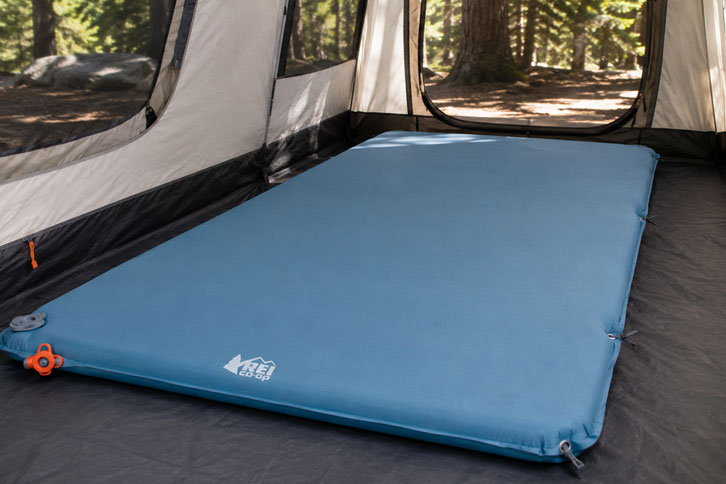
This is the pad we’d point a first-time camping family toward if you need to outfit 4 people at once without draining your gear budget. It’s thinner than the pricier options at 2.5 inches, but the R-value of 7 punches well above what you’d expect at this price, and it inflates in seconds thanks to a simple valve system.
Best for: First-time campers or families kitting out multiple sleepers on a tight budget. Skip it if: you want extra cushion under your hips and shoulders, step up to the Westward Dreamer for the thicker option.
7. Therm-a-Rest Z-Lite (Foam Pad)
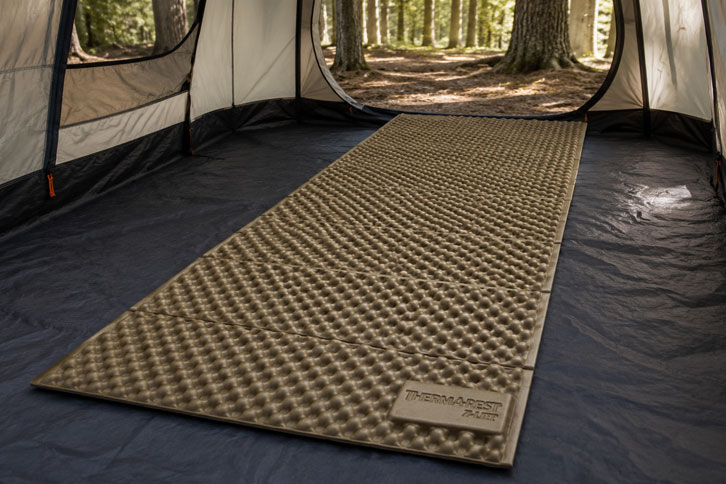
Not every kid needs a fancy air pad, and honestly, most of them don’t sleep any worse on a folding foam pad than they would on an inflatable one. The Z-Lite can’t puncture, unfolds instantly, and costs a fraction of anything else on this list, which makes it an easy way to add a pad or two for the kids without upgrading everyone’s gear.
Best for: Kids’ sleeping spots, backup pads, and anyone who wants zero risk of waking up on the ground from a leak. Skip it if: you want maximum plushness, this is a functional pad, not a cushy one.
Buying Guide: What to Look for in a Camping Sleeping Pad
R-Value Determines Warmth, Not Thickness
R-value measures how well a pad insulates you from cold ground, and it matters more for warmth than how many inches thick the pad is. For three-season family camping, look for an R-value of 4-5 minimum. For camping into fall or shoulder-season cold snaps, aim for 6.5 or higher like the MondoKing or Westward Dreamer.
Self-Inflating vs. Air-Only vs. Foam
Self-inflating pads (most on this list) combine convenience with comfort. Air-only mattresses need a pump but pack down smaller. Foam pads like the Z-Lite never puncture and are the easiest option for young kids. Most families end up with a mix: a nicer self-inflating pad for the adults and cheap foam pads for the kids.
Sizing for a Family Tent
Measure your tent’s floor space before you buy. A queen-sized double pad plus two kids’ pads can eat up more floor than you’d expect, especially in a smaller family tent setup. Long Wide sizing (78″ x 30″) fits most adults comfortably without hanging off the edges.
Repair Kits and Puncture Prevention
Every self-inflating and air-only pad on this list is patchable in the field with a basic repair kit, and most come with one included. Keep it in your camping checklist so it doesn’t get left at home. If staying warm through the night matters more to your family than avoiding punctures altogether, our camping safety guide covers cold-weather sleep setups in more depth.
📋 Pairing a new pad with the right sleeping bag matters just as much as the pad itself. Check out our guide to the: Best Sleeping Bags for Family Camping in 2026Final Verdict
Best Overall: The REI Co-op Westward Dreamer delivers real comfort and self-inflating convenience without the premium price tag.
Best Budget: The REI Co-op Campwell Mattress gets a family of 4 sleeping comfortably without a big financial commitment.
Best for Couples: The Exped MegaMat Duo 10 is the widest, most stable option for two adults (or a parent and a co-sleeping toddler) sharing one pad.
If you only read one section of this guide, read this: the Westward Dreamer is the pad we’d buy first for our own family. It’s thick enough to actually sleep well on, self-inflates without a fight, and costs $60+ less than the premium options for nearly the same comfort. Skip it only if you need serious cold-weather insulation – grab the MondoKing 3D instead.
Check Price on Amazon →Frequently Asked Questions
What’s the difference between a sleeping pad and an air mattress for camping?
Sleeping pads are self-inflating (foam plus air) and built to insulate you from the ground, with an R-value rating for warmth. Air mattresses are air-only, taller off the ground, and generally more about comfort than insulation. Pads are better for cooler nights; air mattresses are better for warm-weather comfort.
What R-value do I need for family camping?
For spring through fall camping, an R-value of 4-5 is enough. If you camp into cooler shoulder-season nights, look for 6.5 or higher, like the Therm-a-Rest MondoKing 3D or REI Co-op Westward Dreamer.
Should I get foam pads or inflatable pads for kids?
Foam pads like the Therm-a-Rest Z-Lite are a great choice for younger kids. They can’t puncture, unfold instantly, and cost a fraction of inflatable options, which matters if a pad ends up covered in mud or gets jumped on.
How much should I spend on a camping sleeping pad?
Budget $100-200 per adult pad for a solid self-inflating option, and $30-50 per kid for a basic foam pad. You don’t need to spend $300+ per person unless you’re camping in genuinely cold conditions or want maximum comfort.
Can two people comfortably share one wide sleeping pad?
Yes, with the right pad. Double pads like the Exped MegaMat Duo 10 are built with stable, non-bouncy surfaces specifically so one person moving doesn’t wake the other. A single-width pad shared between two adults will feel cramped.
How do I prevent my sleeping pad from getting punctured at a campsite?
Clear rocks, sticks, and pinecones from your tent footprint before setting up, and use a groundsheet or tent footprint underneath. Most punctures happen from debris under the tent floor, not from anything inside the tent.