



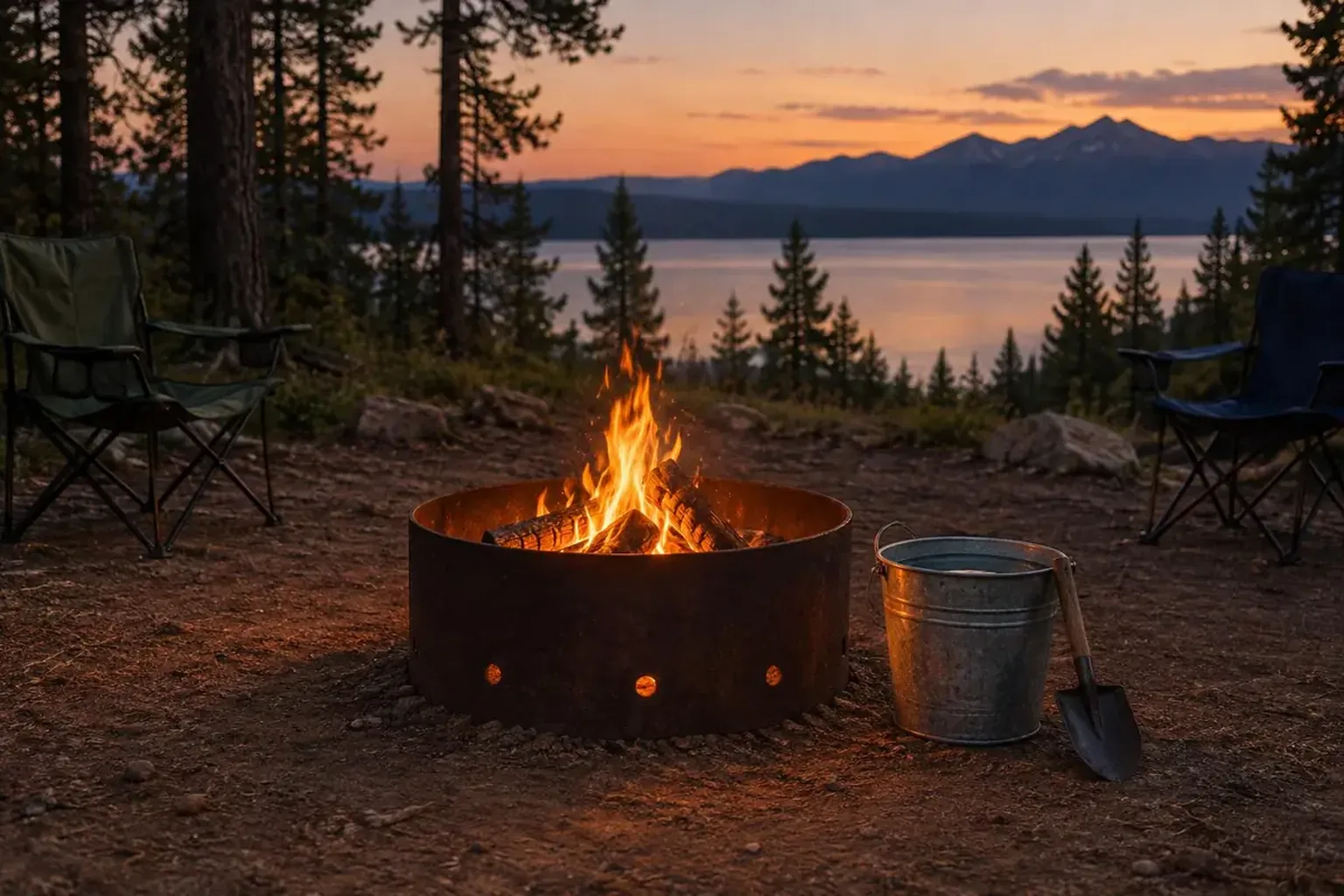
Buy firewood near your campsite instead of bringing it from home: Don’t Move Firewood says to buy it where you burn it, ideally within 10 miles and no more than 50, or buy certified heat-treated wood. Burn only dry, seasoned wood, and never burn trash or painted or treated wood. Gather wood at camp only where the rules allow it.
Firewood seems simple until you’re at the campsite with a smoky, hissing fire, or a ranger tells you that the wood from your garage isn’t allowed. Here’s what to buy, where to get it and what to keep out of the fire.
Don’t Bring Firewood From Home
Firewood can carry insects and diseases that kill trees. When you bring it from home, those pests can crawl out and spread to the forest around your campsite. Don’t Move Firewood asks campers to:
- Buy it where you burn it, from within 50 miles of your campsite, and ideally within 10.
- Or buy certified heat-treated firewood.
- Gather wood at the campground only when it’s allowed.
- Leave any wood you gathered at the site or with the camp host, instead of taking it home.
Rules vary by state and park, and some places ban outside firewood completely. Check the campground’s rules before you pack.
Where to Buy Firewood for Camping
- At the campground: many camp stores and hosts sell bundles. It’s the easiest way to follow local rules.
- Nearby stores and stands: gas stations, grocery stores and roadside stands close to the campground.
- Certified heat-treated bundles: look for the certification on the label when you can’t buy right next to the campground.
What Makes Good Firewood
The EPA says to burn only dry, split, well-seasoned wood. Seasoned wood is darker, weighs less and sounds hollow when you knock two pieces together. Wood burns best below 20% moisture. Wet or green wood is hard to light, smokes a lot and gives little heat.
| Type | What it’s good for |
|---|---|
| Dry kindling and small sticks | Getting the fire going |
| Seasoned hardwood (oak, maple and similar) | A longer, steadier fire for the evening |
| Softwood (pine and similar) | Lights more easily, but burns faster and can pop and spark |
What Never to Burn
The EPA lists materials that can release toxic or harmful chemicals when burned:
- Household trash, including cardboard, plastics, foam and colored paper or wrappers.
- Coated, painted and pressure-treated wood.
- Ocean driftwood, plywood, particle board or any wood with glue in it.
Pack out your trash instead of burning it. Never use gasoline or other flammable liquids to start a fire; Smokey Bear says a match or lighter is all you need.
Gathering Wood at Camp
Some campgrounds let you collect wood, and many don’t. Where it’s allowed, the usual rule is dead wood already on the ground. Never cut living trees or branches. Gathering kindling can be a good job for kids, with an adult nearby, where the rules allow it.
Smoke and Kids
The EPA says children are more sensitive to wood smoke, along with people with asthma or heart and lung disease. Dry wood makes less smoke. Sit upwind, move kids away when the smoke shifts, and keep the fire small. A smokeless fire pit can cut smoke too, where pits are allowed.
Fire Safety Basics
- Use the existing fire ring, at least 15 feet from tents, plants and low branches, as Smokey Bear advises.
- Keep water and a shovel nearby, and never leave the fire unattended.
- Before you leave or go to bed, drown it, stir it and drown it again, then feel for heat with the back of your hand held above the ashes.
More in our guides on how to start a campfire, portable fire pits and campfire games for families.
Sources: Don’t Move Firewood: camping · EPA Burn Wise: best wood-burning practices · EPA Burn Wise: wood smoke and your health · Smokey Bear: campfire safety
Frequently asked questions
 Can I bring my own firewood camping?


It’s best not to. Firewood can spread tree-killing pests, and many parks restrict it. Don’t Move Firewood says to buy it within 50 miles of where you’ll burn it, ideally within 10, or buy certified heat-treated wood.
Where can I buy firewood for camping?
At the campground store or host, at nearby stores and roadside stands, or as certified heat-treated bundles. Buying close to the campground is the simplest way to follow local rules.
What is the best firewood for camping?
Dry, seasoned wood. The EPA says it should be split and below 20% moisture. Seasoned hardwood burns longer, and softwood lights more easily.
How much firewood do I need for camping?
It depends on how long and how big your fires are. Start with a bundle or two per evening and buy more on site if you need it, so you don’t end up with leftover wood you can’t take home.
Can I gather firewood at the campsite?
Only where the rules allow it. Where it’s allowed, collect dead wood from the ground and never cut living trees. Leave what you don’t burn at the site.
What should I never burn in a campfire?
Trash, plastics, painted or pressure-treated wood, plywood, particle board and ocean driftwood. The EPA says these can release toxic chemicals.

