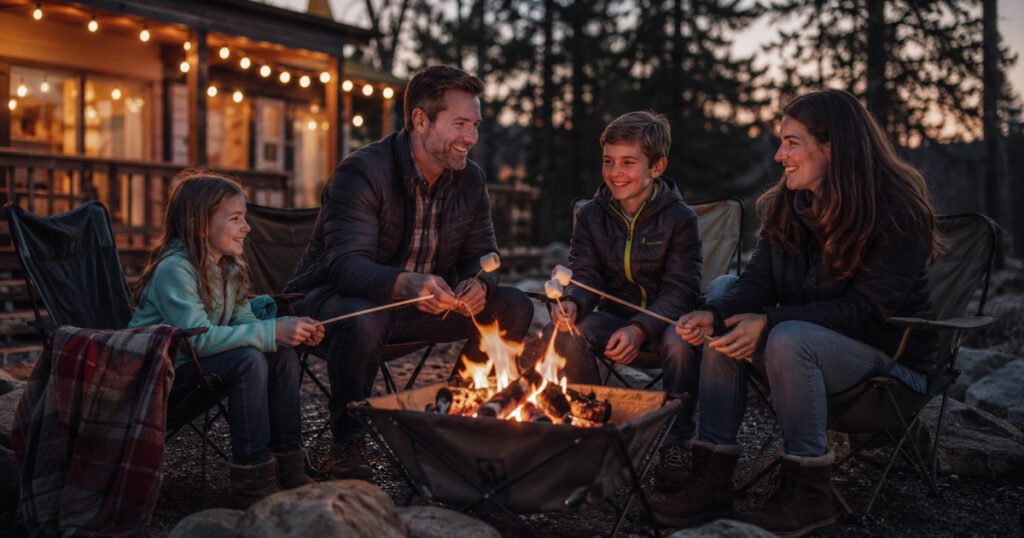
Short answer: the Fireside Outdoor Pop-Up Fire Pit is the best portable fire pit for most families in 2026. It packs down to the size of a camp chair, holds enough wood for a real bonfire, and set up is simple enough that a 9-year-old can help. If you want zero smoke drifting into the tent, the Solo Stove Ranger 2.0 is worth the extra money. And if your budget tops out under $50, the Ohuhu Foldable Fire Pit still gets the marshmallows toasted.
We’ve packed up a soggy, half-burned campsite fire more times than we’d like to admit, usually because we built it straight on the ground and forgot the campground rules said “contained fire pits only.” A good portable fire pit fixes that problem and turns into the actual center of your camping trip. Here’s what held up once real kids, real wind, and real bedtime meltdowns got involved.
Quick Top 3 Picks
- Best Overall: Fireside Outdoor Pop-Up Fire Pit, packs small, burns big, easy family setup
- Best Budget: Ohuhu Foldable Fire Pit, under $50, good for occasional weekend trips
- Best Smokeless: Solo Stove Ranger 2.0, no more kids complaining about smoke in their eyes
Comparison Table
1. Fireside Outdoor Pop-Up Fire Pit – Best Overall
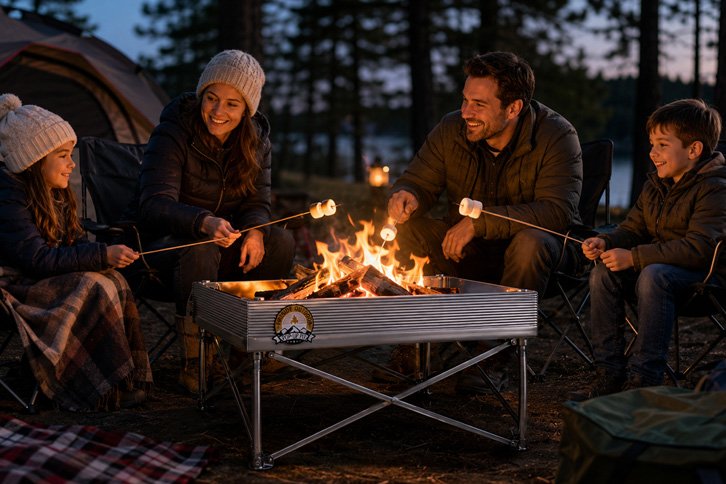
This is the fire pit we’d throw in the car without a second thought. Folded down, it’s about the size of a camp chair and slides into a 27-inch tote with a shoulder strap, so it doesn’t eat trunk space that’s already fighting with a cooler, tent, and three duffel bags. Setup takes a few minutes: unfold the aluminum frame, slot in the rails, drop in the fine-mesh screen, and strap on the reflective heat shield underneath.
The fire pan itself is big, 24 inches across, and holds enough wood for an actual bonfire that a whole extended family can circle up around. A heat shield under the mesh protects grass or a campground pad from scorching, which matters if you’re at a site that charges a damage deposit. It’s not the most windproof design since the fire is open on top, so on a gusty beach or ridge site, keep an eye on flying embers.
Best for: families who want a genuine bonfire experience without hauling something heavy. Skip if: you camp mostly at exposed, windy sites where embers could carry.
2. Ohuhu Foldable Fire Pit – Best Budget
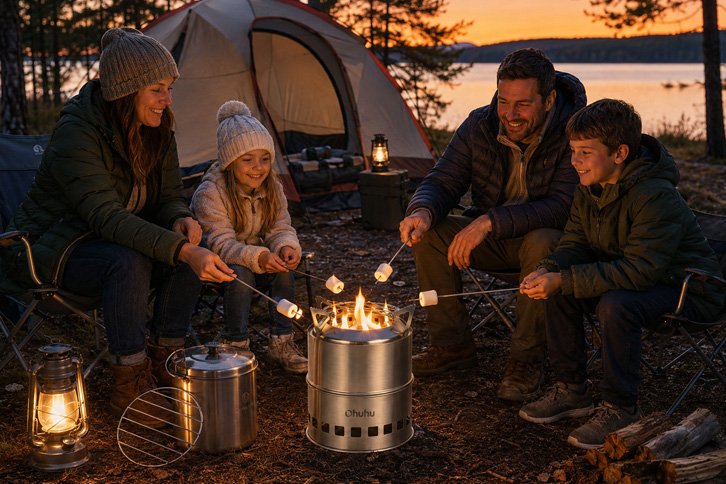
If you camp two or three weekends a year and don’t want to drop $200 on a fire pit, this is the one to grab. It’s a simple folding steel mesh design that opens like an umbrella and holds a small-to-medium fire, plenty for roasting hot dogs and marshmallows with a couple of kids.
It won’t survive daily abuse the way a heavier steel model would, and it’s genuinely too small to gather more than four or five people around comfortably. Think of it as the fire pit for the family just testing out whether campfires are even their thing, not the one you’ll still be using in ten years.
Best for: first-time campers who want to see if a fire pit is worth the investment before spending more. Skip if: you camp often or regularly host extended family around the fire.
3. Solo Stove Ranger 2.0 – Best Smokeless
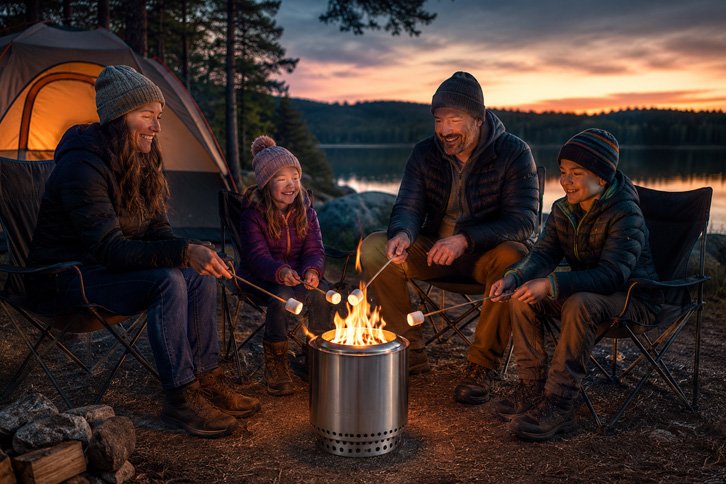
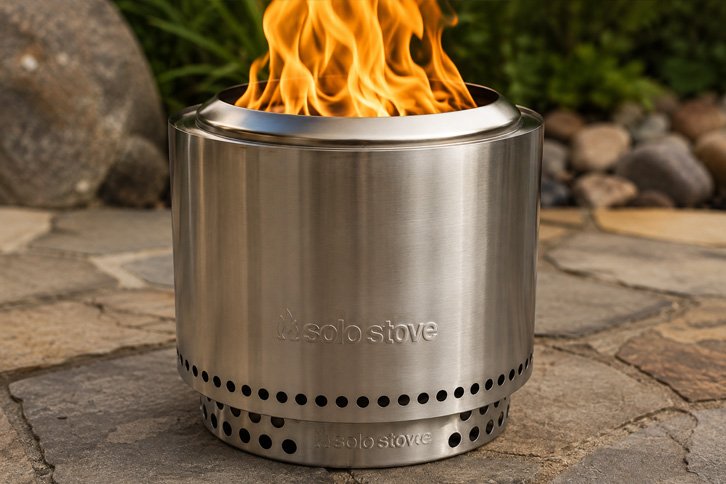
Solo Stove built its reputation on this design, and it earns it. A double-walled steel body pulls air in from underneath, feeds it up through the walls, and pushes it back into the fire through vent holes near the top. That extra oxygen burns off smoke before it ever reaches your face, which is the single biggest difference for a family sitting around it for hours.
It’s heavier than the Fireside at about 22 lbs and comes in its own carrying tote, so it’s portable but not something you’re tossing on top of an already-full pile of gear. There’s no built-in cooking grate, so it’s really for warmth and ambiance rather than grilling, though a compatible grill top is sold separately.
Best for: families who camp often and are tired of coming home smelling like a campfire for three days. Skip if: you’re on a tight budget or only camp once or twice a summer.
4. Outland Living Firebowl Mega – Best Propane
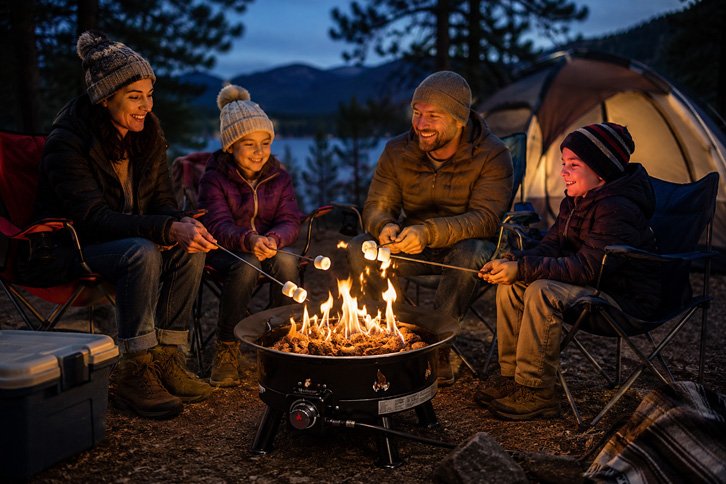
If your usual campground bans wood fires during dry season, or you just don’t want to deal with ash and smoke smell, propane solves both problems. The Firebowl Mega lights with the turn of a knob, burns clean, and shuts off instantly when you’re ready for bed instead of needing to be doused and stirred.
You’ll need a separate propane tank (a standard 20-lb grill tank works, sold separately), which adds bulk to what you’re packing. And let’s be honest, it doesn’t have quite the same crackle-and-pop magic as a wood fire, though the lava rocks do a decent job faking the look.
Best for: families camping in dry-season areas or at campgrounds with strict wood-fire rules. Skip if: roasting over real wood coals is the whole point of the trip for you.
5. BioLite FirePit+ – Best for Damp Wood
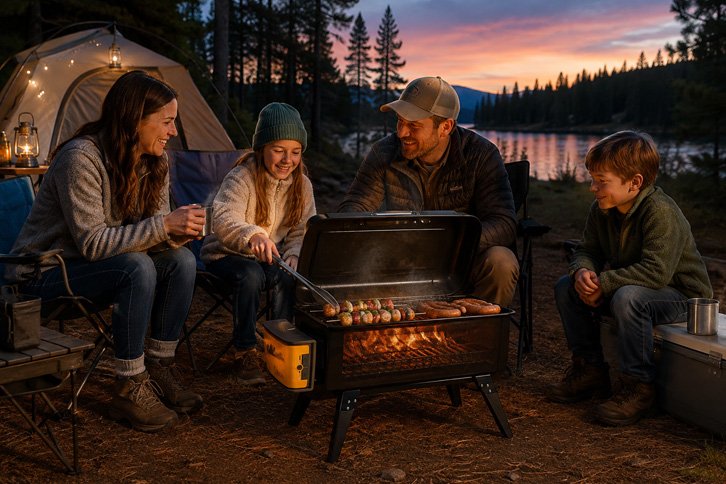
A USB-charged battery pack runs a built-in fan that blows air below and above the flames, so even half-damp campground firewood catches and stays lit. Once it’s going, three fan speeds (adjustable by hand or Bluetooth) let you dial the flame up for warmth or down for a mellow evening glow. Battery life runs from 7 hours on high to 30 hours on low.
The fan has a faint whine that some families notice and others tune out completely within a few minutes. It also kicks up more ash than a standard fire pit, so if you’re using the included grill grate, expect a light dusting of gray flakes on your hot dogs.
Best for: families in humid or rainy climates where dry firewood is never a guarantee. Skip if: you want the classic, silent crackle-and-pop campfire experience.
6. Snow Peak Takibi Fire & Grill – Best Premium
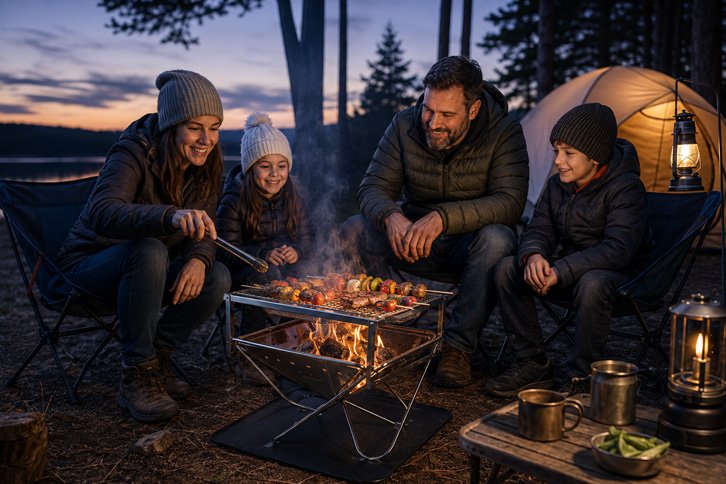
This is the fire pit for families who want both a cozy fire and a proper grilled dinner without owning two separate pieces of gear. The modular stainless steel setup raises and lowers the included grill grate into three positions, so you can sear over hot flame or move to a gentler simmer for something that needs more time.
The price reflects the build quality, and Snow Peak backs it with a lifetime warranty, which says something about how long this is meant to last. Some campers report trouble getting larger logs to catch, so smaller split wood or kindling works best here rather than whole fat logs.
Best for: families who camp often and want one piece of gear that replaces both a fire pit and a camp grill. Skip if: you already own a dedicated camp stove and just want a simple fire.
Buying Guide: What to Look for in a Portable Fire Pit
Fuel Type: Wood, Propane, or Pellets
Wood-burning fire pits give you the real crackle-and-pop experience most families are chasing, but need dry fuel and produce ash and smoke. Propane models light instantly and leave zero mess, trading the campfire smell for total convenience. Pellet-fed pits sit in between, offering long, steady burns with less smoke than raw wood but still needing fuel you pack in.
Portability and Weight
If your trunk is already packed with a tent, sleeping bags, and a cooler, weight and folded size matter as much as burn quality. Pop-up and mesh designs under 15 lbs are easiest to add without a second thought, while double-walled steel models in the 20+ lb range are more of a “dedicated space in the car” commitment.
Safety Features That Matter With Kids Around
Look for a spark screen or mesh cover that contains embers, cool-touch handles for moving or adjusting the pit once it’s warm, and a stable base that won’t tip if a running kid clips it. Elevated designs also keep the flame further from crawling babies and toddlers than a fire pit sitting flush on the ground.
Check Your Campground’s Fire Rules First
A lot of family-friendly campgrounds and state parks now require an elevated, contained fire pit rather than a ground fire ring, especially in dry months or areas recovering from past wildfires. Some sites ban wood fires entirely during burn bans but still allow propane. A quick check of the campground website or a call ahead saves you from unpacking a fire pit you can’t use.
Size and Heat Output
Bigger fire pans hold more wood and generate more heat, which matters for cool-weather trips or a larger extended-family crowd. For a typical family of four roasting marshmallows on a summer evening, a mid-size pit like the Fireside or Solo Stove Ranger is plenty. Save the bigger, heavier options for regular group camping trips.
Final Verdict
For most families, this is the fire pit that earns its spot in the trunk trip after trip. It packs small, burns big, and doesn’t need babying. If you camp often enough that smoke in your eyes is a real annoyance, spend more on the Solo Stove Ranger 2.0. If you’re just testing the waters, start with the Ohuhu instead.
Check Price on Amazon →- Best Overall: Fireside Outdoor Pop-Up Fire Pit, the pick most families should just buy
- Best Budget: Ohuhu Foldable Fire Pit, solid starter fire pit under $50
- Best Premium: Snow Peak Takibi Fire & Grill, worth it if you want fire and grill in one
Frequently Asked Questions
Are portable fire pits allowed at campgrounds and state parks?
Most family campgrounds allow portable fire pits, but many now require them to be elevated and contained rather than a ground fire ring, especially during dry season or in areas with past wildfire damage. Always check the specific campground or park website, or call ahead, since rules vary by location and season.
Do I need a fire permit for a portable fire pit?
It depends on where you’re camping. Many developed campgrounds don’t require a separate permit if you’re within a designated fire pit or ring, but dispersed camping on public land often does require one. Check with the local ranger station or land management agency before your trip.
Is propane or wood better for a family fire pit?
Wood gives you the classic crackle, glow, and marshmallow-roasting experience most families want, but needs dry fuel and produces smoke and ash. Propane lights instantly, leaves no mess, and works even under wood-fire bans, making it a solid pick for families who prioritize convenience over the traditional campfire feel.
How do I keep kids safe around a portable fire pit?
Set a “no-touch zone” of at least 3 feet around the pit and establish it before lighting anything. Keep a bucket of water or sand nearby the entire time it’s burning, use a fire pit with a spark screen, and never leave young kids unsupervised near an active or recently extinguished fire.
Can I use a portable fire pit on grass or a wood deck?
Only if it has a proper heat shield underneath, and even then, check the manufacturer’s guidance and any campground or homeowner rules first. Elevated fire pits with a reflective base panel, like the Fireside Outdoor, are built specifically to protect grass and decking from scorching.
How much does a good portable fire pit cost for a family?
Budget models start around $40-50 and handle occasional weekend trips fine. Most families land in the $90-200 range for a durable, mid-size fire pit that lasts for years, while smokeless and combo grill models run $200-350 for the added features and build quality.