Our first attempt at a campfire took 25 minutes, half a box of matches, and ended with two kids asking “is it a fire yet?” every 90 seconds. Turns out we’d piled on logs before we had anything actually burning underneath them. Wet matches, a wind gust, and a very patient partner later, we finally got it going.
Starting a campfire isn’t complicated once you know the order things go in. It’s tinder, then kindling, then fuel, in that order, with airflow the whole way through. Get that sequence right and a fire that used to take 25 frustrating minutes takes about 5.
Check the Rules Before You Strike a Match
Not every campsite allows a fire, and the rules change with the season. Skipping this step is the single most common way a family camping trip goes sideways with a ranger involved.
What You’ll Need
- Tinder: dry grass, birch bark, dryer lint, or a store-bought fire starter cube. This is the stuff that catches from a single spark.
- Kindling: pencil-thin to finger-thick dry sticks. This is what carries the flame from your tinder to your real fuel.
- Fuel: the actual firewood, wrist-thick or larger. Buy it locally near your campsite rather than bringing your own from home, since transporting firewood can spread invasive insects across state lines.
- A lighter, waterproof matches, or a ferro rod. Pack more than one option. A single lighter that runs out of fluid on night two is a bad night for everyone.
- Water bucket or shovel, kept within reach the entire time the fire is lit.
Step-by-Step: How to Build and Light a Campfire
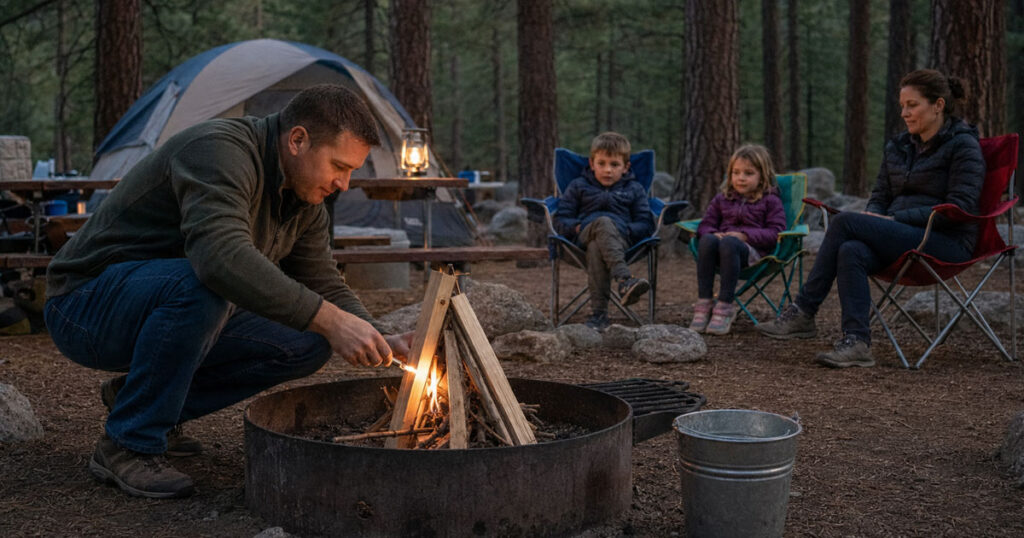
1. Pick a spot at least 10 feet from your tent, camp chairs, and any low branches. Most developed campsites already have a fire ring built for this. If you’re building your own ring in a dispersed site, clear a 3-foot circle down to bare dirt first.
2. Check the wind. Face the opening of your fire structure away from the direction the wind is blowing, so it feeds oxygen in rather than blowing your tinder away before you strike a match.
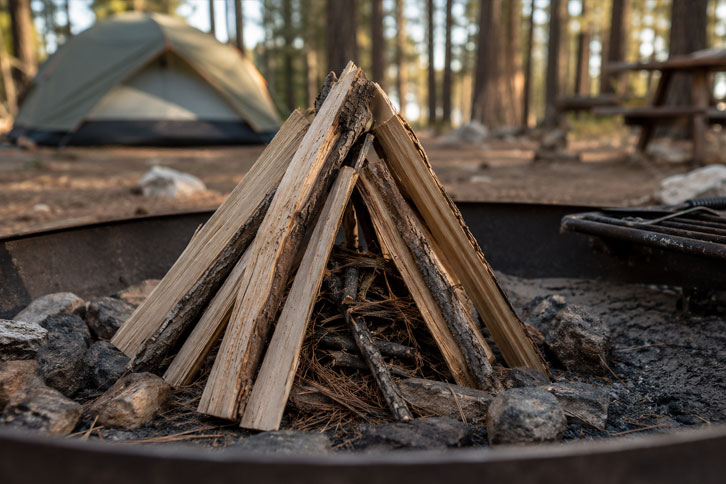
3. Gather your materials into three separate piles before you light anything. Tinder, kindling, and fuel, sorted and within arm’s reach. Hunting for a stick mid-fire while your tinder burns out is how a lot of first attempts fail.
4. Build a loose teepee. Stand a handful of tinder in the center, lean kindling around it in a cone shape, and leave gaps for airflow. Don’t pack it tight. Fire needs oxygen more than it needs wood.
5. Light the tinder at its base, not the top. Fire climbs. Lighting from underneath lets the flame work its way up through the kindling naturally instead of just charring the top and going out.
6. Add kindling gradually as the flame grows, then move to fuel logs only once you have real, sustained flame. Smoke and a little glow isn’t there yet. Wait for actual fire before you add anything bigger, or you’ll smother what you just built.
7. Feed it steadily, not all at once. Add one or two logs at a time as the fire burns down, leaving gaps for air between them.
Fire-Building Methods, Compared
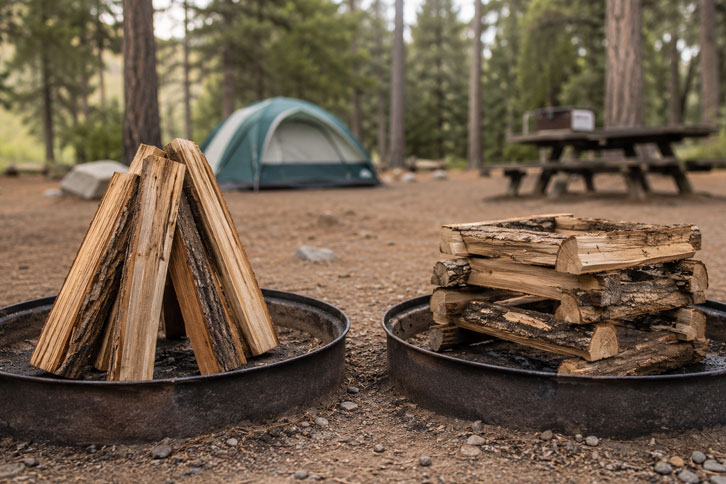
The teepee method above works for most family car-camping situations, but two other layouts are worth knowing if conditions change.
Putting It Out Safely (Don’t Skip This)
Let it burn down to coals before you plan to sleep or leave the site, rather than trying to douse a full blaze.
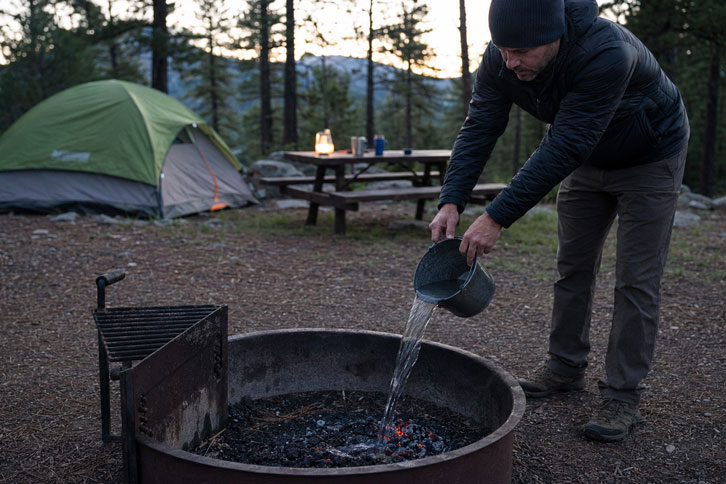
Pour water over the coals slowly, stirring with a stick as you go. Keep adding water and stirring until the hissing stops completely.
Feel for heat with the back of your hand held near the ashes, without touching them. If you feel any warmth at all, it’s not out. Add more water and check again.
Common Mistakes to Avoid
Adding fuel logs before you have real flame. Smoke and a faint glow aren’t enough. Wait for actual fire, or the bigger logs will just smother what little flame you had.
Packing the teepee too tight. A fire needs airflow as much as it needs wood. Loose and gappy beats tightly stacked every time.
Using green or wet wood as your main fuel. It smokes heavily and struggles to catch. Buy dry, seasoned firewood at or near the campground instead of gathering damp branches from the ground.
Declaring it “out” too early. A fire that looks dark and cold on top can still have hot coals underneath. Always confirm with water and a hand-check, not just a glance.
Next Steps
Once the fire’s part of your routine, round out the rest of your safety prep with our full camping safety tips for families guide, and make sure a basic first aid kit is packed before every trip. If this is your family’s first time camping altogether, start with our complete first-time camping guide and double-check your gear against our family camping checklist before you leave.
Frequently Asked Questions
What’s the easiest way to start a campfire for beginners?
The teepee method is easiest to learn: stand tinder in the center, lean kindling around it in a cone, light the tinder at the base, and add fuel logs only once you have real flame. It also handles wind and slightly damp conditions better than other layouts.
What can I use as tinder if I don’t have any with me?
Dry grass, birch bark, and dryer lint all work well. A cotton ball dipped in petroleum jelly, kept in a ziplock bag, is a reliable backup that catches a spark almost instantly.
How do I start a campfire in wet or windy conditions?
Use the teepee method, since its shape naturally shields the tinder from wind and concentrates heat on damp wood. Split any wet logs to expose drier wood inside, and use extra tinder since the first attempt or two may not catch.
Is it safe to let kids help start a campfire?
Gathering tinder and kindling is a good supervised job for kids around 6 and up. Lighting the match or lighter itself should stay an adults-only task regardless of age.
How do I know a campfire is completely out?
Pour water over the coals while stirring, and keep adding water until the hissing stops entirely. Hold the back of your hand near the ashes without touching them; if you feel any warmth, it isn’t out yet.
Do all campgrounds allow campfires?
No. Many campgrounds ban fires entirely during dry seasons or high-wind days, sometimes with little advance notice. Check the campground or land agency’s website before you leave home and again when you check in.
Can I bring firewood from home?
It’s best not to. Transporting firewood across state or even county lines can spread invasive insects that damage local forests. Buy firewood at or near your destination instead.