There’s a specific kind of panic that hits when you feel a cold drip land on your kid’s sleeping bag at 3am. We’ve been there, and it’s why we don’t trust a tent’s “waterproof” label until we’ve seen it hold up with a family actually inside during real weather.
This list is narrower than most. We’re not ranking every waterproof tent on the market here, just the five we’d genuinely trust with our own kids on a trip where rain is a real possibility. For the full lineup across sizes and budgets, see our complete guide to the best waterproof camping tents.
Quick Top 3 Picks
- Best Overall: North Face Wawona 6, the one we’d trust through a genuinely bad-weather weekend with kids
- Best Value: Coleman WeatherMaster 6-Person, proven WeatherTec rain protection without the premium price
- Toughest in a Storm: Kodiak Canvas Flex-Bow, built for the trips where the forecast can’t be trusted
Comparison Table
1. North Face Wawona 6 – Best Overall
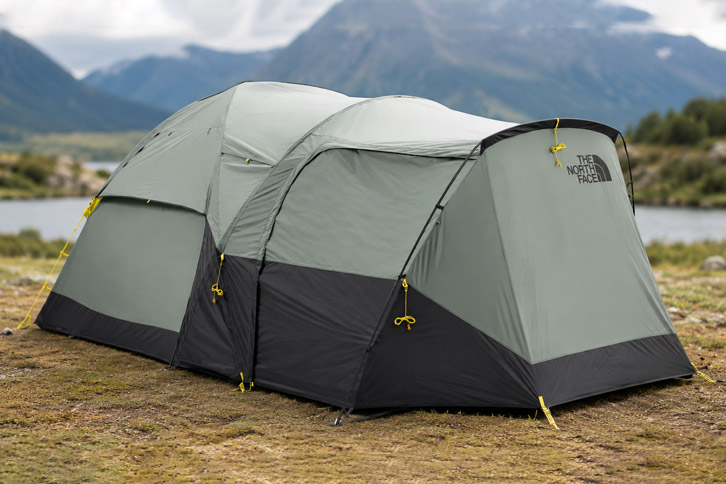
This is the tent that keeps coming up when we ask other camping parents what actually kept them dry. The 1,200mm rainfly and 1,500mm floor rating are solid on paper, but what matters more is the huge vestibule, big enough to stash wet shoes, backpacks, and a soggy dog before any of it tracks inside.
Best for: families who don’t want to think twice about the forecast before booking a trip. Skip it if: you’re camping once this summer and want to spend less upfront.
2. Coleman WeatherMaster 6-Person – Best Value
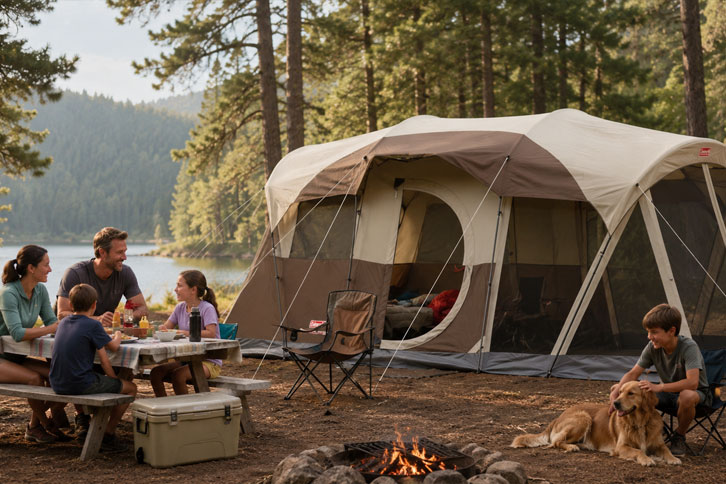
This is our go-to recommendation for families who want real rain protection without spending $400 or more. It’s a straightforward pole tent, not the fastest to pitch, but the welded floor and inverted seams mean water gets directed away from the tent instead of finding a way through the stitching.
Best for: families who want proven rain tech at a fair price. Skip it if: you’re facing sustained heavy storms rather than typical weekend showers.
3. Kodiak Canvas Flex-Bow
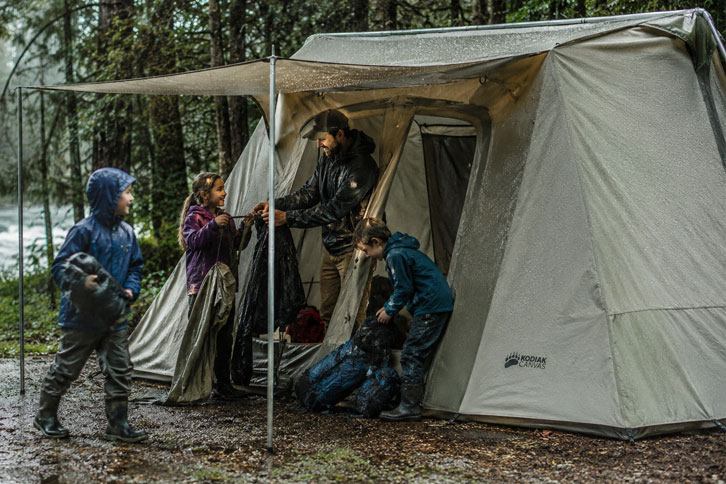
Canvas isn’t the first material parents think of, but for a family that camps through genuinely unpredictable weather, it’s worth the extra weight and cost. The treated cotton duck sheds rain without stiffening up, and the steel frame holds its shape in wind that would collapse a lighter tent.
Best for: families heading somewhere with a real chance of extended bad weather. Skip it if: you need something one parent can set up alone while the other watches the kids.
4. REI Co-op Base Camp 6
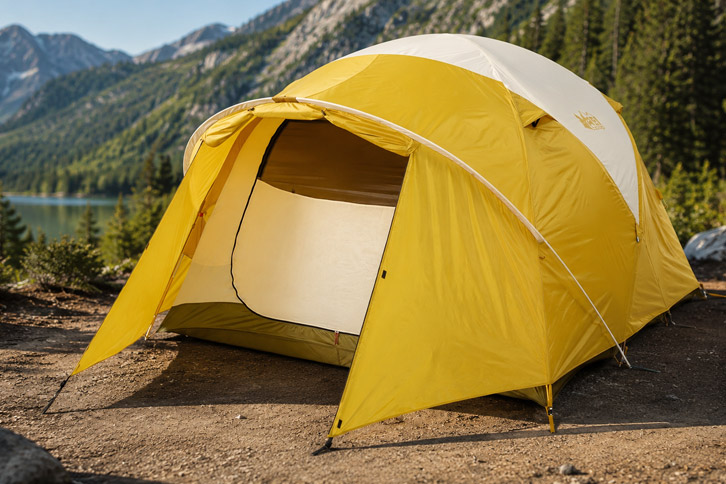
When rain shows up with wind, which is more often than not, this is the tent that holds its ground. The five-pole dome design keeps its shape in gusts that would flex a lighter frame, and the full-length rainfly doesn’t leave the walls exposed the way partial flies do.
📋 Want to see how this stacks up against other 6-person options beyond rain performance? Read our best waterproof 6-person tents guideBest for: exposed campsites near lakes, coastline, or open fields. Skip it if: you mostly camp in sheltered, tree-covered spots.
5. ALPS Mountaineering Meramac 6
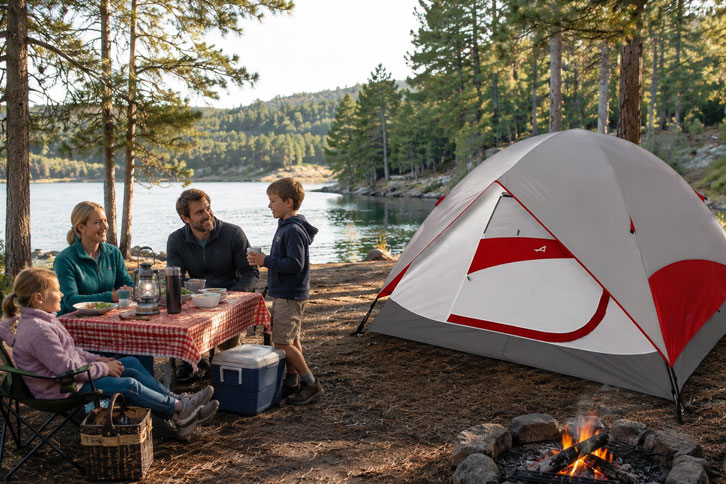
Not every family needs storm-proof gear for a first trip. This tent won’t survive a multi-day downpour, but the taped floor seams and polyester rainfly handle a normal rainy weekend just fine, and it costs less than a lot of “kid-friendly” toys that get used twice.
Best for: first-time campers who want real rain protection without a big investment. Skip it if: rain is a near-certainty on your trip, step up to the WeatherMaster or Wawona instead.
How We’d Test Any Tent With Kids in the Mix
Pitch it at home first. A backyard test with a garden hose tells you more in twenty minutes than any spec sheet. Focus the hose on the seams and the base of the walls, where most leaks actually start.
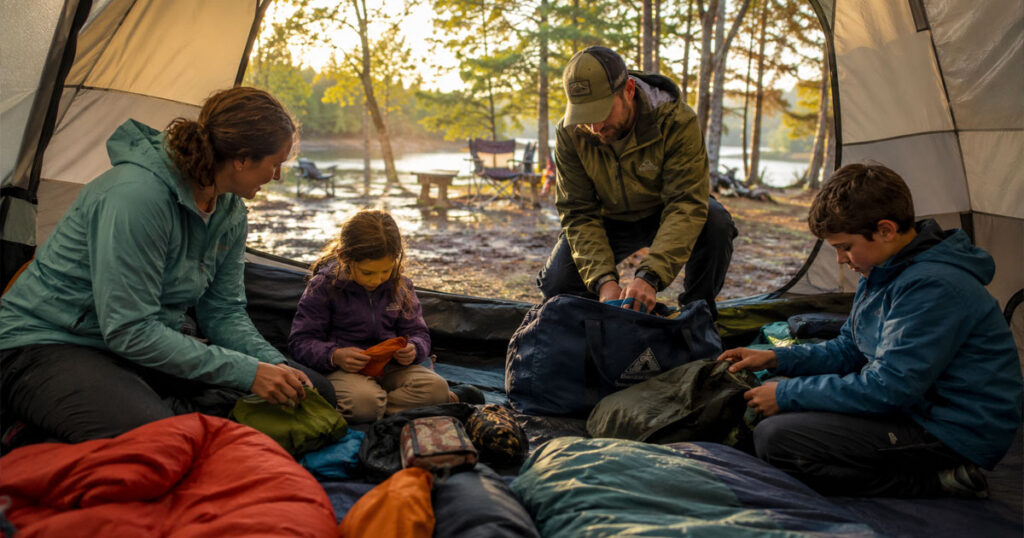
Pack for a wet vestibule, not just a wet outside. Muddy shoes and rain jackets need somewhere to live that isn’t the sleeping area. A tent with a small or nonexistent vestibule looks fine in dry weather and becomes a problem the first rainy morning.
Have a backup plan for gear, not just the tent. Even the best tent benefits from a dry bag for electronics and a tarp over the picnic table. A waterproof tent handles sleeping dry; it doesn’t handle everything else.
Final Verdict
Best Overall: The North Face Wawona 6 is the tent we’d want between our kids and a genuinely bad forecast.
Best Value: The Coleman WeatherMaster 6-Person delivers real rain protection without the premium price tag.
Toughest in a Storm: The Kodiak Canvas Flex-Bow is built for the trips where you can’t fully trust the forecast.
Frequently Asked Questions
What’s the most important feature for a waterproof family tent?
A full-coverage rainfly and taped seams matter more than almost any other spec. A tent can have great fabric and still leak if the rainfly is partial or the seams aren’t sealed.
Is it worth paying more for a family-specific waterproof tent?
If you camp more than once or twice a year, yes. Tents like the Wawona 6 or WeatherMaster hold up to repeated rainy trips better than budget options, and the larger vestibules make a real difference with kids’ gear.
How do I keep a tent dry inside if it rains during setup?
Pitch the rainfly first if your tent allows it, or work quickly and towel-dry the interior once it’s up. A tarp laid inside before you unpack sleeping bags also helps catch any incidental moisture.
Can I trust “waterproof” claims on cheap tents?
Not always. Look for an actual hydrostatic head number (in mm) rather than just the word “waterproof” on the packaging. A tent without a listed rating is more likely to be water-resistant, not truly waterproof.
Do kids’ sleeping bags need extra protection in a waterproof tent?
A good tent keeps rain out, but a sleeping pad or cot still keeps kids off any residual ground moisture and adds warmth. It’s a small addition that makes a rainy night far more comfortable.
What should I do if my “waterproof” tent leaks anyway?
Check the seams first with a flashlight from inside during rain, since that’s the most common failure point. A tube of seam sealer is a cheap fix, and for the next trip, consider a tent with factory-taped seams like the Wawona 6.