A leaky tent at 2am with two soaked kids is the kind of camping memory nobody wants. Most “waterproof” tents on Amazon aren’t tested the way they claim, so we focused on the 6-person tents with real hydrostatic head numbers, taped seams, and a tub-style floor that actually keeps ground moisture out.
We pulled the most current 2026 test data and owner reports specifically on rain performance, not just general reviews, to find the 6-person tents worth trusting on a forecast that looks rough.
Quick Top 3 Picks:
- Best Overall: The North Face Wawona 6, 1,200mm rainfly, 1,500mm floor, and a track record of surviving multi-day storms dry.
- Best Budget: Coleman Skydome XL 8, spill-safe tub flooring and dependable rain performance well under $300.
- Best for Heavy Storms: NEMO Aurora Highrise 6P, steep sidewalls that shed sideways rain better than most.
Comparison Table: Best Waterproof 6-Person Tents
The North Face Wawona 6 – Best Overall
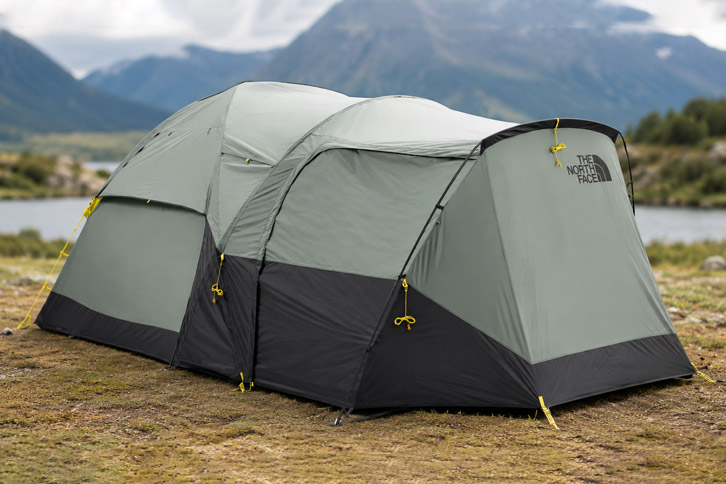
The Wawona 6 is the tent we’d grab if the forecast looks rough. The rainfly is a 75-denier polyester taffeta rated to a 1,200mm hydrostatic head, and the floor steps up to a heavier 150-denier fabric with a 1,500mm PU coating. In practical terms, that’s enough to handle steady rain and most storms without water pushing through the fabric.
Testers have run it through 3 straight days of heavy rain with standing water underneath, and it stayed dry inside. The taped seams and tub-style floor (which wraps slightly up the walls) are doing a lot of that work.
It’s a 3-season tent, so it’s built for rain and cold, not snow load. At just under 21 lbs, it’s a car-camping tent through and through.
Best for: families who camp often enough that a surprise storm is a “when,” not an “if.”
Skip it if: you only camp in predictable, dry summer weather, the Coleman Skydome XL 8 below covers you for far less.
NEMO Aurora Highrise 6P – Best for Heavy Storms
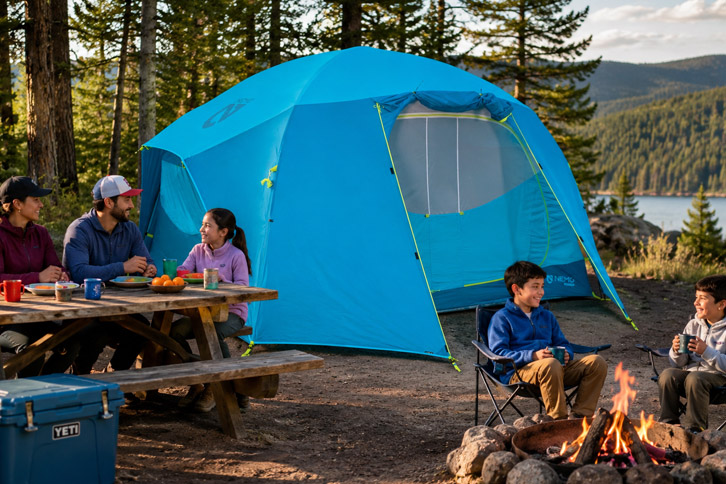
Most tent failures in heavy rain don’t happen through the fabric, they happen at the angle rain comes in sideways during a real storm. The Aurora Highrise’s steep sidewalls are built specifically to shed that kind of weather, and testers report it seals out all but the most extreme sideways rain.
The 100 x 120-inch floor comfortably fits four adults, and the standing-height interior means you’re not crouching through a downpour waiting it out.
Best for: families camping somewhere with unpredictable storm patterns (mountains, coastal areas).
Skip it if: you mostly camp in dry climates, you won’t need this level of storm protection.
REI Co-op Base Camp 6 – Best for Rain Plus Wind
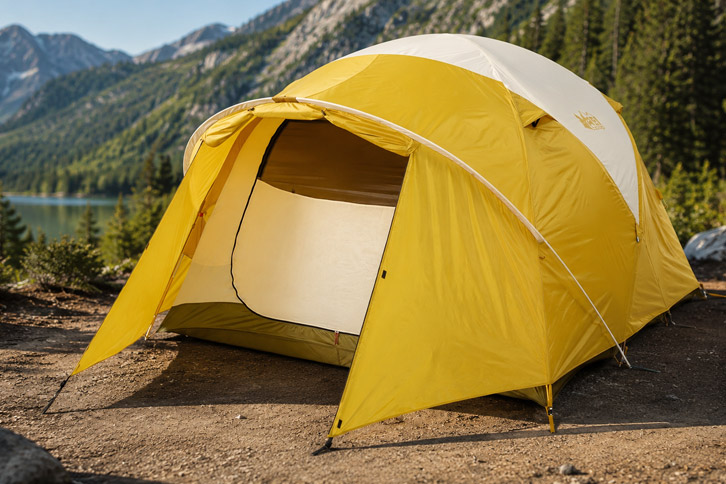
Rain rarely shows up alone. It usually comes with wind, and that’s where the Base Camp 6 earns its keep. The five-pole dome structure stays solid in gusts over 40 mph while keeping water out, which matters most at exposed sites near open fields, lakes, or coastline.
It’s engineered with design cues borrowed from REI’s 4-season tents, even though it’s rated for 3-season use, which is part of why it holds up better than most in nasty weather combos.
Best for: campsites where rain and wind tend to show up together.
Skip it if: you camp in sheltered, tree-covered spots, you’re paying for weather resistance you may not need.
Coleman Skydome XL 8 – Best Budget
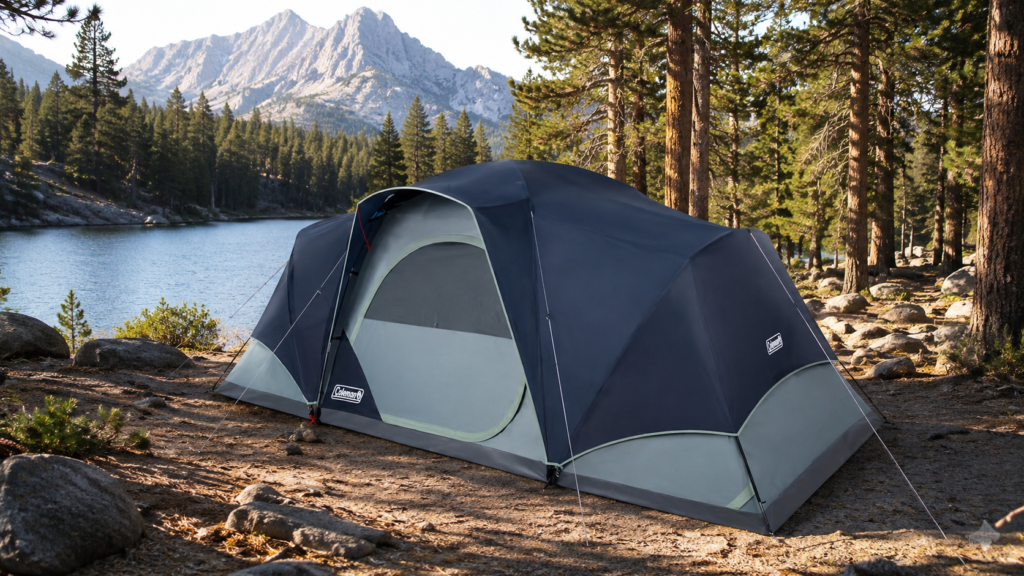
The Skydome XL 8 runs at the larger end of this list, but at around $190, it’s still the most affordable tent here with genuinely dependable rain performance. The tub-style tarp floor is the standout feature: it’s spill-safe, easy to wipe clean, and keeps ground water from creeping in during a storm.
It won’t out-perform the Wawona in a multi-day deluge, but for typical weekend rain, it does the job without the premium price.
Best for: budget-conscious families who still want trustworthy rain protection.
Skip it if: you’re dealing with frequent severe weather, invest in the Wawona or Base Camp 6 instead.
Buying Guide: What Actually Makes a Tent Waterproof
Check the hydrostatic head rating. This number (measured in mm) tells you how much water pressure the fabric can resist before leaking. Look for at least 1,200mm on the rainfly and 1,500mm+ on the floor for dependable family use.
Taped seams matter as much as the fabric. Needle holes from stitching let water through if seams aren’t taped on both the rainfly and tent body. Check product descriptions for “fully taped seams” or “factory-sealed seams.”
A tub-style floor beats a flat floor. When the waterproof fabric wraps a few inches up the tent walls before meeting the mesh, ground water has nowhere to seep in. Flat floors are more vulnerable to puddling underneath.
A footprint adds a real layer of protection. Even the best-rated tent benefits from a $20-30 ground tarp, especially on uneven or rocky ground where the floor takes more abrasion.
Final Verdict
Best Overall: The North Face Wawona 6, the tent we’d trust through a genuinely bad-weather weekend.
Best Budget: Coleman Skydome XL 8, dependable rain protection without the premium price.
Best for Heavy Storms: NEMO Aurora Highrise 6P, steep sidewalls built for sideways rain.
Frequently Asked Questions
What waterproof rating should I look for in a family tent?
Aim for at least 1,200mm on the rainfly and 1,500mm or higher on the floor. Anything under 1,000mm is likely to struggle in sustained rain.
Does a higher denier fabric mean more waterproof?
Not directly. Denier measures fabric thickness and durability, while the PU or silicone coating determines waterproofing. A tent can have a high denier and a low waterproof rating, so check both specs.
Can I make a non-waterproof tent more rain-resistant?
A seam sealer and a quality rain tarp pitched over the tent help, but they’re a patch, not a fix. For real rain protection, start with a tent rated 1,200mm+.
Do all 6-person tents come with a rainfly?
Most do, but coverage varies. Full-coverage rainflies (extending close to the ground) protect far better than partial “cap” style flies. Check product photos before buying.
Is the floor or the rainfly more important for staying dry?
Both matter, but the floor takes more abuse from ground moisture and pooling water. A tub-style floor with a high mm rating is non-negotiable for family camping.
How do I know if my tent is actually waterproof before a trip?
Test it at home with a garden hose on a dry day, focusing on seams and the floor edges. It’s much better to find a leak in your backyard than during a storm with kids inside. For more setup basics, see our first-time camping guide.