Search “best tent for winter camping” and you’ll land in a world of $700 expedition shelters built for solo mountaineers pitching on a glacier. That’s not you. You’re a family who wants to extend the camping season into fall and early winter, or handle a surprise cold snap, without buying gear made for summiting Denali.
The tents below are built differently: roomy enough for a family, warm enough for 20-40°F nights, and simple enough to pitch without a structural engineering degree. No stove jacks or snow-load calculations required.
Quick picks if you’re in a hurry:
- Best Overall: Browning Glacier
- Best Value: Coleman WeatherMaster 10-Person
- Warmest (Canvas): Kodiak Canvas Flex-Bow Deluxe
Comparison Table
1. Browning Glacier – Best Overall
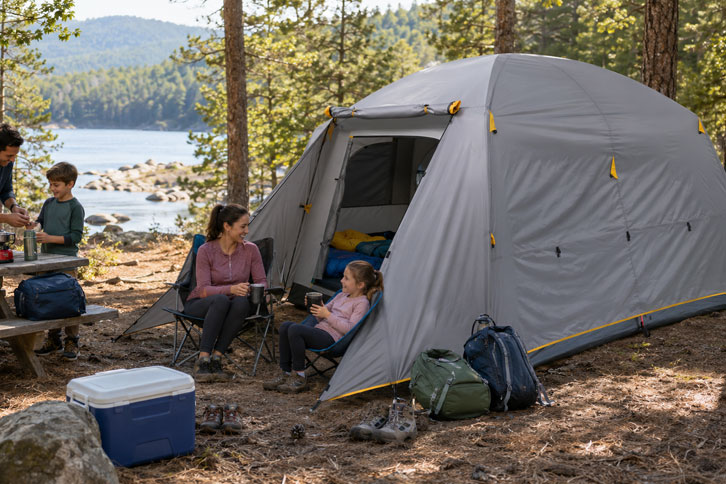
Built with a heavier-denier shell and a low-profile geometry that sheds wind better than a tall cabin tent, the Glacier splits the difference between a summer family tent and a true 4-season shelter. It’s still a two-person, poles-and-clips setup, not a technical build, so you won’t need a manual to pitch it.
The trade-off for that wind resistance is a lower ceiling than cabin-style tents. Your family gets warmth and stability, not standing headroom.
Buy this if: you want one tent that handles both a chilly fall weekend and a 3-season summer trip.
Skip this if: you only ever camp in warm weather, a lighter 3-season tent will breathe better.
2. Kodiak Canvas Flex-Bow Deluxe – Warmest (Canvas)
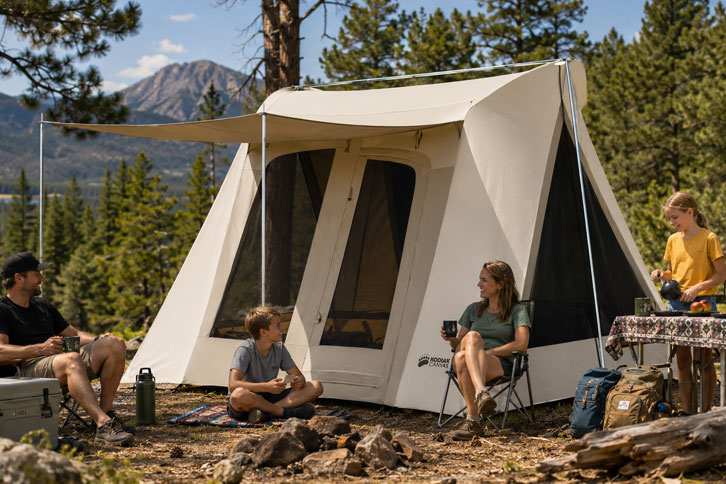
Cotton canvas breathes differently than synthetic fabric. It’s naturally more insulating, resists condensation buildup better on cold nights, and the flex-bow steel frame stands up to wind gusts that would flatten a pole tent. This is the closest thing to a “cabin that packs down” you’ll find.
The catch is weight and price. Canvas tents run heavier and cost more upfront, but they also last for years with basic care.
Buy this if: you camp in cold weather several times a year and want gear that lasts a decade.
Skip this if: you camp cold weather once or twice a season, the Browning Glacier gets you 90% of the benefit for less.
3. Coleman WeatherMaster 10-Person – Best Value
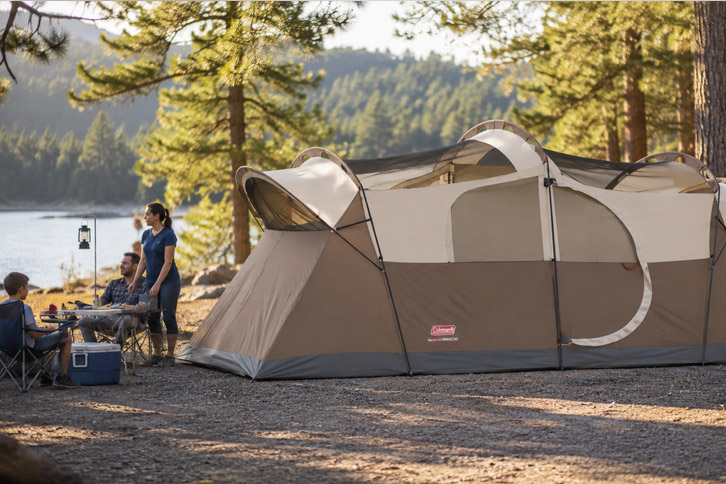
Coleman built this one around wind resistance, with a strong frame rated to handle high gusts and a straight-wall cabin design that still gives your family standing room. For a large family tent that isn’t priced like an expedition shelter, it’s the easiest recommendation on this list.
Buy this if: you want a large, sturdy tent for cold-season car camping without a premium price tag.
Skip this if: you’re camping somewhere with regular sub-freezing nights, look at the canvas option instead.
4. REI Co-op Wonderland 6 – Premium Pick
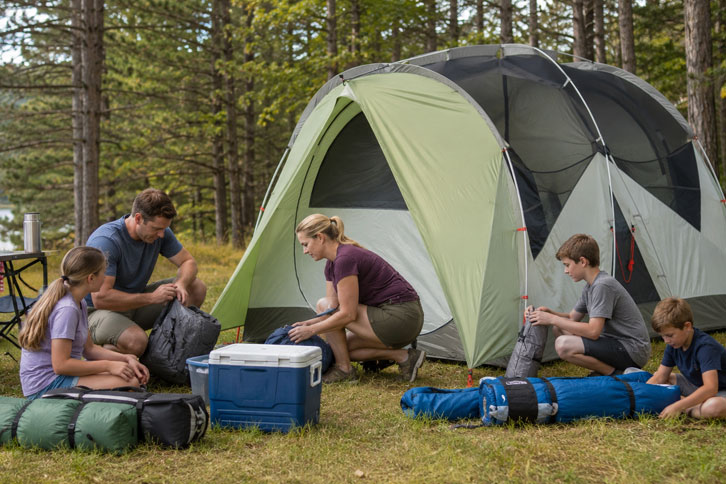
A step up in build quality, with a more storm-worthy pole structure and better fabric coatings than most mass-market family tents. REI backs it with their standard co-op satisfaction guarantee, which matters more once you’re spending real money on cold-weather gear.
Buy this if: you want a long-term tent upgrade with better materials than budget cabin tents.
Skip this if: you’re only extending into fall camping occasionally, the Coleman WeatherMaster covers that need for less.
5. Core Equipment 9-Person Instant Cabin – Best Budget
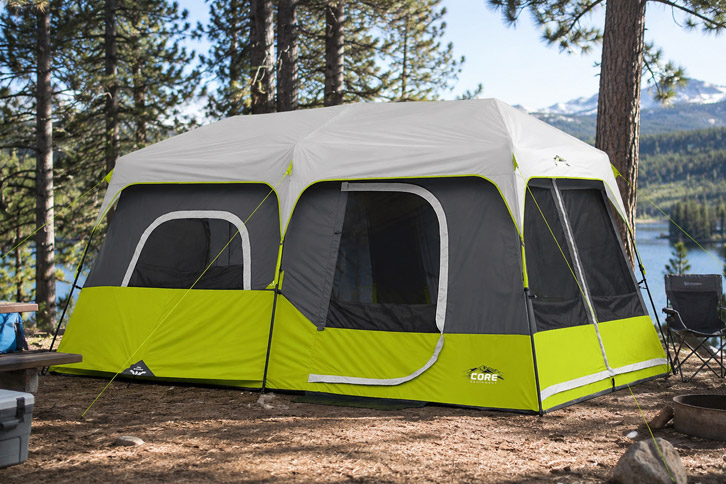
If your “cold weather” camping is really just a chilly fall weekend rather than a snow trip, you don’t need to upgrade to a dedicated cold-weather tent at all. This instant cabin, paired with a good sleeping bag, handles 40s and 50s comfortably and it’s already the tent a lot of Day4Camp families own.
Buy this if: you’re testing the waters with one or two cold-season trips before investing more.
Skip this if: you’re planning regular winter camping, the fabric and pole strength here aren’t built for it long-term.
What Actually Keeps a Family Tent Warm
It’s not really about the tent. A tent traps air and blocks wind. It doesn’t generate heat. Your sleeping bag rating and sleeping pad’s R-value do the actual work of keeping you warm. Buy the warmth budget for your bags and pads first, then pick a tent that blocks wind and holds that warmth in.
Smaller interior volume, warmer nights. A tent with less empty air to heat with body warmth feels noticeably warmer than an oversized one, even at the same temperature. Don’t over-buy on size for cold trips.
Ventilation still matters. Sealing a tent completely to “keep the warmth in” backfires. Condensation from breathing collects on the walls and drips on your gear by morning. Keep at least one vent cracked.
Skip the snow-specific features you don’t need. Snow flaps, stove jacks, and geodesic dome engineering solve problems for people camping in actual snowpack. If you’re extending into fall or camping at 30-40°F, none of that adds real value, it just adds cost.
Final Verdict
Best Overall: Browning Glacier, the best balance of wind resistance, warmth, and easy setup for families.
Best Value: Coleman WeatherMaster 10-Person, a sturdy, roomy tent without a premium price.
Warmest (Canvas): Kodiak Canvas Flex-Bow Deluxe, the pick for families who camp cold weather regularly.
Want the full setup for staying warm overnight? Pair any of these with our guide to the best sleeping bags for family camping, and check the best family camping tents guide if you’re not sure cold-weather features are even worth it for your trips.
Frequently Asked Questions
Do I need a “4-season” tent for fall or early winter camping?
Usually not. True 4-season tents are built for sustained snow load and extreme wind, which most family cold-weather trips don’t involve. A well-built 3-season tent with a solid rainfly and wind-resistant geometry, paired with a warm sleeping bag, covers most fall and early-winter trips.
What temperature can a regular family tent handle?
Most tents on this list are comfortable down into the 30s and 40s°F with the right sleeping bag. Below freezing regularly, or in snow, step up to a genuine 4-season or canvas tent.
Are canvas tents actually warmer than synthetic ones?
Yes, canvas breathes differently and tends to manage condensation and retain a bit more warmth than typical polyester tents, though the tent’s shape and your sleeping system still matter more overall.
Can I just add a tent heater instead of buying a warmer tent?
Combustion heaters inside any tent (canvas or synthetic) carry real carbon monoxide and fire risks and aren’t recommended for family tents without a certified stove jack and ventilation system built for it. Focus on insulation and sleeping gear instead.
Do I need snow stakes for cold-weather camping?
Only if you’re camping on snow or frozen, loose ground. For typical fall or early-winter dirt and grass campsites, your tent’s standard stakes are usually fine.