The first aid kit that’s been in your car since 2019 does not count. We know, because we had one, and half the bandages had lost their stick by the time we actually needed them. This list covers kits that are actually stocked for what happens on a family camping trip: scrapes, splinters, bug bites, the occasional dramatic nosebleed.
You don’t need a kit built for a wilderness EMT. You need one that covers real injuries fast, has kid-appropriate supplies, and doesn’t require a manual to find the tweezers.
Quick Top 3 Picks
- Best Overall: Adventure Medical Kits Adventure First Aid Family Kit, organized by injury type, includes a “Caring for Children” guide, around $45
- Best Budget: American Red Cross Deluxe Family First Aid Kit, 115 pieces, ring-binder organization, around $25
- Best for Base Camp: Surviveware Large First Aid Kit, built for a group over multiple days, around $70-100
Comparison Table
1. Adventure Medical Kits Adventure First Aid Family Kit – Best Overall
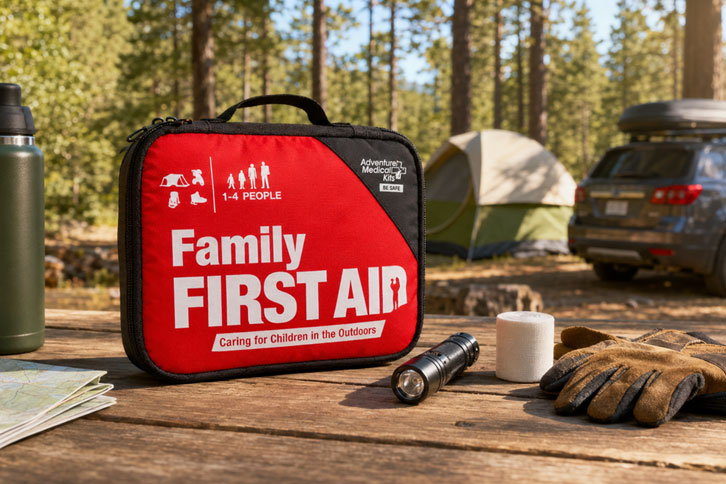
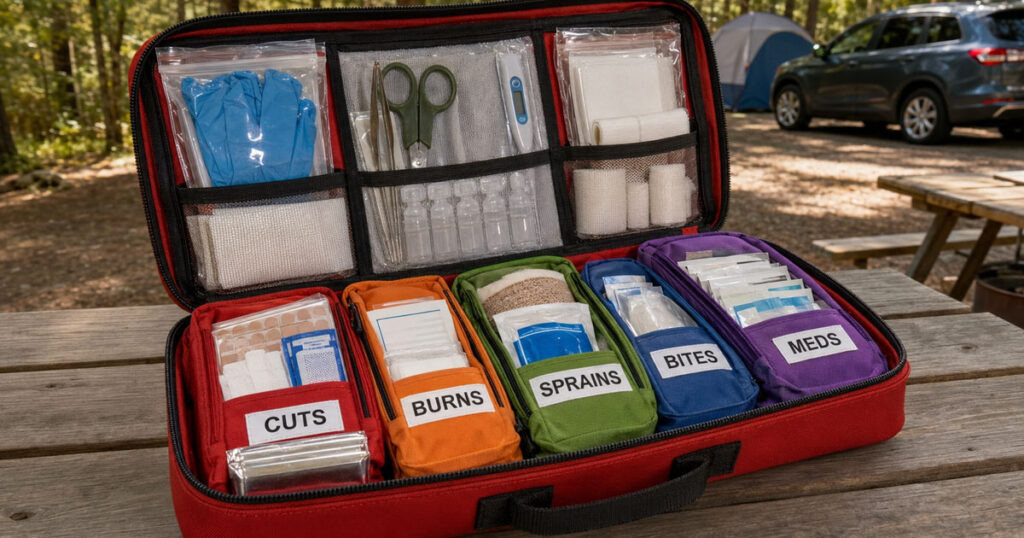
This kit earns the top spot because it’s organized around what actually happens, not just a bag of loose supplies. Bandages, wound care, and medications are sorted into labeled, injury-specific pockets, so you’re not dumping the whole kit onto a picnic table to find one thing at 9pm. It also includes a booklet on caring for kids in the outdoors, which is more useful than it sounds when you’re the one making the call on whether a cut needs stitches or a bandage.
It’s sized for a family of up to four on a day trip or weekend, not an extended base camp stay. If you’re camping with a bigger group or staying out for a week-plus, size up to something larger.
Best for: Families who want organized, fast access over raw piece count. Skip it if: you’re camping as a bigger group or need supplies for a week or more.
2. Surviveware Small Waterproof First Aid Kit – Best for Hikes & Day Trips
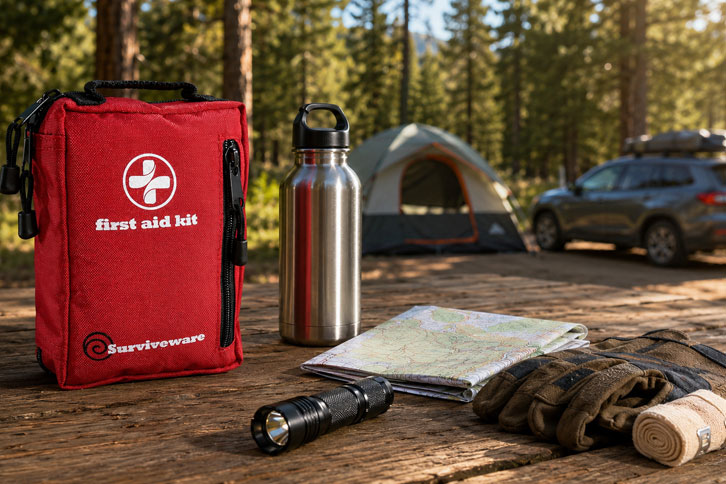
Outdoor gear testers consistently rank this one near the top, and it’s easy to see why once you look inside. It’s fully waterproof (IPX7-rated), and it includes real tools like trauma shears and fine-point tweezers, the kind you actually need for a splinter or a tick, not the flimsy plastic ones that come in dollar-store kits.
It’s compact enough to live in a daypack for trail hikes, which makes it the kit we’d grab specifically for the hike away from camp, not the whole-trip base kit.
Best for: The daypack you take on trail away from camp. Skip it if: you want one single kit to cover the entire trip.
3. Welly First Aid Kit (130 Count) – Best for Kids
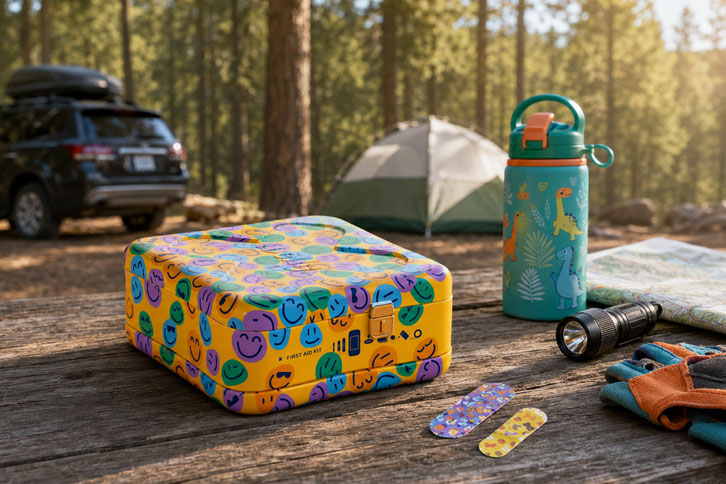
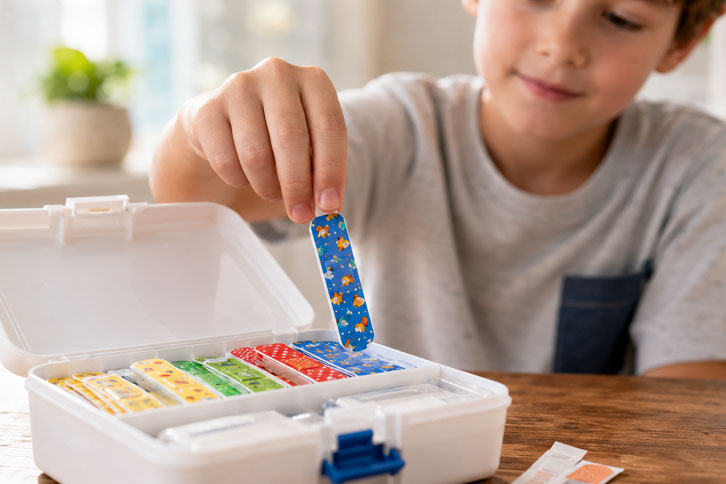
This one isn’t about medical capability, it’s about compliance. Welly’s colorful, patterned bandages mean your kid isn’t negotiating with you over a boring beige strip while a scrape is still bleeding. The tin case is reusable and holds up fine to being tossed in a backpack.
It’s a supplement to a full family kit, not a replacement. Think of it as the bandage box that lives in the car door or a kid’s backpack for fast, low-stakes scrapes.
Best for: Keeping kids cooperative during minor first aid. Skip it if: you need a single comprehensive kit and don’t want to buy two.
4. Surviveware Large First Aid Kit – Best Premium / Base Camp
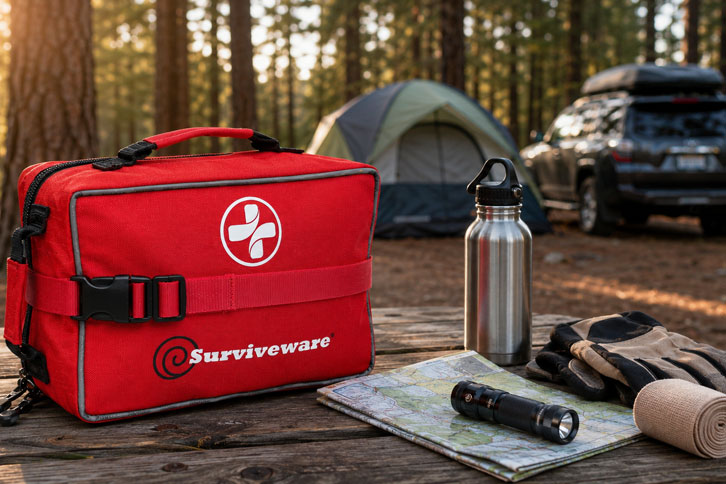
If you’re camping with extended family, running a scout troop’s worth of kids, or setting up base camp for a week, this is the kit that won’t leave you short. It carries enough supplies for a group over multiple days and keeps the same durable, well-organized case design as the smaller Surviveware kit, just scaled up.
The price reflects the volume. If you’re a family of four on a weekend trip, this is more kit than you need. Save it for bigger or longer trips.
Best for: Multi-family trips, longer stays, or groups. Skip it if: it’s just your immediate family for a weekend, a smaller kit covers you fine.
5. American Red Cross Deluxe Family First Aid Kit – Best Budget
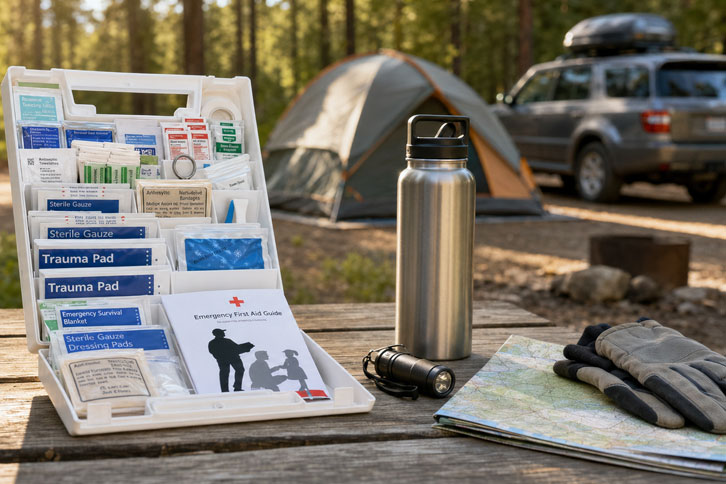
This kit covers the basics without the extras, and for a lot of family trips, the basics are all you need. The ring-binder-style organization is easy to flip through, and it’s stocked with the essentials the Red Cross recommends for home and travel: bandages, gauze, tape, antiseptic wipes.
Don’t expect trauma shears or waterproofing at this price. It’s a solid foundation kit, and a good one to supplement with a few extras (tweezers, kid-safe pain reliever) rather than expecting it to cover everything out of the box.
Best for: Budget-conscious families who want reliable basics. Skip it if: you’re headed somewhere remote or wet and need rugged, waterproof gear.
Buying Guide: What to Actually Look For
Wound care basics. Bandages in multiple sizes, sterile gauze pads, medical tape, antiseptic wipes, and antibiotic ointment cover the vast majority of camping injuries: scrapes, cuts, blisters.
Tools that actually work. Fine-point tweezers matter more than they sound for splinters and ticks. Real trauma shears (not tiny scissors) matter if you ever need to cut through fabric fast.
Age-appropriate medications. Look for kits that include, or leave room for you to add, children’s fever reducer and child-safe antihistamines. A kit built only for adult dosing isn’t fully family-ready.
Organization over raw piece count. A 250-piece kit that’s just a pile of loose bandages is less useful than a 100-piece kit organized into labeled sections. When you’re dealing with a kid who’s upset, being able to find the right thing in five seconds matters more than the total count on the box.
Waterproofing, if you’re near water or expect rain. A soaked, mushy bandage is useless. If your trips involve creeks, lakes, or unpredictable weather, prioritize a sealed or waterproof case.
Final Verdict
Best Overall: The Adventure Medical Kits Adventure First Aid Family Kit earns it for the injury-organized layout and kid care guide, worth the extra cost for most families.
Best Budget: The American Red Cross Deluxe Family First Aid Kit covers the essentials reliably without overspending, a smart pick if this is your first kit purchase.
Best Premium: The Surviveware Large First Aid Kit is the one to grab for extended trips, bigger groups, or anyone who wants real headroom in their supplies.
Frequently Asked Questions
Do I really need a dedicated camping first aid kit, or is a home kit enough?
A home kit works in a pinch, but camping-specific kits are built for outdoor injuries (blisters, splinters, bug bites) and often include tools like tweezers and trauma shears that home kits skip. If you’re camping more than once a year, a dedicated kit is worth the cost.
What should never be missing from a family camping first aid kit?
Bandages in multiple sizes, sterile gauze, antiseptic wipes, tweezers, and any personal or child-specific medications your family needs. Those five categories cover the vast majority of what actually comes up on a trip.
How often should I replace or restock a first aid kit?
Check it before every trip and fully restock medications and ointments annually, since those items expire even if they’re never opened. Bandages and gauze last longer but should be replaced if the packaging is damaged or the adhesive feels weak.
Are kids’ first aid kits actually different from adult ones?
Yes, mainly in dosing (children’s fever reducers and antihistamines) and in bandage design. A kit with colorful, kid-friendly bandages genuinely gets used more willingly than a plain beige one, which matters when you’re trying to calm down an upset kid.
Should I build my own kit instead of buying one?
You can, but pre-built kits from established brands are usually cheaper than buying the same items individually, and they’re organized in a way that’s hard to replicate with a shoebox of loose supplies. Building your own makes more sense once you already know exactly what you use and don’t.
What’s the difference between a “family” kit and a “hiking” kit?
Family kits are typically larger, with more medications and kid-focused supplies, meant to stay at the campsite. Hiking kits are smaller, often waterproof, and built to fit in a daypack for injuries that happen away from camp, like on a trail.