Our first camping trip with a two-year-old lasted exactly one nap cycle before she discovered she could unzip the tent door herself and walked straight toward the fire ring. We caught her three feet away, no harm done, but our heart rate didn’t recover until dinner. That’s toddler camping in one sentence: constant motion, zero risk awareness, and somehow still one of the best trips we’ve ever taken as a family.
Toddlers aren’t babies you can set down and forget about, and they’re not big kids who understand “stay away from the fire.” They walk, they run, and they have no idea a campfire or a boat launch is dangerous. This guide covers how to set up a campsite that survives that, where your toddler will actually sleep, and how to get through meals and meltdowns without losing your mind.
Why Toddlers Are Their Own Category
A baby stays where you put them. A six-year-old can learn “the fire pit is off-limits” and mostly remember it. A toddler is mobile enough to get somewhere dangerous in ten seconds, but too young to understand why they shouldn’t. That gap is what makes this age the hardest one to camp with, and it’s also why most generic “camping with kids” advice doesn’t quite fit.
The good news: a few specific adjustments to your campsite setup and schedule close most of that gap. You don’t need less camping. You need a campsite built around how a toddler actually moves through the world.
Where Your Toddler Will Actually Sleep
1. Get them off the tent floor. A raised sleep space (a travel cot, a toddler travel bed with mesh rails, or a pack ‘n play if they still fit) keeps them warmer than the ground and stops a half-asleep toddler from wandering to the tent door in the middle of the night.
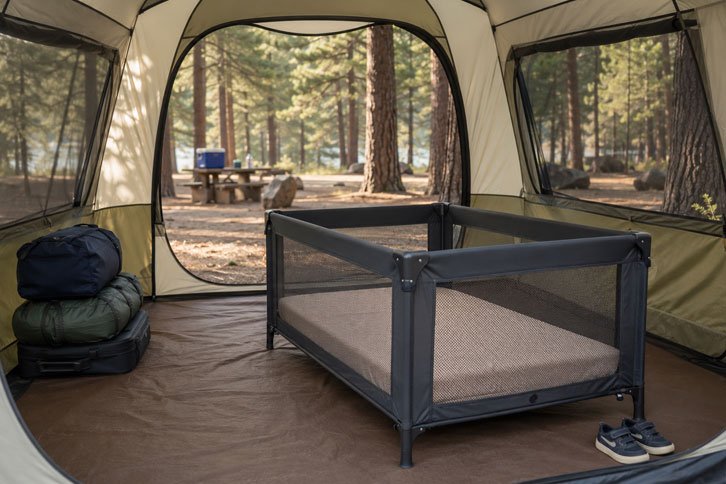
2. Practice at home first. Set up the sleep space in your living room a few nights before the trip. A toddler who’s already napped in it once won’t treat the campsite as a totally foreign sleeping situation.
3. Keep the bedtime routine close to normal. Same pajamas, same book, same order of events, just in a tent instead of a bedroom. Toddlers lean hard on routine, and camping is already novel enough without changing everything at once.
4. Bring pull-ups even if they’re potty trained. A toddler who’s dry at home for months can still have an accident in an unfamiliar sleeping setup. It’s a small thing to pack and saves a 2am tent cleanup.
Here’s how the three most common toddler sleep setups stack up against each other.
Toddler-Proofing a Campsite That Was Never Built for Toddlers
This is the part most camping advice skips, and it’s the part that actually matters most. Campgrounds are designed for adults: open fire rings, gravel roads with car traffic, and water within walking distance. None of that comes with a fence.
5. Pick a site with a natural boundary. A campsite backed by dense brush or set well back from the road gives your toddler fewer directions to wander off in. Ask the campground office which sites are “toddler-friendly” when you book. Most have opinions.
6. Set a physical line around the fire ring. A ring of rocks, a length of rope, or even a camp chair perimeter gives a toddler a visual boundary they can learn fast, even before they fully understand “hot.”
7. Clip bells or a loud toy to their shoes. It sounds silly, but a jingling toddler is a toddler you can track by ear while your hands are full with camp stove or tent stakes.
8. Do a hazard walk before you unpack. Water’s edge, boat launch, road, exposed tent stakes, and the fire ring all get a quick check the moment you arrive, before anyone’s attention is split between three things at once.
Meals, Snacks, and Keeping a Toddler Fed on Camp Time
9. Bring a portable high chair or booster. A toddler loose around a camp stove during dinner prep is a recipe for spilled hot water. A folding chair with a tray keeps them contained and safer during the one hour of the day everyone’s hands are full.
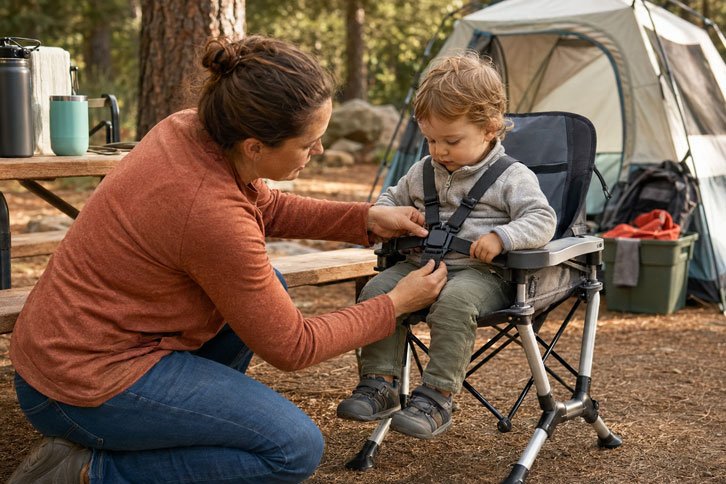
10. Pack more snacks than feels reasonable. Camp days burn more energy than home days, and “hangry toddler at a campsite” is a mood nobody wants to manage. Easy-to-grab options like sliced fruit, cheese sticks, and crackers cover most of a day without prep.
11. Keep at least one meal exactly like it is at home. New food, new setting, new sleep schedule all at once is a lot for a toddler. One familiar dinner (even if it’s the same mac and cheese they always eat) gives them one predictable thing in a day full of new stuff.
Naps, Meltdowns, and Keeping Everyone Sane
12. Protect nap time like it’s a scheduled event, because it is. A missed nap turns the rest of the day into damage control. Plan the afternoon’s activities around it, not the other way around.
13. Expect one meltdown you didn’t see coming. New environment, thrown-off schedule, and constant stimulation add up by day two for most toddlers. It’s not a sign the trip is going wrong. It’s just what toddlers do, tent or no tent.
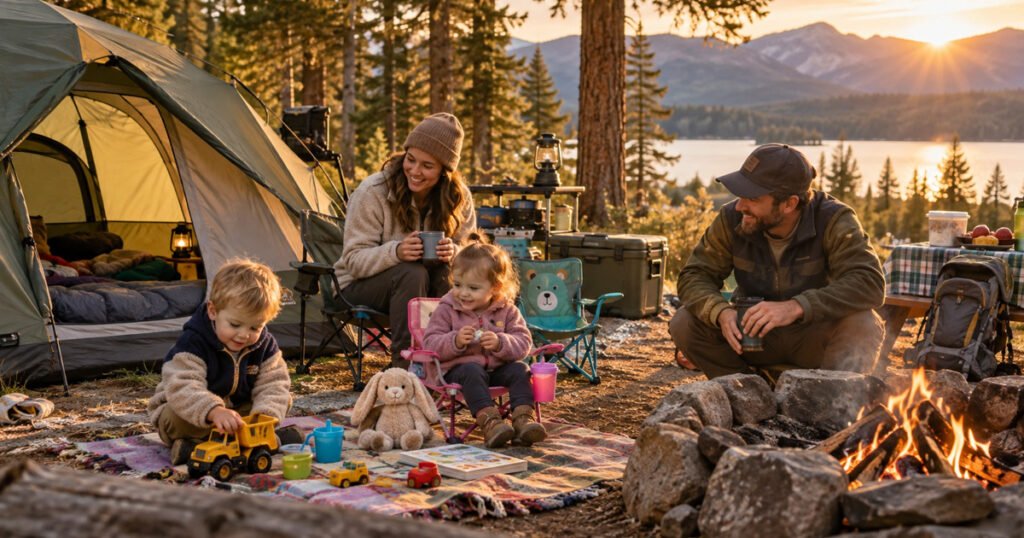
14. Bring one or two comfort items from home. The same stuffed animal, blanket, or sippy cup they use every night gives them an anchor in an unfamiliar sleeping spot. This isn’t the trip to introduce a new lovey.
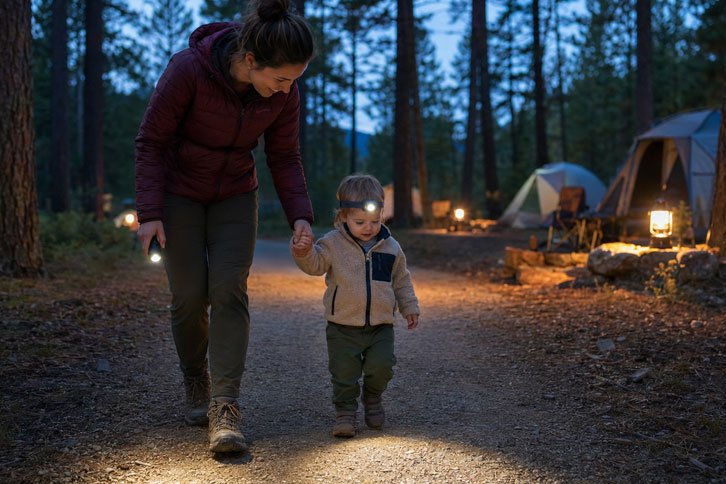
15. Headlamps or clip-on lights, not handheld flashlights. Toddlers drop things. A headlamp stays on their head for the walk to the bathroom at 9pm, and it frees up their hands for whatever they’re carrying (usually a rock).
16. A wagon or stroller built for uneven ground. Toddlers walk a lot slower than the pace you need to set up camp. A wagon lets you move them (and gear) without a meltdown about being carried or a toddler wandering off mid-task.
Mistakes First-Time Toddler Campers Make
Overpacking activities. A toddler will happily spend twenty minutes with a stick and a pile of dirt. You don’t need a bag of toys, just permission to let them explore what’s already there.
Skipping the boundary-setting on day one. Waiting until after a scary near-miss to establish fire and water rules is backwards. Set the physical boundaries the moment you arrive, before anyone’s exploring on their own.
Scheduling a trip that’s too long for a first attempt. One or two nights is plenty for a first toddler camping trip. You can always add nights once you know how your specific kid handles it.
Assuming nap and bedtime will happen on autopilot. New noises, new light, and new smells all delay sleep for most toddlers, even good sleepers at home. Build in extra wind-down time rather than expecting the same 15-minute bedtime routine to work unchanged.
Make It Part of a Bigger Family Trip
A toddler camping trip works best when it’s short, close to home, and low-stakes. Pick a campground within an hour’s drive for the first attempt, so a rough night doesn’t mean a long drive home in a bad mood, yours or theirs.
Once you’ve got one toddler trip under your belt, most of what you learn carries over to future family trips as your kids grow. Our complete kids camping gear guide covers what to add to your kit as your toddler becomes a full-blown camp helper.
Next Steps
Once you’ve got sleep, food, and safety handled, the rest of a toddler camping trip is mostly about lowering your expectations and letting them explore. Bookmark this guide, pack half of what you think you need in “activities,” and bring double the snacks you think you need in food. That formula covers most of what goes wrong on a first trip.
Frequently Asked Questions
What age is too young to take a toddler camping?
There’s no cutoff. Toddlers as young as one can camp successfully with the right sleep setup and campsite boundaries. The bigger factor is your comfort level managing a mobile kid in an open environment, not a specific age.
How do you keep a toddler safe at a campsite?
Pick a site with a natural boundary, set a visible perimeter around the fire ring, assign one adult to “eyes on toddler” duty during setup and teardown, and do a hazard walk for water, roads, and exposed stakes as soon as you arrive.
Where should a toddler sleep while camping?
A raised sleep space like a toddler travel cot or pack ‘n play works better than a floor mattress. It’s warmer, keeps them contained if they roll, and stops a half-asleep toddler from wandering toward the tent door at night.
What should I pack for camping with a toddler?
A raised sleep space, a portable high chair or booster, more snacks than feels reasonable, pull-ups even if potty trained, comfort items from home, and a headlamp instead of a handheld flashlight. Our family camping checklist covers the rest of the trip’s gear.
How do you handle toddler meltdowns while camping?
Expect at least one. Protect nap time like a fixed appointment, keep one meal familiar, and bring a comfort item from home. Most meltdowns on camping trips come from a missed nap or an unfamiliar routine, not the camping itself.
How long should a first toddler camping trip be?
One or two nights, at a campground within an hour of home. It’s long enough to learn what works for your specific kid without committing to a long drive home if the first night goes badly.