Short answer: for most families with kids, a cot wins. It keeps everyone off the cold ground, survives a lot more abuse than an air mattress, and a stackable model can free up floor space you didn’t know your tent had. An air mattress is still the better call if you want the softest possible sleep and you’re only camping once or twice a year.
We’ve slept on both with three kids and a dog crammed into a 6-person tent. We’ve also patched an air mattress at 11pm with a bike repair kit because a Lego brick found its way underneath it. Here’s what actually matters when you’re picking between the two for a family trip, not a solo backpacking one.
Cot vs Air Mattress: Side-by-Side Comparison
Comfort & Support: A Genuine Toss-Up
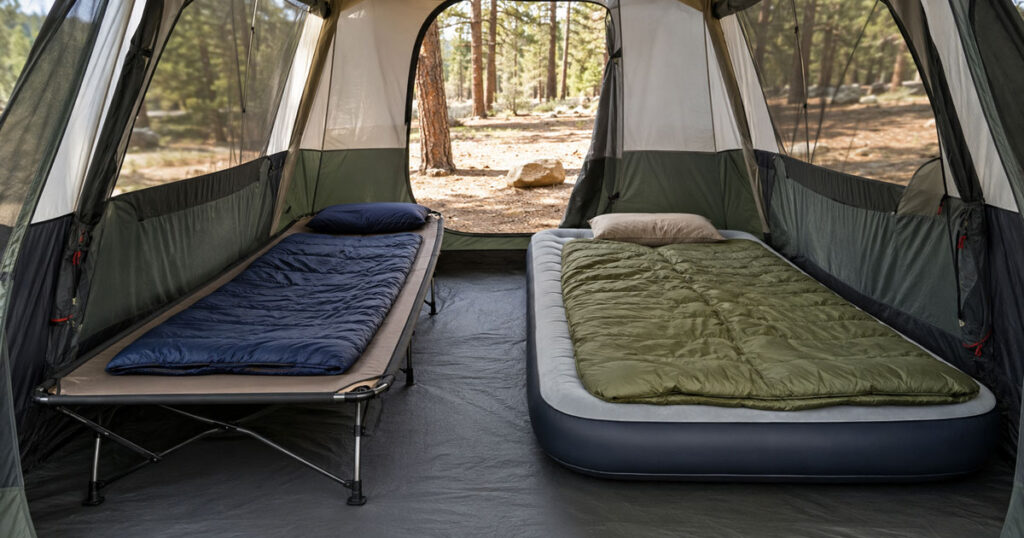
Air mattresses win on first impression. They feel like your bed at home, especially the double-high queen models with a plush top layer. Cots feel firmer and more like a cot, which some adults love for back support and others find takes a night or two to adjust to.
For kids, this category barely matters. Most children under 10 will fall asleep happily on either one, and honestly, some of ours have slept just as well on a sleeping bag directly on the tent floor. Don’t let comfort alone decide this for you. The categories below matter a lot more for a family trip.
Insulation & Cold Nights: Cots Take This One
Ground temperature drops fast after dark, even in summer. An air mattress sitting directly on the tent floor pulls heat out of your body all night through conduction, which is why people wake up cold on an air mattress even when the air temperature felt fine at bedtime. A cot’s few inches of clearance breaks that contact and keeps you noticeably warmer.
This matters more for kids than adults, since children lose body heat faster relative to their size. If you’re planning a shoulder-season or fall trip, this is the single biggest reason to lean cot. We cover this in more detail, including exactly how to layer a sleep system for cold nights, in our guide on how to keep your family warm while camping.
Durability: Cots Survive Kids, Air Mattresses Don’t Always
This is the category most competitor articles skip, and it’s the one that matters most once you actually have children in the tent. Air mattresses puncture. Not eventually, often on the first or second trip, from a dog’s nail, a stray tent stake, a Lego brick, or a kid doing a cannonball onto it because that’s what kids do with anything soft and bouncy.
Cots have almost nothing to puncture. The fabric sling can tear under serious abuse, but a bent pole or a broken hinge is a much rarer failure than a slow leak you don’t notice until 3am. If durability with kids in the mix is your top priority, a cot is the safer bet.
Space Efficiency: The Family-Specific Angle Nobody Talks About
Here’s the thing most cot vs air mattress articles miss entirely. If you’re sharing a tent with 2 or more kids, floor space is your scarcest resource, not comfort. A queen air mattress eats roughly 30 square feet of your tent floor by itself. Two kids each on their own twin cot eat about the same footprint side by side.
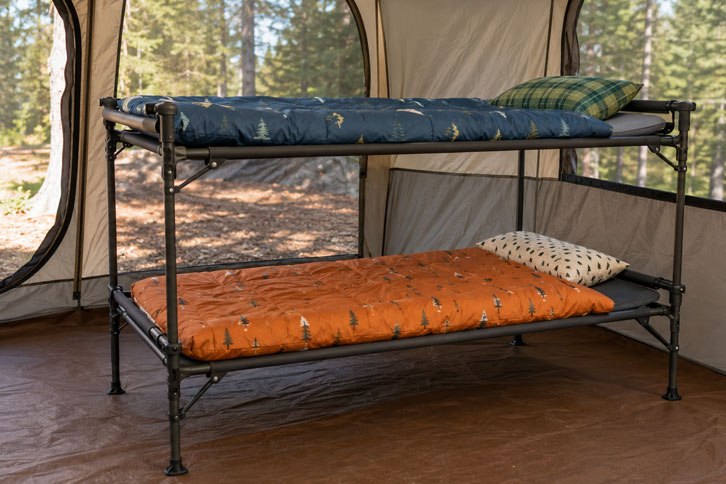
Stackable bunk-style cots solve this. A model like the Disc-O-Bed Cam-O-Bunk lets two kids sleep on top of each other instead of side by side, which can free up half your tent floor for gear, a play area, or just room to not step on anyone getting up at night. If you’re consistently tight on tent space, this is the strongest argument for cots that competitor articles aren’t making.
Setup, Packability & Ease of Use
Cots set up fast and need zero equipment beyond your hands. Most fold out and lock in under 5 minutes, and there’s nothing to inflate, deflate, or worry about running out of battery on. The tradeoff is size when packed. A cot doesn’t compress, so it takes up real trunk space and won’t fit in a backpack.
Air mattresses need a pump, which is one more thing that can fail or run out of charge at the worst moment. Once inflated, though, they’re comfortable fast, and deflated they pack down to a bag you can toss anywhere in the car. If trunk space is tighter than your patience, air mattresses win here.
📋 Not sure a full sleep-off-the-ground setup is even necessary for your trip? See our full guide to the best camping sleeping pads and air mattresses for families, which covers ground-level options too.Cost: Air Mattresses Win the Entry Price, Cots Win Long-Term
A basic single air mattress starts around $35, and even a nice queen double-high model with a built-in pump lands around $70-$130. A single cot runs $65-$130, and a family-size bunkable or double cot runs $180-$260.
Air mattresses look cheaper up front, but factor in replacement cost. If yours punctures every season or two, you’re re-buying every year or two. A decent cot, taken care of, lasts 5-10 years or longer. Run the math on your camping frequency: occasional campers save money with an air mattress, frequent campers save money with a cot.
Best Cots for Family Camping
Coleman Trailhead Adult Cot ($65-$70) is the simplest, most reliable single cot for a family that just needs everyone off the ground without a fuss. It sets up in under 3 minutes, has no pump or batteries involved, and the steel frame holds up trip after trip.
Disc-O-Bed Cam-O-Bunk ($250-$500) is the pick if you’re tight on tent floor space with 2 kids. It stacks two cots into one bunk-bed footprint, and each half can also be used separately once your kids outgrow sharing.
📋 Want the full lineup of cots we’ve tested, not just these two? See our complete guide: Best Camping Cots for Real ComfortBest Air Mattresses for Family Camping
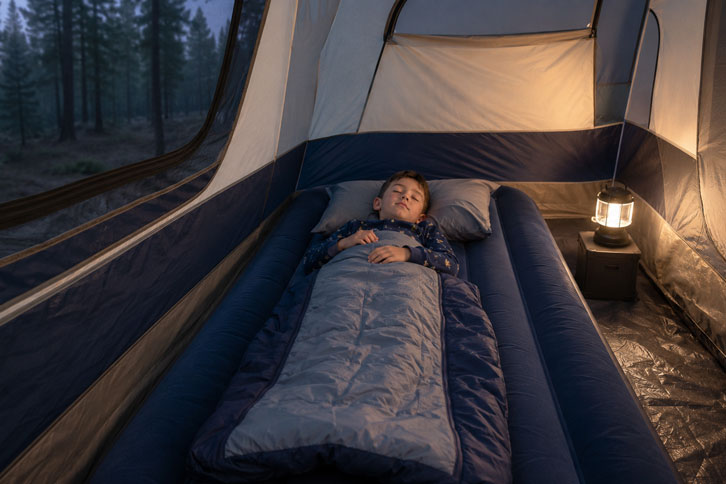
Coleman GuestRest Double High Queen ($40-$100) is the budget entry point for parents who want a full-size mattress without spending much. It’s not the most durable option out there, but for a couple of trips a year it does the job.
SoundAsleep Camping Series Queen ($80-$130) is worth the upgrade if you camp more than a couple times a year. It uses thicker, puncture-resistant material and comes with a rechargeable pump that inflates it in under 3 minutes, no outlet needed.
📋 Camping with a baby or toddler and weighing your sleep options? Start with our guide to camping with toddlers, which covers sleep setups by age.Verdict: Which to Pick Based on Your Situation
- Pick a cot if: you camp more than a couple times a year, you’re heading somewhere cool or unpredictable, you’re tight on tent floor space with multiple kids, or durability matters more than plush comfort.
- Pick an air mattress if: you camp occasionally, comfort on the first night matters most to you, your trunk space is limited, or you want the lowest possible upfront cost.
- Do both if: budget allows. A lot of experienced camping families put the adults on cots and keep one air mattress or a stack of sleeping pads for the kids, since kids need less convincing to sleep well anywhere.
For families who camp more than once or twice a year, a cot’s warmth, durability, and space efficiency outweigh the softer feel of an air mattress. Occasional campers on a tight budget can still get a good night’s sleep on a quality air mattress with a pad underneath.
Check Price on Amazon →Frequently Asked Questions
Is a cot or air mattress better for camping with kids?
A cot is usually better for families with kids. It keeps them warmer overnight, holds up better against punctures from toys and rough play, and a bunkable model can free up real tent floor space if you have more than one child.
Do air mattresses really pop that easily while camping?
More often than most people expect. Sharp objects on the tent floor, dog nails, and enthusiastic kids are the most common causes. A quality model with thicker PVC and a pad underneath reduces the risk significantly.
Are camping cots warm enough without a sleeping pad?
Not on their own in cool weather. A cot elevates you off the cold ground, which helps a lot, but the fabric itself still doesn’t insulate much. Add a sleeping pad or foam topper any time temperatures drop below the 50s.
Can two kids share one air mattress or cot?
A queen air mattress comfortably fits two kids. For cots, look at a stackable bunk-style model like the Disc-O-Bed Cam-O-Bunk instead of trying to fit two kids on one single cot, which is too narrow to share safely.
How long do camping air mattresses actually last?
Most last 1-3 camping seasons with regular family use before a leak shows up, especially budget models. Higher-end options with thicker material can last longer, but cots generally outlast air mattresses by several years.
Is it worth buying both a cot and an air mattress for a family?
Often, yes. Many families put adults on cots for durability and warmth, then keep a queen air mattress or extra sleeping pads on hand for kids or overflow guests. It’s a reasonable middle ground if budget allows.