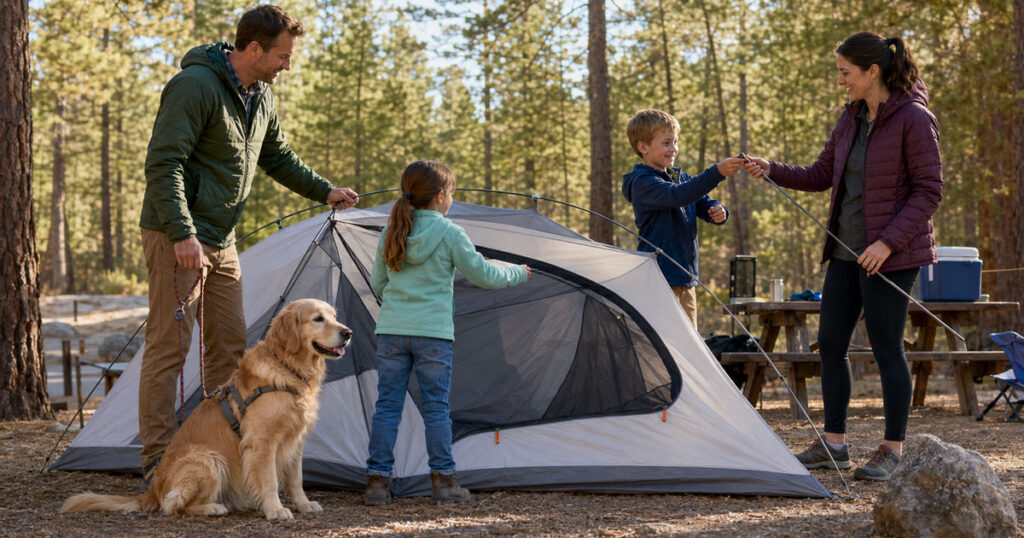
Our first family camping trip with our dog Biscuit went sideways in about four minutes flat.
Our youngest was chasing him around the picnic table, he was chasing a squirrel, the leash was wrapped twice around a camp chair, and somewhere in the chaos a hot dog ended up on the ground and disappeared before anyone could react.
Nobody got hurt. Nothing got ruined. But we learned fast that camping with kids and camping with a dog are two different logistics problems, and doing both at once takes an actual plan.
That’s what this guide is: the plan we wish we’d had. Not generic “how to camp with your dog” advice written for solo hikers and couples, but what actually works when you’re also watching kids, cooking dinner, and trying to keep a fire ring safe for both a toddler and a 60-pound lab who thinks marshmallows are for him.
Picking a Campsite That Works for Kids and a Dog
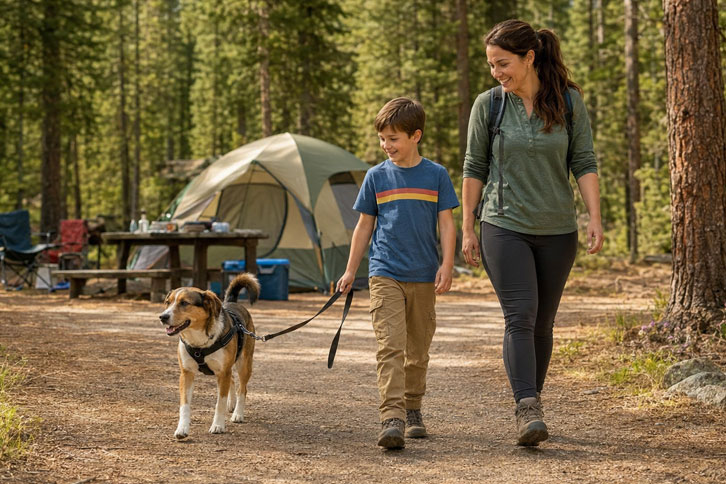
Not every “dog-friendly” campground is actually set up for a family with young kids in tow, and not every kid-friendly campground allows dogs off a 6-foot leash. Check both boxes before you book, not after you arrive.
1. Call or check the website for the pet policy, not just a “pets welcome” badge. Some campgrounds cap it at two dogs per site, some require proof of vaccination, and some restrict certain breeds or sizes. National park campgrounds are usually dog-friendly in the frontcountry but ban dogs on most trails, so if you’re planning to hike as a family, double check the trail rules separately from the campsite rules.
2. Look for sites with some natural separation from neighbors. A dog meeting unfamiliar kids running past the site, or unfamiliar dogs on leash walking the loop road, is one of the most common sources of a bad first night. A site backed by trees or brush, or an end site with only one neighbor, gives everyone more buffer.
3. Ask about a dog park, dog run, or off-leash hours. Bigger campgrounds and most KOAs have a fenced area where your dog can burn off energy without a leash, which matters a lot if your kids also want your dog’s full attention at the site.
Getting Your Dog Ready Before the Trip
4. Book a vet check 2-3 weeks out. Confirm vaccinations are current (most campgrounds and boarding facilities want proof of rabies at minimum) and start flea and tick prevention before you leave, not after you notice a tick at the campsite.
5. Do a backyard trial run. Set up the tent in your yard and let your dog spend an evening in it with the whole family around, ideally with the same sleeping setup you’re bringing. A dog who’s never seen a tent up close can be surprisingly anxious about the zipper noise and the confined space at 11pm on night one.
6. Update the ID tag. A collar with your current cell number is the single cheapest insurance policy for a dog that slips a leash at an unfamiliar campsite. Microchip registration matters too, but a tag is what the person who finds your dog can actually read.
Setting Up a Campsite Kids and a Dog Can Both Handle
This is the part most “camping with dogs” guides skip entirely, because most of them are written for solo campers or couples. Add kids to the mix and campsite setup becomes a two-species safety problem, not a one-species one.
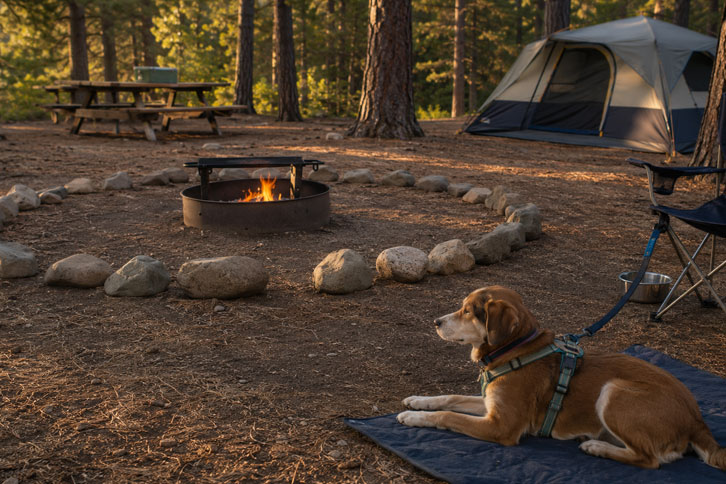
7. Set a visible boundary around the fire ring first, before anyone unpacks. A ring of rocks, rope, or a line of camp chairs gives both your dog and your youngest kid the same visual cue: this is the line we don’t cross. Dogs pick up on physical boundaries fast, often faster than a verbal “stay back” works on a 3-year-old.
8. Pick one tie-out spot for the dog that’s within sight of the kids’ play area but not in the walking path to the fire, water, or bathroom. A long lead clipped to a stake or a tree lets your dog move around without being underfoot every time someone crosses the site.
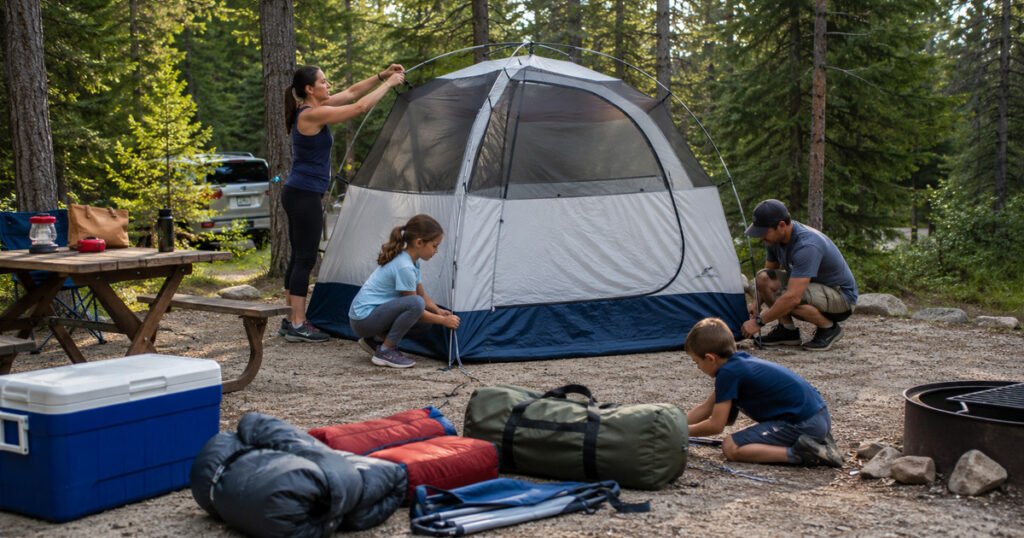
9. Assign “dog duty” during setup and teardown. These are the two windows when adults are most distracted (tent poles, gear bins, coolers) and kids and dogs are both loose and unsupervised at the same time. One adult on dog leash duty for the first 20 minutes prevents most of the chaos.
Gear Worth Packing
Beyond the leash and bowls everyone already knows about, a few items make the difference between a smooth trip and a rough one when kids are also in the mix.
10. A tent with a roomy vestibule. Muddy paws, a wet leash, and a kid’s muddy shoes all need somewhere to live that isn’t the sleeping area. We’ve got a full breakdown of tents built for exactly this in our guide to the best family tents for camping with dogs.
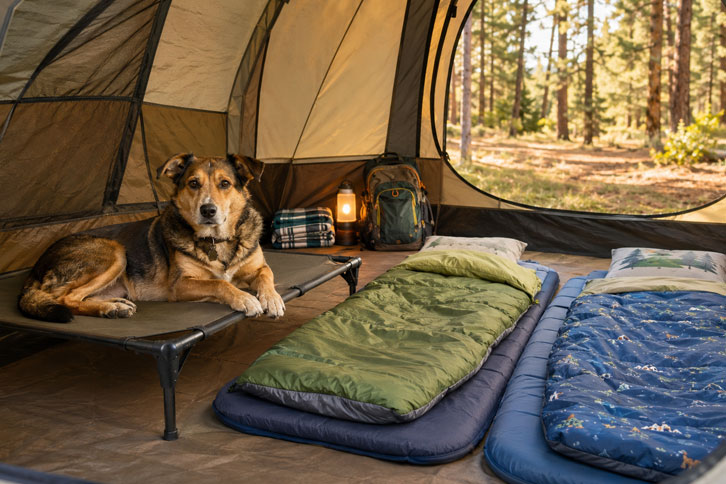
11. An elevated dog bed or travel cot. Off the tent floor means warmer, drier, and less likely to end up shared with a kid’s sleeping bag at 2am.
12. A closable food container. Leaving kibble out overnight teaches wildlife the campsite is a buffet, and it’s also an easy target for a curious toddler.
13. A basic pet first aid kit, separate from the family one: tweezers for splinters and ticks, vet wrap, and any medication your dog takes regularly.
Here’s how the three most common dog sleep setups for family camping trips compare.
Mealtimes, Campfires, and Water: The Double-Supervision Problem
This is where most families with both kids and a dog actually struggle, and it’s the part almost no camping-with-dogs guide addresses. You’re not just watching a dog, and you’re not just watching kids. You’re watching both, often at the same moment your hands are full with a camp stove.
14. Feed the dog and the kids at different times, or in different spots. A dog circling a picnic table during a kid’s dinner is a recipe for a knocked-over plate, and food-motivated dogs can get pushier around kids than they are around adults.
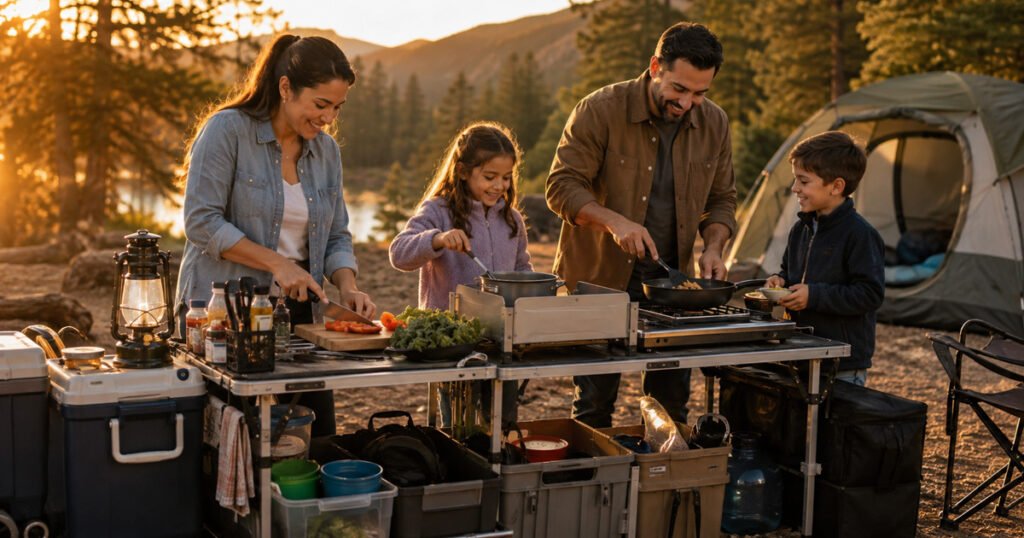
15. Keep the dog on a short leash (literally) during fire-lighting and cooking. This is the highest-risk window of the day for both a curious kid and an excited dog: hot coals, boiling water, and a stove that’s easy to bump.
16. At the water’s edge, one adult watches kids and one watches the dog, not the same adult watching both. Dogs are strong swimmers who can pull a leash holder off balance, and a distracted adult trying to do both jobs at once is how accidents happen at the shoreline.
Nighttime: Sleeping Arrangements for the Whole Pack
17. Plan tent space for the dog before you pack the tent. A 4-person tent that fits 2 adults, 2 kids, and a 70-pound dog is really a 3-person tent. Size up if the dog is coming, or your dog gets the vestibule.
18. Most campgrounds require dogs to sleep inside with you, not tied outside overnight. It’s also just safer. Wildlife moves through campgrounds at night, and a dog loose or tied outside the tent is more likely to have a bad encounter with a raccoon or skunk than one curled up at your feet.
19. Do a last paw-and-coat check before anyone gets in their sleeping bag. Ticks, foxtails, and burrs hide well in fur, and nobody wants to discover one at 6am pressed against a kid’s sleeping bag.
Common Mistakes Families Make Camping with Dogs
Assuming the dog will “just figure it out” like he does at home. A campsite has ten times the smells, sounds, and distractions of a backyard. Give your dog (and yourself) grace for a rockier first night than you expected.
Skipping the leash because “he’s really well behaved.” Nearly every campground requires it anyway, and even the best-trained dog can bolt after a deer or a squirrel in a way he never would at home.
Not packing enough water for the dog specifically. Dogs dehydrate faster than most people expect, especially on hot-weather trips with more walking than usual. Bring more than feels necessary.
Letting kids feed the dog table scraps to “keep him busy.” It teaches a habit that gets worse with every trip and can genuinely make a dog sick depending on what’s on the plate.
Make It Part of a Bigger Family Trip
A first camping trip with kids and a dog goes best when you keep it simple: one or two nights, a campground close to home, and a plan for who’s watching what during the busiest parts of the day. Once you’ve got one trip under your belt, most families find the second one is dramatically smoother.
If you’re road-tripping to the campground rather than camping close to home, our car camping checklist covers how to pack the trunk so kids, dog, and gear all actually fit.
Next Steps
Bookmark this guide, pack the leash you’ll actually use (not the one buried in a drawer since last summer), and go into the trip expecting a little chaos on night one. That’s normal. By the second morning, your dog and your kids will have settled into their own campsite rhythm, and that’s usually when the trip actually starts feeling like a vacation instead of a logistics exercise.
Frequently Asked Questions
Can you bring your dog camping with kids?
Yes, and it’s one of the most rewarding ways to camp as a family. The main adjustment is supervision: plan for one adult watching the dog and one watching the kids during high-risk windows like fire-lighting, cooking, and time near water.
What should I pack for camping with a dog and kids?
A leash, ID tag, food and extra water, waste bags, an elevated bed or blanket, a basic pet first aid kit, and a tent with enough vestibule space for muddy paws. Our family camping checklist covers the rest of the trip’s gear.
Where should a dog sleep while camping with the family?
Inside the tent with the family, ideally on a raised cot or pad instead of the tent floor. Most campgrounds require it, and it’s safer given the wildlife that moves through campgrounds at night.
How do you keep kids and a dog safe around the campfire?
Set a visible physical boundary around the fire ring before anyone unpacks (rocks, rope, or camp chairs work), and keep the dog on a short leash during active fire-lighting and cooking, which are the highest-risk windows of the day.
Do all campgrounds allow dogs?
Most developed campgrounds on public land allow dogs, but rules vary by park and agency, and many restrict dogs on trails even when they’re welcome at the campsite. Always check the specific campground’s pet policy before booking, not just a general “pet-friendly” label.
What’s the biggest mistake families make camping with a dog for the first time?
Assuming the dog will behave exactly like he does at home. A new campsite has far more smells, sounds, and distractions, so build in extra patience (and a shorter leash) for the first night especially.