We rolled into a campsite once at 6pm with two hungry kids and just started unpacking whatever bag was on top. Forty minutes later we had a half-up tent, a cooler blocking the fire ring, and a toddler wandering toward a stove we hadn’t even set up yet. Nothing went wrong that day, but it easily could have.
Setting up a campsite isn’t hard, but it goes a lot smoother in a specific order: tent first, then kitchen, then fire, with food storage and a kid zone worked in around them. Get that order right and you’re eating dinner in 20 minutes instead of an hour of chaos.
Pick Your Spot Before You Unpack Anything
Walk the site before you unload the car. Look up as well as down: dead branches overhead (“widowmakers”) are a real risk in wind, and a site under a large dead tree isn’t worth the shade it offers.
Look for a flat, slightly elevated spot so water runs away from your tent rather than pooling under it if it rains overnight. If you’re camping with young kids, a site closer to the bathroom or water spigot saves a lot of nighttime walks.
The Setup Order That Actually Works
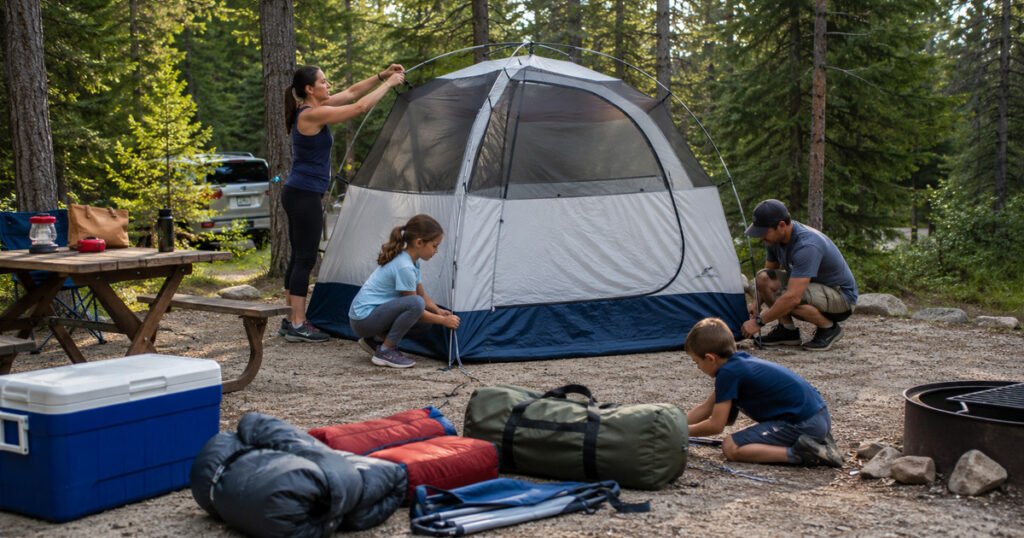
1. Pitch the tent first, on the flattest, driest ground you can find. Face the door away from the prevailing wind if you can tell which way it’s blowing. This is also the moment to unroll sleeping bags and pads inside before it gets dark and you’re doing it by headlamp.
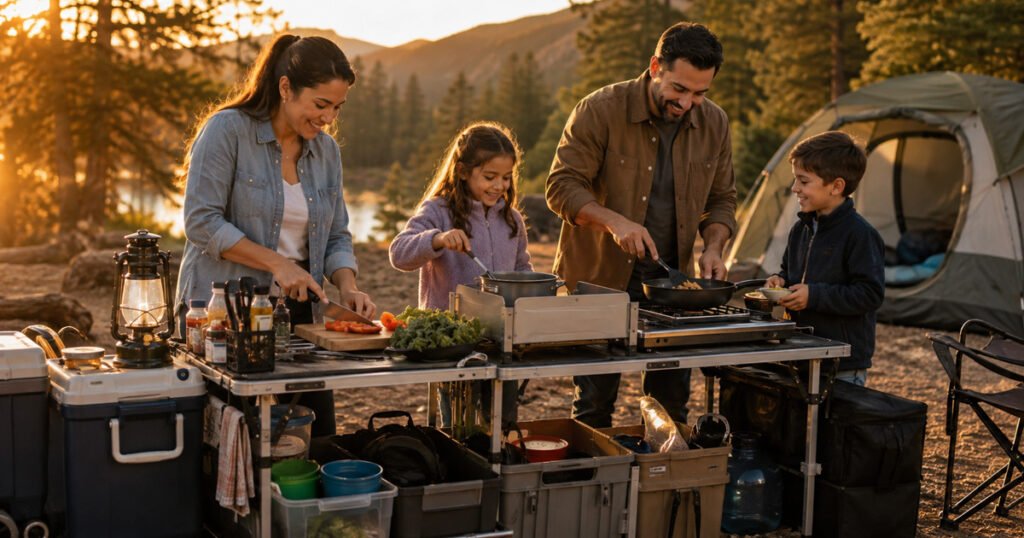
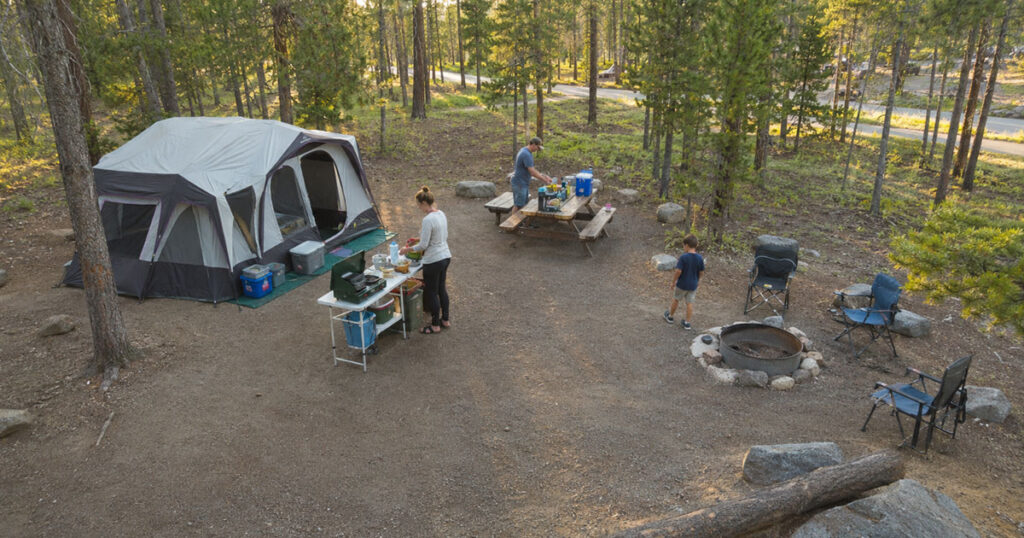
2. Set up your kitchen zone at least 10 feet from the tent, downwind of it. This keeps food smells, smoke, and stove fumes away from where you’ll be sleeping. Put your stove on a stable, level surface with about 18 inches of clearance on each side so nobody’s reaching across a lit burner.
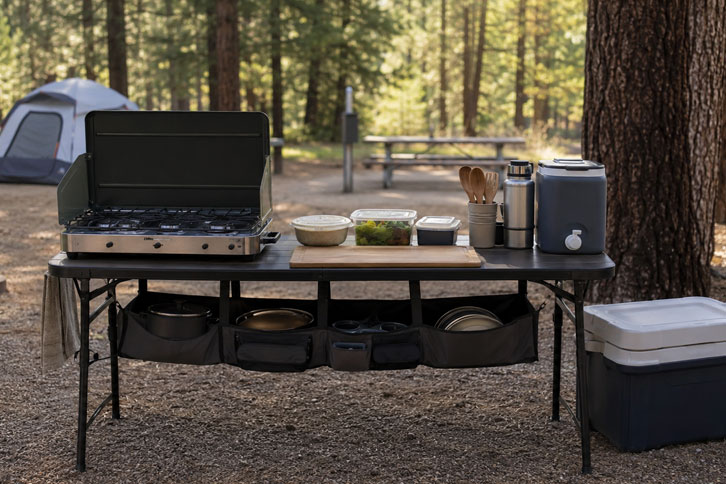
3. Position the fire ring near the kitchen but not overlapping it. Your stove and your campfire are both heat sources; keep them close enough to share supervision but far enough apart that nobody’s tripping between them. Full details on lighting it safely are in our step-by-step guide to starting a campfire.
4. Store food away from the tent, not inside it. A cooler or bear box at least a short walk from your sleeping area keeps curious wildlife (and curious toddlers looking for snacks at 2am) away from where you sleep.
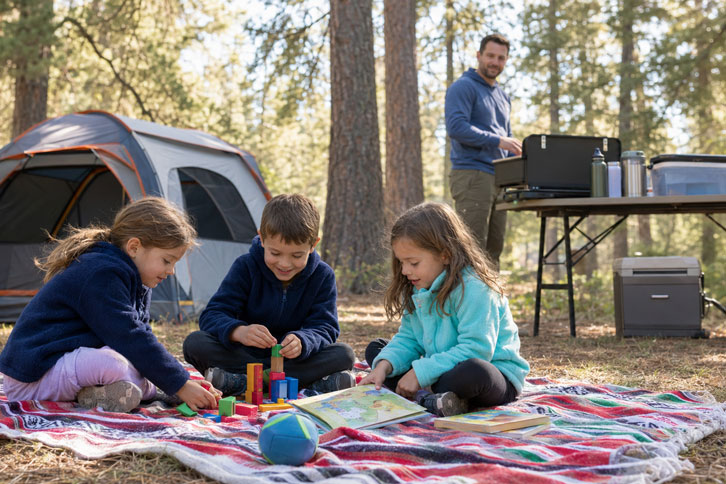
5. Do a walkthrough with the kids before dark. Point out the fire ring boundary, where the bathroom path is, and any tripping hazards like tent stakes or guy lines. Kids remember a boundary much better when they’ve physically walked it in daylight.
Campsite Zones at a Glance
Common Mistakes to Avoid
Setting up the kitchen too close to the tent. It feels convenient in the moment, but cooking smells and smoke drifting into your tent all night isn’t worth the ten steps you saved.
Pitching the tent under a dead tree for the shade. Check overhead before you commit to a spot. A little extra sun is a much smaller problem than a falling branch.
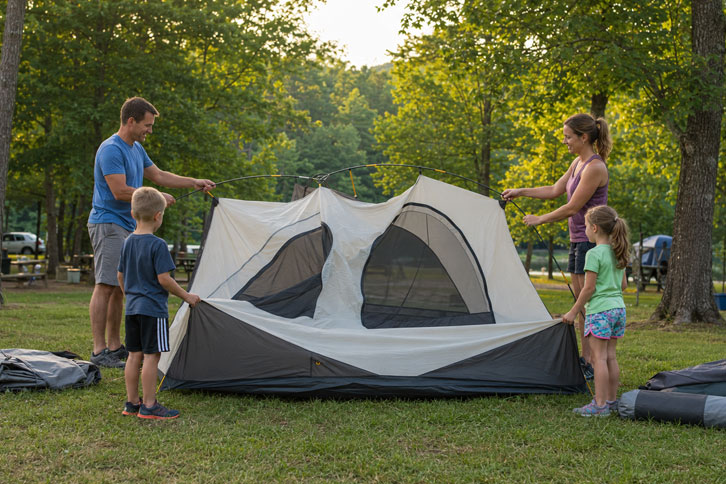
Unpacking bags in random order. Get the tent up and the kitchen zone functional before digging through bins for board games or extra layers. Shelter and food come first; everything else can wait ten more minutes.
Skipping the daylight walkthrough. Explaining boundaries to kids after dark, mid-flashlight-tag, is much less effective than walking the site together while the sun’s still up.
Next Steps
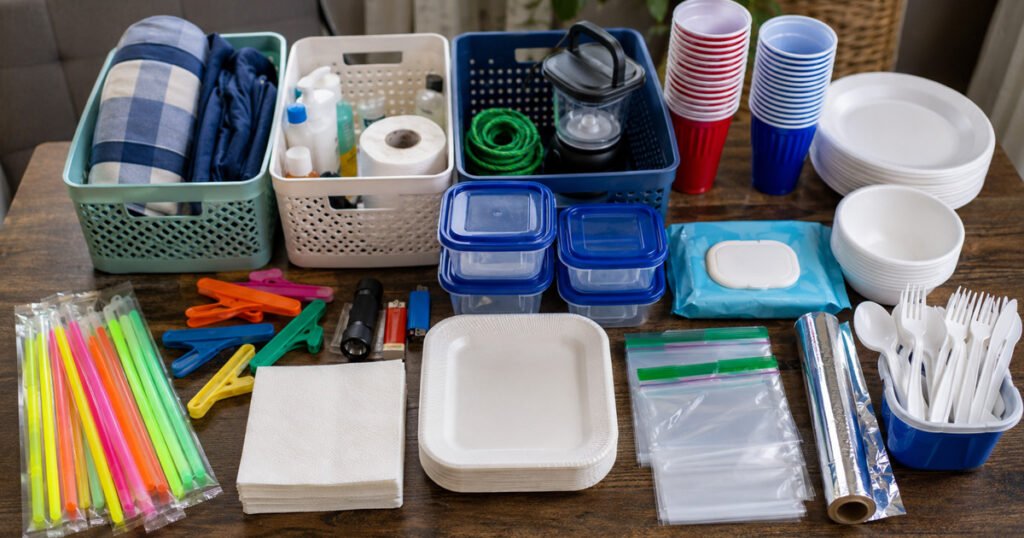
If this is your very first trip, back up and start with our complete first-time camping guide, then double-check your gear against our family camping checklist before you leave. If you’re setting up from a packed car rather than a backpack, our car camping checklist covers what to keep within reach for easy unloading.
Frequently Asked Questions
What’s the correct order to set up a campsite?
Tent first, then your kitchen zone at least 10 feet away and downwind, then the fire ring near the kitchen but not overlapping it, then food storage a short walk from the tent. Set up a visible play spot for kids last, once the higher-priority zones are settled.
How far should the kitchen be from the tent?
At least 10 feet, and positioned downwind so smoke and food smells don’t drift into your sleeping area overnight.
Where should I store food at a campsite?
In a cooler or bear box a short walk from your tent, never inside it. This keeps wildlife, and curious kids looking for late-night snacks, away from where you sleep.
How do I set up a campsite safely with young kids around?
Do a daylight walkthrough of boundaries (fire ring, tripping hazards, bathroom path) before it gets dark, and set up a play zone somewhere visible from your cooking area so you can supervise while you cook.
What should I check before pitching my tent?
Look overhead for dead or dying branches that could fall, and check that the ground is flat and well-drained so water doesn’t pool underneath if it rains.
Do I need a separate area for the campfire and the stove?
Yes. Keep them close enough to share supervision but not overlapping, since you don’t want to be tripping between two heat sources while cooking or tending the fire.