Short answer: the Crown Shades 10×10 CenterLok is the best pop-up canopy for most camping families in 2026. It sets up alone with one push (no fighting with a second person while the kids wander off), blocks UPF 50+ sun, and comes with a removable wall for shade or a bit of privacy. If your campsite needs serious rain protection and more square footage, the Coleman 13×13 Oasis covers a full table and chairs with room to spare. And if you just need shade for a weekend and don’t want to spend much, the ABCCANOPY 10×10 gets the job done for under $110.
We’ve set up a canopy one-handed while holding a toddler on our hip more times than we’d like to admit, and we’ve also watched one cartwheel across a campsite because nobody staked it down. A good canopy turns a blazing-hot picnic table into the one shady spot every kid in the group fights over. Here’s what actually held up.
Quick Top 3 Picks
- Best Overall: Crown Shades 10×10 CenterLok, one-push setup, UPF 50+, removable wall
- Best Budget: ABCCANOPY 10×10, solid basic shade under $110
- Best for Rain & Extra Coverage: Coleman 13×13 Oasis, bigger footprint, built for wet weather
Comparison Table
1. Crown Shades 10×10 CenterLok – Best Overall
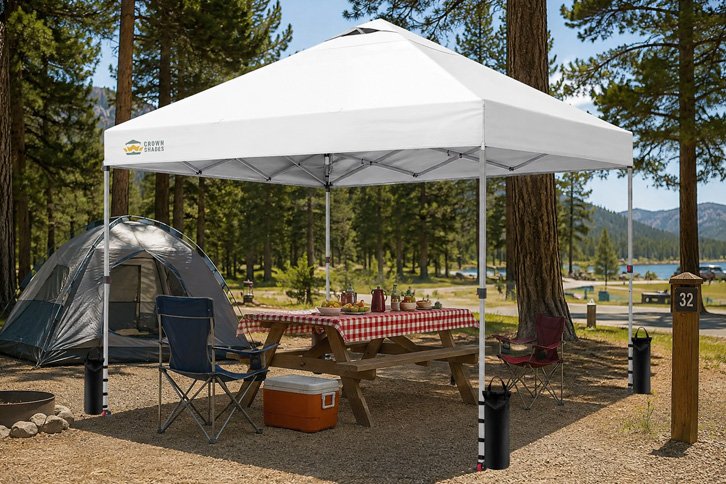
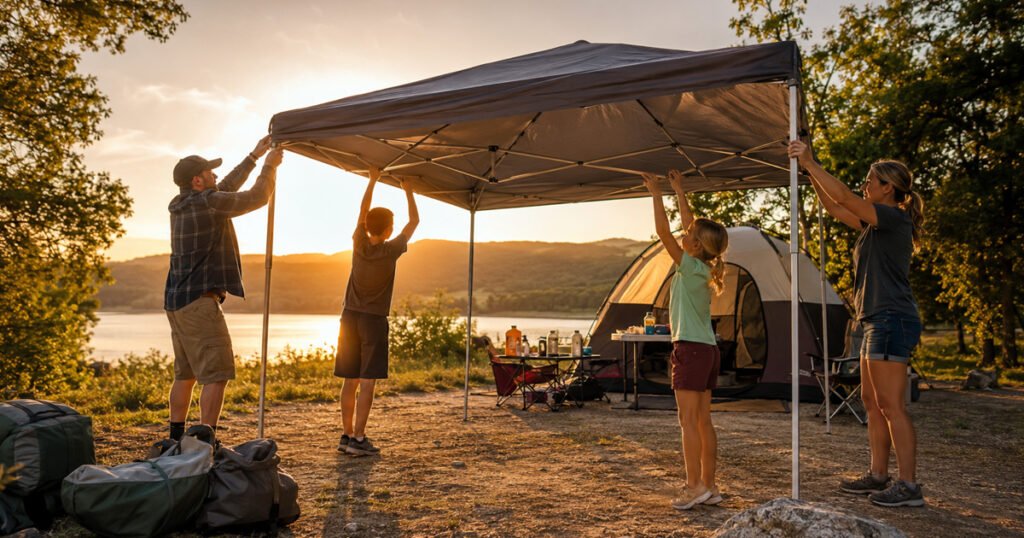
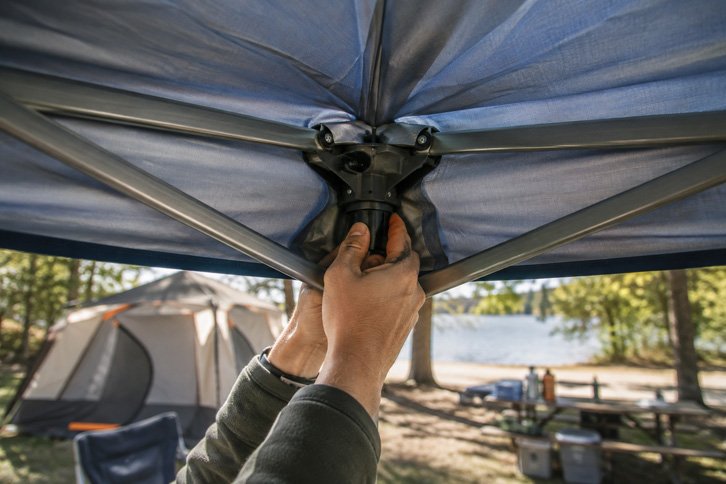
This is the canopy we’d grab first, mostly because one adult can put it up alone. The CenterLok mechanism means you push down in the middle and the whole frame locks into place, instead of wrestling four separate corners while a kid tugs on your shirt asking for a snack. The 150D polyester top blocks UPF 50+ sun and holds up fine under a light rain.
The removable wall panel is the feature that gets used more than we expected. Zip it onto the windward side to cut the breeze at dinner, or use it to block the afternoon sun without losing airflow on the other three sides. At around 38 lbs packed, it’s not the lightest thing you’ll carry, but it fits in most trunks without a fight.
2. ABCCANOPY 10×10 – Best Budget
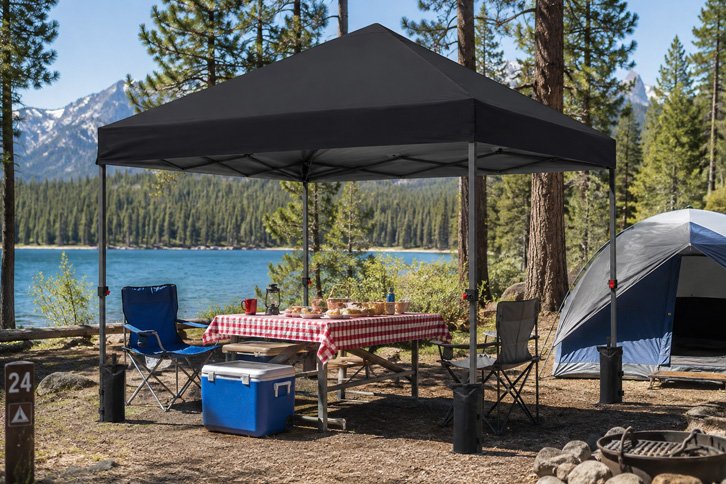
You don’t need to spend $200 to get shade over your camp table. The ABCCANOPY 10×10 covers the basics: a steel frame, a polyester top that keeps direct sun off, and a carry bag that doesn’t fall apart after one trip. It won’t survive a real windstorm, but for a calm weekend at a state park campground, it’s plenty.
Setup takes two people about five minutes, which is a little slower than the pricier options on this list, but it’s not complicated. If you’re camping two or three times a year and don’t want a big investment, this is where we’d start.
3. Coleman 13×13 Oasis – Best for Rain & Extra Coverage
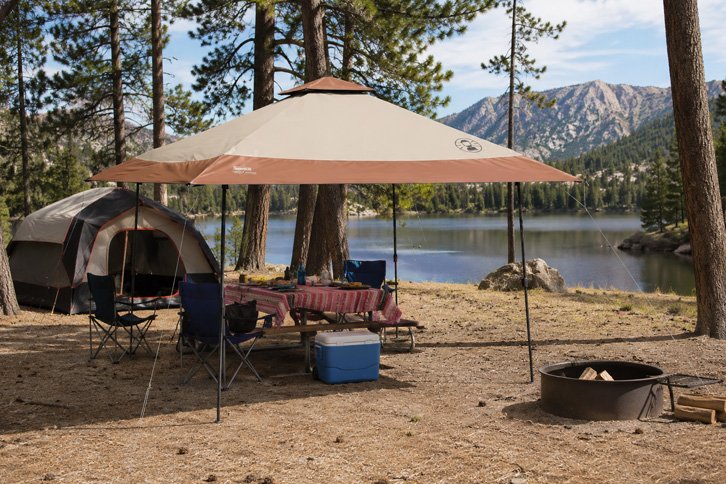
The Coleman Oasis is the one to grab when the forecast looks iffy. At 13×13 feet, it covers a full camp table, a cooler, and four chairs, and the roof pitch is steep enough that rain actually runs off instead of pooling in the middle (a problem we’ve had with flatter canopies during a surprise afternoon storm).
It’s heavier and bulkier than the 10×10 options here, so it’s really a car-camping canopy, not something you’re carrying far. If your site is a short walk from the lot, that’s not an issue. If you’re hauling gear a quarter mile in a wagon, look at a lighter 10×10 instead.
4. Core 10×10 Instant (Wheeled Bag) – Best for Easy Transport
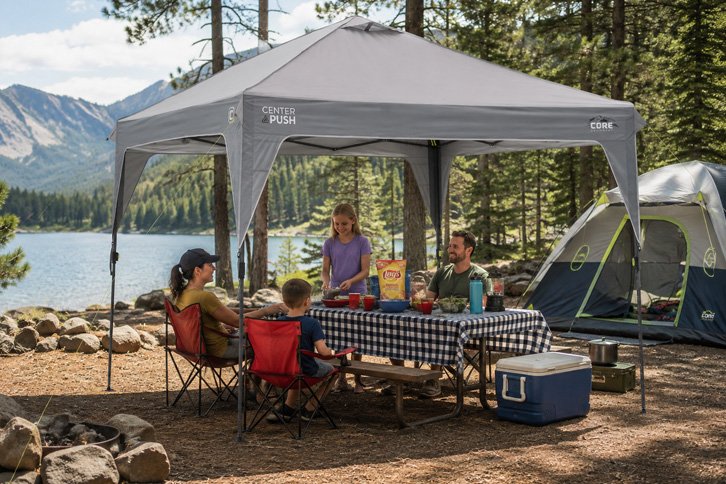
If your campsite is any real distance from the parking lot, the wheeled carry bag on this Core canopy is worth the price bump on its own. Instead of hauling a 35-lb bag over your shoulder while also carrying a cooler and a toddler, you roll it in like a suitcase.
The canopy itself is a solid, unremarkable 10×10 with a push-button center frame. It’s not the fastest setup on this list, but it’s not fussy either, and the fabric has held up fine through a few seasons of regular weekend use in our testing.
5. Caddis Rapid Shelter – Best for Windy Sites
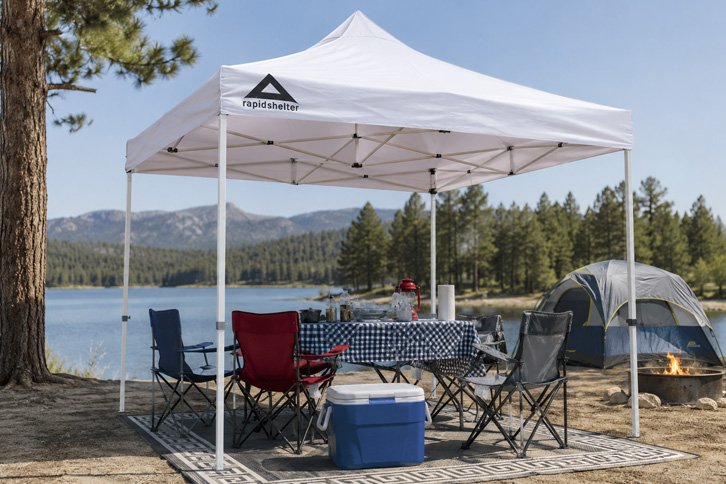
We wouldn’t take a $99 aluminum canopy to a campsite on an exposed ridge or open beach, and this is why. The Caddis Rapid Shelter uses a heavier steel frame that handles gusty conditions without folding in on itself, and the fabric is rated for real weather instead of just filtered sun.
It’s not cheap, and at close to 50 lbs it’s not something you’re setting up quickly by yourself. But if you’ve ever watched a canopy cartwheel across a campground because a gust caught it wrong, you understand why this one earns its price tag.
6. FAVOFAMILIE 13×13 – Best for Big Groups
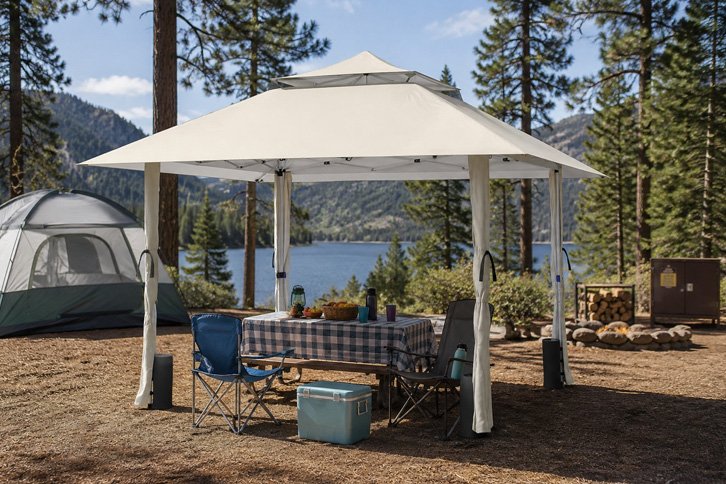
When it’s not just your family but the cousins, grandparents, and the neighbor’s kids too, a 10×10 canopy fills up fast. The FAVOFAMILIE 13×13 gives you 169 square feet, enough for two tables pushed together or one table plus a whole cluster of camp chairs.
Setup takes two adults and a little patience, but the payoff is a shade structure that can genuinely host a family reunion. Just know this is a car-camping-only canopy. It’s not something you’re carrying across a field.
7. Eurmax USA 10×10 – Best Heavy-Duty Build
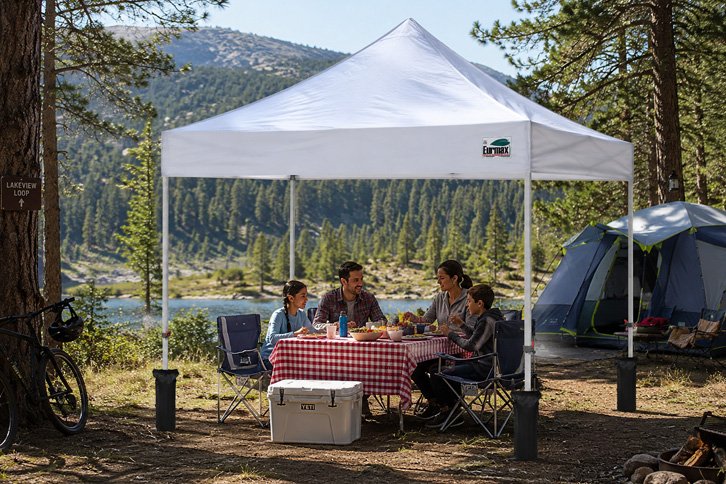
Eurmax makes canopies built for vendors and event booths who set one up every single weekend, and that durability carries over nicely to family camping. The frame is thicker gauge than most consumer canopies, the fabric is heavier, and the whole thing feels like it’s built to survive being used, not just displayed in a backyard once a year.
It’s a two-person setup and a bit heavier to carry than the budget options, but if you camp often and want something that won’t need replacing after two seasons, this is the one that earns its keep.
Buying Guide: What Actually Matters
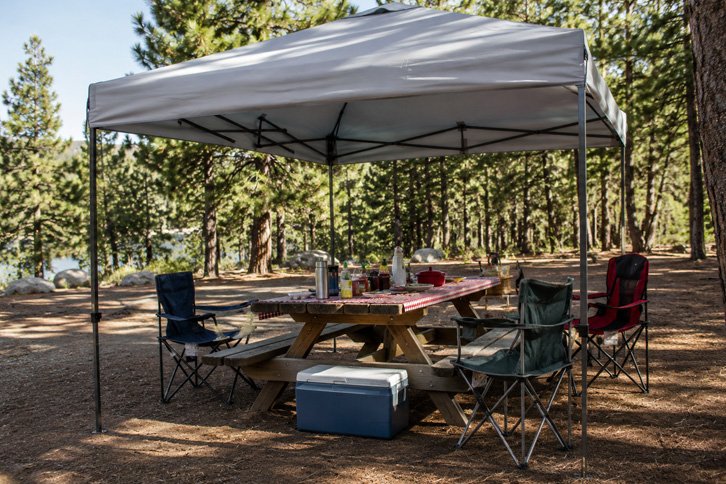
Size. A 10×10 canopy covers a table and four chairs comfortably. Go 13×13 if you regularly camp with extended family or want room for a second table. Measure your usual campsite footprint before you buy the bigger option, since not every site has room for it.
Setup style. Center-push (sometimes called “one-second” or “CenterLok”) designs let one adult set up alone. Traditional push-up-each-corner designs need two people and go slower. If you’re often the one setting up camp solo while a partner handles the kids, pay extra for the easier mechanism.
Wind rating. Nearly every canopy on the market is rated for light wind only, roughly 15-20 mph. If your usual campsites are exposed (beaches, open fields, high desert), a steel-framed option and real stakes aren’t optional extras. They’re the difference between shade and a canopy chasing your kids across the campground.
Ventilation. Canopies with a vented roof or mesh panel near the peak stay noticeably cooler underneath on hot days, and they’re less likely to catch wind like a sail.
Final Verdict
- Best Overall: Crown Shades 10×10 CenterLok, the easiest setup, a removable wall, and enough sun protection for daily use.
- Best Budget: ABCCANOPY 10×10, real shade and a sturdy frame for occasional campers who don’t want to overspend.
- Best Premium: Caddis Rapid Shelter, the steel frame that keeps standing when the wind picks up on an exposed site.
Frequently Asked Questions
Do I need a canopy for camping, or is a tent’s rainfly enough?
A rainfly keeps rain off your tent, not off the space where you eat, cook, and hang out during the day. A canopy gives your family a shaded, dry spot to gather that isn’t inside a hot tent, which matters a lot on multi-day trips.
What size canopy do I need for a family of four?
A 10×10 canopy comfortably covers a camping table and four chairs. If you want room to also stash a cooler and a wagon underneath, or if extended family joins you, go with a 13×13.
How much wind can a pop-up canopy handle?
Most consumer canopies are only rated for light wind, around 15-20 mph, and only when properly staked and weighted. Heavier steel-framed options handle gusts better, but no pop-up canopy is truly storm-proof. Take it down if a real storm is forecast.
Can one person set up a canopy alone?
Yes, if you choose a center-push design (sometimes marketed as CenterLok or “instant” canopies with a single locking mechanism). Traditional four-corner push-up canopies really need two people to go up straight and evenly.
Do pop-up canopies come with stakes and weights?
Most include basic plastic stakes that aren’t reliable in real ground or wind. Budget for a separate set of steel stakes and canopy weight bags. It’s a cheap upgrade that prevents the most common canopy failure: it blowing away.