Short answer: the GCI Outdoor Master Cook Station is the best camp kitchen for most families in 2026. It has a heat-resistant tabletop, a soft-shell sink for washing dishes and dirty kid hands, and enough workspace for a two-burner stove plus prep space, all for around $150. If you want something lighter that sets up in under a minute, the GCI Outdoor Slim-Fold Cook Station skips the sink but folds down to almost nothing. And if you’re just starting out and don’t want to spend much, the Timber Ridge Portable Camp Kitchen Station gets dinner made for under $80.
We used to cook family dinners balanced on a wobbly picnic table, chasing a toddler away from a lit stove with one hand while stirring pasta with the other. A real camp kitchen fixes that. It gives your stove a stable, heat-safe spot, keeps your gear organized instead of dumped in three different bins, and, if it has a sink, gives kids a place to wash up before dinner that isn’t “wherever the water bottle happens to be.” Here’s what actually held up.
Quick Top 3 Picks
- Best Overall: GCI Outdoor Master Cook Station, built-in sink, heat-resistant top, lantern pole
- Best Budget: Timber Ridge Portable Camp Kitchen Station, solid basics under $80
- Best Lightweight/Fast Setup: GCI Outdoor Slim-Fold Cook Station, under a minute, 18.9 lbs
Comparison Table
1. GCI Outdoor Master Cook Station – Best Overall
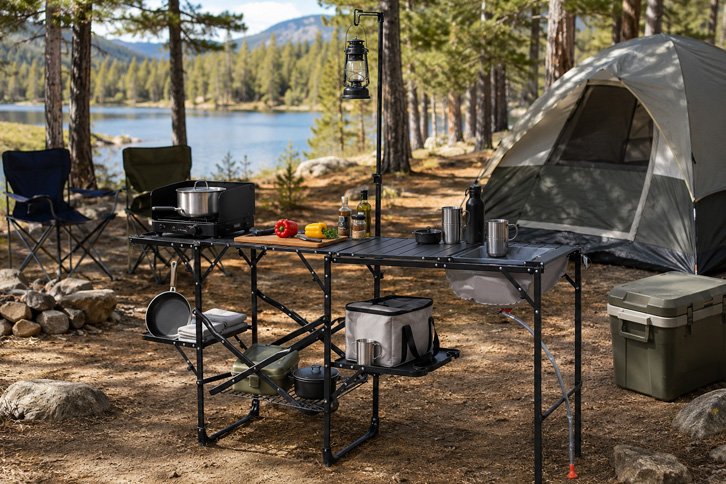
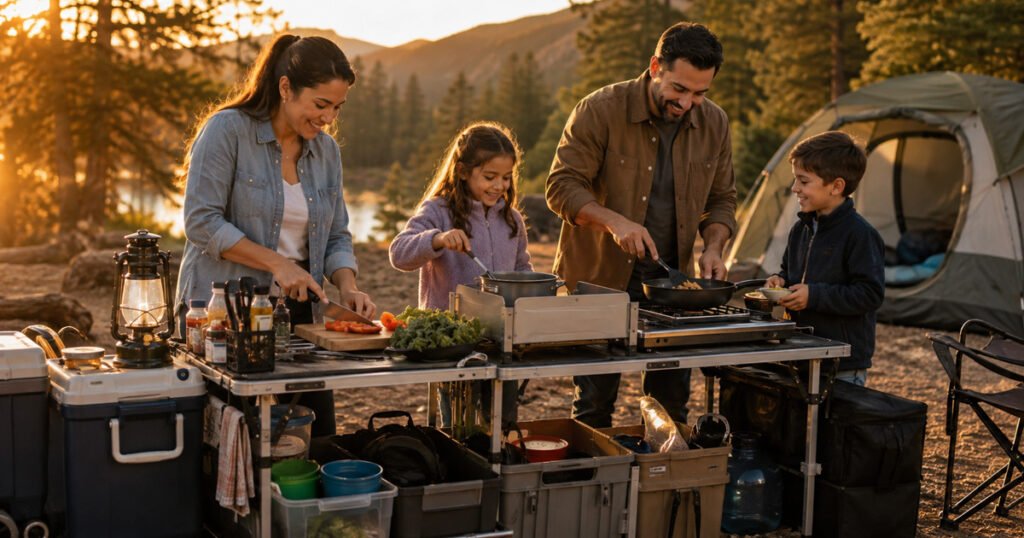
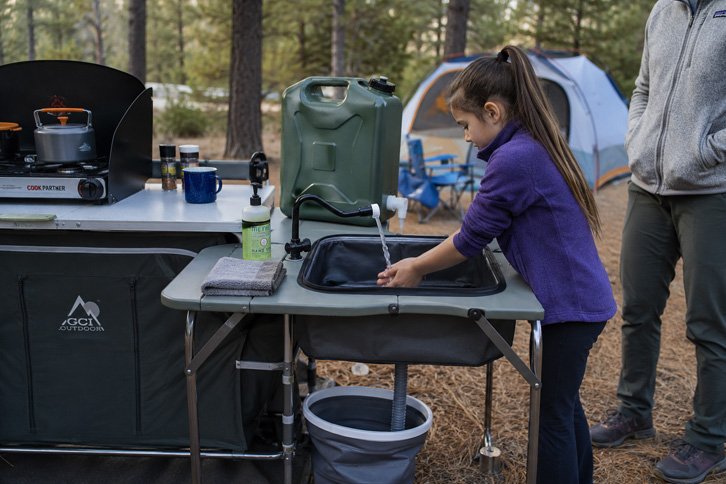
This is the camp kitchen that makes your setup feel like an actual kitchen instead of a folding table with stuff piled on it. The heat-resistant aluminum tabletop handles a two-burner stove without scorching, and the soft-shell sink is the feature that changes your whole camp routine. Kids can rinse hands before meals, you can wash dishes without hauling a bin to the spigot, and cleanup stops eating into your evening.
At 300 lbs of weight capacity, it holds a full stove, a stack of cookware, and a cooler bag without wobbling. The telescoping lantern pole means dinner prep after sunset doesn’t happen by headlamp. It folds down for transport, though at this size it’s not the kind of thing you carry far from the car.
Best for: families who car camp regularly and want dish washing and hand washing sorted without extra gear. Skip it if: you hike into your campsite or only camp once or twice a year, the price and bulk aren’t worth it for occasional use.
2. Timber Ridge Portable Camp Kitchen Station – Best Budget
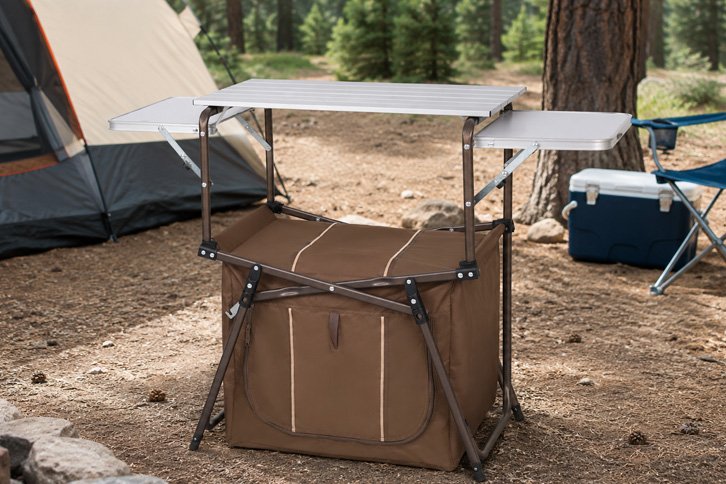
If you’re not sure camping is going to become a regular family thing yet, this is where to start. It has a heat-resistant surface for your stove, a couple of side shelves for prep, and it folds flat enough to slide behind the back seat. No sink, no frills, just a stable place to cook that isn’t the tailgate of your car.
The frame is lighter-duty than the GCI options, so it’s not the pick for a family of six cooking a full spread every night. For weekend trips with basic meals, it does exactly what you need for under $80.
Best for: first-time campers who want to try a real camp kitchen before spending more. Skip it if: you’re cooking for 5+ people every night, go with the Coleman or GCI Master Cook Station instead.
3. GCI Outdoor Slim-Fold Cook Station – Best Lightweight
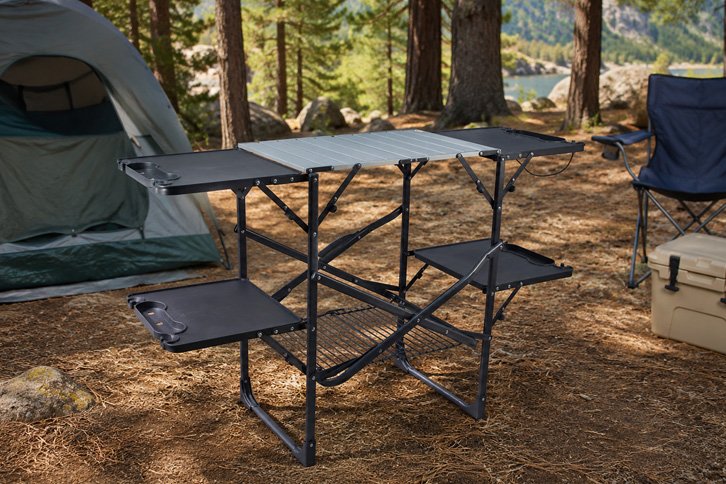
At 18.9 lbs and a setup time under a minute, this is the one to grab if you’re doing the whole campsite build yourself while your partner wrangles kids and the tent. It has the same heat-resistant aluminum top as the Master Cook Station and four side tables for prep and stove space, just without the sink.
We like this one for families who already have a separate wash bin or are camping somewhere with a spigot nearby. You’re trading the sink for weight savings and a faster pack-up, which is a fair trade if dishwashing isn’t your bottleneck.
Best for: solo setup, families who pack light or camp often and want quick teardown. Skip it if: hand washing at the table matters to you, go with the Master Cook Station instead.
4. Coleman Pack-Away Portable Kitchen – Best Value
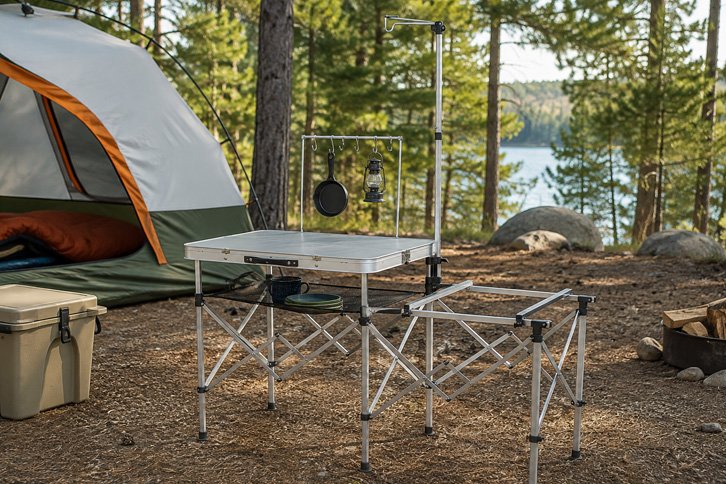
This is the pick for families who genuinely cook full dinners at camp, not just reheat hot dogs. It has a wide food prep area, a dedicated spot for your stove, and enough shelving underneath to keep cookware and spices from turning into a scavenger hunt every meal. It folds away into a bag you can toss in the trunk without much thought.
It’s a step down from the GCI Master Cook Station on build quality and doesn’t have a sink, but for the price it packs in more usable counter space than almost anything else here.
Best for: families who cook real meals at camp and want the most counter space for the money. Skip it if: you need a sink at the table, pair this with a separate wash bin, or go GCI Master Cook Station instead.
5. Camp Chef Sherpa Table Organizer – Best Add-On Organizer
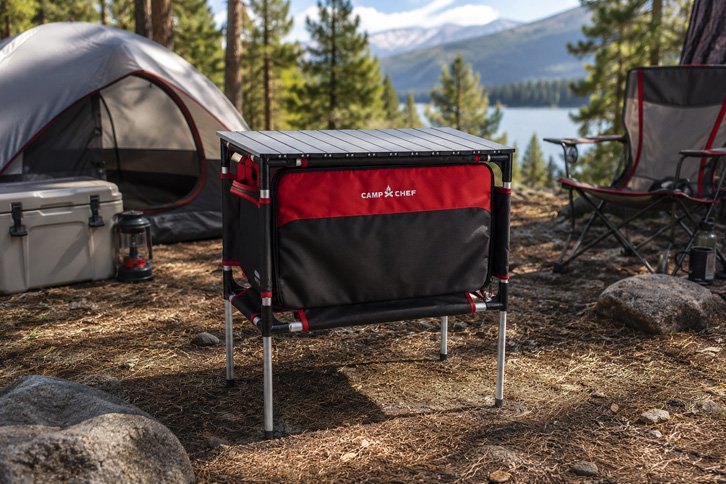
Not everyone needs a whole new table. If you already own a camping table from our best camping tables guide, this organizer hangs off the side of it and turns any flat surface into a real kitchen station. It has a zippered fabric pantry with two shelves, wire racks for spices and soap, utensil hooks, and a paper towel holder.
It’s the cheapest way to get organized without buying an entirely new setup, and it packs down small enough to live in your camping bin year-round. The trade-off is it needs something to attach to. On its own, it’s storage, not a cooking surface.
Best for: families who already have a table and just need to stop losing spatulas in the grass. Skip it if: you don’t own a camp table yet, get a full station instead.
6. REDCAMP Aluminum Camp Kitchen Table – Best for Tailgating & Small Groups
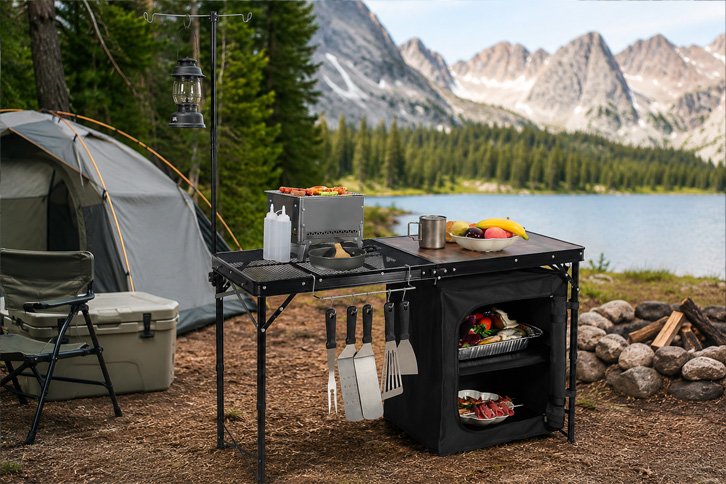
Smaller and simpler than the rest of this list, this one is built more like a camp table with kitchen features bolted on than a dedicated cook station. The aluminum top resists heat well enough for a single burner, and it folds into a compact carry bag that’s easy to toss in with tailgating gear.
For a family of 3-4 on weekend trips, it’s plenty. If you’re cooking for a crowd or running two stoves at once, you’ll outgrow the workspace fast.
Best for: small families and tailgate-style trips that don’t need a full kitchen station. Skip it if: you’re cooking for 5+ people, the Coleman Pack-Away has more room.
Buying Guide: What to Look For in a Camp Kitchen
Heat-resistant tabletop. Your two-burner stove gets hot, and a flimsy plastic table will warp or melt under it. Look for aluminum or coated tabletops rated for direct stove contact. If you’re still choosing a stove, our guide to the best camping stoves for families covers options that pair well with any of these kitchens.
Weight capacity and stability. A camp kitchen holding a stove, a full pot of water, and a stack of cookware needs a sturdy frame. Check the listed weight capacity, especially if you’re cooking full meals rather than just boiling water for coffee.
Storage built in. Shelves, pantry pockets, and hooks keep spatulas, spices, and paper towels from disappearing into the grass. This matters more with kids around, since gear scattered on the ground becomes a tripping hazard fast.
Sink or wash station. Not every kitchen needs a sink, but every family with kids needs a wash station somewhere. If your pick doesn’t have one built in, plan on a separate collapsible wash basin.
Portability vs. workspace. More counter space almost always means more weight and bulk. Decide honestly whether you’re car camping five feet from the trunk or hauling gear a distance, and pick accordingly.
Common Mistakes to Avoid
Buying a camp kitchen before you have a stove and cookware sorted is backwards. Get your stove and cookware picked out first, then choose a kitchen sized to fit them. A $150 kitchen station is wasted if your stove barely fits on it.
Skipping the wash station is the other common mistake. Families plan for cooking and forget cleanup, then end up scrubbing pans in a shared campground sink 200 feet away after dark with a cranky toddler in tow. A cheap wash basin solves this for under $15.
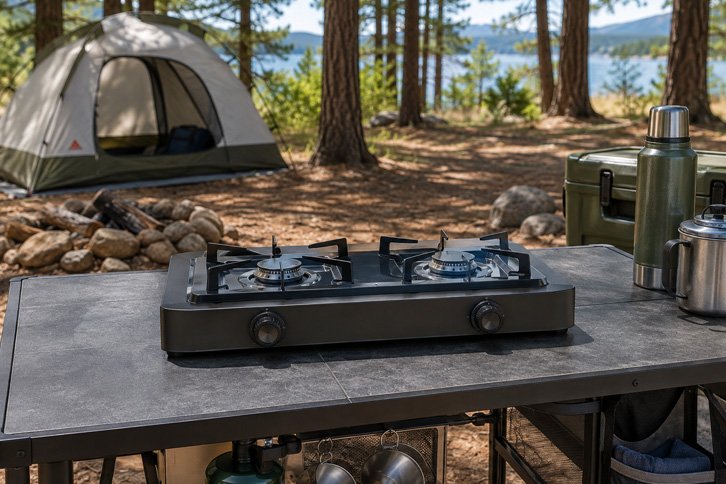
Once your kitchen and stove are sorted, the rest of your campsite layout falls into place. If you haven’t picked seating yet, our guide to the best camping chairs covers options that put everyone within reach of dinner without crowding the cook.
Final Verdict
- Best Overall: GCI Outdoor Master Cook Station, the sink alone makes camp life easier, and the build quality backs up the price.
- Best Budget: Timber Ridge Portable Camp Kitchen Station, real heat-resistant workspace for families just getting started.
- Best Premium: GCI Outdoor Master Cook Station also wins here, nothing else in this list matches its capacity and features at any price.
Frequently Asked Questions
Do I really need a camp kitchen, or can I just use a folding table?
A regular folding table isn’t rated for heat, so a stove can warp or scorch it, and you lose the built-in storage that keeps gear organized. A camp kitchen costs more upfront but saves you from replacing a melted table and hunting for utensils every meal.
What size camp kitchen do I need for a family of four?
Look for a station with at least two side tables or 4+ square feet of prep space, enough for a two-burner stove plus a cutting board. The GCI Outdoor Master Cook Station and Coleman Pack-Away both comfortably fit that setup.
Can I use a camp kitchen with any camping stove?
Yes, as long as the tabletop is heat-resistant and wide enough for your stove’s base. Most two-burner stoves fit fine on any of the stations in this guide; just check your stove’s exact dimensions against the kitchen’s tabletop size first.
How do I keep the camp kitchen area safe with young kids around?
Position the stove on the side farthest from foot traffic, set up on level ground so nothing tips, and designate a specific spot for hand washing so kids know exactly where to go before meals instead of wandering near the flame.
Are camp kitchen organizers worth it if I already have a table?
Yes, if losing utensils and spices in the grass is a recurring problem. An organizer like the Camp Chef Sherpa costs far less than a full kitchen station and solves the organization half of the problem without replacing gear you already own.
Do camp kitchens with a sink need to be hooked up to water?
No. Sink-equipped stations like the GCI Master Cook Station use a soft-shell basin you fill manually with a jug or hose, then drain out afterward. There’s no plumbing involved.