Beach camping breaks half the rules of regular camping. Standard tent stakes pull straight out of sand, sunscreen you’d normally reapply twice needs reapplying four times, and the wind that felt pleasant at noon can rattle your rainfly all night. This checklist covers what’s actually different about camping on sand, not just a copy of a forest checklist with “bring a towel” tacked on.
Work through it by category, and pay extra attention to the Shelter and Sun Protection sections. Those two are where beach trips go wrong most often.
Shelter & Sand Anchoring
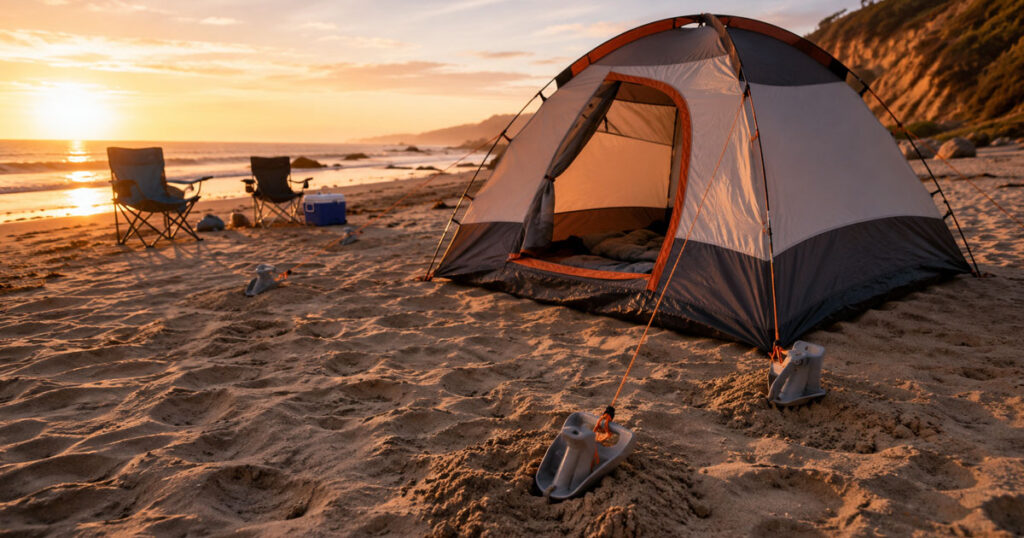
A regular tent works fine at the beach, but regular stakes don’t. Sand won’t hold a standard steel stake once the wind picks up, and a collapsed tent at 2am is a bad way to meet your camping neighbors.
- Tent with a low, wind-resistant profile (dome-style handles gusts better than tall cabin tents)
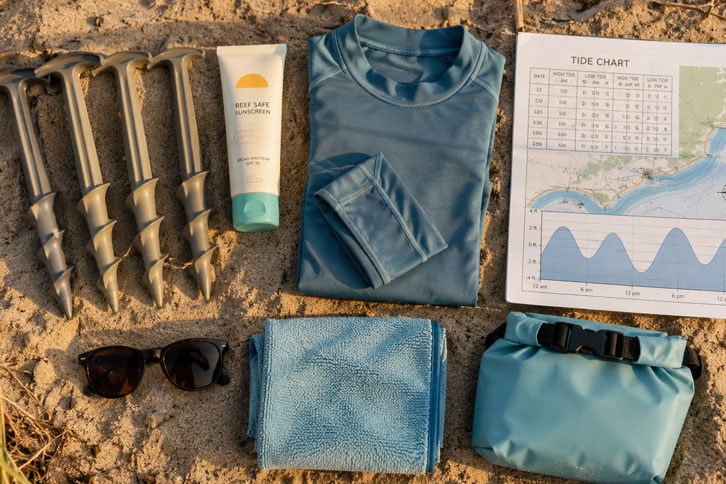
- Sand stakes, screw-in anchors, or sandbags (regular stakes will pull loose)
- Rubber mallet
- Tarp or footprint to keep sand out of the tent floor seams
- Pop-up sun shade or beach canopy for daytime
- Extra guylines for extra tie-down points in wind
Sun & Water Safety
Beach sun is stronger than forest sun. There’s no tree canopy, and the sand and water bounce UV rays back up at you, so sunburn shows up in places you didn’t expect.
- Reef-safe sunscreen, SPF 30+ (reapply every 2 hours, more after swimming)
- Lip balm with SPF
- Wide-brim hats for every family member
- UV-protective rash guards, especially for kids
- Polarized sunglasses (cuts glare off the water)
- Beach umbrella or shade tent
- Insulated water bottle, at least 32 oz per person
- Extra drinking water if the campground doesn’t have a reliable source
Beach Camp Kitchen
Sand gets into everything, food included. A few small changes to your normal camp kitchen setup save you from a gritty dinner.
- Camping stove and fuel (set up in a wind-blocked spot, or bring a windscreen)
- Cooler with extra ice (heat and direct sun drain a cooler faster than shaded forest sites)
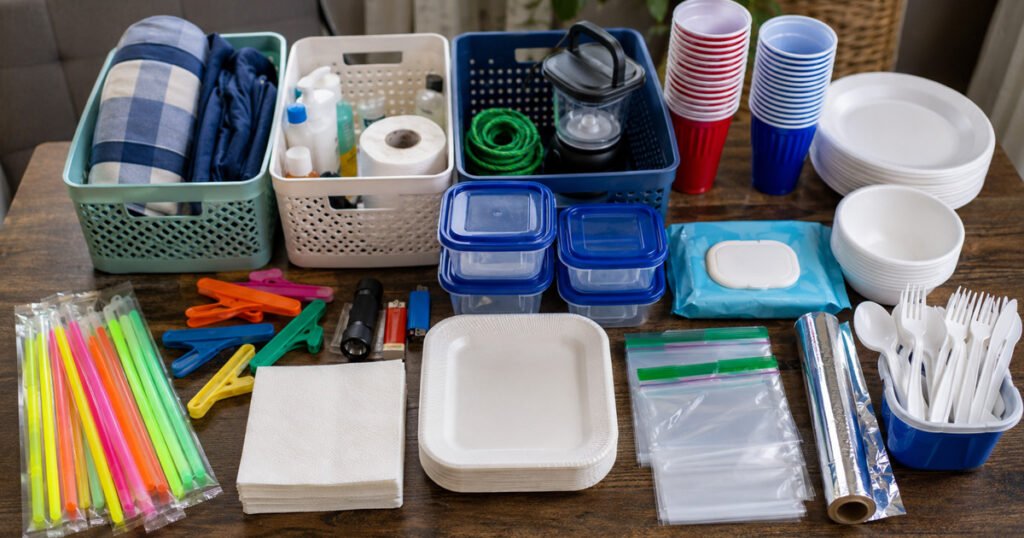
- Lidded containers instead of open bowls
- Reusable plates, cups, and utensils
- Trash bags, and extra ones for wet or sandy trash
- Dish basin and biodegradable soap
- A tarp to prep food on, off the sand
Sand-Specific Gear
This is the category a regular checklist skips entirely, and it’s the one that determines whether you spend the trip fighting sand or just living with it.
- Beach mat or sand-resistant blanket (shakes clean faster than regular fabric)
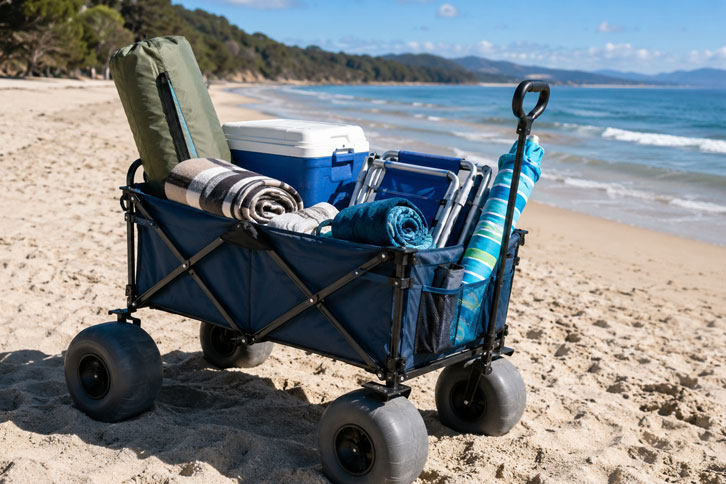
- Foldable wagon or beach cart (hauling gear across soft sand by hand gets old fast)
- Closed-toe water shoes (sand can hit 100°F+ at midday)
- Portable rinse station or a few gallons of fresh water for feet before entering the tent
- Ziplock bags or a dry bag for phones and electronics
- Small camp shovel
- Mesh bag for wet swimsuits and towels
Safety & First Aid
Standard camping safety rules still apply at the beach, plus a few water- and sand-specific extras.
- First aid kit, stocked and checked before you leave
- Bug spray (sand fleas and no-see-ums are a real beach problem, not just a forest one)
- Tide chart or tide app for your specific beach
- Life jackets for kids, even for shallow water play
- Whistle for each kid
- Vinegar or meat tenderizer for jellyfish stings, if local waters have them
- Emergency contact info written down
- Map of the nearest lifeguard station or hospital
Kids-Specific Beach Gear
Kids move between sand and water all day, which means their gear needs get a little different treatment than the rest of the packing list.
- Swim diapers, if you’ve got a little one still in diapers
- UV swimsuits or rash guards
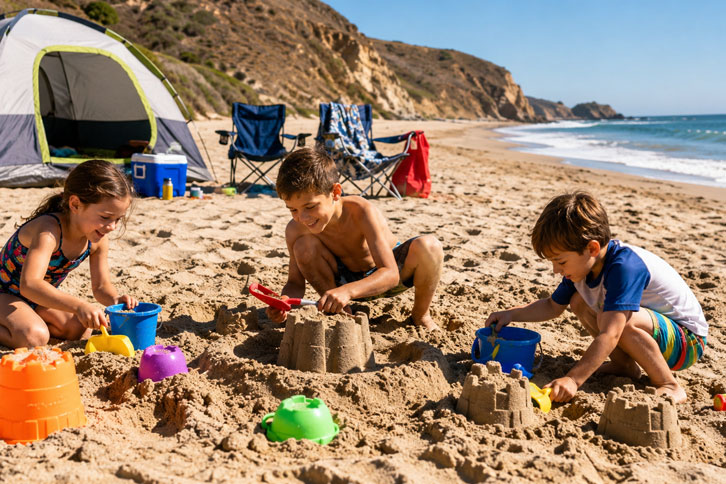
- Sand toys (bucket, shovel, molds)
- Floaties or puddle jumpers for weak swimmers
- A “fun bag” they packed themselves
- Extra dry clothes (more than you think you’ll need)
- Kid-safe, reef-safe sunscreen
Comfort & Extras
Not essential, but this is the stuff that makes a beach campsite feel relaxed instead of like a logistics operation.
- Low beach chairs
- Cornhole, frisbee, or other sand-friendly games
- Bluetooth speaker
- Camera (waterproof or in a dry case)
- Books, cards, or a journal
- String lights for the tent area after dark
How to Actually Use This Checklist
Pack your shelter and sand-anchoring gear first, since that’s the category where a mistake ruins the whole trip. Then work through sun protection, since it’s the easiest thing to forget when you’re focused on tents and coolers. Kitchen, kids’ gear, and comfort items can go in whatever order works for your family.
Do a final check the morning you leave: reef-safe sunscreen, tide chart for your beach, and sand anchors. Those three get left behind more than anything else on this list.
Frequently Asked Questions
Do I need special tent stakes for beach camping?
Yes. Regular steel stakes pull straight out of sand. Use wide sand stakes, screw-in anchors, or bury a bag of wet sand tied to your guyline as a makeshift deadman anchor.
How often should I reapply sunscreen while beach camping?
Every 2 hours at minimum, and immediately after swimming or heavy sweating. Beach sun reflects off sand and water, so exposure is higher than at a shaded forest campsite even on cloudy days.
Can I camp directly on the sand, or do I need a raised site?
Most public beach campgrounds have designated tent pads or firm sand areas. Camping directly on loose, soft sand is possible but makes anchoring harder and lets more sand into your tent.
What’s the biggest difference between beach camping and regular camping?
Wind and sand management. A tent that’s perfectly stable in the woods can flap and struggle at an exposed beach site, and sand works its way into gear, food, and sleeping bags far more than dirt does.
Do kids need life jackets for shallow beach water play?
Yes, especially for young or weak swimmers. Waves and currents can knock a small child off balance even in water that only reaches their knees.
Is bug spray really necessary at the beach?
Yes. Sand fleas and no-see-ums are common at dusk and dawn on many beaches, and they’re small enough to bite through a light breeze that would normally keep bugs away.
How do I keep sand out of the tent?
Use a doormat or towel at the entrance, rinse feet before entering, and keep a small broom or brush handy. A tarp or footprint under the tent also keeps sand from working into the floor seams from underneath.