Family camping activities are the games, crafts, and outdoor challenges that fill the hours between setting up the tent and roasting marshmallows. The best ones need little to no gear, work across different ages, and turn “I’m bored” into “can we do that again tomorrow?”
We’ve camped with a toddler who needed a nap by 3pm and a teenager who wanted nothing to do with “family time.” These 15 activities worked for both, and that’s the real test. No Pinterest-perfect crafts, no activities that need a U-Haul of supplies. Just things that keep everyone moving, laughing, and off their phones.
Quick picks if you’re short on time:
- Best for all ages: Campsite Scavenger Hunt (#1)
- Best for zero prep: Flashlight Tag (#4)
- Best for rainy afternoons: Campfire Storytelling (#9)
Active Outdoor Games (Good for Burning Energy)
These get kids (and let’s be honest, adults too) moving after a long car ride or before bedtime, when the campsite zoomies hit hard.
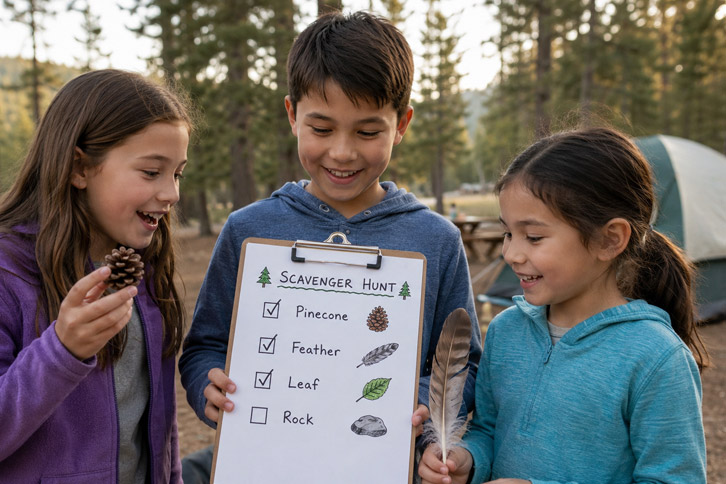
1. Campsite Scavenger Hunt
A scavenger hunt is a list of natural or campsite items kids search for and check off, and it works for almost any age if you adjust the list. Write down 10-15 things to find: a pinecone, something red, an animal track, a smooth rock, a feather. Hand out the list (or read it aloud for younger kids) and set a time limit.
For toddlers, stick to 5 easy items they can find within sight of camp. For older kids, hide a small prize at the end or turn it into a team race.
2. Capture the Flag
This needs two bandanas (or socks) and enough open space to split into two territories. Each team protects a “flag” while trying to sneak into the other team’s territory and grab theirs. It works well at campgrounds with a shared field or meadow.
Set clear boundaries before you start. “Capture the flag rules” arguments have ended more than one camping trip early.
3. Glow Stick Ring Toss
Stick a few glow sticks in the ground in a loose circle once it’s dark, then toss glow-in-the-dark rings (or even pool noodle rings) to see who can land one. It’s a low-stakes game that keeps kids occupied right after dinner, when the sun’s down but bedtime isn’t yet.
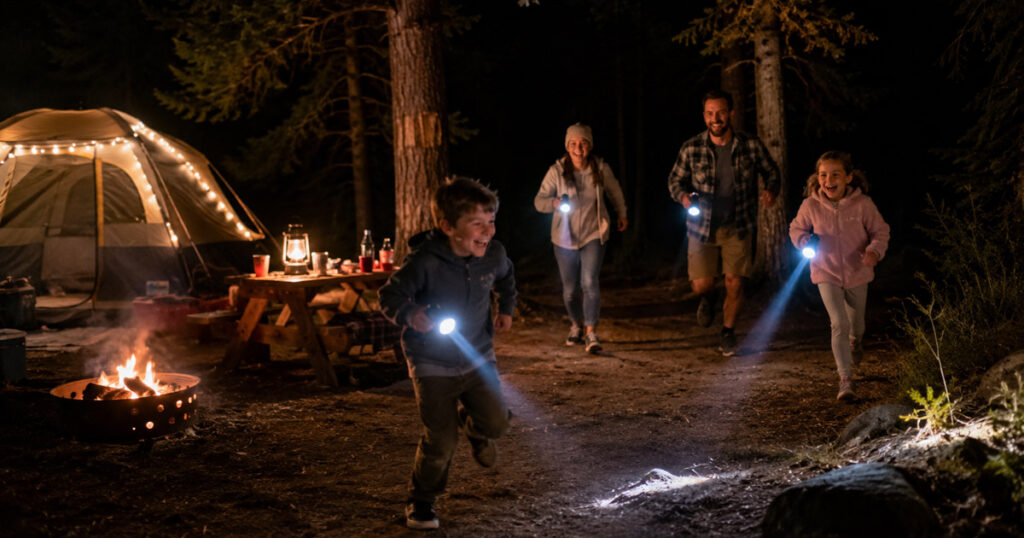
4. Flashlight Tag
This is regular tag, but at night, with flashlights instead of touch. Getting “tagged” means getting caught in someone’s flashlight beam. It needs zero setup beyond the flashlights you already packed, which makes it our pick for zero-prep activities.
5. Cornhole or Ladder Ball
Both pack flat, set up in under 2 minutes, and give kids and adults something to compete at side by side. If you’re buying for the first time, look for a set with a carrying case. Loose bean bags rolling around your trunk get old fast.
Campfire Activities (For When the Sun Goes Down)
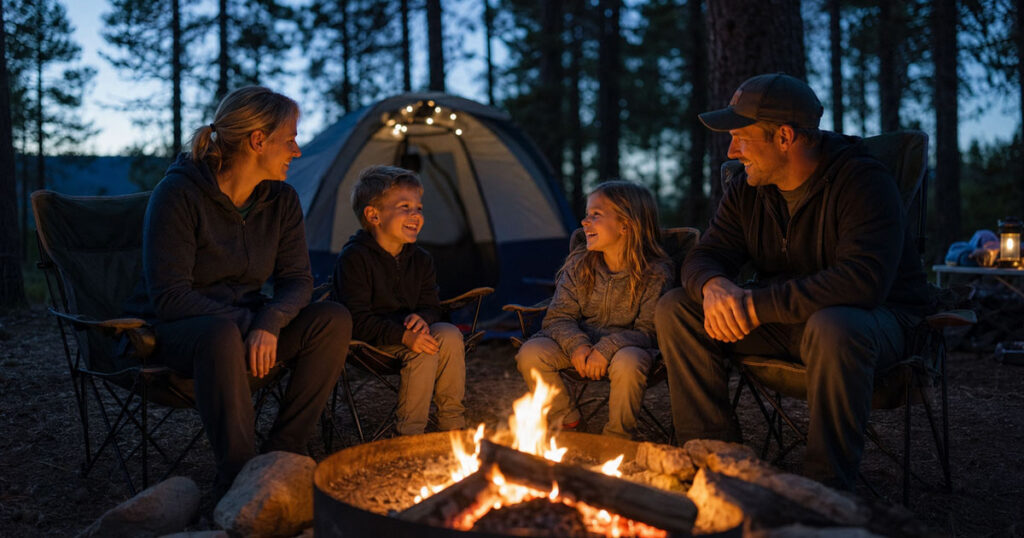
The campfire is where most of the actual bonding happens. These activities work with the whole family sitting in one spot, which is good news if anyone’s tired.
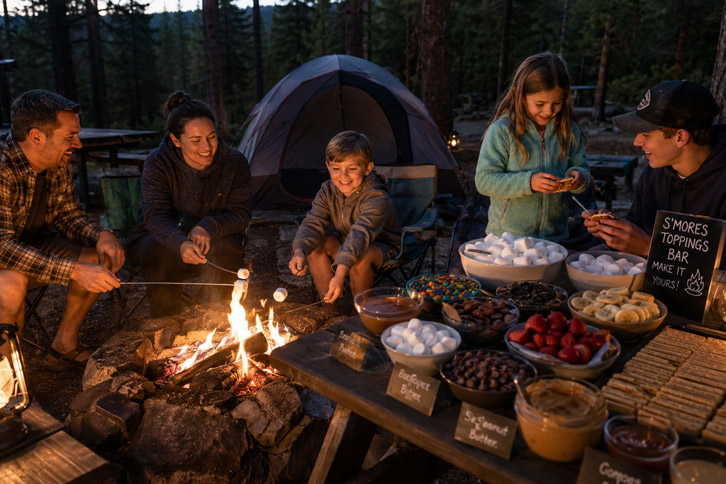
6. Campfire S’mores Bar
A s’mores bar is a setup with multiple topping options (different chocolates, marshmallow flavors, cookies instead of graham crackers) instead of the standard three ingredients. Bring a few extras like peanut butter cups, strawberries, or pretzels and let everyone build their own.
7. Shadow Puppets
Use a flashlight and a blank tent wall or tarp to make hand shadow puppets. It costs nothing, needs nothing you didn’t already pack, and toddlers through grandparents can all join in.
8. Campfire Songs
A speaker isn’t required here, and honestly it’s better without one. Simple, repetitive songs work best with mixed ages: call-and-response songs, camp classics, or even made-up verses about your own trip.
9. Campfire Storytelling
Take turns adding one sentence at a time to build a story together, or go around with a “scary story” round for older kids and teens. This is our pick for rainy or windy nights when you’re stuck under a tarp with nothing else to do.
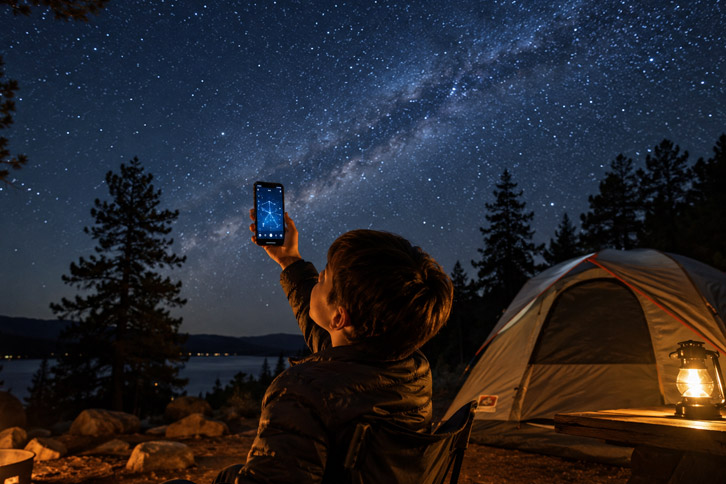
10. Stargazing and Constellation Spotting
Once the fire dies down, lie back on a blanket and look up. A free stargazing app on your phone (downloaded ahead of time, since you likely won’t have signal) can identify constellations in real time. This works especially well at campgrounds away from city lights.
Hands-On and Creative Activities
Good for slower mornings or when you need a break from running around.
11. Nature Journaling
Give each kid a small notebook to sketch leaves, bugs, or the view from the campsite, and jot down one thing they noticed that day. This works surprisingly well with reluctant teens if you frame it as documenting the trip rather than “doing art.”
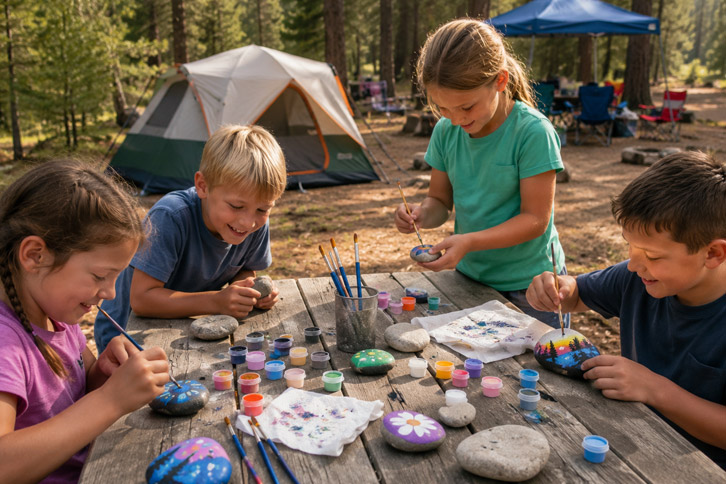
12. Rock Painting
Pack a small kit of acrimony-free paint and a handful of smooth rocks (or collect them on a hike). Painted rocks become trip souvenirs, or you can hide them around the campground for other campers to find, which has become its own mini-tradition at many campgrounds.
13. Campsite Cooking Together
Letting kids help build the fire (with supervision), skewer hot dogs, or mix pancake batter turns a chore into an activity. It also means dinner takes longer, which is honestly fine when you have nowhere to be.
14. Geocaching
Geocaching is a real-world treasure hunt using GPS coordinates to find hidden containers (“caches”) that other people have placed, often near trailheads and campgrounds. Download the free Geocaching app before you lose signal, and you’ve got a built-in hike with a payoff at the end.
15. Family Hike With a Destination
A hike works better as an “activity” rather than a chore when there’s a clear destination: a waterfall, an overlook, a lake for swimming. Pick a trail rated for your youngest hiker’s stamina, not your most ambitious one.
How to Pick the Right Activities for Your Trip
Match the activity to your family’s actual situation, not the version you see on Instagram. A few things to consider before you plan a packed schedule:
Age range matters more than anything else. A 3-year-old and a 13-year-old rarely want the same thing at the same time. Plan a mix, and don’t expect every activity to please everyone.
Weather changes the plan fast. Keep a backup list of indoor-tent or shelter activities (cards, storytelling, shadow puppets) ready in case rain moves in.
Energy levels dip after driving. Don’t schedule anything that requires focus or patience in the first hour after you arrive. Let everyone stretch their legs first.
Less planning is usually better. The families who have the most fun tend to bring a handful of flexible options, not a printed hourly schedule.
Common Mistakes to Avoid
Overpacking the schedule. Trying to fit in 8 activities a day leaves no room for the unplanned stuff, like a frog someone found, that ends up being the highlight of the trip.
Forgetting the in-between activities. Card games, books, and simple toys fill the gaps between “big” activities and prevent the dreaded “I’m bored” 20 minutes after breakfast.
Ignoring nap schedules for toddlers. A toddler who skips their nap for “one more activity” turns the evening into a different kind of memorable.
Not checking campground rules first. Some campgrounds restrict campfires, quiet hours, or certain games in shared spaces. A quick check avoids an awkward conversation with a ranger.
For more ways to fill rainy afternoons or hot summer days specifically, check our guides on rainy day camping activities and summer camping activities. If you’re still gearing up, our camping gear for kids guide covers what’s actually worth packing, and our family camping safety tips cover what to know before you head out.Next Steps
Now that you’ve got activities covered, round out the rest of your trip planning:
– First-Time Family Camping: The Complete Guide – Family Camping Checklist – More Outdoor Camping ActivitiesFrequently Asked Questions
What are good camping activities for toddlers?
Toddlers do best with short, simple activities like a 5-item scavenger hunt, shadow puppets, or splashing in a shallow creek under supervision. Keep activities under 15-20 minutes since attention spans are short, and build in nap time rather than fighting it.
What can families do at a campsite without electricity or wifi?
Card games, scavenger hunts, campfire storytelling, stargazing, nature journaling, and most active outdoor games need zero electricity or signal. Many families find the lack of wifi is what makes the trip feel like a real break.
How do you keep teenagers entertained while camping?
Give teens some independence (a hike to a destination, a campfire cooking task, or geocaching) instead of structured “family games.” Teens generally engage more when an activity feels like a real responsibility or challenge rather than a kid’s game. See our full guide on camping activities for teens.
What camping games need no equipment at all?
Flashlight tag, campfire storytelling, shadow puppets, stargazing, and scavenger hunts (using natural items instead of a printed list) need nothing beyond what’s already in your camp bag.
How many activities should we plan per camping day?
Plan 2-3 loosely scheduled activities per day, with extra backup options for downtime. Overpacking the schedule is one of the most common mistakes families make on their first trip, since unstructured time is often where the best memories happen anyway.