Camping with a 14-year-old is a different sport than camping with a 6-year-old. Scavenger hunts and stick boats don’t always land anymore, and “go play outside” gets you an eye roll instead of action. Teens aren’t bored by camping itself, they’re bored by activities that feel like they were designed for someone half their age.
The fix isn’t more structure, it’s the right kind. Teens respond to activities with some independence, a little competition, or a real skill attached. Here are 15 that consistently work, even with the kid who swore this trip was “going to be lame.”
Quick Picks by Vibe
- Competitive: Fire-building challenge, knot-tying race, capture the flag (glow-in-the-dark version)
- Independent/exploratory: Geocaching, supervised night hike, fishing
- Low-key/social: Campfire storytelling, stargazing, content creation challenge
Skill-Building Challenges: Competition They Actually Want
Teens are far more likely to engage when there’s a clear win condition, not just “have fun.”
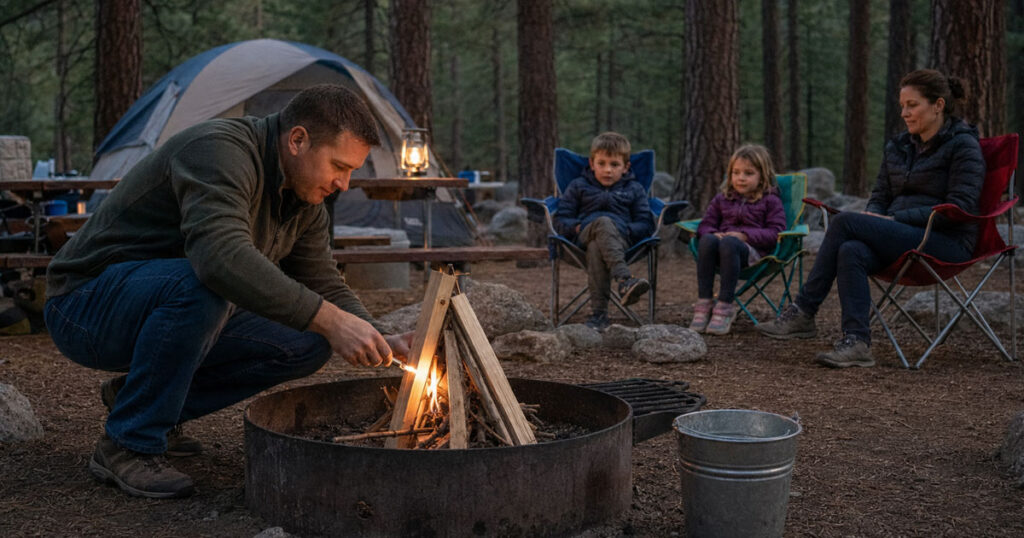
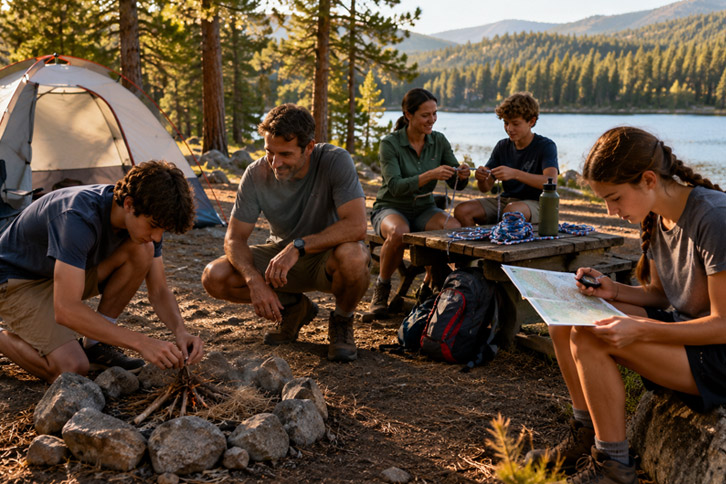
Fire-building challenge. Split into pairs or go solo, give everyone the same starter materials (no lighter fluid), and time who gets a stable fire going first. It teaches a real skill and turns into the most competitive ten minutes of the trip.
Knot-tying race. Pick 3-4 useful knots (bowline, clove hitch, square knot), demonstrate once, then race to tie all three correctly. Works well as a rainy-afternoon filler too.
Orienteering with a map and compass. Set a few waypoints around the campground and let teens navigate without GPS. Pair it with the geocaching activity below for a full “find stuff in the woods” afternoon.
Geocaching. Download a free app, find nearby caches, and let teens take the lead on tracking them down. It combines a phone (which they already want to use) with actual outdoor movement, and most campgrounds have several caches within walking distance.
Independence-Driven Activities: A Little Freedom Goes a Long Way
Part of what makes teens disengage from “kid” camping activities is the lack of autonomy. These give them some.
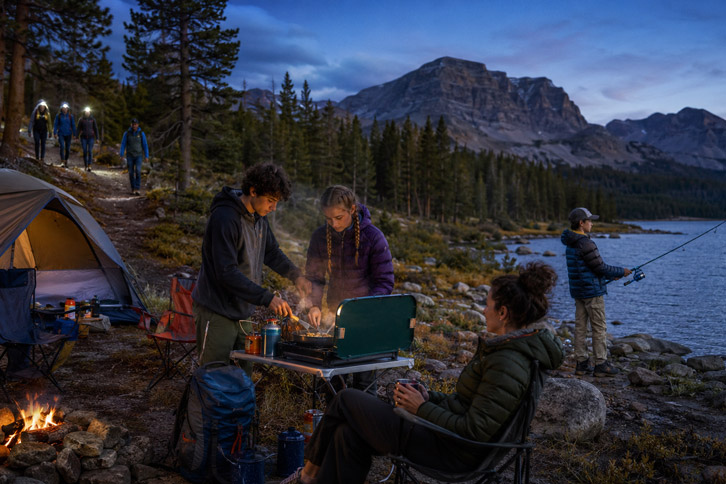
Supervised night hike. Pick a short, well-marked trail, hand out headlamps, and let older teens hike slightly ahead of the group (within shouting distance, not out of sight). The novelty of hiking in the dark does most of the work.
Fishing. Whether it’s a lake, river, or stocked pond, fishing gives teens a reason to sit quietly outside without it feeling like punishment. Bring a basic rod and let them rig their own bait.
Solo or paired campsite cooking. Hand a pair of teens the ingredients for one meal and let them figure out the cooking. Expect some smoke and a slightly burnt result the first time. That’s part of it.
Group Games That Don’t Feel Like Summer Camp
Glow-in-the-dark capture the flag. Same rules as the classic version, but swap flags and gear for glow sticks and play after dark. The novelty factor alone gets reluctant teens off their phones.
Selfie scavenger hunt. Instead of collecting physical items, give a list of things to photograph (a weird-shaped rock, the whole group mid-jump, something that looks bigger than it is). Works because it uses their phone instead of competing with it.
Tournament-style cornhole or spikeball. Bring one portable game, run a quick bracket, and let trash talk do the rest. Low setup, high payoff for groups of 4 or more.
Evening Activities: Where Teens Actually Show Up
Stargazing with a star app. Skip the lecture about constellations and just hand over a stargazing app. Teens tend to get pulled in once they realize they can point a phone at the sky and get instant answers.
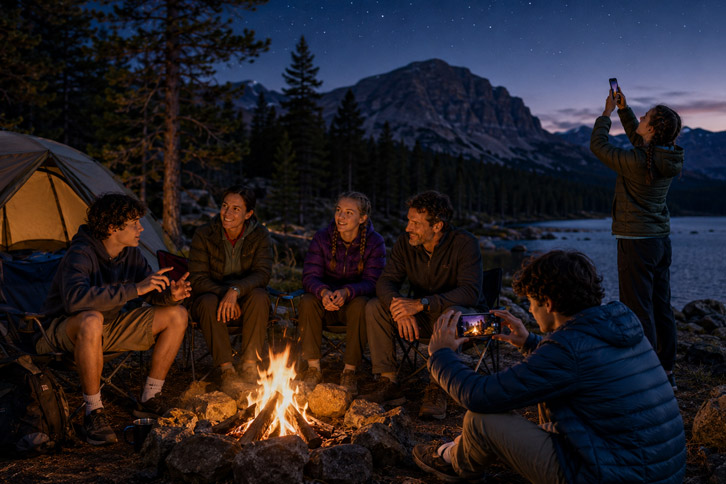
Campfire storytelling, with a twist. Classic campfire stories work better with teens when you add a structure, like a round-robin story where each person adds one sentence, or a “scariest true story” theme.
Content creation challenge. Give teens 20 minutes to shoot and edit a 30-second video about the trip on their phone, then watch them together at the fire. It turns “stop being on your phone” into a creative assignment instead of a fight.
What to Skip With This Age Group
Skip activities pitched as “for kids.” Anything described with words like “magical” or “adventure time” tends to get an instant veto from a 14-year-old, even if the activity itself is fine. Reframe it instead (call the scavenger hunt a “selfie challenge,” not a “nature hunt”).
Skip forced group bonding games. Icebreaker-style games (two truths and a lie, name that tune) usually fall flat with teens who already know each other. Save structured bonding for genuinely new groups, like a multi-family trip.
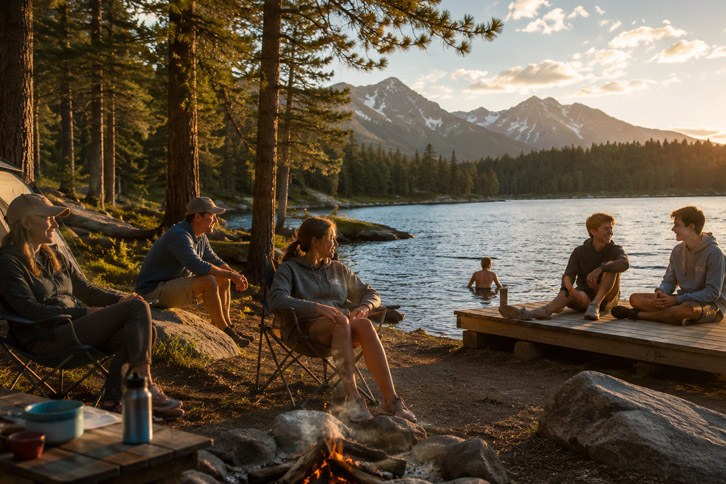
Skip over-scheduling. Teens often want stretches of unstructured time to talk, swim, or just sit. Plan 1-2 activities a day and leave real gaps instead of a packed itinerary.
Final Verdict
Best All-Around: Geocaching. Combines a phone, independence, and real outdoor movement, with almost zero setup cost.
Best for Competitive Groups: Fire-building challenge. Builds a real skill and turns into the most talked-about activity of the trip.
Best for Reluctant Teens: Content creation challenge. Reframes phone time as a creative task instead of a battle.
Frequently Asked Questions
What if my teen just wants to stay on their phone the whole trip?
Build one activity around their phone instead of fighting it, like the photo/video challenge or geocaching. Once they’re engaged with one thing, it’s easier to pull them into a second activity later in the day.
Are camping activities for teens different from activities for younger kids?
Yes. Teens respond better to activities with a skill, challenge, or independence component, while younger kids do better with structured, supervised games. The biggest difference is framing: teens disengage from anything that feels designed for little kids.
What age is “teen” for camping activity purposes?
Most of the activities in this guide work well for ages 12-17, with fire-building, night hikes, and orienteering best suited to 13 and up depending on maturity and group size.
Do teens need separate gear for these activities?
Mostly no. A headlamp, a basic fishing rod, and a phone cover most of the activities here. Fire-building and knot-tying use gear you likely already have at the campsite.
How do I get a reluctant teen to participate without forcing it?
Frame activities as challenges or competitions rather than mandatory family time, and let them opt into a “leader” role for younger siblings or other kids in the group. Autonomy is usually the deciding factor.
Can these activities work for a mixed group of teens and younger kids?
Some can. Geocaching, capture the flag, and campfire storytelling scale across ages. Fire-building challenges and night hikes are better kept to teens and adults only for safety reasons.