Car camping means your trunk is basically a second garage for the weekend, which sounds great until you’re repacking it for the third time because the cooler is buried under the tent. This checklist covers what to bring AND how to load it, so you’re not unpacking half the car to find the marshmallows.
We car camp with two kids who somehow generate more gear than the adults. What changed everything for us wasn’t buying more stuff. It was packing in the right order.
Documents & Money (Don’t Skip This One)
Families forget this category constantly because none of it feels like “gear.” It’s still the stuff that gets you turned away at the gate.
- Campsite reservation confirmation (printed or screenshotted, in case service is spotty)
- Government-issued ID
- Cash (some campgrounds are cash-only after hours, and firewood vendors rarely take cards)
- Campground map or downloaded offline map
- Roadside assistance card or app login
- Insurance card and registration (glovebox, but check it’s current before you leave)
Car & Trunk Essentials
This is the category most general camping checklists skip entirely, because it’s specific to arriving by car instead of on foot. None of it is exciting. All of it ruins a trip if it’s missing.
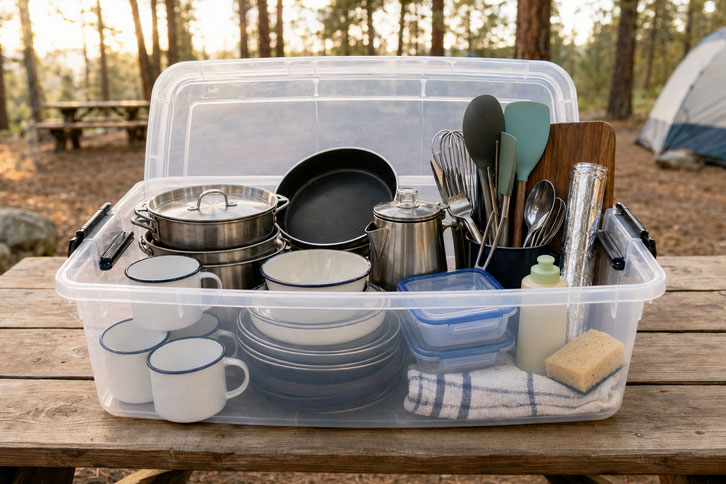
Trunk Organization & Load Order (The Part That Actually Saves You)
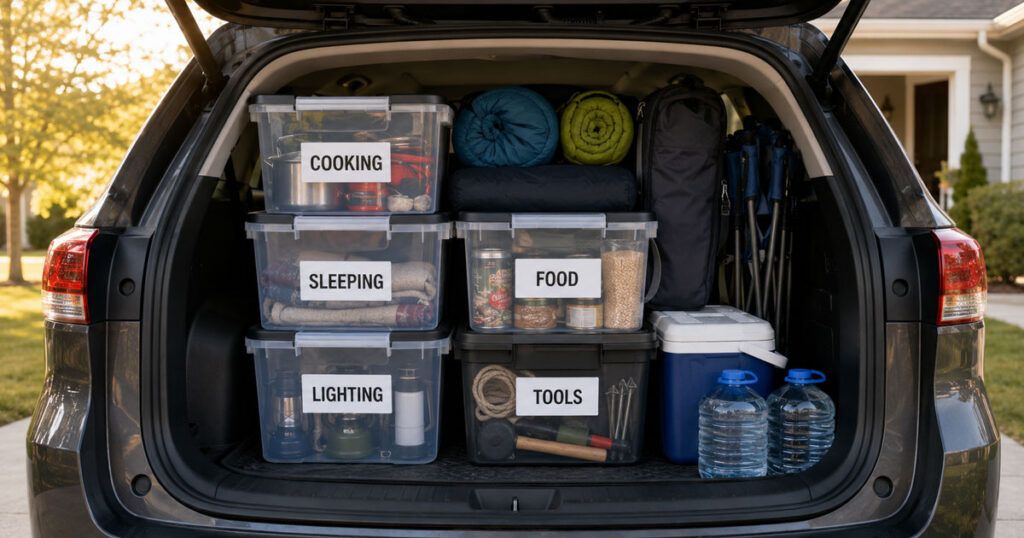
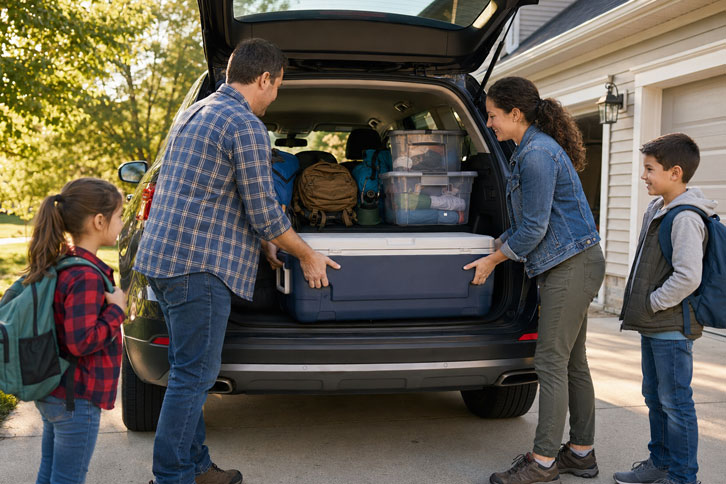
Here’s the trick nobody tells you: pack in reverse order of when you’ll need things. Whatever you need first at the campsite goes in last, closest to the trunk door. Whatever you won’t touch until bedtime goes in first, buried at the back.
Use labeled bins instead of loose bags. Clear plastic totes work best because you can see what’s inside without opening every single one in the parking lot while your kids ask “are we there yet” for the tenth time.
Shelter, Sleep & Cooking
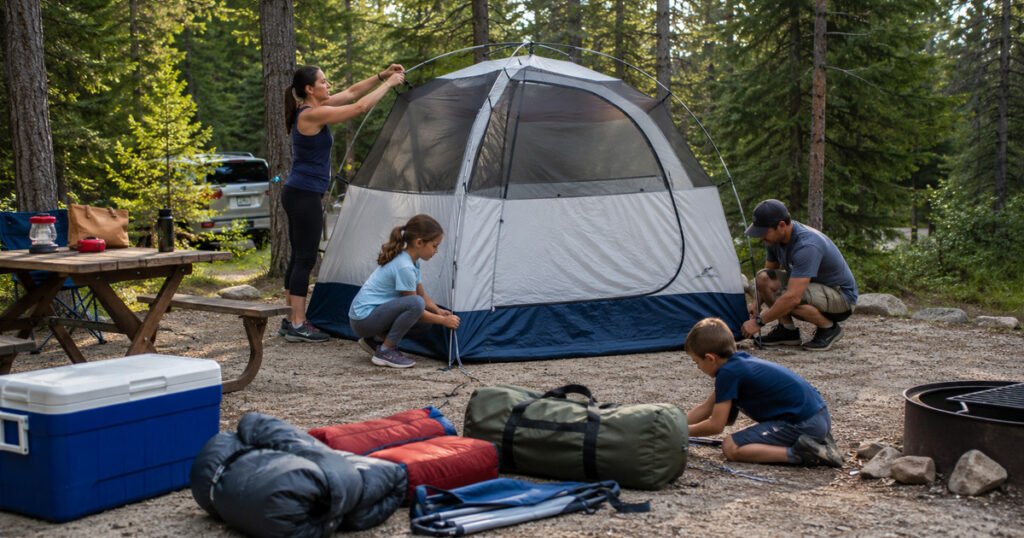
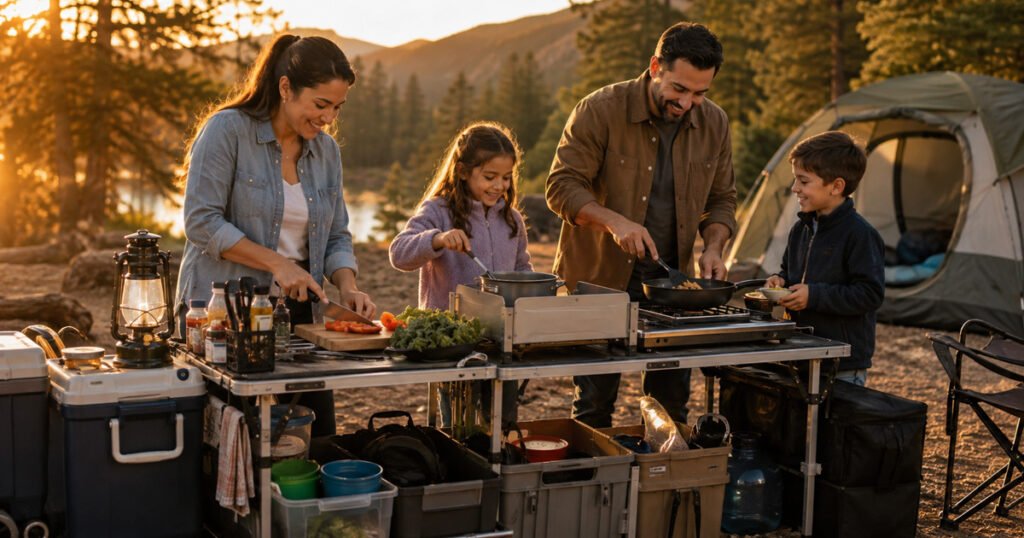
Car camping means you can bring the heavier, more comfortable version of everything since you’re not carrying it on your back. Use that advantage.
A 50-quart cooler is the realistic minimum for a family of four on a multi-day trip. Anything smaller and you’re making a grocery run by day two.
Kids’ Car Camping Essentials
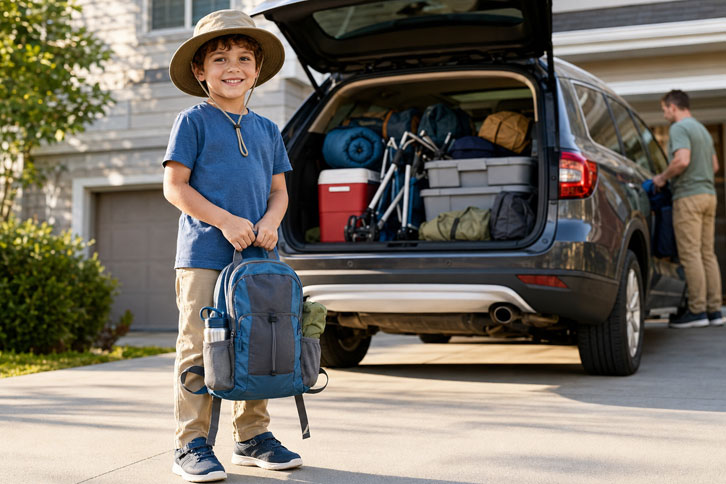
The drive itself is its own small event when you’ve got kids in the back seat for two-plus hours. Pack for the car ride, not just the campsite.
- A “fun bag” per kid, packed by them, for the drive and downtime at camp
- Snacks that don’t melt or crumble everywhere (learned this one the hard way)
- Motion sickness bands or medication, if that’s ever been an issue
- Extra clothes within reach in the back seat, not buried in the trunk
- Comfort item (stuffed animal, blanket) kept in the car, not packed away
- Kid-safe sunscreen and bug spray, one set for the car, one for the campsite
Comfort & Extras
Car camping is where you get to bring the stuff that makes a campsite feel like yours instead of a parking lot with a tent on it.
- Camping chairs (one per person, no sharing)
- Table, if the site doesn’t already have one
- Lantern and headlamps for every person old enough to wear one
- Extra batteries and a portable power bank
- Games, cards, or a speaker for evenings around camp
- First aid kit, sunscreen, bug spray, personal medications
Common Mistakes When Packing the Car
Packing by memory instead of by list. The confident “I’ve done this before, I don’t need a list” approach is exactly how the can opener gets left on the kitchen counter. Every time.
Loading the car in the order things come out of the garage. If the tent gets loaded first because it’s closest to the door, it ends up buried under everything else by the time you’re trying to set up camp in fading daylight.
Underestimating the cooler. A cooler that’s “big enough” at home in the driveway is somehow never big enough three days into a trip. Size up.
Forgetting the car itself needs supplies too. Jump starter, tire gauge, and a paper map aren’t glamorous, but they’re the difference between a minor inconvenience and a genuinely bad day.
Next Steps
Once your trunk is loaded and your bins are labeled, you’re basically ready. If you want the full explained version of camping essentials beyond what’s car-specific, our family camping checklist covers 75+ items category by category. And if this is your first trip out, start with our first-time family camping guide for everything beyond the packing list, like choosing a campsite and setting expectations for the trip itself.
If you want a broader packing reference that isn’t organized around the car specifically, our what to bring camping guide is a good companion checklist.
Frequently Asked Questions
What’s different about a car camping checklist versus a regular camping checklist?
A car camping checklist includes items specific to arriving by vehicle: a jump starter, tire pressure gauge, trunk organization bins, and load order. A general camping checklist focuses only on gear you’ll use at the site, not how you get it there.
How should I organize my trunk for camping?
Use labeled, clear bins by category (sleep, kitchen, kids) and load in reverse order: what you need last at camp goes in first, and what you need immediately upon arrival (cooler, chairs, snacks) goes in last, closest to the door.
What size cooler do I need for car camping with a family?
A 50-quart cooler is the realistic minimum for a family of four on a trip of two or more days. Smaller coolers work for a single overnight but run out of cold space fast on longer trips.
Do I need special car supplies for camping, or is that overkill?
It’s not overkill once you’ve been stuck at a trailhead with a dead battery or a soft tire and no gauge. A jump starter and tire inflator take up minimal space and solve real problems that regular camping checklists don’t mention.
What do kids need specifically for the car ride to the campsite?
A packed “fun bag” they chose themselves, snacks that won’t make a mess, easy access to extra clothes and a water bottle, and their comfort item kept in the back seat rather than buried in the trunk.
Should I pack differently for a one-night trip versus a longer car camping trip?
The categories stay the same, but quantities and cooler size scale up. For anything past two nights, plan for a bigger cooler, backup stove fuel, and extra batteries, since resupply options are often limited near a campsite.