What to bring camping comes down to four categories: shelter and sleep, cooking and food, clothing, and safety, plus whatever keeps your specific kids happy. The part most packing lists skip is how much of each thing to bring and when to actually pack it, which is exactly where most families lose an evening the night before a trip.
We’ve packed for camping trips at 11pm with a screaming toddler and a half-empty cooler more times than we’d like to admit. This guide covers the categories, the quantities, and a timeline so packing stops eating your Friday night.
The 4 Categories Everything Falls Into
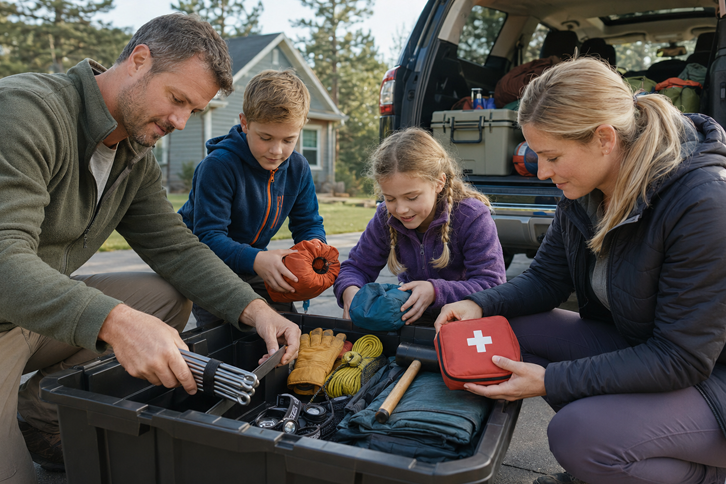
Every camping item you own fits into one of four buckets: shelter and sleep, cooking and food, clothing, and safety. Kids’ gear is really a fifth, smaller bucket layered on top.
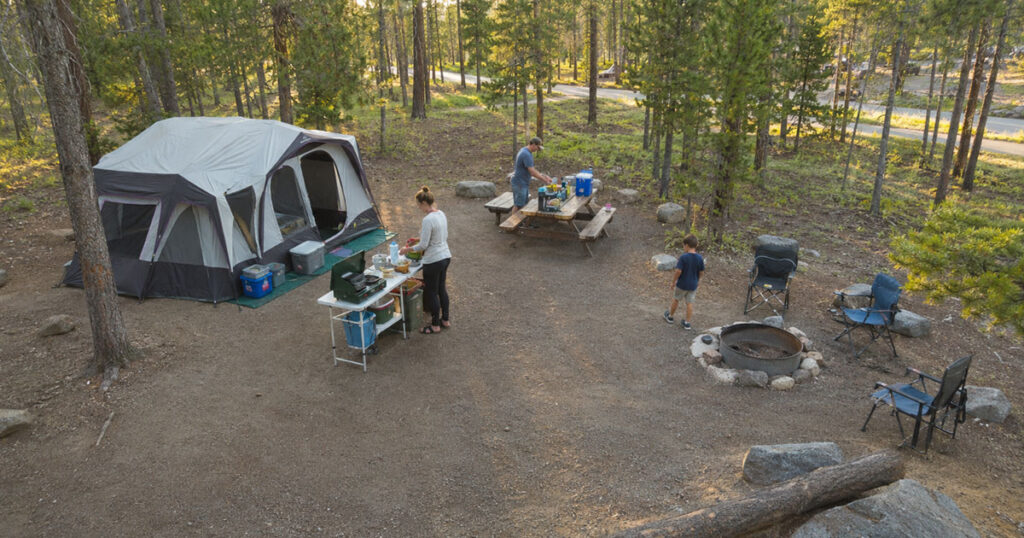
Shelter and sleep covers your tent, footprint, stakes, a mallet, sleeping bags rated for the season, and a pad or air mattress under every bag. If you’re still deciding on a tent, our family tent guide breaks down sizing so you don’t end up sleeping in a “4-person” tent that barely fits four sleeping bags.
Cooking and food means a stove, basic cookware, a cooler, and enough ice to last a day longer than you think you need. Our camping cooler guide covers options from budget coolers to ones that hold ice for five-plus days.
Clothing is layers, not just “warm clothes.” Base layer, fleece, rain shell. Temperature swings at a campsite are bigger than at home, especially once the sun goes down.
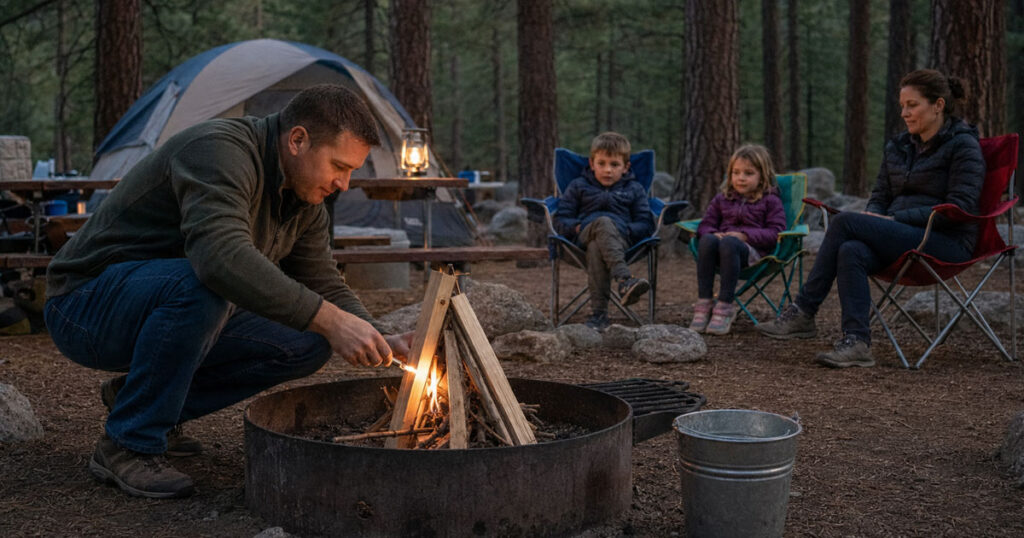
Safety is your first aid kit, headlamps or flashlights, sun protection, and bug spray. This is the category people trim first when the car’s full, and it’s the one you don’t want to trim. Our family camping safety guide covers what a family-sized kit actually needs.
How Much to Pack, Per Person
Categories tell you what to bring. Quantity tells you how much, and that’s where most lists go quiet. Here’s what actually gets used on a 2-3 night family trip.
Packing Timeline: What to Pack When
The categories above tell you what goes in the car. This table tells you when to actually put it there, so packing doesn’t turn into one long scramble the night before.
Load the Car in Reverse Order
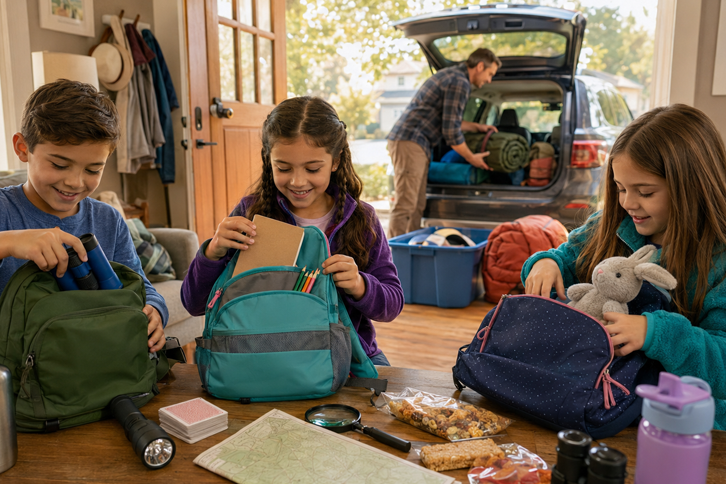
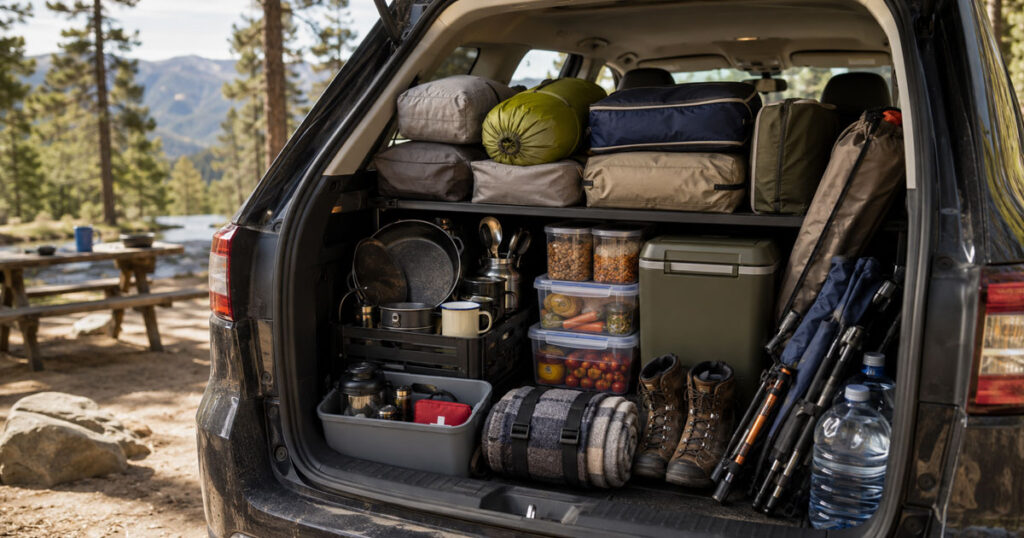
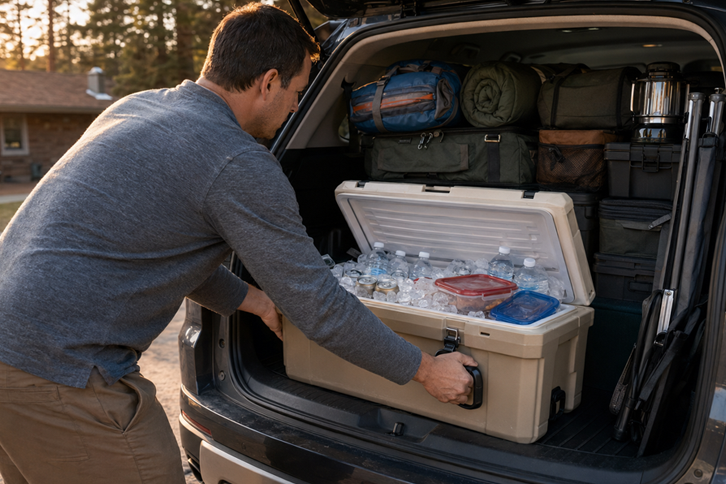
Pack the car in the reverse order you’ll need things at the campsite. Cooler and food go in last so they come out first. Tent and stakes go in early since you won’t need them until you’re already parked and ready to set up.
This sounds obvious written down, but it’s the single biggest time-saver we didn’t figure out until our third trip. Digging through a fully loaded trunk for a can opener while the kids ask “are we there yet” is not a great use of anyone’s patience.
Common Packing Mistakes
Packing food and ice too early. Ice bought two days ahead is water by the time you leave. Buy ice the morning of, or the evening before at the earliest.
Trusting memory instead of a reusable list. Even experienced campers forget something when they wing it. Reuse the same list every trip and update it after each one.
Packing exact quantities instead of buffers. One day’s worth of ice, one pair of socks per day, one set of clothes per outfit change all sound reasonable until weather, mud, or a spill changes the math. Build in one extra day’s buffer for ice, socks, and one spare outfit per kid.
Forgetting the “boring” safety items. First aid kits, extra batteries, and sun protection lose the packing priority fight against fun gear every time. Pack safety items first, not last.
Next Steps
Once your packing list is dialed in, the rest of trip planning gets a lot easier. Here’s where to go next.
– Family Camping Checklist: 75+ Items You Can’t Forget – Printable Family Camping Checklist (Tick-Box Version) – First-Time Camping with Your Family: Complete Beginner Guide – The Best Family Camping Tents in 2026 – 10 Essential Camping Safety Tips Every Family Should KnowFrequently Asked Questions
What are the most important things to bring camping?
Shelter (tent, stakes, sleeping bags, pads), a cooler with a day’s buffer of ice, a stove with basic cookware, layered clothing, a first aid kit, and a light source for every person old enough to carry one. Everything else is nice to have.
How far in advance should I start packing for a camping trip?
Start with gear-only items about a week ahead: tent, sleeping bags, stove, first aid kit. Add clothing and toiletries 2-3 days out, non-perishable food the day before, and save ice, perishables, and chargers for the morning you leave.
How many changes of clothes do I need per person for a camping trip?
Plan on one daytime outfit per day, one dedicated set of sleep clothes, and at least two spare pairs of socks beyond what the trip length suggests. Kids need one full extra outfit on top of that for mud, water, and food spills.
What do people forget most often when packing for camping?
A can opener, a rubber mallet for tent stakes, extra batteries, and enough sunscreen top the list. None of them are exciting to pack, which is exactly why they get left behind.
Is there a difference between a packing list and a camping checklist?
Not really in content, but in use. A packing list usually answers what and how much to bring and when to pack it, while a checklist is the item-by-item version you tick off as you load the car. Use both: this guide for strategy, our printable checklist for the actual tick-boxes.
Do I need a different packing list for a weekend trip versus a week-long trip?
The categories stay the same, but quantities scale up: more socks, more food, and a bigger cooler with a plan to restock ice partway through. Gear items like the tent and stove don’t change regardless of trip length.