Our first camping trip with a baby involved a 2am diaper change by headlamp, a formula bottle warmed in a pot of lake water, and the sudden realization that “just wing it” is not a packing strategy when there’s no 24-hour pharmacy for forty miles. We survived. She slept great, actually. We were the ones who needed the nap.
Camping with a baby isn’t harder than camping without one, it’s just different. The gear list changes, the safety margin gets thinner, and a few things that seem optional at home (like a backup diaper stash) stop being optional at all. This checklist covers exactly what to pack, organized so you’re not guessing at 10pm the night before you leave.
Sleep Setup: Where Baby Will Actually Sleep
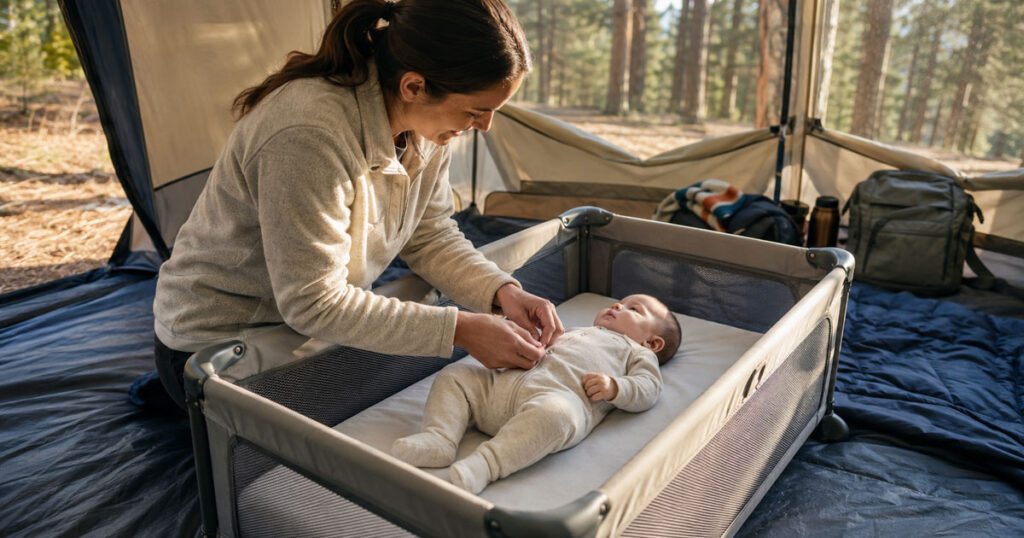
This is the category that matters most, and it’s the one first-time parents get wrong most often. A baby needs a flat, firm, empty sleep space, same as at home, just portable.
- Travel bassinet or mesh travel bed (pops up in seconds, keeps sun and bugs off during naps)
- Pack ‘n play or travel crib, if you prefer a crib-style setup
- Firm-fitting sheet sized for whatever sleep space you bring
- Wearable baby sleeping bag rated for the overnight temperature
- Foam pad or Thermarest underneath the sleep space for insulation from cold ground
- Portable white noise machine or a phone app downloaded for offline use
Here’s how the three most common sleep setups compare, since this is usually the first real purchase decision new camping parents face.
Diapering & Hygiene on the Go
Campsite diapering is basically home diapering with worse lighting and no trash pickup until you leave.
- Disposable diapers, packed for one extra day beyond your trip length
- Wipes (more than feels reasonable, you will use them for things beyond diapers)
- Portable changing pad
- Diaper rash cream
- Odor-proof bags for used diapers (you’re packing these out, not leaving them at the site)
- Hand sanitizer
- Small trash bag dedicated just to diaper waste, separate from your regular camp trash
Feeding Setup at the Campsite
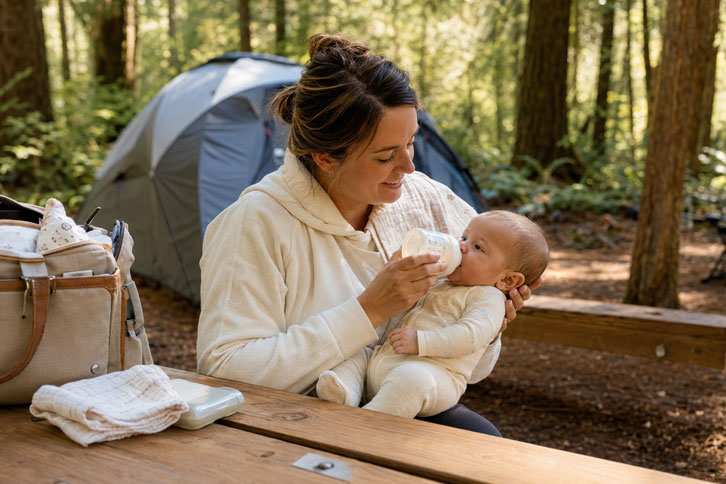
Whether you’re bottle-feeding, breastfeeding, or starting solids, plan for one extra layer of backup here. There’s no midnight grocery run at most campgrounds.
- Formula (packed extra) or breastfeeding cover and pump with a way to keep it charged
- Bottles and a way to clean them (a small basin and biodegradable soap works fine)
- Cooler space dedicated to formula, milk, or pumped breast milk, separate from food
- Boiled or bottled water for mixing formula, if you don’t trust the campground tap
- Travel high chair or booster seat with a tray
- Bibs (pack more than you think you need)
- First solid foods or purees, if your baby’s started eating, plus a spoon and small bowl
Clothing & Temperature Regulation
Babies lose and gain heat faster than adults, so layering matters more here than it does for the rest of the family.
- Onesies or footed pajamas, one extra set per day (blowouts happen more at campsites, not less)
- A warm layer for overnight, even in summer (temperatures drop more than you’d expect after dark)
- A hat, always, both for sun during the day and warmth at night
- Mitts or socks that stay on for cold mornings
- Sun hat with a brim for daytime
- Swimsuit and rash guard, if there’s water nearby
- Extra outfit stored in the car specifically for emergencies
Sun, Bug & Weather Protection
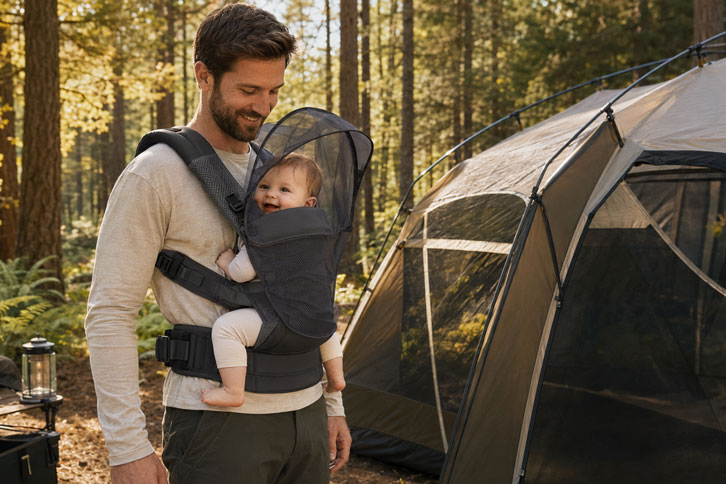
Babies under 6 months shouldn’t wear sunscreen on most of their skin, which makes shade and clothing your main defense instead.
- Baby-safe mineral sunscreen (for babies over 6 months; rely on shade and clothing before that)
- DEET-free bug repellent formulated for infants, or mesh netting over the stroller or sleep space
- Pop-up shade tent or canopy for daytime naps and play
- Light muslin blanket for extra shade over a carrier or stroller
Comfort, Soothing & the Stuff That Saves Your Sanity
A new environment throws off a baby’s routine, and a few familiar objects go a long way toward a smoother trip for everyone.
- Favorite lovey, stuffed animal, or blanket from home
- A shirt that smells like a parent, tucked near the sleep space (a genuinely effective, low-effort trick)
- Portable white noise machine or downloaded sound app
- A couple of familiar toys, not the whole toy bin
- Baby carrier for hands-free time around camp or on a short trail
Health & Safety Extras
Your regular family first aid kit needs a few baby-specific additions before this trip.
- Infant thermometer
- Infant pain/fever reducer, only after checking dosing with your pediatrician
- Saline drops and a nasal aspirator
- Any prescribed medications, with a printed dosing schedule (don’t rely on memory at 3am)
- Emergency contact info and your pediatrician’s number written down, not just saved on a phone that could die
- A general first aid kit stocked for the whole family, not just baby items
Common Mistakes First-Time Baby Campers Make
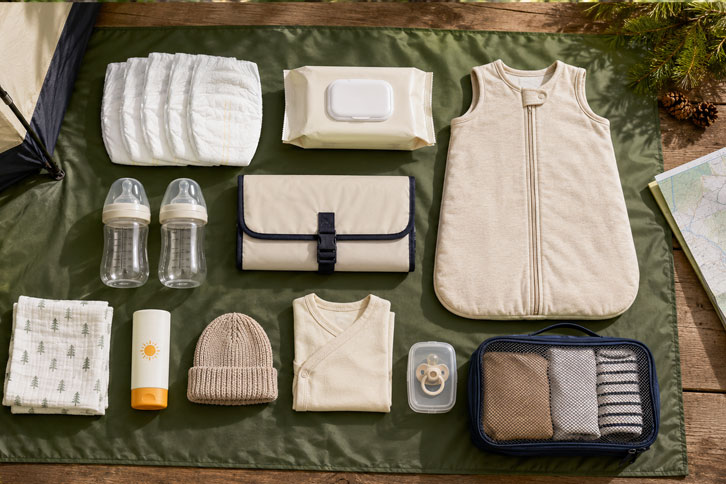
Camping too far from home for the first trip. Pick a campground within an hour of home for trip one. If something’s not working, whether it’s the weather, a fussy night, or a gear failure, you want the option to just leave.
Not test-running new gear beforehand. Set up the travel bassinet or crib in your living room first, and let your baby nap in it once before the trip. The campsite is the wrong place to discover a piece of gear doesn’t work the way you expected.
Underpacking diapers and formula. Pack for one extra day beyond your planned trip length. Weather delays, extra blowouts, and general chaos all eat into your supply faster than you’d plan for.
Skipping the overnight temperature check. Look up the actual overnight low for your specific campsite, not just the general daytime forecast. A 45°F night catches a lot of first-timers off guard in what looked like a warm-weather destination.
Treating baby’s sleep space as optional. A flat, firm, empty sleep space isn’t a nice-to-have, it’s the one piece of gear on this list that isn’t negotiable, and it’s the first thing to pack and test.
Next Steps
Once the baby-specific gear is sorted, you still need everything else a family camping trip requires: shelter, cooking, lighting, safety basics.
Frequently Asked Questions
How old should a baby be before camping?
There’s no official minimum age, but most pediatricians and experienced camping parents suggest waiting until at least 2-3 months, once your baby has better temperature regulation and you’ve settled into a feeding routine. Camping close to home for the first trip matters more than the exact age.
Can a baby sleep in a sleeping bag while camping?
No, not a regular sleeping bag. Babies should sleep in a wearable sleeping bag sized for the temperature, inside a flat, firm sleep space like a travel bassinet or crib, following the same safe sleep guidelines you’d use at home.
How many diapers should I pack for a camping trip?
Pack for your baby’s normal daily usage plus one extra full day beyond your trip length. A newborn using 8-10 diapers a day on a 3-day trip means packing closer to 40-45 diapers, not 24-30.
Is it safe to camp with a baby in bear country?
Yes, with the same food and scent-storage precautions that apply to the rest of your family, plus extra attention to formula, breast milk, and any baby food, which all need to be stored the same way as other food, away from the sleeping area.
What temperature is too cold for camping with a baby?
Most experienced camping parents avoid overnight lows below freezing for infants under a year, since a baby’s ability to regulate body temperature is still developing. Above that, a properly rated wearable sleeping bag and a warm sleep space handle most conditions fine.
Do I need a special tent for camping with a baby?
No special tent is required, but extra floor space helps, since you’ll have a travel bassinet or crib taking up room your tent budget didn’t originally account for. Check that your tent has enough clearance for whatever sleep setup you choose.