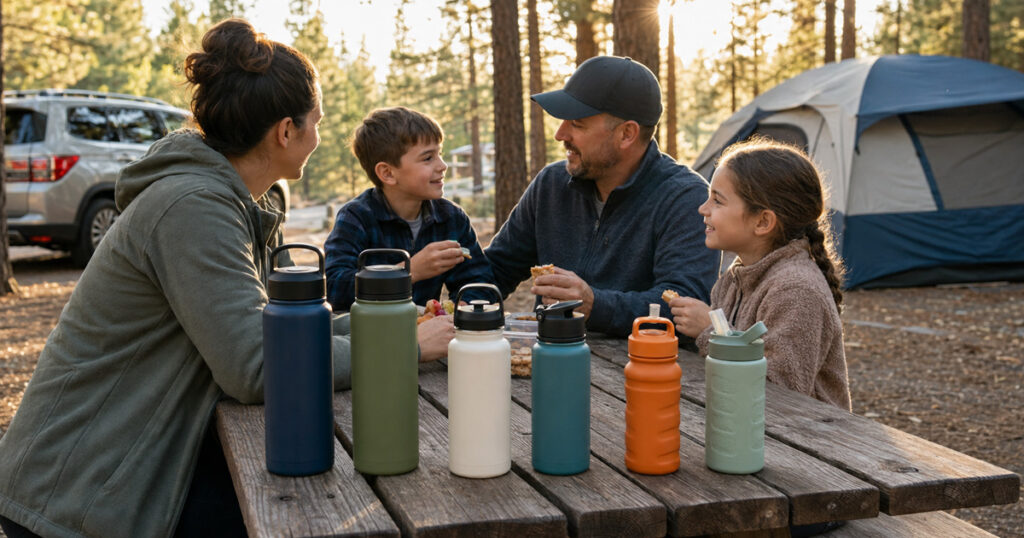
Somewhere between the third “I’m thirsty” of the hike and the water bottle rolling under the picnic table for the fourth time, you start to understand why this gear matters more than it seems like it should. A good water bottle isn’t glamorous. But the wrong one means warm water, sticky spills in the cooler, and a kid who won’t drink enough on a hot afternoon.
We’ve dragged a dozen bottles through campsites, trailheads, and the bottom of a minivan for a full season to figure out which ones actually hold up. Here are our picks for the whole family, adults and kids included.
Quick Top 3:
- Best Overall: Owala FreeSip 24oz, the switch-top design keeps kids and adults actually drinking
- Best Budget: Nalgene Sustain Wide-Mouth 32oz, nearly indestructible, doubles as a camp cooking scoop
- Best for Kids: CamelBak Eddy+ Kids 14oz, bite-valve straw toddlers and preschoolers can’t screw up
Need the rest of your hydration setup sorted too? Our guide to the best portable water filters for camping covers what to do once these bottles run dry at the campsite.
Comparison Table: Best Camping Water Bottles at a Glance
1. Owala FreeSip 24oz – Best Overall for Families
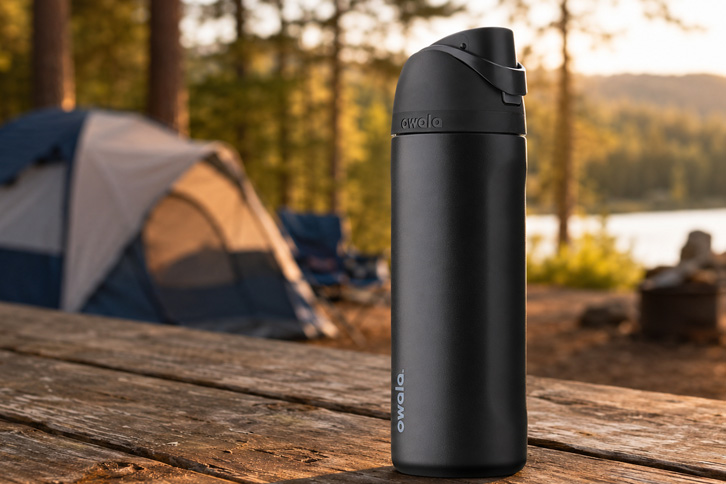
The Owala FreeSip is the bottle we keep buying more of, because someone in the family always “borrows” the last one. It has a flip-up straw on one side and a push-button spout on the other, so kids who want to gulp and adults who want to sip can both get what they need from the same bottle design. That sounds like a small thing until you’ve watched a 6-year-old actually finish their water for once instead of leaving it capped in the cupholder.
It’s double-wall insulated stainless steel, so trail water stays cool through a whole afternoon hike. The wide mouth takes ice cubes easily, and the silicone handle clips onto a backpack strap without extra gear. At $29.99, it sits right in the middle of the pack price-wise, which is fair for how often it actually gets used.
Best for: Families who want one bottle style everyone can use, especially if your kids are old enough to manage a flip-straw on their own (roughly age 5+). Skip it if: you need a bottle that survives being run over by the car, go with the Nalgene below instead.
2. Hydro Flask Wide Mouth 32oz – Best Insulated for Hot Days
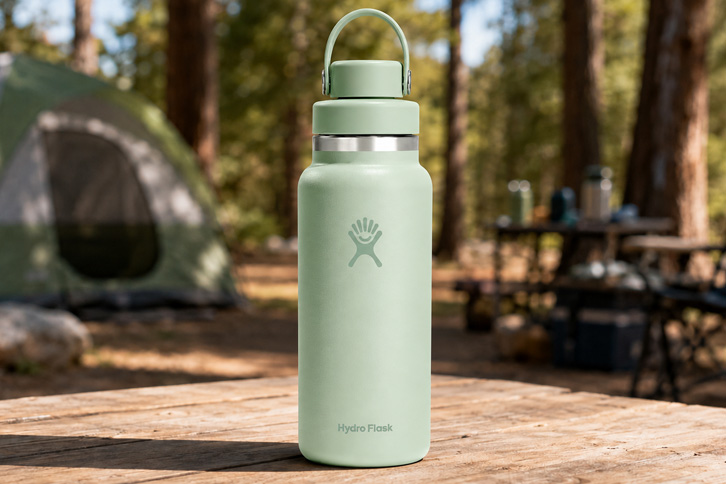
If your family camps in July and August, insulation stops being a luxury and starts being the whole point. The Hydro Flask Wide Mouth keeps water cold for close to 24 hours, even when the bottle’s been baking in a sunny tent vestibule all afternoon. We’ve tested it against a plain plastic bottle side by side on a 95°F trip, and the difference by 2pm was not subtle, one was still cold, one was basically tea.
The stainless steel body dents rather than cracks, which matters when it inevitably gets dropped on a rock. At $44.95 it’s the priciest bottle on this list, and it’s the heaviest too, so it’s not the pick for a kid’s daypack. It’s a parent bottle through and through.
If summer heat is your main planning concern, our summer camping essentials guide covers the rest of what actually helps a family beat the heat at the campsite.
Best for: Parents camping somewhere hot who want reliably cold water without buying ice packs. Skip it if: you’re outfitting kids, it’s heavy and pricier than the kid-specific picks below.
3. Nalgene Sustain Wide-Mouth 32oz – Best Budget Pick
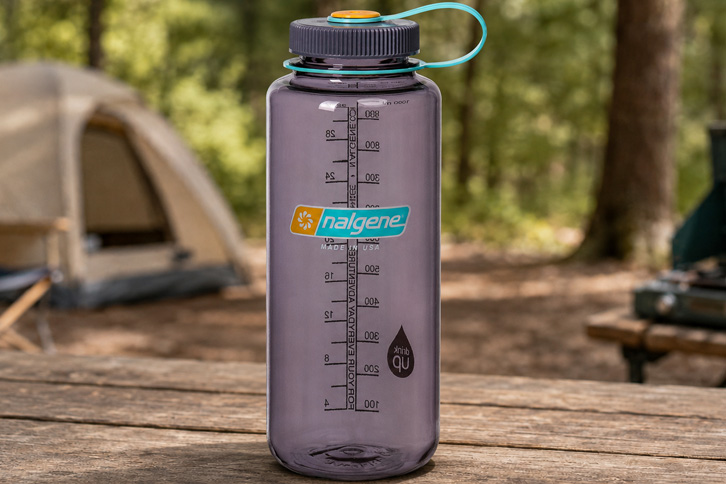
This is the bottle that’s been in camping gear bins for two decades for a reason. It’s plastic, so it’s light, cheap, and doesn’t sweat all over your car seat on a hot drive. It’s also nearly impossible to break — the “Sustain” version is made from 50% recycled material and still passes the same drop tests Nalgene’s been running since forever.
At under $17, it’s the easiest bottle to buy three or four of without flinching, which matters when you’ve got multiple kids who all lose things. The measurement markings on the side double as a handy scoop for camp cooking recipes, which is a small bonus nobody mentions until they’re standing at the stove needing exactly 2 cups of water.
Best for: Budget-conscious families, or anyone who needs several bottles at once without a big spend. Skip it if: you’re camping somewhere hot and want water to stay cold, go insulated instead.
4. Stanley Quencher H2.0 30oz – Best for Car Camping
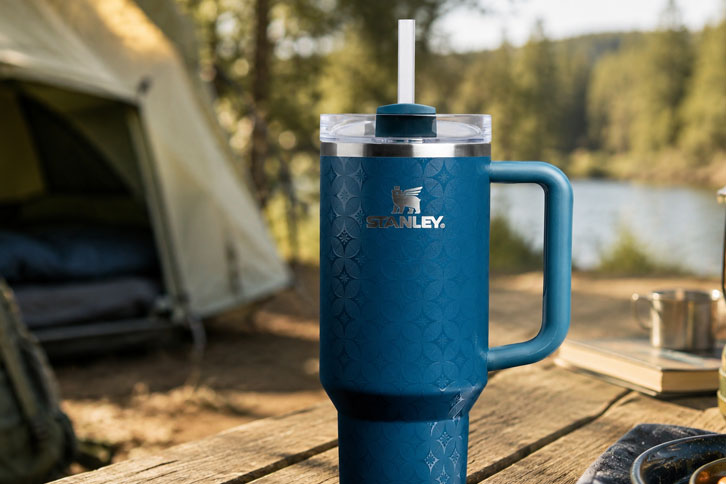
The Quencher blew up on social media as a coffee-shop accessory, but it earns its spot here for a much less glamorous reason: it fits in a standard cupholder, and that matters more than you’d think when you’re organizing a packed car for a camping trip. The tapered base slots into cupholders in the front seat, cooler side pockets, and camp chair cupholder arms without wobbling.
The straw lid encourages more sipping over a long drive or a lazy afternoon at the site, and the handle makes it easy to grab one-handed while you’re wrangling a kid with the other. At $40, it’s not cheap, but the double-wall vacuum insulation genuinely keeps drinks cold for most of a camping day.
Best for: Car camping families who live out of the vehicle and want a bottle that rides in the cupholder all trip. Skip it if: you’re hiking any real distance, it’s bulky for a daypack.
5. CamelBak Eddy+ Kids 14oz – Best for Toddlers & Preschoolers
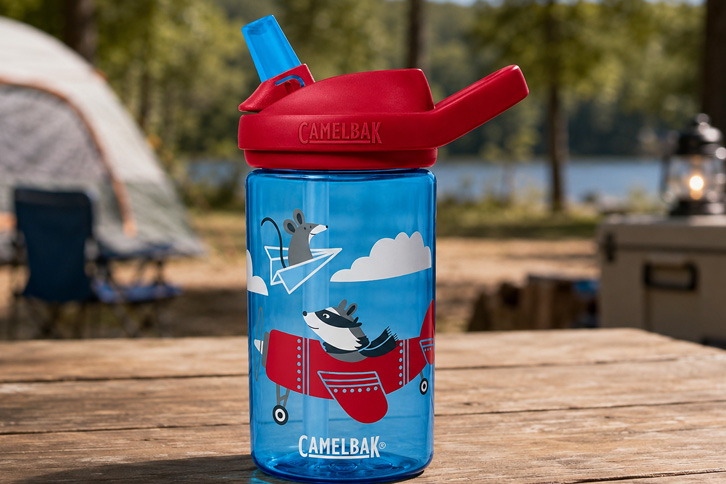
This is the bottle we hand to the youngest camper in the group. The bite-valve straw means a 3-year-old can drink without tilting their head back or losing half the water down their front, and it’s genuinely leak-proof when the valve is pushed closed. It clips onto a backpack strap or belt loop with the included carabiner, so it survives being “helped” onto the ground by small hands.
At $14.99 it’s cheap enough to replace without guilt when it inevitably goes through a dishwasher one too many times. It’s dishwasher-safe on the top rack, which matters more than any spec sheet after a week of dirty campsite hands.
Best for: Kids ages 2-5 who aren’t coordinated enough yet for a spout or open-mouth lid. Skip it if: your kid is older and wants a “big kid” bottle, try the YETI Rambler Jr. below.
6. YETI Rambler Jr. 12oz – Best for Older Kids
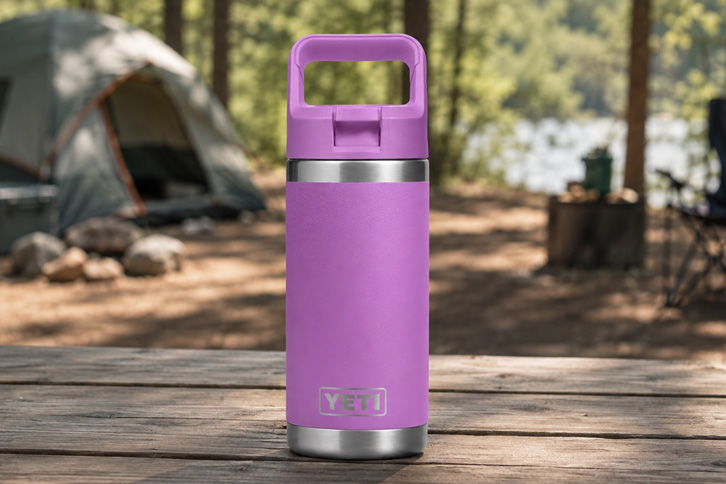
Once your kid hits 6 or 7 and starts wanting gear that looks like the “grown-up” version, the YETI Rambler Jr. is the answer. It’s the same stainless steel insulation tech as the adult Ramblers, scaled down to a size a kid can actually lift and carry, with a shatterproof cap they can operate without help.
We’ve watched this bottle survive being dropped off a picnic table, kicked across a campsite, and left out in the rain overnight, with zero damage beyond a scuff. It keeps drinks cold for hours, which is the whole reason kids will actually finish it instead of leaving it half-full and warm by the tent.
Best for: Kids ages 6-12 who want something that feels like their own real gear. Skip it if: budget is tight, the ThermoFlask below gets you most of the insulation for less.
7. ThermoFlask Kids Straw 12oz – Best Value Insulated Kids Bottle
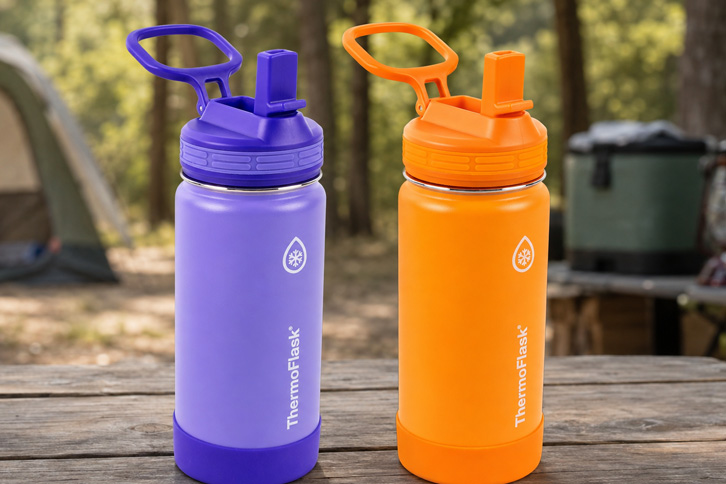
If the YETI price tag makes you wince for something a kid will lose the cap to within a month, ThermoFlask gets you most of the same insulated performance for about $20. It’s double-wall stainless steel, keeps drinks cold for roughly 12 hours, and the straw lid has fewer parts than most kids’ bottles, which means fewer pieces to lose or mildew.
It won’t survive quite as many drops as the YETI, but for the price, it’s an easy bottle to buy two of, one for camp, one that inevitably stays lost in a backpack until laundry day.
Best for: Budget-minded families who still want cold water without the premium price tag. Skip it if: your kid is rough on gear, spring for the YETI’s tougher build instead.
8. CamelBak Chute Mag 32oz – Best Cap System
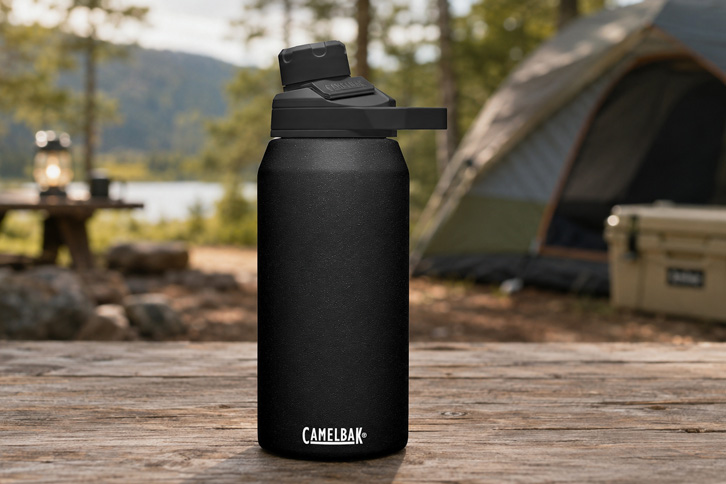
The single biggest annoyance with most water bottles isn’t the bottle, it’s the cap disappearing into a tent, a cooler, or the general chaos of a campsite. CamelBak solved this with a magnetic cap that clicks and stows against the handle while you drink, so it physically cannot roll away.
It’s a straightforward, no-frills bottle otherwise: wide mouth, easy to clean, holds a full 32oz for a long hike. At $27.99, the cap system alone justifies the price if you’ve ever spent ten minutes searching camp for a missing bottle lid (we all have).
Best for: Anyone tired of losing bottle caps at the campsite, parents especially. Skip it if: you need insulation, since this version is uninsulated plastic.
Buying Guide: What to Look for in a Family Camping Water Bottle
Insulated vs. plain. Insulated stainless steel bottles keep water cold for hours, which genuinely gets kids to drink more on hot days. Plain plastic bottles are lighter and cheaper, and honestly fine for cooler weather or short trips. If you’re camping somewhere over 80°F, insulation stops being optional.
Lid type matters more than the bottle itself. Screw-top lids seal best but are slow for little hands. Straw lids get kids drinking more but need more cleaning. Spout lids are a middle ground, though toddlers tend to spill from them until they get the hang of tilting correctly.
Size by age, not by how big the bottle looks in the store. A 12oz bottle is right for kids under 6. Kids 7-12 do well with 16-24oz. Teens and adults are fine with 24-32oz for a half-day hike, but pair it with a hydration pack for full-day trips.
Material. Stainless steel resists dents and doesn’t hold onto smells the way plastic can after a season of use. Plastic (BPA-free) is lighter, cheaper, and won’t crack your kid’s tooth if they bite down on it mid-hike. Both are reasonable choices; pick based on what your family actually needs.
Cleaning reality check. Straws and bite valves mold fast if they’re not rinsed daily. Look for bottles that come apart easily or say dishwasher-safe right on the box, especially for kid bottles that get less attention at the end of a long camping day.
Want the rest of your family’s hydration setup dialed in? Our guide to portable water filters covers what to pack if you’re camping somewhere without reliable drinking water, and our family camping checklist makes sure you don’t forget the bottles in the first place.
Final Verdict
Best Overall: The Owala FreeSip 24oz works for the whole family and gets even reluctant drinkers to actually finish their water.
Best Budget: The Nalgene Sustain Wide-Mouth 32oz is cheap enough to buy several, and it’ll outlast every other bottle on this list.
Best Premium: The Hydro Flask Wide Mouth 32oz is the one to reach for if you’re camping somewhere hot and want reliably cold water all day.
For the kids specifically, go with the CamelBak Eddy+ for toddlers and preschoolers, and step up to the YETI Rambler Jr. once they’re old enough to want gear that looks like yours.
Just getting your family’s camping gear together for the first time? Start with our complete kids camping gear guide for everything else you’ll want to pack beyond hydration.
Frequently Asked Questions
How much water should a kid drink while camping or hiking?
A general rule is about half a liter (17oz) per hour of easy hiking for kids, more in hot weather. Encourage regular sips rather than waiting until they say they’re thirsty, since kids often don’t notice thirst until they’re already a bit dehydrated.
Is stainless steel or plastic better for a kid’s water bottle?
Both work well. Stainless steel keeps water cold longer and resists dents, while plastic is lighter and won’t damage teeth if a kid bites the spout. For toddlers who chew on everything, we lean toward plastic; for older kids who are rough on gear, stainless steel usually lasts longer.
Do insulated water bottles actually make a difference while camping?
Yes, especially in hot weather. In our side-by-side test, an insulated bottle stayed noticeably cold after several hours in a warm tent while a plain plastic bottle matched the outside air temperature within about an hour.
What size water bottle is best for a family camping trip?
For car camping, size doesn’t matter as much since you can refill easily, go with whatever your family will actually drink from. For hiking, aim for 12oz for kids under 6, 16-24oz for kids 7-12, and 24-32oz for teens and adults on a half-day trail.
Can I put a water bottle in the dishwasher?
Check the specific bottle first. Most plastic and stainless steel bodies are dishwasher-safe on the top rack, but straw components and silicone seals sometimes need hand washing to avoid warping or trapping bacteria in tight spaces.
Should I bring a water filter instead of just bottles?
If you’re camping somewhere without a reliable potable water source, yes. Bottles hold water, but a filter lets you refill from streams or lake water safely. See our water filter guide for picks that pair well with these bottles.