Fall camping is genuinely one of the best-kept secrets in the outdoor world. Crowds disappear, temperatures cool down to that perfect campfire sweet spot, and the forest turns into a color show your kids won’t stop talking about. We’ve done it in 40°F and we’ve done it in 65°F, and honestly? Both beat any sweaty August weekend by a mile.
That said, camping in autumn with children is a different ballgame than summer. The cold sneaks up on you, especially after sunset. What starts as a pleasant 60°F afternoon can drop into the upper 30s by 3am, and if your kid’s sleeping bag isn’t rated for it, you’re in for a miserable night.
These 15 tips are built specifically for families, not solo backpackers. If you’re planning your first fall trip with kids (or your fifth, and things keep going sideways), this is for you.
Why Fall Is the Best Time to Camp with Your Family
Summer camping has its charm, but it comes with sweaty tents, bugs that won’t quit, and campgrounds so packed you can hear your neighbor’s podcast from 30 feet away.
Fall solves most of that. Mosquitoes are done for the season. Campsite reservations open up (or become walk-in friendly). The trails are quieter and the views, especially anywhere with deciduous trees, are legitimately stunning. For families with school-age kids, a long fall weekend is often easier to plan than a two-week July trip.
The catch: you need more gear, slightly more planning, and a solid strategy for keeping the kids warm at night. That’s exactly what this guide covers.
1. Check the Overnight Low, Not Just the High
This is the mistake almost every first-time fall camper makes. You look at the forecast, see “high of 68°F” and pack accordingly. But at 2am, it’s 38°F and your 7-year-old is crawling into your sleeping bag.
The overnight low is what matters most for gear decisions. If you’re camping somewhere with a forecasted overnight low of 40°F, plan for 35°F. Weather apps are helpful but often underestimate cold in valleys, near water, or in clearing skies after rain.
As a rule of thumb: subtract 10°F from the expected overnight low and make sure your sleeping bags are rated for that temperature.
2. Upgrade Your Kids’ Sleeping Bags Before You Go
Here’s the honest truth: that $25 sleeping bag rated to 45°F is fine for summer. It is not fine for a 38°F October night.
Kids lose body heat faster than adults and they can’t always articulate that they’re cold, they just wake up crying or don’t sleep at all. Do yourself (and them) a favor and match the bag to the expected temperature.
For most families doing fall car camping:
- Ages 2–5: A bag rated to 20–30°F gives you margin. Layer them in warm PJs underneath.
- Ages 6–12: A 20°F rated bag or a 32°F bag with a fleece liner works great.
- Adults: A 20°F rated bag for most fall camping in the continental US.
3. Add a Sleeping Pad – It Matters More Than the Bag
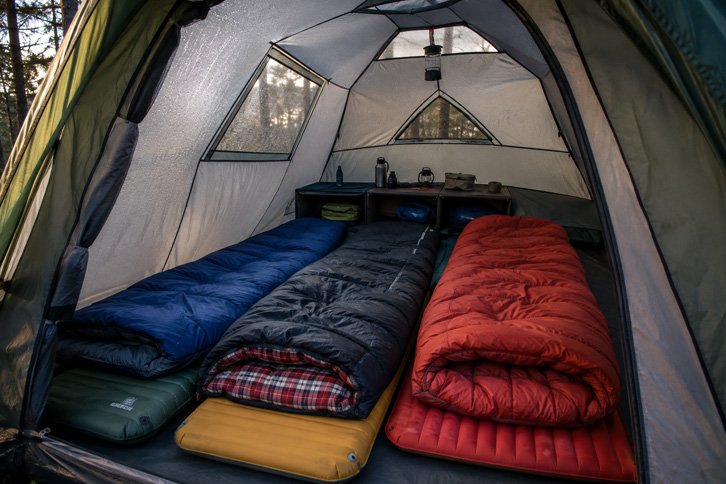
Most families obsess over the sleeping bag and forget the pad entirely. In fall, this is backwards thinking.
Up to 30% of your body heat at night escapes downward, into the ground. A summer-rated sleeping pad with an R-value of 1 or 2 won’t cut it once the ground starts cooling in September. For fall camping, aim for an R-value of at least 3–4 for adults, and use a self-inflating pad or closed-cell foam pad under your kids, they weigh less and press into the cold ground more.
An air mattress feels luxurious but has a low R-value unless it’s specifically insulated. If you’re bringing an air mattress, put a foam pad or a folded blanket underneath it.
4. Layer the Kids Like an Onion (and Do It Early)
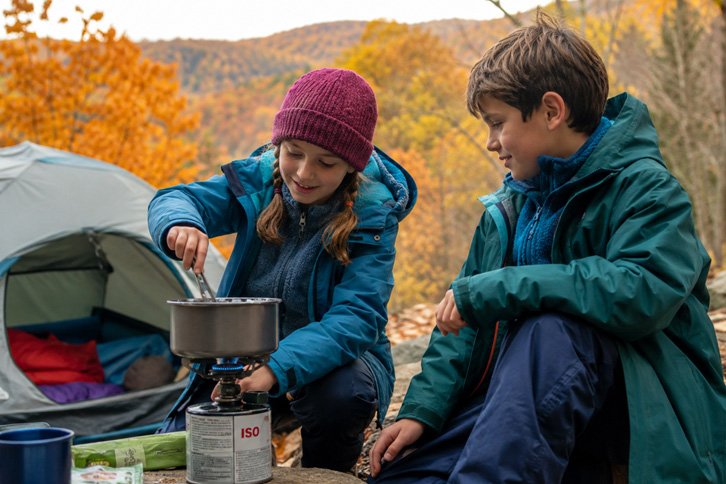
Layering for adults is easy, you know when you’re cold. Kids don’t. They’ll be running around sweaty at 4pm and then shivering the second they stop moving. Build their layering habit before the trip.
The system is simple:
Base layer: moisture-wicking, snug fit. Merino wool or synthetic (not cotton, cotton kills warmth when wet). A long-sleeve shirt and leggings underneath everything else.
Mid layer: fleece jacket or insulated hoodie. This is the main warmth layer. Fleece works even when slightly damp, which is why it beats down for kids who are always touching wet things.
Outer layer: a waterproof shell or rain jacket. Even if rain isn’t in the forecast, fall mornings are dewy and windy. A shell keeps both of those at bay.
For feet: wool socks are non-negotiable. One dry pair for daytime hiking, one dedicated “camp socks” they only wear inside the tent.
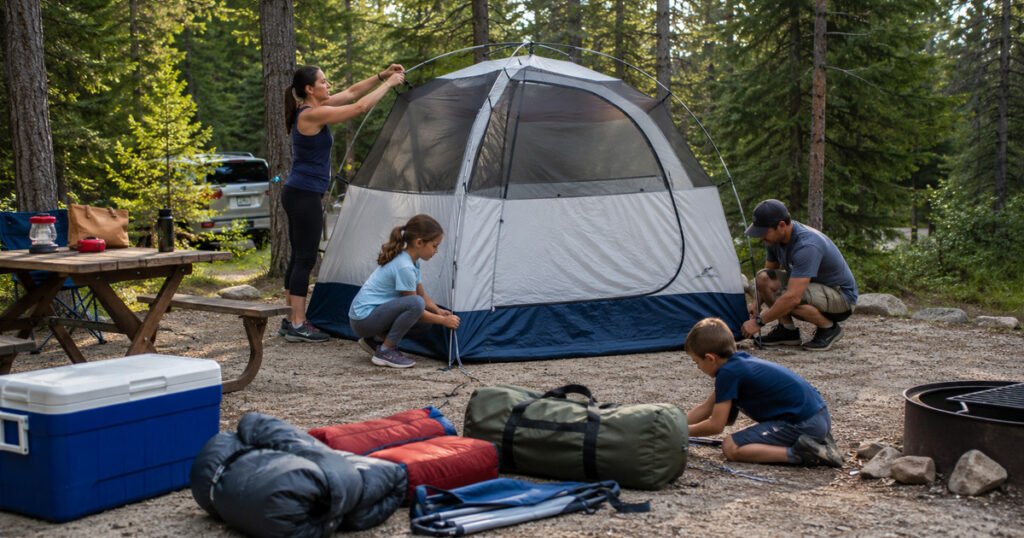
5. Bring a Tent Rated for Three-Season Use (At Minimum)
Your summer mesh tent is not going to cut it once October hits. Three-season tents have better rainflies, sturdier poles, and less ventilation mesh, all of which help trap warmth and handle fall wind and rain.
For most fall family camping, you don’t need a full four-season tent. A solid three-season tent with a full-coverage rainfly will handle temperatures down to 25–30°F without issue. What you want to avoid is a single-wall tent or one with a rainfly that only covers half the tent body.
If you’re camping somewhere that expects early snow or sub-freezing temps, look for tents with stronger poles and lower vestibules that resist snow load.
6. Choose Your Campsite Strategically
Campsite selection matters way more in fall than in summer. A few things to look for:
Tree cover: a site with mature evergreens overhead blocks wind, holds slightly more warmth, and keeps morning dew off your tent. Avoid camping directly under dead trees with heavy branches (widow makers), especially in windy fall conditions.
Stay off the valley floor: cold air is heavier than warm air and sinks overnight. A campsite 20–30 feet up a slope is often 5°F warmer than the valley floor.
Face east if possible: morning sun hits your tent earlier, which dries condensation faster and takes the edge off the cold morning. Kids wake up earlier in fall; might as well have some warmth for it.
Stay away from bodies of water: riverbanks and lakesides are the coldest spots in any fall campground.
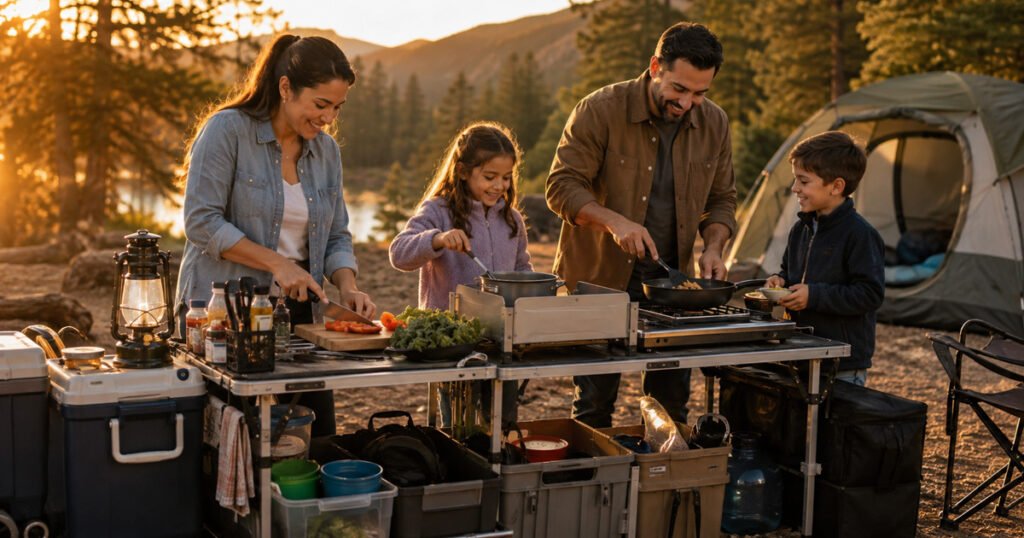
7. Pack Fall-Specific Meals That Warm You Up
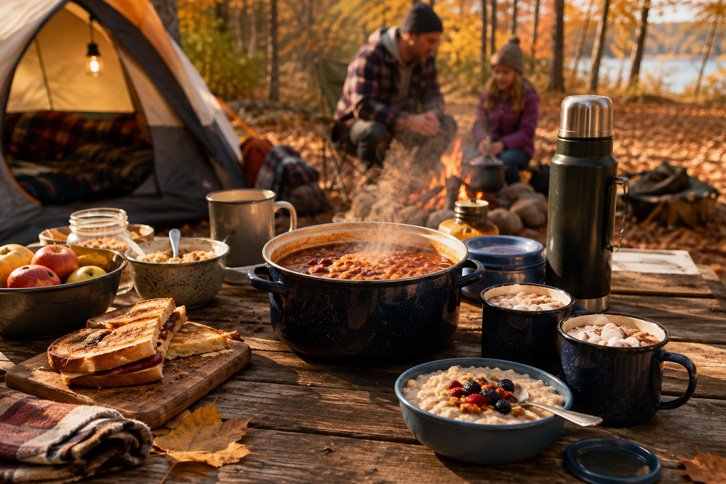
Fall camping food strategy is different from summer. You’re burning more calories staying warm, and hot meals matter a lot more when it’s 45°F at dinnertime.
Build your menu around things that are warm, filling, and easy to make:
- Breakfast: Oatmeal with brown sugar and dried fruit, or scrambled eggs with cheese cooked in a cast iron skillet. Both are fast and hot.
- Lunch: Soup from a thermos (prepare at home and keep hot), PB&J wraps, trail mix. Easy, no cooking required.
- Dinner: Chili, pasta with meat sauce, foil packet meals over the campfire. Anything with carbs and protein keeps kids fueled through the cold night.
Pro move: bring a thermos for hot cocoa. It stays hot for hours and kids treat it like gold after a cold afternoon hike.
8. Master the Pre-Bed Warmth Routine
Bedtime logistics are the difference between a great fall camping trip and one you never repeat. Cold kids take forever to fall asleep, wake up repeatedly, and often end up in your sleeping bag (which means neither of you sleeps well).
Build a 30-minute pre-bed routine:
- Hot drink (cocoa, warm apple cider, herbal tea for older kids)
- Change into dry base layers: even if their day clothes feel fine, fresh dry layers make a huge difference
- Warm hat and socks: on before they get into the bag
- Pre-warm the sleeping bag: stuff a hot water bottle (NOT boiling) wrapped in a fleece into the bag 10 minutes before they climb in
- Add a familiar blanket or stuffed animal: comfort objects help kids relax in a new environment
For toddlers under 3: extra caution with sleeping bag fit. Make sure there’s no excess fabric that can cover their face. A wearable blanket sleep sack over a footed onesie works better than a mummy bag for young toddlers.
9. Plan Fall-Specific Activities for the Kids
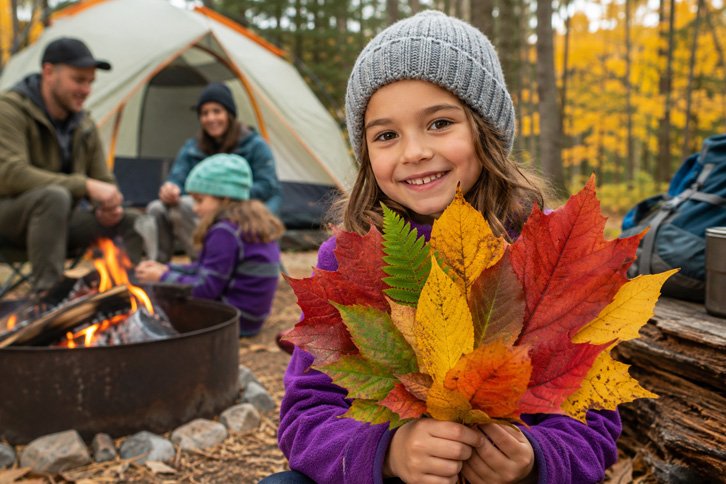
Fall camping activities beat summer ones for one reason: the whole forest becomes a hands-on classroom. Kids who are bored at home become completely engaged outside in October.
Leaf identification hunt: Download a free leaf identification app before you leave (iNaturalist and PictureThis work offline). Challenge kids to identify 10 different tree species by their leaves. Make it a little competition.
Nature scavenger hunt: acorns, pinecones, seed pods, animal tracks, mushrooms (look but don’t touch), lichen, moss, spider webs. Print a list before you leave.
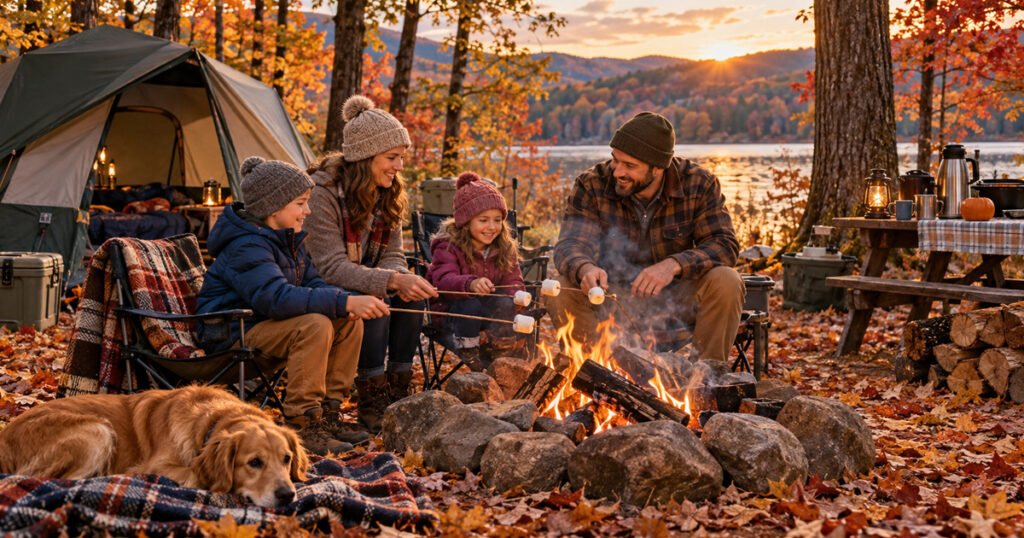
Campfire cooking: fall is the perfect season for foil packet meals and s’mores. Let kids build their own foil packets (potatoes, carrots, sausage, olive oil). The mess and pride when it actually tastes good is priceless.
Star gazing: fall nights are often clearer than summer (lower humidity) and it gets dark earlier, which is great with kids. Download a star map app (SkySafari is excellent) and find Orion or Cassiopeia together.
Sunrise watching: sunrise happens later in fall. A 7am sunrise is totally doable for kids. Walking to a clearing in sleeping bags and PJs with hot chocolate is one of those experiences kids remember for years.
10. Manage Condensation in Your Tent
Fall camping brings something summer campers rarely deal with: significant condensation inside the tent. When warm air from your family meets the cold tent walls, moisture forms. You wake up and the inside of the tent is damp, your gear feels slightly wet, and everything feels colder than it should.
The fix: ventilation. Even in cold weather, crack your tent vents slightly. It feels counterintuitive, but the small amount of warmth you lose is worth it, trapped humid air is colder than dry, slightly ventilated air.
Also: don’t cook inside the tent (adds significant humidity), shake out sleeping bags before you pack them (they absorb body moisture overnight), and hang a small microfiber towel near the door to wipe walls down in the morning.
11. Pack a Tarp and Know How to Use It
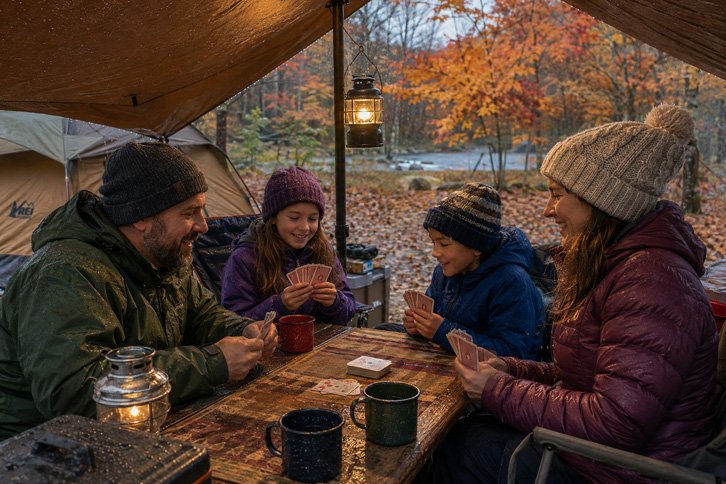
Fall rain is frequent, unpredictable, and almost never shows up exactly when the app said it would. A tarp rigged over your picnic table and cooking area is one of the smartest moves you can make for a fall trip.
Set it up when you arrive, before you need it. A 10×12 tarp with some paracord and a few trees is enough to give your family a covered outdoor space that makes a rainy afternoon manageable instead of miserable.
Kids who would be stuck in the tent during a drizzle can still play cards, have lunch, and roast marshmallows under a tarp.
12. Bring Hand Warmers – More Than You Think You Need
Hand warmers are cheap, weigh almost nothing, and are worth 10x their cost when it’s 38°F and your kid is complaining their fingers are frozen. Pack twice as many as you think you’ll need.
Uses beyond obvious warming: drop them in boots 10 minutes before your kids put them on, slip one into a sleeping bag pocket, use them to warm a cold cup of water before drinking. They last 8–10 hours per pouch.
The chemical kind (HeatMax, Little Hotties) are the most reliable for camping. Rechargeable electric hand warmers are great too, if you’re car camping with a battery pack, they heat faster and last longer per “use.”
13. Headlamps for Everyone – Including the Kids
It gets dark in fall. Really dark, really early. At 6pm it can feel like midnight, and you don’t want to be navigating a campground bathroom with one headlamp and two kids.
Every person in your family needs their own headlamp. Kids included. This is not negotiable. Clip a small headlamp to each kid’s daypack before you leave home, they feel responsible for it, and it means you’re not the family tripping over tent stakes at 7pm.
Get headlamps with red-light mode. Red light doesn’t destroy your night vision the way white light does, which matters when you’re trying to get kids back to sleep at 2am without turning the tent into a spotlight.
14. Tell Someone Where You’re Going and When You’ll Be Back
This one applies to all camping, but fall adds extra urgency. Trails get icy, weather changes faster, and campgrounds have fewer staff around than in summer. Before you leave, send a friend or family member a clear message: campground name, GPS coordinates, planned return date, what to do if they don’t hear from you by a specific time.
You’re probably going to be totally fine. But the couple of minutes it takes to do this is the simplest safety habit you can build into every trip.
15. Lower Your Expectations (In the Best Way)
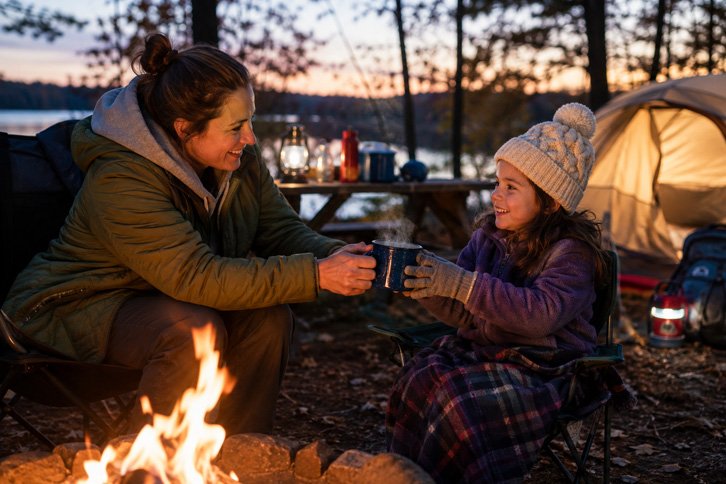
Here’s the real talk: your first fall camping trip with kids will not be picture-perfect. Someone will complain it’s too cold before dinner. Someone will refuse to sleep. The hot cocoa will spill. It’s going to happen.
Lower the bar on “success.” Success means everyone made it home with a memory. Success means your kid saw a thousand stars. Success means the cold-morning pancakes tasted better than any breakfast at home. You don’t need a flawless trip, you need a real one.
The families who keep camping together through fall and winter aren’t the ones with the most expensive gear. They’re the ones who decided the chaos was part of the fun.
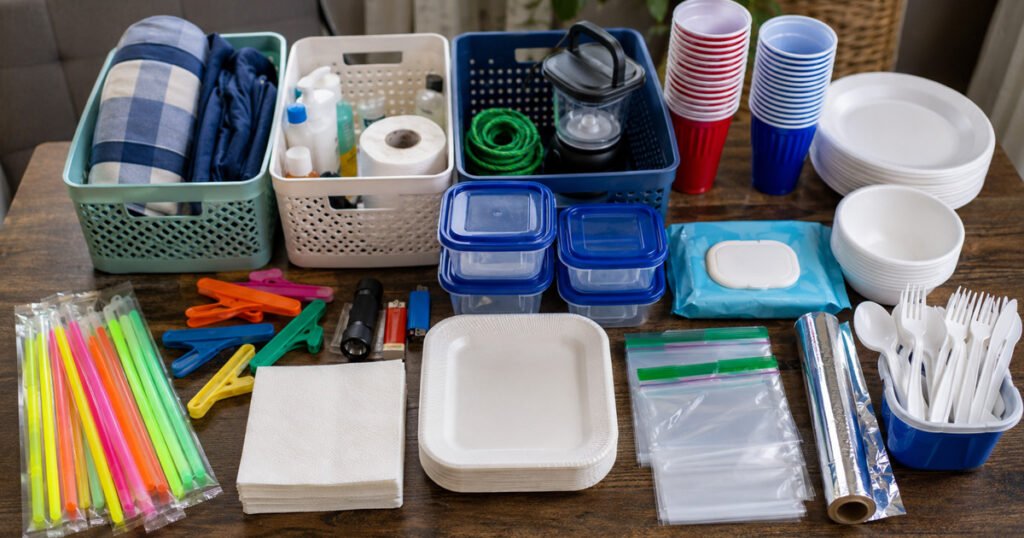
Fall Camping Gear: Quick Checklist
Here’s what changes from your summer kit for a fall trip:
Shelter & Sleep:
- Three-season tent with full rainfly
- Sleeping bags rated at least 15–20°F lower than expected overnight low
- Sleeping pads with R-value 3–4 (for everyone, including kids)
- Extra blanket or fleece liner
- Hot water bottle for pre-warming sleeping bags
Clothing:
- Merino wool or synthetic base layers (2 sets per person)
- Fleece mid-layer
- Waterproof shell jacket (adults and kids)
- Wool or synthetic hiking socks (2 pairs per person)
- Camp socks (warm, dry, never leave the tent)
- Beanie hat for every family member
- Gloves or mittens
- Rain pants
Camp Comfort:
- Hand warmers (20–30 for a family of 4, 3-day trip)
- Headlamp with red light mode for every person
- Thermos for hot drinks
- Tarp (10×12 minimum) + paracord
- Extra stakes and guylines for tent
Safety:
- First aid kit
- Emergency whistle per child
- Fire starting kit (waterproof matches + lighter + tinder)
- Paper map of campground and surrounding area
Common Mistakes First-Time Fall Campers Make
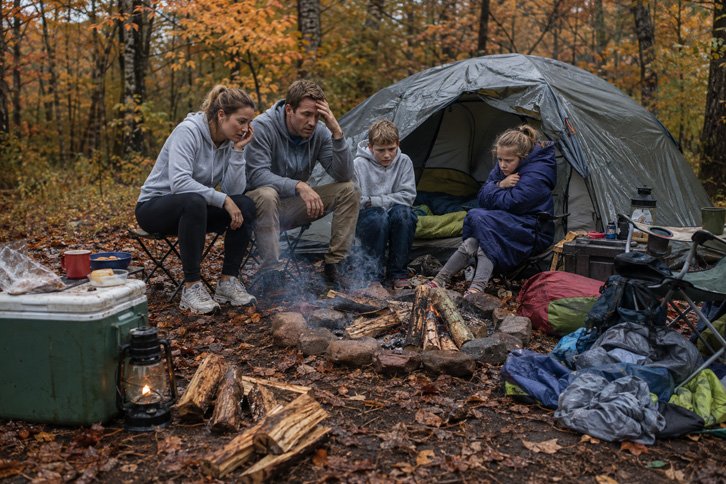
Packing for the high, not the low. The daytime temperature is irrelevant. Sleep gear is calibrated to the overnight low.
Bringing cotton layers. Cotton absorbs moisture and stops insulating. Once a cotton layer is damp (from sweat or dew), it actively makes you colder.
Forgetting to eat enough. Your body burns significantly more calories maintaining warmth in cold weather. Pack more food than you think you need, especially carbs and fats for evening snacks.
Skipping the sleeping pad upgrade. Cold from the ground is as dangerous as cold from the air. R-value matters.
Over-planning activities. Fall camping moves slowly and that’s the whole point. Don’t schedule every hour. Unstructured time around the campsite, collecting leaves, watching the fire, listening to the creek, is where the real memories happen.
Your Next Fall Adventure Starts Here
Fall camping with kids takes a little more prep than summer, but the payoff is completely worth it. Once you’ve huddled around a campfire in October with your family, watching the steam from your cocoa disappear into cold air while the leaves fall, you’ll understand why people do this every year.
If you’re planning your first family camping trip (any season), start here:
Frequently Asked Questions
Is fall camping safe with young children?
Yes, fall camping is safe with young children as long as you’re properly prepared. The main risks are exposure to cold (manageable with appropriate gear) and slipping on wet trails (manageable with good footwear and supervision). The key is matching your gear, sleeping bags, clothing layers, and shelter, to the actual overnight temperatures, not just the daytime high. Start with a campground that has facilities (flush toilets, running water) for your first fall trip with young kids, and build confidence before heading to remote sites.
What temperature is too cold to camp with kids?
Most families camp comfortably in overnight temperatures down to 30–35°F with the right gear. Below 25°F overnight starts to require more specialized cold-weather sleeping bags and extra insulation, and it becomes less appropriate for toddlers and very young children. The real limit isn’t an exact temperature, it’s whether your gear is properly rated for the conditions. If your sleeping bags are rated to 20°F and everyone has wool base layers, a 35°F night is entirely manageable.
What’s the best sleeping bag temperature rating for fall camping?
For fall camping in most of the US, aim for sleeping bags rated to 20–30°F for children and adults. This gives you a comfortable buffer even on unexpectedly cold nights. Kids’ bags should actually be rated slightly warmer (lower temperature number) than adults because children tend to sleep colder and lose heat faster. Avoid using summer bags (rated 45°F or higher) for fall camping, they’re simply not designed for the overnight lows common in September through November.
How do I keep my tent warm at night in fall?
The biggest factors: (1) use sleeping pads with R-value 3 or higher to block ground cold, (2) close the tent fully once everyone is inside and sleeping, but keep vents slightly cracked to reduce condensation, (3) wear a dry hat and warm socks to bed, (4) pre-warm sleeping bags with a hot water bottle before getting in. For extra warmth, you can park your vehicles windward of the tent to block wind, and choose a site with natural windbreaks like boulders or dense evergreens.
What fall camping food ideas work well with kids?
High-calorie, warm foods that kids actually like: oatmeal with brown sugar and dried cranberries for breakfast, hot soup from a thermos for lunch, and chili or pasta with meat sauce for dinner. Foil packet meals (potatoes, vegetables, and sausage wrapped in foil and cooked directly in coals) are a huge hit with kids because they can assemble their own. For snacks: trail mix, granola bars, apple slices with peanut butter, and of course s’mores. Bring twice as many snacks as you think you need, cold weather makes everyone hungrier than usual.
Do I need a special tent for fall camping?
You don’t need a four-season mountaineering tent for fall family camping. What you do need is a three-season tent with a full-coverage rainfly that reaches all the way to the ground (or close to it). Single-wall tents, screen tents, and pop-up canopy tents are not appropriate for fall camping. Look for tents specifically described as “three-season” with pole counts of four or more for better wind resistance. If you expect to camp in places with early snowfall, look for four-season or convertible tents.
What’s the best way to keep kids entertained on a cold fall camping day?
The fall landscape is genuinely the best entertainment. Leaf ID apps, nature scavenger hunts, pine cone collecting, and tracking animal prints in mud are all free and endlessly engaging for kids under 10. For older kids, night sky apps plus a clear fall sky will occupy an entire evening. On rainy days, card games and board games inside the tent, storytelling, and cooking projects (s’mores variations, foil packet meals) keep everyone busy. The trick is to pre-load activities onto a phone or tablet (offline access) before you lose cell signal.