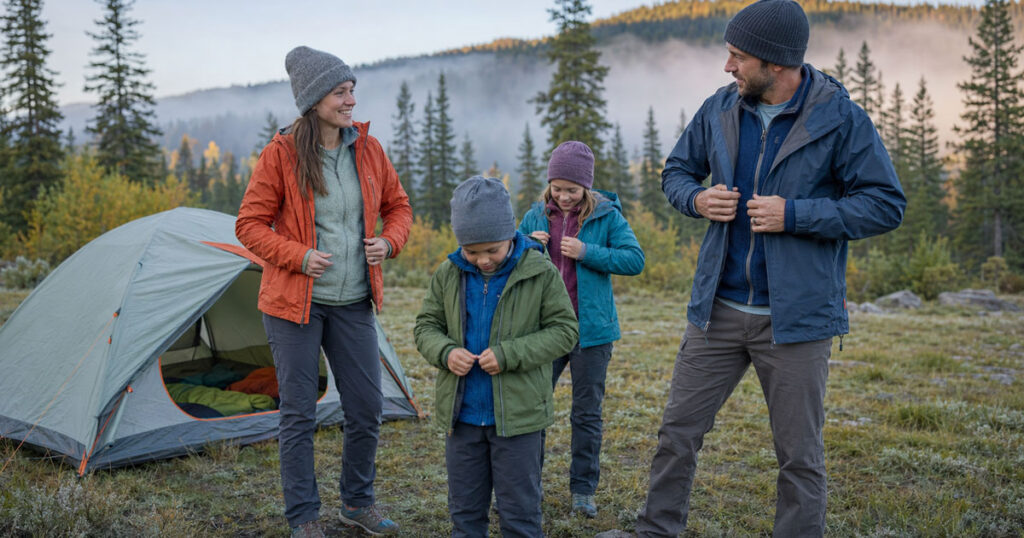
Short answer: dress in three layers (a moisture-wicking base, an insulating mid layer, and a waterproof outer shell), skip cotton entirely, and pack one extra outfit per day for adults and two extra for kids under 6. That covers you whether the afternoon hits 85°F or the night drops to 45°F, which, at most campsites, it will do in the same 24 hours.
We learned this one the hard way, standing in a wet cotton hoodie at 6am watching our kid shiver because we’d packed like it was a backyard barbecue instead of an actual outdoor overnight. Weather at a campsite swings harder than weather at home. Your clothing plan needs to swing with it.
The 3-Layer System (For Every Family Member)
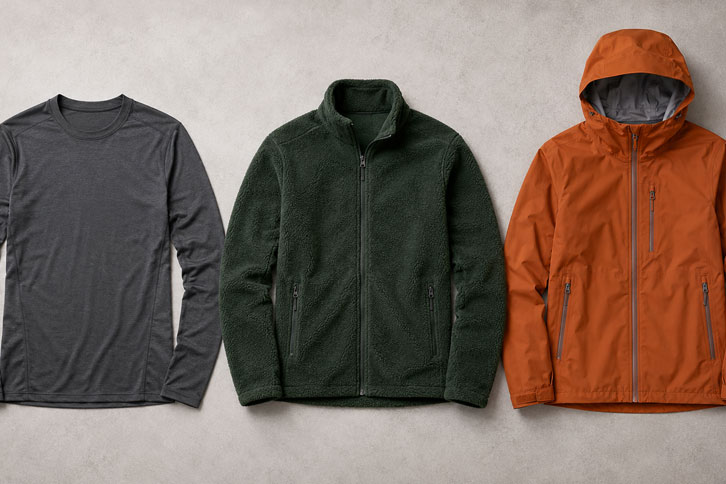
This is the same system serious hikers use, simplified for a family that’s mostly walking between the tent and the picnic table, not summiting anything.
The trick isn’t owning more clothes. It’s owning the right three pieces per person and adding or removing them as the day heats up or cools down, instead of packing one bulky “camping outfit” and sweating or freezing in it all weekend.
Why Everyone Says “Skip the Cotton” (And They’re Right)
This isn’t outdoor-gear-snob advice, it’s a real problem: a wet cotton hoodie at a 50°F campsite is genuinely uncomfortable, and on a kid it can mean a miserable, shivery night instead of a good one. A $12 synthetic long-sleeve solves this better than an expensive cotton hoodie ever will.
What to Wear by Scenario
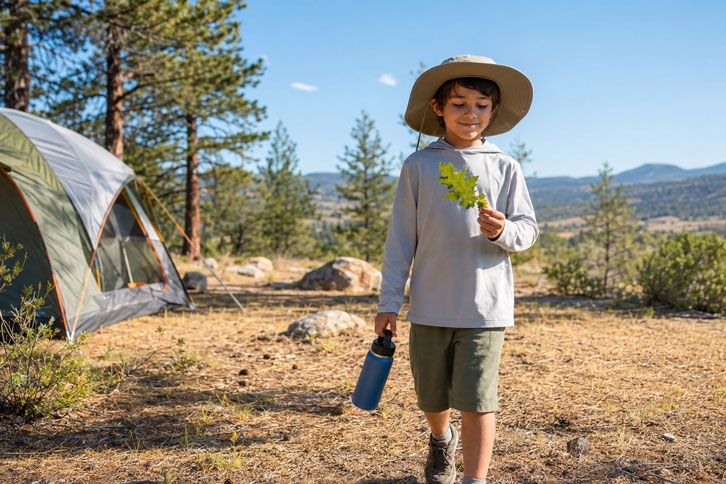
Hot, sunny days (75°F+). Lightweight, long-sleeve sun shirt (yes, even in heat, it beats sunscreen reapplication every 2 hours), breathable shorts or pants, a wide-brim hat, and closed-toe camp shoes for around the fire pit. Skip the mid layer entirely until evening.
Mild days (55-75°F). Base layer plus a light long-sleeve or light fleece you can tie around a waist when it warms up. This is the temperature range where “just bring layers you can add or remove” matters most, since it’s the most common daytime camping weather.
Cold nights (below 50°F). Full three-layer system, plus a warm hat (kids and adults both lose a lot of heat through the head) and wool socks. For sleeping, fleece footie pajamas work well for younger kids, with a beanie for babies specifically since they can’t regulate body heat as well.
Rain. A real rain jacket, not a fashion raincoat, plus rain pants or splash pants for kids who will inevitably sit in a puddle. Bring rain gear even if the forecast looks clear. Mountain and forest weather changes faster than any forecast app predicts.
How Much Clothing to Actually Pack
Here’s the number families almost always get wrong: too little for kids, too much for adults. Kids get muddy, wet, or sticky faster than any adult, and you will not be doing laundry at a campsite.
That’s on top of dedicated sleepwear, one warm layer per person regardless of forecast, and at least one full backup outfit per kid packed separately from the rest, specifically for “we’re at the lake and someone fell in” scenarios.
Footwear: The One Category Worth Spending On
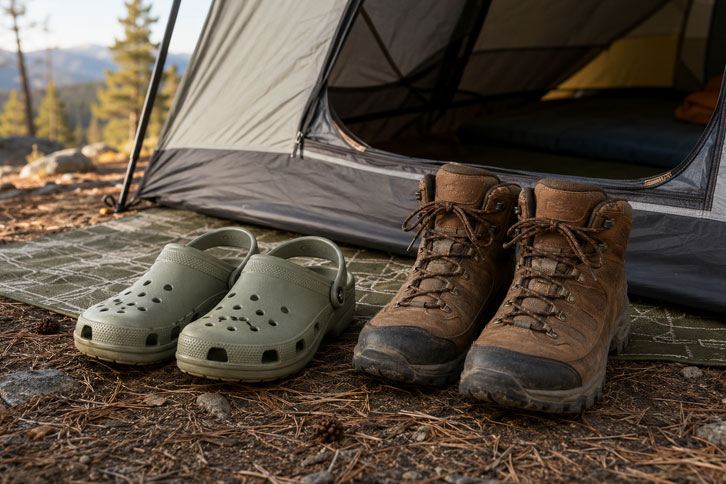
Closed-toe shoes for around the fire and general camp walking, plus a pair of easy slip-on shoes (Crocs or similar) for the 2am bathroom walk when nobody wants to lace up boots. If you’re hiking at all, real hiking shoes or boots with ankle support beat sneakers, especially for kids who trip more than adults do on uneven trail.
Best for: families doing any real trail walking, where ankle support and grip actually prevent falls. Skip the boots if: you’re strictly car camping at a developed site with paved or flat paths, where comfortable sneakers and camp sandals cover everything you need.
Common Mistakes Families Make With Camping Clothes
Packing like it’s the daytime forecast all weekend. The forecast high is not the temperature at 6am. Pack for the low, not just the high.
Bringing jeans as the main pants. Jeans take forever to dry and get heavy and cold when wet. Quick-dry hiking pants or joggers work far better for actual camp activity.
Only packing one jacket. One jacket has to be both an insulating layer and a rain shell, which means on a genuinely cold, wet night, nobody’s covered for both problems at once.
Underestimating how much kids will need to change. A muddy puddle, a spilled juice box, or a swim in the lake means a full outfit change, sometimes twice a day. Pack more spares for kids than seems reasonable.
Forgetting hats entirely. One hat that blocks sun during the day and one warm hat for cold nights. Both are cheap, small to pack, and easy to leave off the list until you’re standing in the sun with no shade.
Next Steps
- Check our full family camping checklist so clothing fits into your complete packing plan, not a separate afterthought.
- Camping somewhere genuinely cold? Our how to stay warm camping guide goes deeper on sleep systems and layering for cold nights specifically.
- Planning a winter trip? Our winter camping checklist covers gear beyond clothing for genuinely cold-weather trips.
- Heading out in peak summer? Our summer camping essentials guide covers sun and heat gear beyond just what to wear.
- Not sure what else belongs in the car? Our full family packing list covers everything outside of clothing.
Frequently Asked Questions
Is it okay to wear jeans camping?
It’s not ideal. Jeans take a long time to dry and get heavy and cold when wet, whether from rain, dew, or sweat. Quick-dry pants or joggers work much better for actual camp activity, though jeans are fine for sitting around a dry campfire on a mild evening.
How many outfits should I pack for a 3-day camping trip?
Plan on 4 outfits for adults (3 days plus one spare), and 5-6+ for kids, especially toddlers and babies, who get dirty or wet much faster. Add one dedicated “emergency” backup outfit per kid, packed separately.
What should kids wear to sleep while camping?
Fleece footie pajamas work well for younger kids on cool nights, with a beanie for babies. Older kids often do fine in sweats or a fleece layer. Add wool socks over pajamas if the overnight temperature drops below about 55°F.
Do I really need rain gear if the forecast looks clear?
Yes. Weather at campsites, especially near mountains, forests, and lakes, changes faster and less predictably than a phone forecast. A packed rain jacket that goes unused costs nothing. An unexpected downpour with no rain gear ruins a trip.
What’s the biggest clothing mistake first-time camping families make?
Packing for the daytime high and forgetting the overnight low. Most campsites see a 20-30 degree swing between afternoon and early morning, so a full layering system matters even on a trip with a warm forecast.
Is cotton really that bad for camping?
For anything active or anywhere near water or rain, yes. Cotton absorbs moisture, takes a long time to dry, and gets cold once wet. Synthetic blends or wool cost a little more but solve a problem cotton genuinely creates.