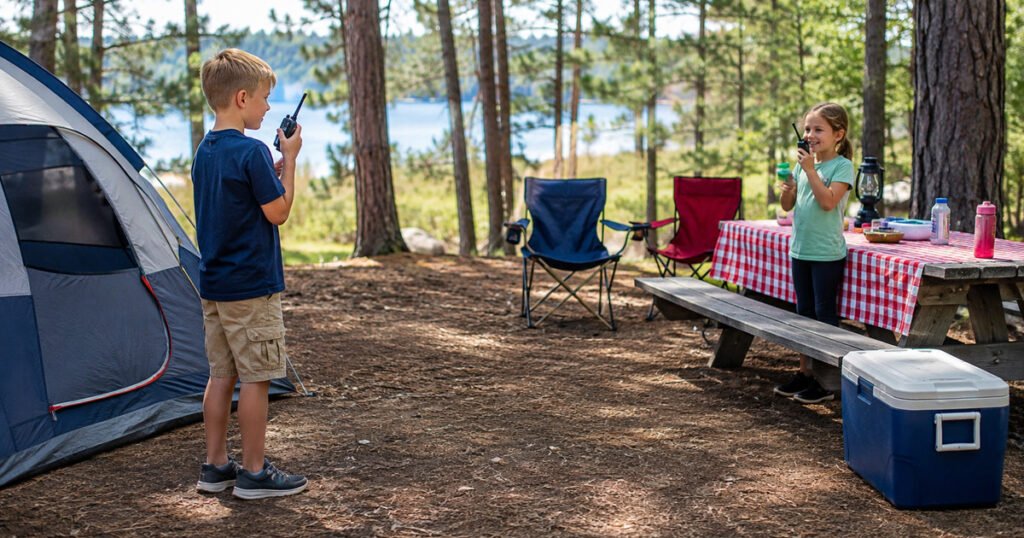
Short answer: the Wishouse Rechargeable 3-Pack is the best overall pick for most families, with a real mile of open-air range, rechargeable batteries, and enough units for three kids to stay in the loop, all for around $60. If you want something that survives a genuine drop onto packed dirt without flinching, the Retevis RT628 does the job for about $22. And if your kids are younger and just want to feel like secret agents at the campsite, the Selieve Walkie Talkies hit that sweet spot for around $36.
We handed our youngest a pair of walkie talkies on a trip to a crowded state park campground, and within an hour she’d found someone else’s set on the same channel and was mid-conversation with a total stranger’s kid two campsites over. Harmless, but it taught us fast that not all walkie talkies are built the same, and a few extra dollars buys real channel control. Here’s what’s actually worth packing.
Quick Top 3 Picks
- Best Overall: Wishouse Rechargeable 3-Pack, 1-mile open range, rechargeable, built-in flashlight, around $60
- Best Budget: Retevis RT628, solid, drop-resistant build with 22 channels, around $22
- Best for Younger Kids: Selieve Walkie Talkies, bright, lightweight, easy first pair, around $36
Comparison Table
1. Wishouse Rechargeable 3-Pack – Best Overall
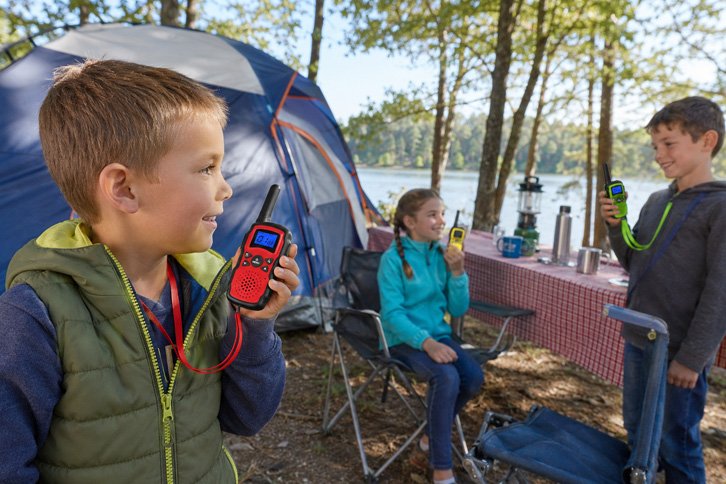
This is the set we’d buy first if you’re outfitting more than two kids. Three handhelds come in the box, along with rechargeable batteries and a shared charging cable, so you’re not stuck buying a fresh pack of AAAs every trip. The advertised 1-mile range is optimistic (it always is), but in open campground terrain we got a genuinely usable few hundred yards, which covers most sites easily.
The built-in flashlight was a bigger hit with our testers than we expected, turning bedtime walks to the bathroom into a whole adventure. The one recurring annoyance is the channel-change process, which takes a few tries to get right, and a phone-style ring feature that serves no real purpose beyond making noise.
Best for: Families with three or more kids who want the longest real-world range without buying multiple sets. Skip it if: you only need two units, the Motorola T114 is simpler and cheaper for a pair.
2. Motorola T114 Talkabout – Most Reliable
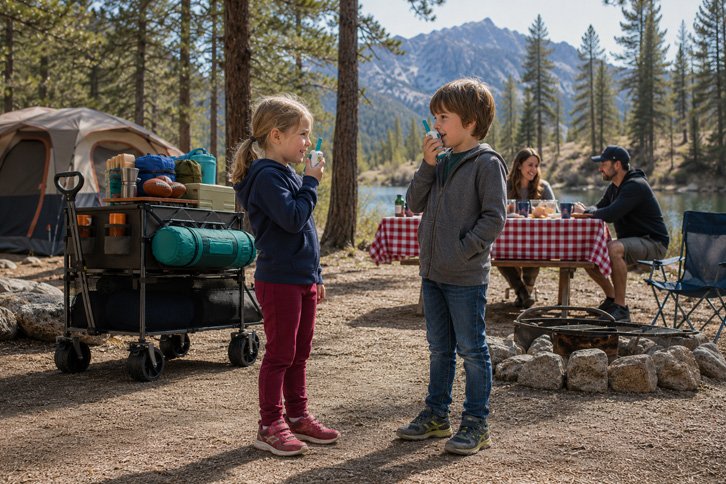
This is the set for parents who just want something that works without fifteen extra buttons to explain. Motorola’s name-brand reliability shows: the interface is stripped down to the essentials, and our testers had the least trouble accidentally switching channels compared to every other set on this list.
The trade-off is that it runs on AAA batteries, which drained faster than we expected during a full weekend of use. Keep a spare set in the glove box. It also skips the fun extras like a flashlight or ring tone, which some kids won’t miss and others definitely will.
Best for: Parents who value simplicity over bells and whistles, and don’t mind packing spare batteries. Skip it if: your kids want flashlights and sound effects, the Wishouse or Huaker sets deliver more fun factor.
3. Retevis RT628 – Best Budget
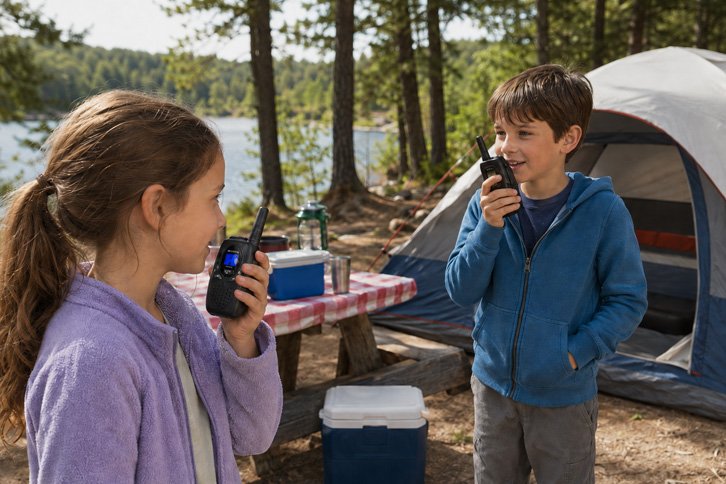
This is the pair we’d actually hand a kid who treats every piece of gear like a hammer. The rounded, solid-feeling shell holds up to real drops onto dirt and rock, and at around $22 for two, it’s cheap enough that losing one in the woods for an afternoon isn’t a crisis. The 22-channel range with VOX (voice-activated) mode means younger kids don’t even need to remember to press a button.
It skips the flashlight and looks more like a grown-up radio than a toy, which some kids love and others find boring. The same annoying phone-ring button shows up here too, and channel changing still takes some fumbling.
Best for: Budget-conscious families and kids who are rough on gear. Skip it if: your kid wants a flashlight and fun sound effects, go with the Wishouse or Huaker instead.
4. Huaker Kids Walkie Talkies 3-Pack – Best for Siblings
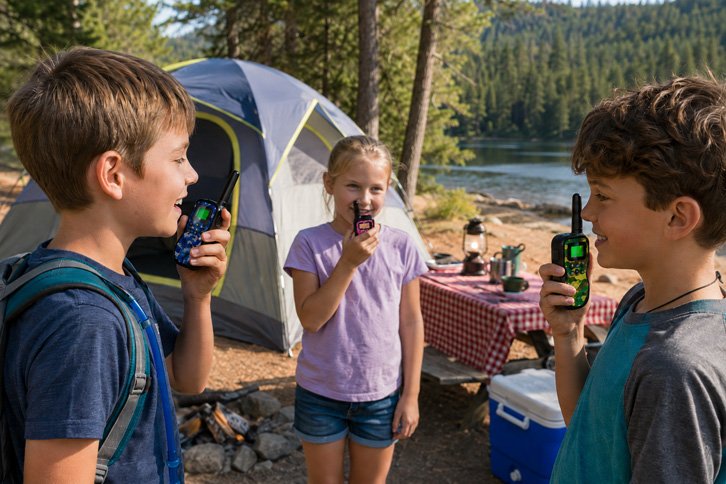
If you’ve got a trio of kids who’ll fight over anything with only two of them, this set solves the math problem outright. Each handset comes with a backlit display and a small flashlight, and the camo color scheme was a genuine hit with our younger testers. A jack for an optional headset adds a nice touch for older kids who want to feel official.
Build quality is solid but not bulletproof: one push-to-talk button popped off during testing (we snapped it back into place, and it kept working). The call-lock ring feature is the same minor annoyance found across most of this list.
Best for: Families with three or more kids who want matching sets without buying two separate 2-packs. Skip it if: durability is your top priority, the Retevis RT628 held up better in our testing.
5. Selieve Walkie Talkies – Best for Younger Kids
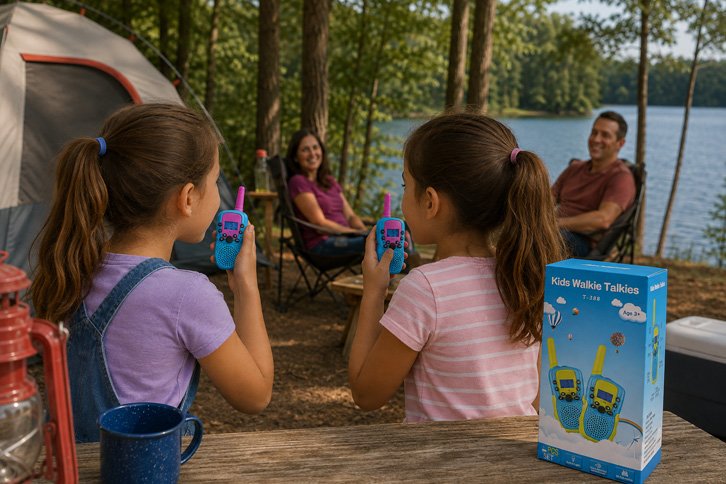
Bright colors, a lightweight shell, and big obvious buttons make this the easiest first set for a preschooler or early-elementary kid. Our younger testers picked up the basics within minutes, no explaining required, and the volume control is simple enough that they could adjust it themselves.
The trade-off shows up in channel stability. Younger kids managed to accidentally switch channels more often on this set than any other we tested, which means more “it’s broken!” moments that are really just a settings mixup. It also only comes as a 2-pack, so larger families will need a second set.
Best for: First-time walkie talkie owners, ages 3-10, who need the simplest possible design. Skip it if: you want fewer channel mishaps, the Motorola T114 is more foolproof for slightly older kids.
6. Baofeng GT-18 – Best for Whole-Family Range
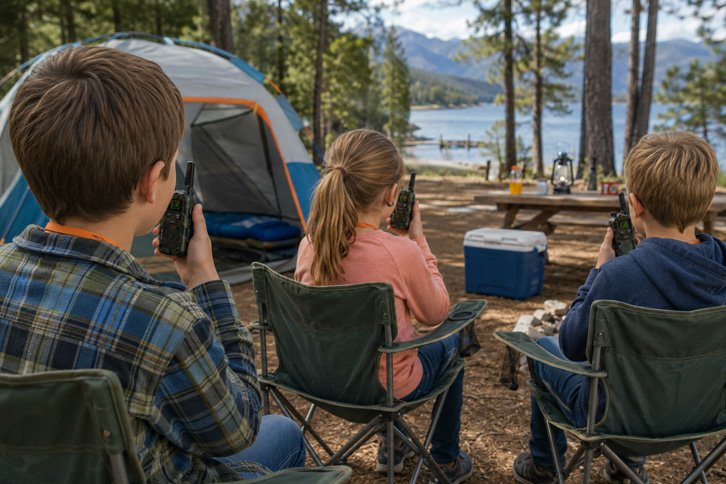
If your campsite backs up to a wooded loop trail and you actually need to find a wandering kid, this is the set that gives parents real range. It’s built more like an adult two-way radio than a toy, with a lockable channel setting so an accidental button mash can’t knock everyone off frequency mid-trip.
Younger kids may find the plain design less exciting than a bright, flashlight-equipped toy, and the button layout takes more explaining. We’d treat this as the “parent and older kid” pair rather than something you hand to a 4-year-old.
Best for: Parents who need to reach a kid across a large or wooded campsite, or older tweens who like the grown-up look. Skip it if: you’re outfitting a young child’s first set, the Selieve or Huaker will be easier for them to use.
Buying Guide: What to Actually Look For
Range claims are marketing, not reality. Every box says something like “up to 3 miles,” and almost none of them deliver that at a real campground. Trees, hills, and other radio traffic cut that number down fast. Expect a few hundred yards to maybe half a mile in typical wooded or hilly terrain, even from sets that claim much more.
Battery type matters more than it seems. Rechargeable sets like the Wishouse save money over a season of camping trips, but you need to remember to charge them before you leave, and there’s no quick fix if they die on day two. AA or AAA sets let you swap in fresh batteries mid-trip, which is worth the tradeoff if you’re the type of family that forgets to charge things.
Channel etiquette at busy campgrounds. Most cheap walkie talkies default to a small handful of channels, and at a full campground, you’re sharing that airspace with a lot of other families. Pick an uncommon channel number if you can, and don’t be surprised if you occasionally catch a stranger’s conversation. It’s usually harmless, just a little funny.
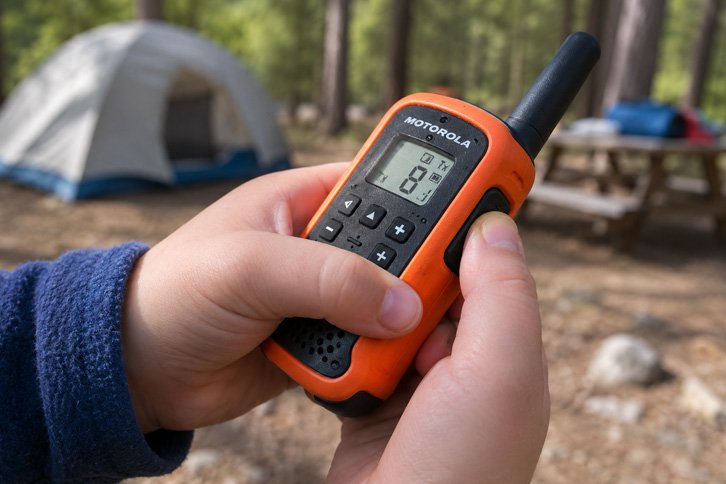
VOX (voice-activated) mode is a mixed blessing. It sounds great on paper: no button to press, just talk. In practice, kids who talk constantly end up hogging the channel without meaning to, since VOX keeps transmitting as long as they’re making noise nearby. For chattier kids, a standard push-to-talk button actually works better.
How much should you spend? For most families, $25-40 gets you a genuinely usable set with decent range and a couple of nice-to-have features. Go under $25 if durability matters more than extras, and skip anything claiming professional-grade range for a toy price. It’s almost never true.
Final Verdict
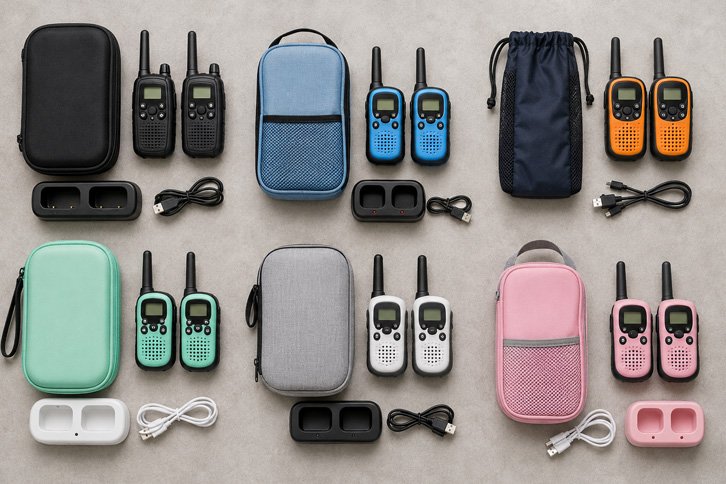
Best Overall: The Wishouse Rechargeable 3-Pack earns it with the best real-world range in our testing, a shared charger instead of endless AAAs, and enough units to cover a family with a few kids.
Best Budget: The Retevis RT628 delivers durability and a genuinely usable range for about $22, ideal if you’re not ready to spend big on a toy that might end up in a creek.
Best for Younger Kids: The Selieve Walkie Talkies are the easiest first set for preschool and early-elementary kids, with big buttons and a lightweight build made for small hands.
Frequently Asked Questions
What’s the real range of kids’ walkie talkies at a campground?
Ignore the box claims. Most kids’ sets advertise 1-3 miles, but real-world range in wooded or hilly campgrounds is usually a few hundred yards to maybe half a mile. Open, flat terrain gets you closer to the advertised numbers.
What age are kids walkie talkies good for?
Most sets work well starting around age 5-6, once a kid can reliably press and hold a talk button. Younger kids do better with simple, lightweight designs like the Selieve, while sets with VOX mode can work for kids as young as 3.
Do I need a license to use kids walkie talkies while camping?
No. Standard kids’ walkie talkies use FRS (Family Radio Service) frequencies, which don’t require a license for casual use. Higher-power radios marketed for serious range sometimes require a GMRS license, so check the packaging if range is a priority.
What features actually matter for camping use?
A channel lock to prevent accidental switching, decent battery life, and a durable build matter far more day-to-day than raw advertised range. Flashlights and sound effects are nice bonuses, not essentials.
Can kids walkie talkies work as a safety device?
Think of them as a fun communication tool, not a safety net. They’re great for calling kids in for dinner or checking in during a game, but they shouldn’t replace clear boundaries about how far kids can wander or a real plan for emergencies.
Rechargeable vs. AA/AAA batteries, which is better for camping?
Rechargeable sets save money over repeated trips but need to be charged before you leave and can’t be quickly refreshed mid-trip. AA/AAA sets let you swap in fresh batteries on the spot, which is handy if you tend to forget to charge things the night before.
How many walkie talkies do we need for a family camping trip?
Two is the minimum for one parent-kid pair, but three or more covers most families better, especially with multiple kids who don’t want to share. Sets like the Wishouse or Huaker that include three handhelds solve this without buying two separate packs.