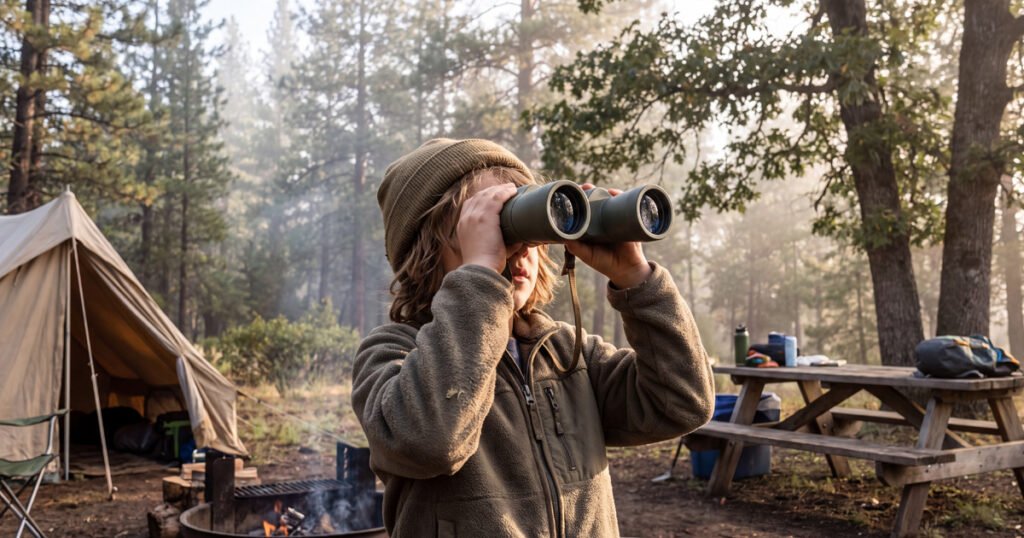
Short answer: the Occer 8×21 Compact is the best all-around pick for most families, with real optics that actually work and large eyepieces sized for smaller hands, all for around $26. If you’re shopping for a toddler who just wants to hold something up to their eyes, the Educational Insights GeoSafari Jr. Kidnoculars skip the frustration of a focus wheel entirely for about $14. And if your kid is genuinely hooked on birdwatching and you want optics that’ll still be sharp in five years, the Celestron Nature DX 8×25 is worth the upgrade.
We bought our oldest a pair of “kids binoculars” from a dollar bin once, thinking it didn’t matter much. She used them for about four minutes at our campsite before handing them back, annoyed that everything looked blurry and doubled. Turns out the lenses weren’t even aligned. Good kids binoculars don’t need to be expensive, but they do need to actually work, or you’ll just be carrying dead weight in the car.
Quick Top 3 Picks
- Best Overall: Occer 8×21 Compact, sharp, properly aligned optics with large eyepieces, great for ages 7 and up, around $26
- Best Budget/Camping Bundle: Vanstarry Kids Binoculars, shockproof set with a compass and carabiner built in, around $18
- Best for Toddlers: Educational Insights GeoSafari Jr. Kidnoculars, focus-free design, no fumbling required, ages 3-6, around $14
Comparison Table
1. Occer 8×21 Compact – Best Overall
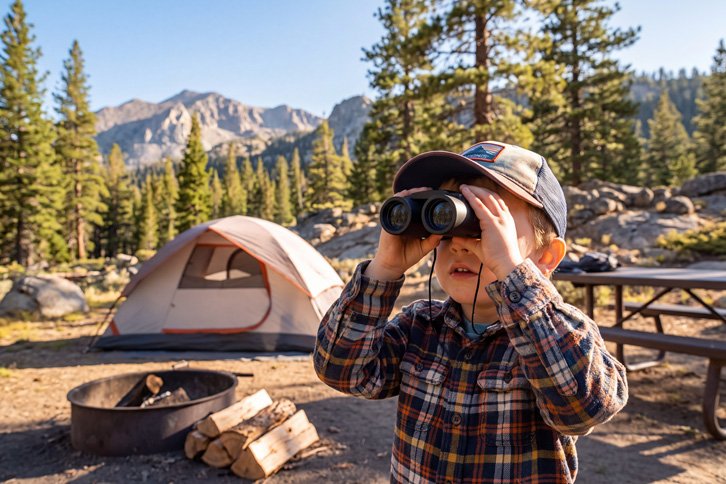
This is the pair we’d hand a kid who’s ready to actually spot things, not just play pretend. The 8x magnification is strong enough to bring a bird or a deer into real focus without being so powerful that every wobble of a kid’s hands turns the view into a blur. The large eyepieces make it easy to line up your eyes correctly on the first try, which sounds minor until you’ve watched a kid squint through misaligned binoculars for five minutes.
The center focus wheel is big enough for small fingers to turn without a struggle, and the compact size means it doesn’t feel like carrying a brick on a hike. At under $30, it’s the pair we’d recommend before spending real money on anything fancier.
Best for: Families who want optics that actually work without spending big money. Skip it if: you’ve got a rough-and-tumble younger kid who drops everything, go with the Vanstarry set instead.
2. Celestron Nature DX 8×25 – Premium Pick
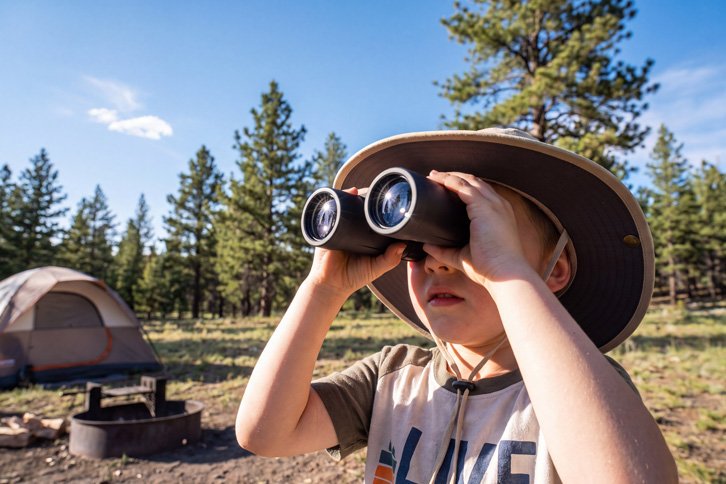
This isn’t a toy, and that’s the point. The Nature DX line is what a lot of adult birdwatchers actually carry, and the rubber-armored, waterproof build means it survives a lot more than a plastic kids’ set. Once your kid moves past “point and giggle” and into actually tracking a bird through the trees, this is the pair that keeps up with them.
The trade-off is obvious: it costs about three times what the Occer does, and a genuinely careless kid can still crack a lens if it takes a hard enough fall. We’d only recommend this once you’ve confirmed your kid is sticking with the hobby, not as a first pair.
Best for: Kids with a genuine, sustained interest in birdwatching, plus parents who’ll happily use the same pair. Skip it if: this is your kid’s first pair of binoculars, start cheaper and upgrade later.
3. Educational Insights GeoSafari Jr. Kidnoculars – Best for Toddlers
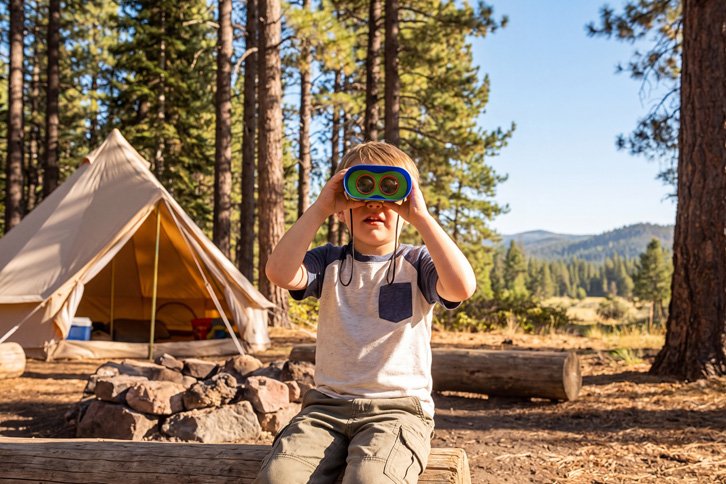
Regular binoculars are genuinely too hard for a 3-year-old, and that’s not a knock on the kid. Lining up two lenses and turning a focus wheel takes coordination toddlers just don’t have yet. These skip the problem entirely with a fixed 2x focus-free design and oversized eyepieces, so your kid puts them up to their face and sees something right away, no fiddling required.
Don’t expect real detail at this magnification. It’s closer to “slightly bigger and more fun to look at” than true optical zoom, and older kids will outgrow the appeal fast. For its actual audience, though, it nails the job.
Best for: Toddlers and preschoolers who want to copy what everyone else is doing. Skip it if: your kid is 7 or older, they’ll be bored with it in about a minute.
4. Celestron Cometron 7×50 – Best for Dusk & Stargazing
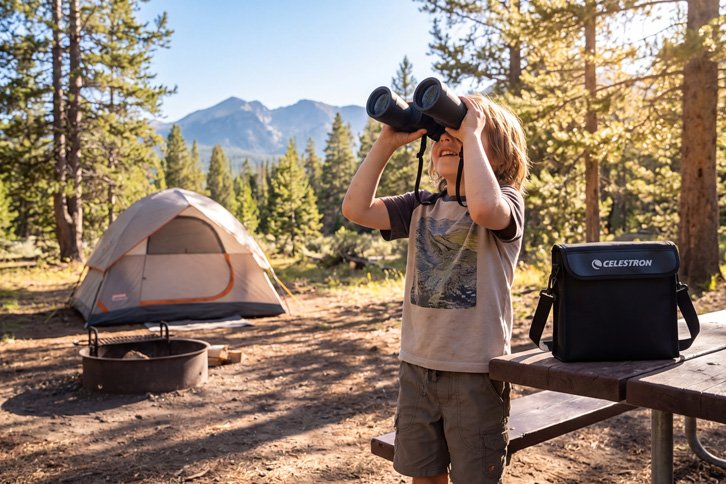
The 50mm lenses on this pair pull in a lot more light than the compact options on this list, which matters once the sun starts going down at the campsite. It’s the pair we’d grab for spotting the first stars coming out, watching bats swoop around the fire ring, or catching a deer moving through the tree line at dusk when everything else on this list would just show you a dark blur.
It’s bulkier and heavier than the compact picks, so it’s less of a “carry it all day on a hike” binocular and more of a “keep it by the picnic table for evening use” binocular. Good for older kids with steadier hands; a bit much for a wiggly 5-year-old to hold up for long.
Best for: Evening campsite use, casual stargazing, and older kids with steadier hands. Skip it if: you need something light enough for an all-day hike, go with the Occer or Olympus instead.
5. Olympus 8×25 WP II – Best Lightweight Fit
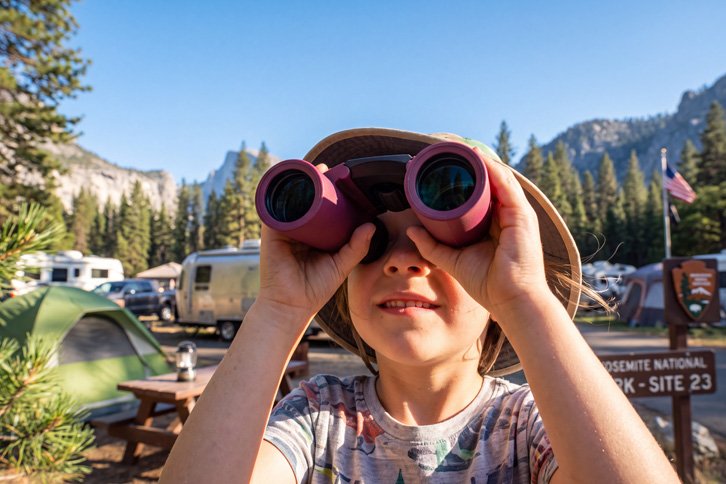
At just over half a pound, this is the pair that won’t leave a strap mark on your kid’s neck after an afternoon of hiking. If your family spends more time on the trail than sitting at the campsite, the low weight makes a real difference, especially once you’re an hour into a hike and the “fun new toy” feeling has worn off.
Optically it’s solid but not spectacular, sitting between the Occer and the Nature DX in terms of clarity. It’s a fair middle-ground pick if the Occer feels too basic for your kid but the Celestron Nature DX feels like too much money.
Best for: Families who hike with kids regularly and want the lightest option that still has real optics. Skip it if: budget is the priority, the Occer gets you 90% of the way there for less.
6. Vanstarry Kids Binoculars – Best Budget/Camping Bundle
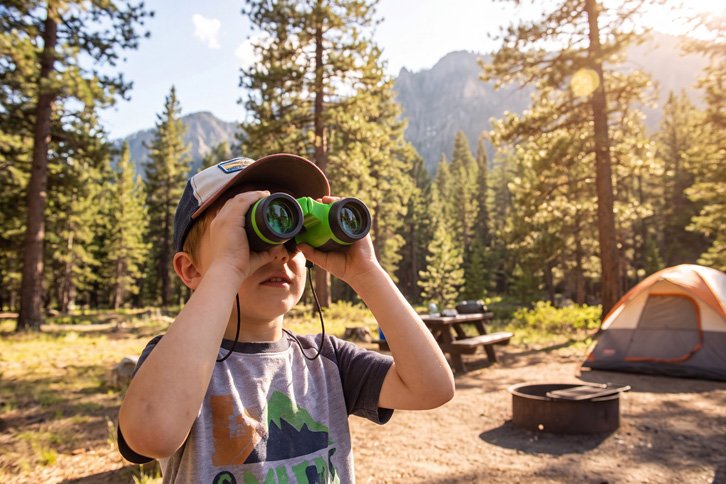
This is the one we’d actually hand a 5- to 8-year-old at the campsite without worrying about it. The shockproof rubber coating survives drops onto dirt and rock that would crack a nicer pair, and it comes bundled with a compass and carabiner clip, which turns a single purchase into an instant nature-exploring kit.
Optical quality is a step below the Occer, and the focus wheel is a bit stiffer than we’d like. For the price and the durability, though, it’s the pair we’d buy in multiples if you’ve got more than one kid wanting their own set.
Best for: Multiple kids, first-timers, and anyone who assumes it’ll end up dropped in the dirt. Skip it if: your kid already has good binocular skills, the Occer will reward them with clearer views.
Buying Guide: What to Actually Look For
Magnification: stick to 6x-8x. It’s tempting to think higher zoom numbers mean better binoculars, but for kids it’s the opposite. Anything above 8x magnifies every shake and wobble in small hands, which makes the image bounce around too much to actually find or hold on to what they’re looking at. 6x-8x is the sweet spot for steady, usable viewing.
Lens size and brightness. Bigger lenses (like the 50mm on the Cometron) pull in more light, which matters at dawn, dusk, or in shaded forest. Smaller lenses (21-25mm) are lighter and more compact, which matters more for all-day carrying on a hike.
Focus-free vs. focus wheel. Toddlers and very young preschoolers do better with focus-free designs like the GeoSafari Jr., since there’s no skill required to get a usable image. Kids around age 6-7 and up can usually handle a center focus wheel with a little practice.
Durability matters more than specs. A pair with excellent optics that can’t survive being dropped on a rock will get broken within a season. Rubber armor, a wrist strap, and a hard case are worth prioritizing over raw magnification power for most families.
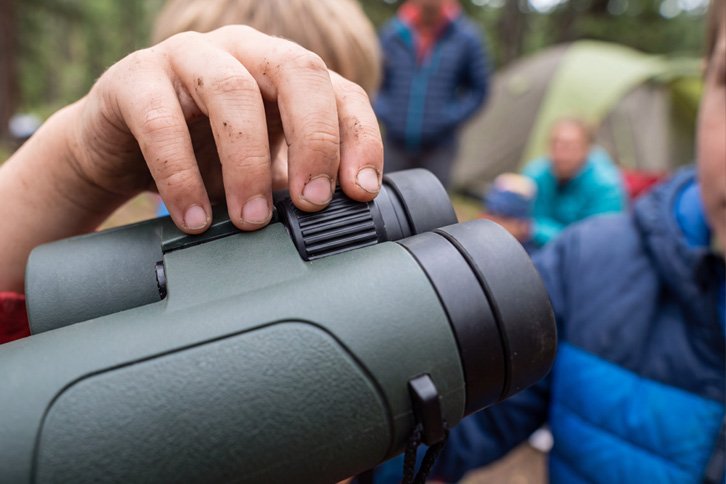
How much should you spend? For most families, $20-30 gets you a genuinely usable pair. Go under $15 only for toddlers who need focus-free simplicity, and only go above $50 once you’ve confirmed your kid is sticking with the hobby past one camping season.
Final Verdict
Best Overall: The Occer 8×21 Compact earns it for combining real, properly aligned optics with a price that won’t sting if it ends up left in the rain.
Best Budget: The Vanstarry Kids Binoculars covers durability and a bundled compass and carabiner for less than $20, ideal if you’re outfitting more than one kid.
Best Premium: The Celestron Nature DX 8×25 is worth the jump once your kid has proven they’re genuinely into birdwatching and not just going through a phase.
Frequently Asked Questions
What’s the best magnification for kids’ binoculars?
6x to 8x is the sweet spot. Higher magnification amplifies hand shake so much that kids struggle to hold a steady image, which makes the whole experience frustrating instead of fun.
What age can kids start using real binoculars?
Most kids can handle a basic focus wheel and 6x-8x magnification starting around age 6-7. Younger kids, roughly ages 3-6, do better with focus-free designs like the GeoSafari Jr. Kidnoculars.
Are expensive binoculars worth it for a kid?
Only once you know they’re actually interested. Start with a $20-30 pair to test the waters, and upgrade to something like the Celestron Nature DX only after a season or two of genuine, sustained interest.
How do I clean kids’ binoculars after a camping trip?
Wipe the lenses gently with a microfiber cloth, never a paper towel or your shirt, which can scratch the coating. For dirt on the body, a damp cloth works fine; just avoid soaking the eyepieces or focus wheel.
Can binoculars damage a kid’s eyes?
Normal use is completely safe. The one real risk is pointing binoculars at the sun, which can cause serious eye damage almost instantly due to the magnified light. Set that rule before handing over a new pair.
Do kids’ binoculars work for stargazing too?
Basic compact models show some detail on the moon and bright stars, but a pair with larger lenses, like the Celestron Cometron 7×50, gathers noticeably more light and works better for dusk and casual stargazing around the campfire.
What should I look for besides magnification?
Prioritize lens alignment (so the image isn’t doubled or blurry), a comfortable focus wheel your kid can actually turn, and a durable, rubber-armored body that survives drops. Those three things matter more day-to-day than raw specs.